
What are the most effective methods for removing graffiti from industrial surfaces?
The most effective graffiti removal method depends on the surface, paint type and extent of marking. Industrial cleaners typically combine controlled pressure washing, specialist chemical treatments and low-pressure steam cleaning, followed by thorough rinsing and appropriate waste-water management to restore masonry, concrete, metal, cladding and other surfaces safely.
The most effective graffiti removal method depends on the surface, the graffiti medium, the age of the marking and the condition of the substrate. On industrial sites, the usual approach is a controlled combination of pressure washing, specialist chemical treatment and low-pressure steam cleaning, selected to remove the marking without stripping coatings, damaging masonry or spreading contaminated wash water.
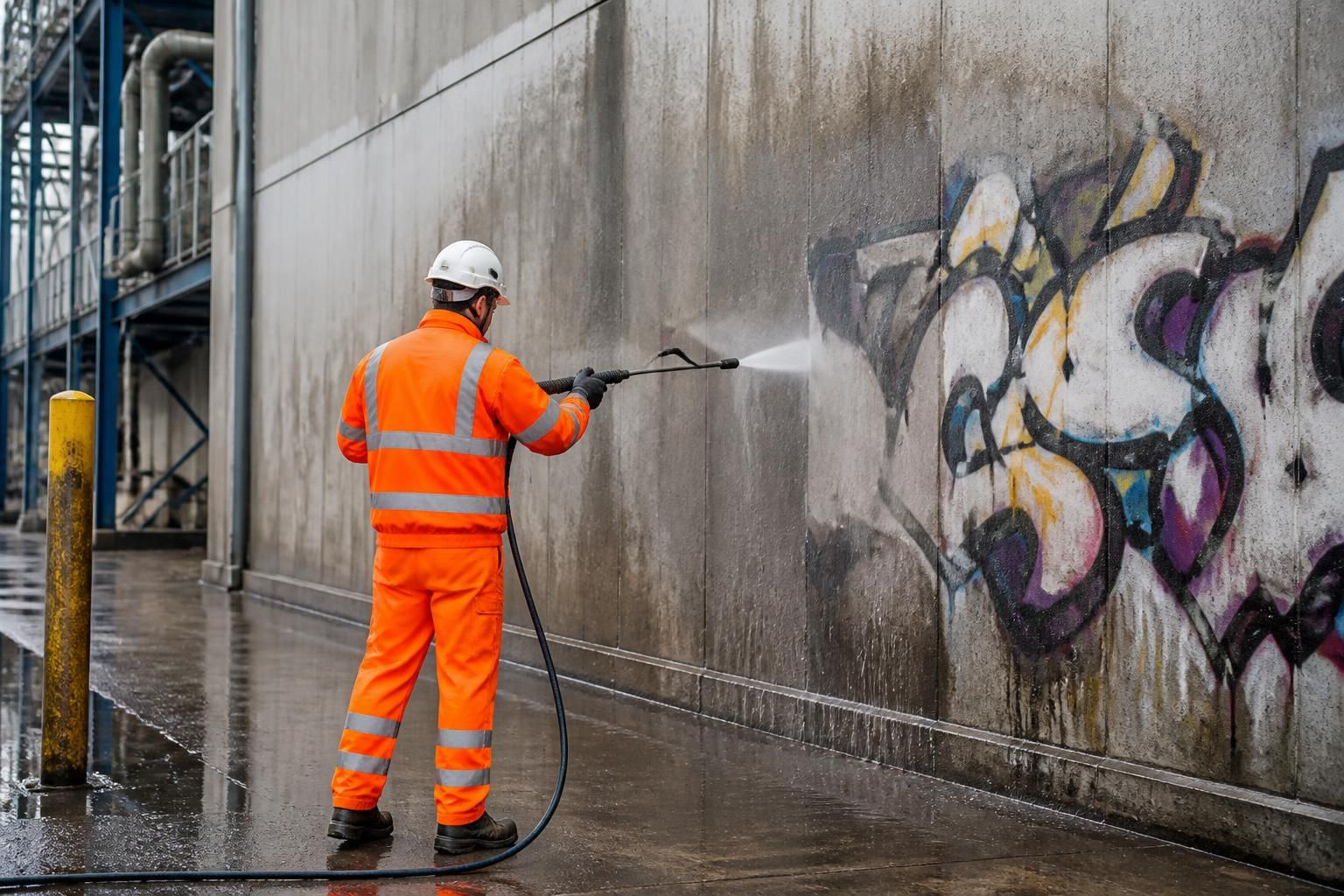
Pressure washing is suitable for many robust surfaces, including concrete, brickwork, paving and some metalwork. Water pressure, flow rate and nozzle selection must be controlled carefully. Excessive pressure can drive paint further into porous masonry, remove the face of bricks, damage mortar joints or lift protective coatings. A trained operative will normally begin with the lowest effective pressure and adjust the technique after inspecting the surface and completing a discreet test patch.
Hot-water and steam cleaning can improve removal where paint, marker ink or adhesive residue has bonded firmly to the surface. Heat softens some coatings and reduces the need for aggressive pressure or large quantities of chemical product. Low-pressure steam is particularly useful for sensitive façades, painted surfaces, signage, street furniture and areas where water use needs to be limited. It is not automatically suitable for every substrate: heat can affect certain plastics, sealants, laminates and existing coatings.
Specialist chemical treatments are used when water alone cannot break down the graffiti. The product must be matched to the marking and the substrate. Solvent-based removers may be effective on some paints and permanent markers, while alkaline or water-based formulations may be more appropriate for other deposits. Chemical application should be controlled rather than indiscriminate. The product is allowed to work for the required dwell time, then removed and rinsed thoroughly. Incorrect selection can cause staining, soften coatings, etch metal or transfer pigment deeper into porous materials.
Porous materials such as unfinished brick, sandstone, concrete and render often require a staged process. Surface paint is removed first, followed by careful treatment of residual pigment in the pores. A specialist poultice or absorbent treatment may be considered where pigment has penetrated deeply and conventional washing would spread it. Repeated light applications are generally safer than one aggressive pass, particularly on historic or weathered masonry.
Abrasive cleaning, including controlled micro-abrasive techniques, can be considered for exceptionally durable, uncoated surfaces where other methods are unsuitable. It may remove a thin surface layer along with the graffiti, so it carries a greater risk of altering texture, exposing aggregate or creating a visible cleaned patch. It should not be used routinely on delicate brick, architectural stone, coated cladding or surfaces that need to retain their original finish.
Different industrial surfaces need different controls:
- Brick and masonry: use low to moderate pressure, suitable chemical treatment and thorough rinsing to avoid mortar loss, surface erosion and ghosting.
- Concrete: pressure washing and hot-water cleaning are often effective, although porous or weathered concrete may retain staining and require further treatment.
- Metal cladding and painted panels: prioritise low-pressure methods and compatible chemicals to prevent scratching, corrosion, colour loss or damage to the factory finish.
- Glass, plastics and signage: use non-abrasive methods and products confirmed as compatible with the material, seals and printed finishes.
- Roofs and coated systems: avoid methods that remove protective layers or force water beneath laps, joints and flashings. Access and fall protection are also essential.
An effective industrial graffiti removal process starts with an inspection. The cleaning team should identify the substrate, coating condition, likely paint or marker type, nearby drainage, electrical equipment, traffic routes and access requirements. A small test area helps confirm the safest combination of pressure, temperature, chemical dwell time and rinsing method before work proceeds across the full elevation.
Site controls are as important as the cleaning method. The work area may need segregation from vehicles, pedestrians and site operations, with suitable personal protective equipment and access equipment selected for the task. Run-off should be contained where it could enter surface-water drains or contaminate surrounding ground. Waste water, sludge, removed paint and chemical residues must be collected, handled and disposed of in accordance with the site’s environmental requirements and applicable UK regulations.
After the graffiti has been removed, the surface should be rinsed or neutralised as required, inspected in suitable lighting and checked for remaining shadows, coating damage or uneven cleaning. Photographic records can help confirm the result and identify areas needing repair. Where recurring tagging is a concern, a compatible sacrificial or permanent anti-graffiti coating may be applied after the substrate is clean, dry and suitably prepared. The coating should be selected for the surface and the expected cleaning regime, not treated as a substitute for correct removal.
For large industrial façades, cladding, car parks and mixed-surface sites, the safest and most reliable result usually comes from a planned, surface-specific method rather than a single high-pressure treatment. Combining controlled cleaning with proper containment, inspection and post-cleaning protection restores the appearance of the site while reducing the risk of damage and repeat remedial work.
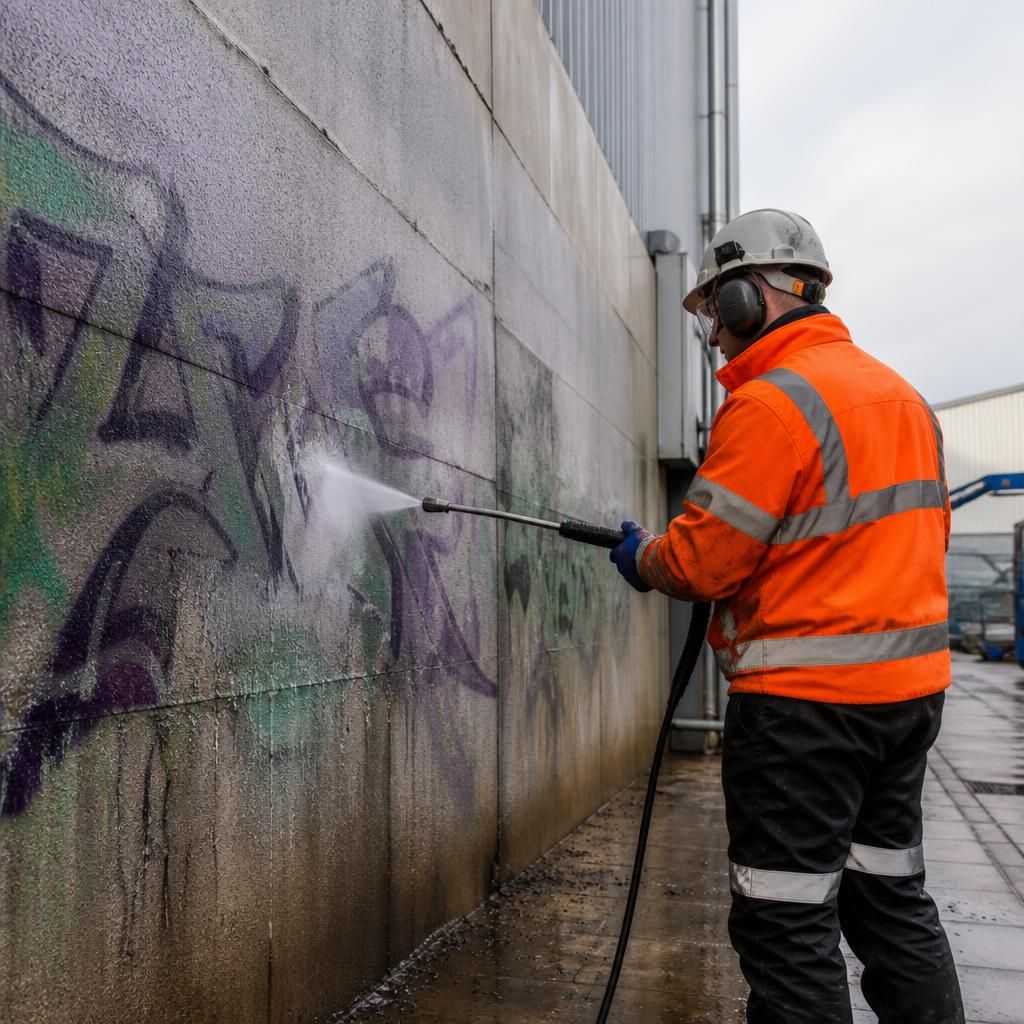
The most effective graffiti removal method is a surface-specific process, confirmed by a small test patch before full cleaning begins. The test establishes whether controlled pressure washing, hot-water or steam cleaning, specialist chemical treatment, or a combination will remove the marking without damaging the underlying material.
This assessment is particularly important on industrial sites with mixed surfaces. Brick and concrete may tolerate carefully controlled pressure, while coated cladding, painted metal, signage and plastics generally require lower-pressure, non-abrasive techniques and compatible products. For porous masonry, repeated light treatments may be safer than one aggressive pass, helping to reduce pigment without eroding the surface or mortar.
Effective removal also includes containing run-off, protecting nearby equipment and inspecting the surface after cleaning. Any remaining shadowing, coating damage or uneven finish can then be addressed before the area is returned to service or treated with a suitable anti-graffiti coating.