
What are the best practices for maintaining industrial surfaces after graffiti removal?
After graffiti removal, industrial surfaces should be rinsed or neutralised as appropriate, inspected for coating or substrate damage, and allowed to dry fully before protective treatment. Ongoing maintenance should include routine inspections, prompt cleaning of new marks, compatible cleaning methods, and repairs to damaged coatings or surfaces to prevent deterioration and repeat vandalism.
Maintaining an industrial surface after graffiti removal requires more than removing the visible paint. The surface should be thoroughly rinsed or neutralised where the cleaning product requires it, inspected for damage, dried completely, and protected with a compatible coating where appropriate. Ongoing care should then combine regular inspections, rapid treatment of new graffiti, suitable cleaning methods, and prompt repair of damaged coatings or substrates.
Complete the post-cleaning process
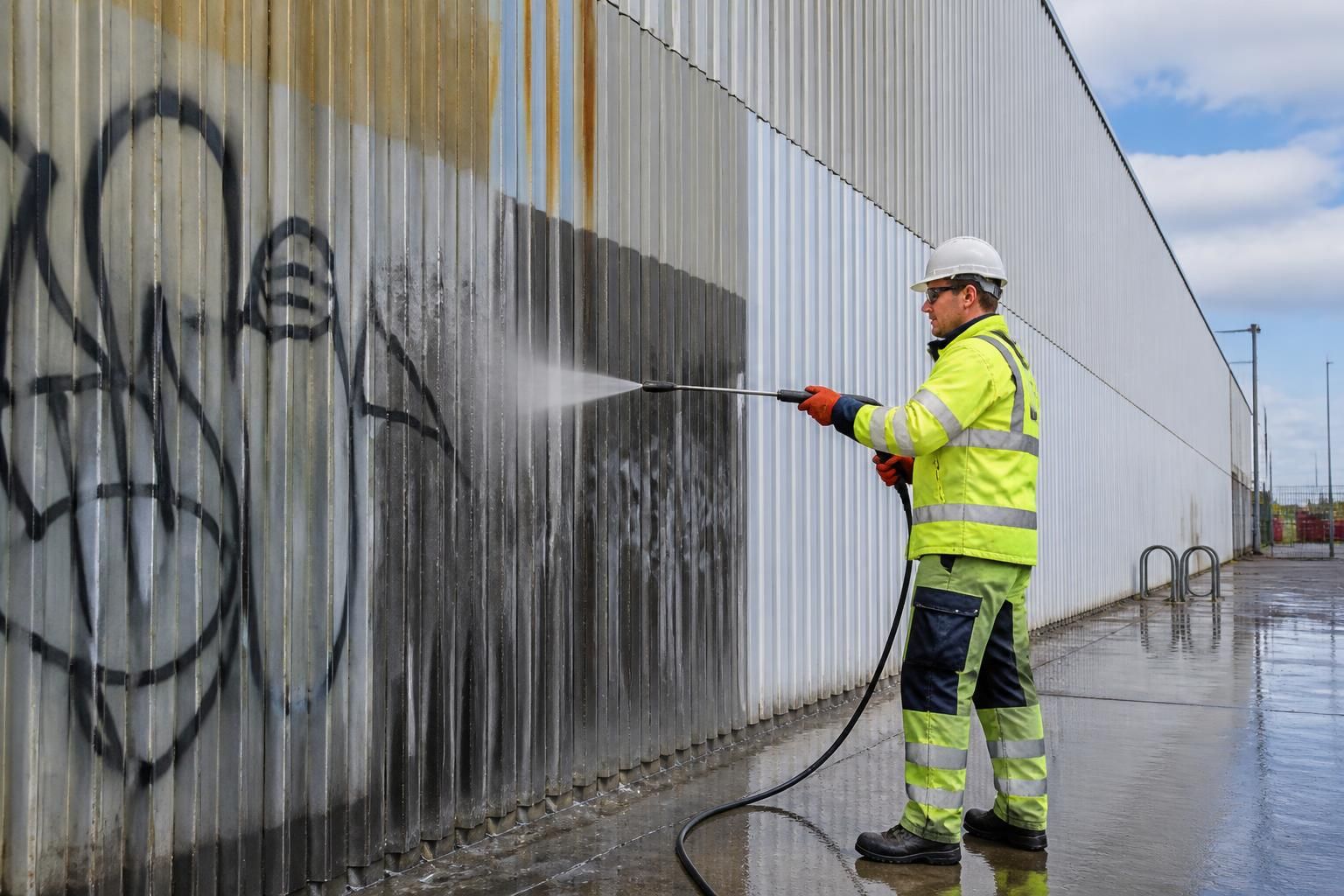
Once graffiti has been removed, the area should be checked for residues from cleaning chemicals, softened paint, pigment transfer and loosened debris. Rinsing must be controlled so that contaminated water does not enter surface water drains, unprotected soil or adjacent areas. On some materials, a neutralising treatment may be necessary after using an alkaline, acidic or solvent-based product. The correct process depends on the product used and the surface being cleaned.
Hard, non-porous surfaces such as certain metals, glazed finishes and dense masonry may tolerate controlled rinsing more readily than porous brick, concrete, painted cladding or coated panels. Excessive pressure or prolonged wetting can force contaminants deeper into porous materials, damage joints and coatings, or spread residues across a larger area. The cleaning method should therefore be selected according to the substrate rather than applied uniformly across the site.
Inspect for damage before applying protection
Graffiti removal can reveal pre-existing deterioration that was hidden by the paint. Inspect the cleaned area for:
- Flaking, blistering or lifting paint and protective coatings
- Etching, discolouration or gloss variation caused by the graffiti or the removal process
- Cracks, open joints, spalling concrete or damaged masonry
- Corrosion on steelwork, shutters, fencing, signage and other metalwork
- Water staining, efflorescence or evidence of moisture entering the substrate
- Residual staining or ghosting in porous materials
Where damage is present, it should be recorded and assessed before a protective coating is applied. A coating may improve resistance to future graffiti, but it will not correct a failed substrate, active corrosion or moisture problem. Repairs, repainting, repointing or corrosion treatment may need to take place first.
Allow the surface to dry fully
Protective treatments and repair materials should not normally be applied to a surface that is still damp, contaminated or affected by condensation. Trapped moisture can cause poor adhesion, clouding, blistering, peeling or premature coating failure. Drying time depends on the material, weather, ventilation, porosity and amount of water used during cleaning.
On industrial premises, drying should also be considered in relation to operational requirements. Areas may need to remain isolated until they are safe to access, free from slip hazards and suitable for contact with vehicles, plant or stored materials. Where necessary, the cleaned zone should be inspected again before it is returned to normal use.
Use a compatible anti-graffiti treatment
An anti-graffiti coating can make future marks easier to remove and may reduce the need for aggressive cleaning. The treatment must be compatible with the substrate and any existing paint or finish. Options may include sacrificial coatings, which are removed and reapplied with the graffiti, or permanent and semi-permanent systems designed to withstand repeated cleaning.
Compatibility should be checked on a discreet area before wider application. The test should assess adhesion, colour, sheen, texture, drying behaviour and the ease of removing a representative type of graffiti. A coating that performs well on smooth metal may not be suitable for porous concrete, powder-coated panels, natural stone or previously painted masonry.
Protection should be applied evenly and according to the product requirements. Edges, recesses, joints and vulnerable lower sections of walls are often overlooked, despite being common locations for repeat marking. The completed treatment should be documented, including the product type, areas covered and any restrictions on future cleaning chemicals or pressure levels.
Establish a routine inspection programme
Regular inspections help identify new graffiti, coating failure and developing surface defects before they become more difficult or expensive to address. The frequency should reflect the site’s exposure to vandalism, public access, visibility, previous incidents and operating conditions. Inspections should cover not only the original affected area but also nearby walls, service compounds, loading bays, boundary fencing, plant enclosures, signs and access routes.
Inspection records should note the location and approximate size of new marks, the surface condition, any evidence of repeat targeting and actions taken. Photographs can help compare changes over time and provide a useful record when planning repairs or reviewing the performance of a protective system.
Remove new graffiti promptly and carefully
Fresh graffiti is often easier to remove than aged or weathered paint, but rapid treatment should not mean using excessive pressure or an unsuitable chemical. The cleaning product, temperature, dwell time, agitation and rinsing method should all be appropriate for the surface and its protective coating. A small test area is advisable where the material, paint type or existing treatment is uncertain.
Repeated cleaning can gradually affect coatings, sealants, paint and delicate finishes. If the same area requires frequent treatment, the maintenance plan should be reviewed rather than continuing with increasingly aggressive methods. A more durable protective coating, improved lighting, access control, or changes to vulnerable site features may provide a better long-term solution.
Repair failed coatings and damaged surfaces
Small defects should be dealt with before water ingress, corrosion, freeze-thaw damage or further coating loss causes wider deterioration. Repairs may include removing loose paint, treating rust, replacing damaged panels, sealing cracks, renewing joints or applying a compatible finish to affected sections. The repaired area should be allowed to cure before it is cleaned or exposed to normal site activity.
Where a surface has been repeatedly etched or stained, complete restoration may not be possible through cleaning alone. Repainting, resurfacing or replacing a damaged component may produce a more consistent appearance and provide a sound base for future protection. The most suitable option depends on the substrate, its function, appearance requirements and exposure to further vandalism.
Control environmental and operational risks
Maintenance work should continue to follow the site’s risk assessment and environmental controls. Run-off should be contained and disposed of correctly, especially where cleaning residues, paint particles or solvents may be present. Work areas should be segregated from pedestrians, vehicles and operational equipment, with suitable controls for wet floors, access equipment, ventilation and chemical exposure.
In practice, the most effective maintenance plan is a documented cycle of inspection, prompt low-impact cleaning, condition assessment and targeted repair. Keeping records of the surface type, previous treatments and approved cleaning methods helps ensure that future graffiti is removed consistently without unnecessarily weakening the industrial surface.

Routine inspections are a key part of maintaining industrial surfaces after graffiti removal because they identify fresh marking, coating failure and developing substrate damage before more aggressive cleaning is needed. Inspections should include the original affected area and nearby walls, fencing, loading bays, plant enclosures, signs and access routes.
Record the location, surface condition and treatment carried out, using photographs where useful. New graffiti should be removed promptly with a method compatible with the substrate and any anti-graffiti coating. If repeated cleaning begins to affect the finish, review the protection and repair plan rather than increasing pressure or chemical strength.