
How long does it typically take to remove graffiti from industrial surfaces?
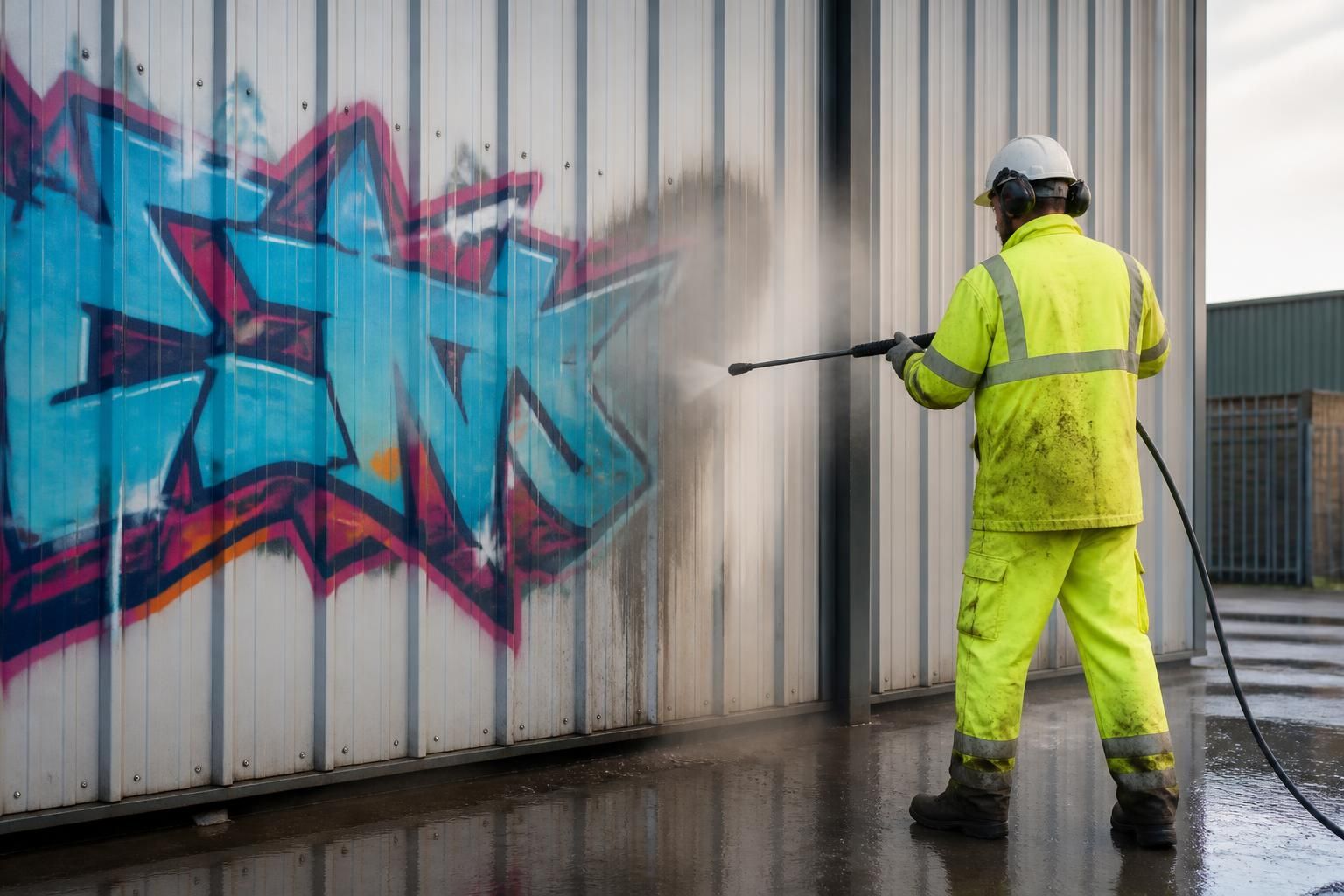
Isolated graffiti on an accessible industrial surface can often be removed during a single visit, while extensive, layered or difficult-to-access graffiti may require more time or multiple visits. The actual timescale depends on the surface material, paint type, area affected, cleaning method, access requirements and any protective coating or wastewater controls needed.
Industrial graffiti removal typically takes part of a working day for a small, isolated area on an accessible surface. Larger, layered or difficult-to-access graffiti may require a full day, several working days or more than one visit. The timescale is determined by the surface, graffiti, cleaning method, access arrangements, environmental controls and the standard of finish required.
A straightforward job may involve setting up the work area, applying the appropriate remover, pressure washing or steam cleaning, collecting wastewater and completing a final inspection. Where the affected surface is sound, the graffiti is relatively fresh and access is unrestricted, these stages can often be completed during one visit.
More time may be needed where the graffiti covers a large façade, extends across several elevations or has been applied in multiple layers. Repeated applications of cleaning product, controlled rinsing and additional inspection may be necessary to remove paint from textured, porous or weathered materials without damaging the substrate.
Typical timescales by project type
- Small, isolated graffiti: Often completed during a single visit when the surface is accessible and the paint has not heavily penetrated the substrate.
- Several affected areas on one site: Usually requires additional preparation and cleaning time, particularly where teams must move equipment between elevations or work around site operations.
- Large façades, cladding or boundary walls: May take a full working day or longer, depending on the total area, height and cleaning method.
- Porous masonry or heavily layered graffiti: Can require repeated treatment, slower cleaning and a follow-up visit if staining remains after the initial removal.
- High-level or restricted areas: The work may extend over several visits where access equipment, traffic management, permits or safety exclusions must be arranged.
These are planning indications rather than fixed completion times. A competent contractor should assess the site before confirming a programme, as rushing the process can cause etching, staining, coating failure or damage to the underlying material.
The main factors affecting the duration are:
- Surface material: Smooth painted metal and some sealed cladding can be cleaned more quickly than untreated brick, concrete, stone or textured render. Porous materials may absorb pigment and require gentler, more controlled treatment.
- Type and age of the graffiti: Aerosol paint, marker ink, adhesive residue and other coatings respond differently to cleaning products and heat. Older graffiti may be weathered into the surface, while fresh paint may still require careful treatment to avoid spreading it.
- Number of layers: Overpainting can create a thicker film that needs several treatment stages. It may also reveal older staining beneath the visible marking.
- Area and location: A small patch at ground level is quicker to prepare and clean than graffiti spread across a long wall, roofline, façade or multiple structures.
- Access: Clear ground-level access generally allows faster work. Restricted yards, live traffic routes, rail or roadside locations and high-level surfaces may require a specialist access system, exclusion zones or a timed work window.
- Cleaning method: Steam cleaning, low-pressure washing, chemical treatment and abrasive techniques each have different preparation, dwell and rinsing requirements. The safest effective method should be selected for the substrate rather than simply using the most aggressive equipment.
- Water and waste controls: Where contaminated rinse water cannot enter surface drains, it may need to be contained, collected and disposed of appropriately. This can add significant time to setup and completion.
- Weather and site operations: Rain, wind, freezing conditions and extreme temperatures can affect product performance, access equipment and safe working. Busy industrial sites may also require the cleaning to be phased around deliveries, production or pedestrian movements.
- Post-cleaning requirements: Applying an anti-graffiti coating, allowing the surface to dry and carrying out remedial painting or colour matching will extend the overall programme beyond the removal itself.
For larger industrial sites, the work is normally planned in stages. The first stage is a site review and method selection, followed by preparation and protection of nearby surfaces, cleaning, wastewater management and a final inspection. If a protective coating is specified, the substrate may need to dry fully before it can be applied. This means the cleaning may be completed on one visit while coating or finishing work is scheduled separately.
A small test area is also useful where the surface or paint type is uncertain. It confirms whether the proposed treatment removes the graffiti effectively without altering the colour, texture or finish of the substrate. Although testing adds a short preparation step, it helps prevent delays and avoids inappropriate cleaning across the whole area.
Businesses can help keep the programme on schedule by providing clear site information before the visit. This includes photographs or marked-up plans showing all affected areas, details of the surface materials, known access restrictions, working-hour requirements and any drainage or wastewater rules. Removing obstructions, arranging permits and agreeing traffic or pedestrian controls in advance can also reduce downtime.
After the initial assessment, the cleaning team should be able to provide an indicative duration, identify any dependencies and explain what could cause the programme to change. For an urgent isolated marking, rapid attendance may be possible, but the safest and most effective completion time still depends on the surface, access and environmental controls at the site.
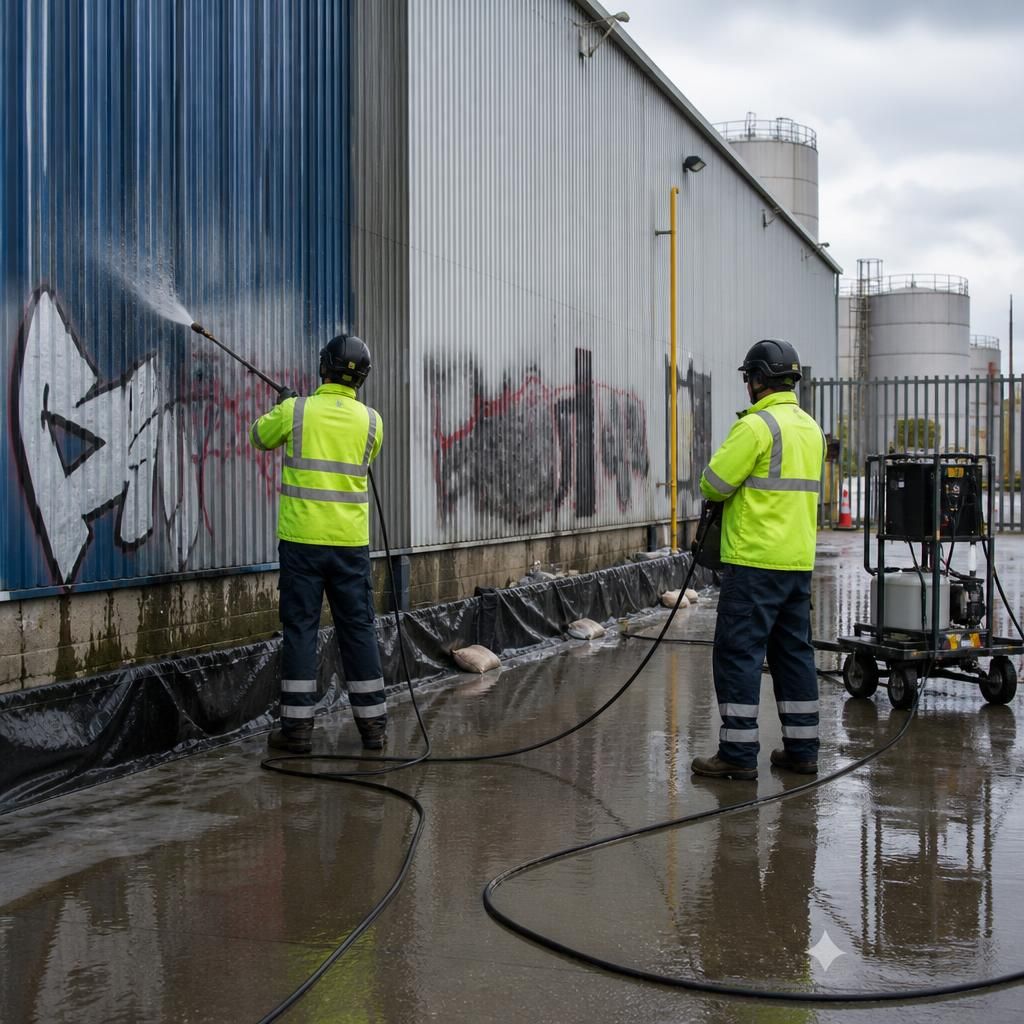
Access and wastewater controls are often the main reasons industrial graffiti removal takes longer than expected. Ground-level graffiti in an open area can usually be treated more efficiently than markings on a high façade, restricted yard, roadside boundary or live production area.
Where access equipment, exclusion zones, traffic management or permits are required, these arrangements must be completed before cleaning begins. Rinse water may also need to be contained and collected rather than allowed to enter surface drains. Planning these requirements in advance helps avoid delays and allows the cleaning team to provide a more reliable programme.