
How can businesses ensure their graffiti removal service is environmentally friendly?
Businesses can ensure their graffiti removal service is environmentally friendly by choosing a contractor that uses suitable low-toxicity products, minimises water and chemical use, and prevents contaminated wash water entering drains or soil. The contractor should also assess the surface before cleaning, use controlled methods such as steam where appropriate, and collect and dispose of paint residues and wastewater in accordance with UK environmental requirements.
An environmentally friendly graffiti removal service uses the least harmful effective method for the surface, limits water and chemical use, prevents contaminated residues entering drains or soil, and disposes of waste lawfully. Businesses should confirm these controls with the contractor before work begins rather than assessing environmental performance solely by the cleaning product used.
Start with a site and surface assessment
Environmental performance depends on matching the process to the graffiti, substrate and surrounding area. A competent contractor should inspect the paint, marker or coating, identify whether the surface is brick, concrete, stone, metal, cladding, render or a previously protected finish, and consider nearby drains, watercourses, planting, public areas and sensitive equipment.
This assessment helps avoid unnecessary abrasive cleaning, excessive pressure or strong chemicals. It should also identify whether the surface can tolerate steam, a low-pressure rinse, a biodegradable cleaning product or a dry removal method. A small test area is useful for confirming that the chosen process removes the graffiti without damaging the underlying finish or creating additional remedial work.
Choose the least intensive effective method
There is no single environmentally preferable method for every industrial surface. Steam cleaning can reduce the need for aggressive chemicals on suitable substrates, while controlled pressure washing may be appropriate where water can be safely contained. Soft abrasive techniques can remove stubborn coatings from durable surfaces, but they require careful control because abrasive media and paint particles must be collected afterwards.
Where a chemical remover is necessary, the contractor should select a product suitable for the substrate and use only the amount required. Products with lower toxicity, low odour and a reduced environmental hazard profile may be preferable, but terms such as “green” or “eco-friendly” should not be accepted without checking the product information. The relevant safety data should explain handling, storage, environmental hazards and disposal requirements.
Control water, runoff and overspray
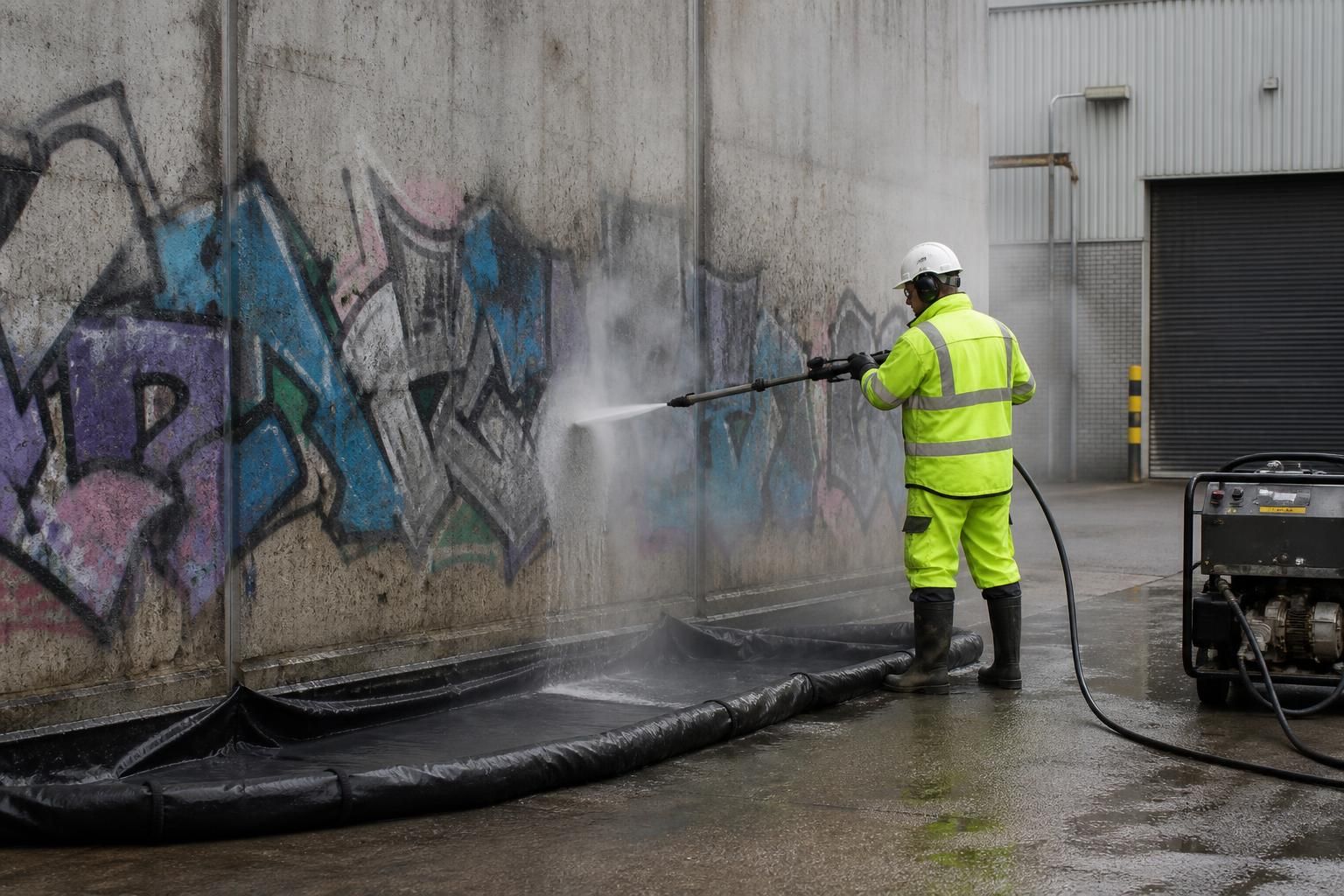
Paint fragments, dissolved coatings, detergents and cleaning chemicals can contaminate water even when the original graffiti appears small. A responsible service should prevent wash water entering surface-water drains, foul-water systems, soil or nearby watercourses unless discharge has been specifically assessed and permitted by the appropriate authority or sewerage provider.
Typical controls may include drain covers, bunding, temporary barriers, absorbent materials, wet vacuums, collection tanks and filtration equipment. The method should be adapted to the site, with particular care around open drainage channels, car parks, loading areas and hardstanding that slopes towards a watercourse. Dry collection may be more suitable where water recovery is impractical.
Runoff should not simply be diluted and released. The contractor should explain how collected water will be tested or assessed where necessary, stored securely and transferred for suitable treatment or disposal. Requirements can vary according to the substance, location and discharge route, so businesses should expect site-specific advice rather than a blanket assurance.
Manage removed paint and contaminated materials
Graffiti residue, used absorbents, spent abrasive media, disposable sheeting and contaminated filters should be gathered during the work. The contractor should prevent these materials being blown across the site or washed into drainage systems and should store them in suitable, labelled containers while awaiting disposal.
Waste should be assessed and handled in line with applicable UK waste requirements. Where the material is hazardous, it must be consigned through the appropriate waste route using a suitably authorised carrier and receiving facility. Businesses should retain waste transfer or consignment documentation where required, particularly for managed industrial sites, estates and facilities subject to environmental audits.
Check the contractor’s working procedures
Before authorising the work, ask the graffiti removal contractor to provide a method statement and risk assessment that cover environmental controls as well as worker and public safety. The documents should identify:
- the proposed cleaning method, products and equipment;
- the surface and environmental risks identified during the site survey;
- how drains, soil, vegetation, vehicles and nearby premises will be protected;
- how wastewater, paint residue and used materials will be captured;
- the storage, transport and disposal arrangements for waste;
- the response procedure for spills, equipment failure or unexpected contamination; and
- the records that will be supplied after completion.
The contractor should also be able to demonstrate that operatives are trained to use pressure washing, steam equipment, chemicals and access systems safely. Product labels, safety data sheets and COSHH assessments should be available where substances that could harm people or the environment are used.
Consider the whole cleaning cycle
Environmental impact is not limited to the moment the graffiti is removed. Businesses can reduce repeat work by repairing damaged surfaces and considering a suitable sacrificial or permanent anti-graffiti coating where it is compatible with the substrate and the site’s appearance requirements. A correctly specified coating can make future marks easier to remove, reducing the need for intensive cleaning, although it still requires appropriate maintenance and eventual reapplication.
Regular inspections and prompt reporting can also prevent graffiti from spreading across a larger area. Planned maintenance should specify approved removal methods, drainage precautions and the products that may be used, so that urgent call-outs do not lead to unsuitable or uncontrolled cleaning.
Request completion records
After the work, the contractor should provide a clear record of the area treated, method and products used, any test results or discharge arrangements, waste transferred and issues requiring follow-up. Photographs can help confirm the condition of the surface and document that nearby drains and surrounding areas were left clean.
For UK businesses, the most reliable indicator of an environmentally responsible service is therefore a controlled process: assess the site, use the mildest effective technique, contain all residues, follow applicable drainage and waste requirements, and document the work. This approach protects industrial surfaces while reducing the risk of pollution and supporting the site’s environmental management obligations.
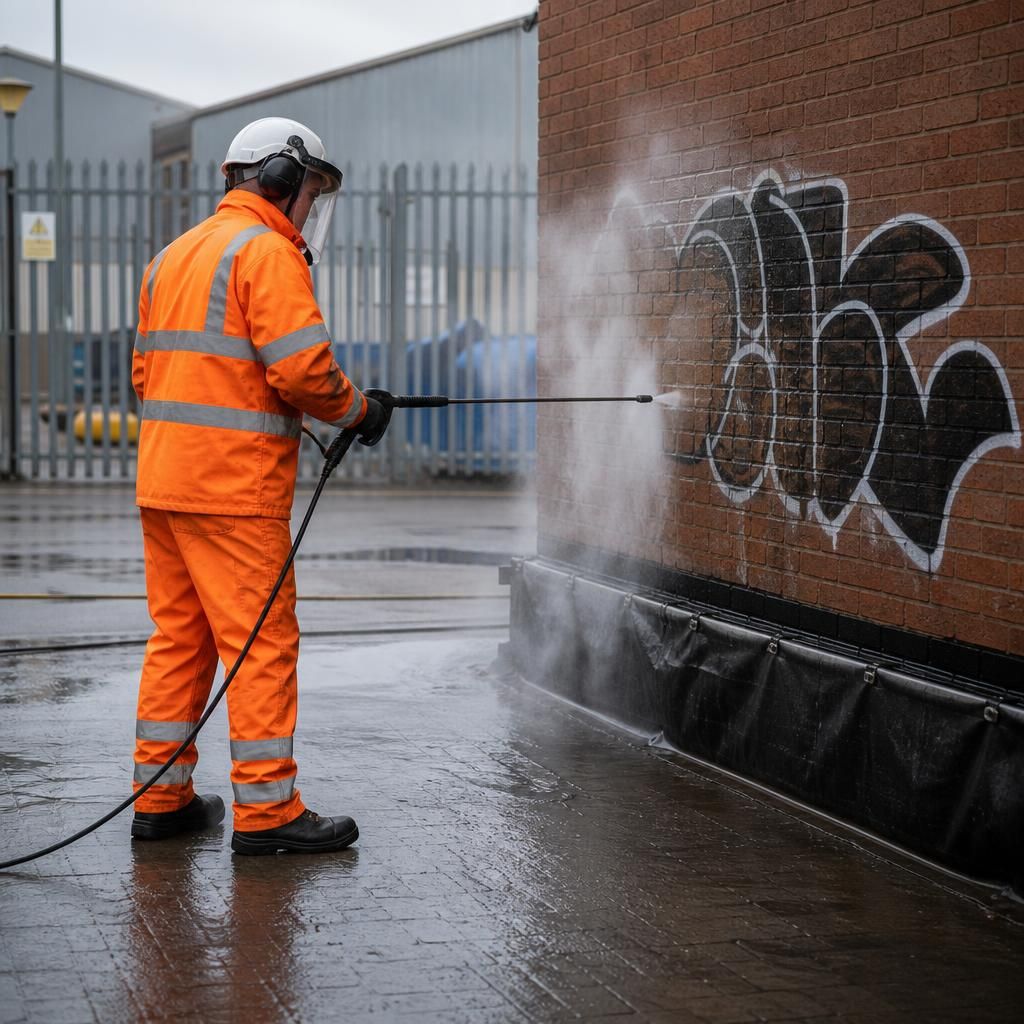
An environmentally friendly graffiti removal service prevents contaminated water, paint fragments and cleaning products from entering drains, soil or nearby watercourses. Using a low-toxicity product is not enough if the resulting runoff is allowed to escape from the work area.
Before cleaning begins, the contractor should identify drainage routes and use suitable controls such as drain covers, bunding, barriers, absorbent materials and wet vacuums. Where water is used, it should be collected and handled through an appropriate treatment or disposal route rather than simply diluted and discharged. Dry removal methods may be more suitable where wastewater cannot be safely contained.
Businesses should ask for the proposed runoff controls, waste arrangements and completion records as part of the method statement. This provides practical evidence that the graffiti removal process protects the surrounding environment as well as the cleaned surface.