
How do you ensure that graffiti removal techniques do not compromise the structural integrity of the surfaces?
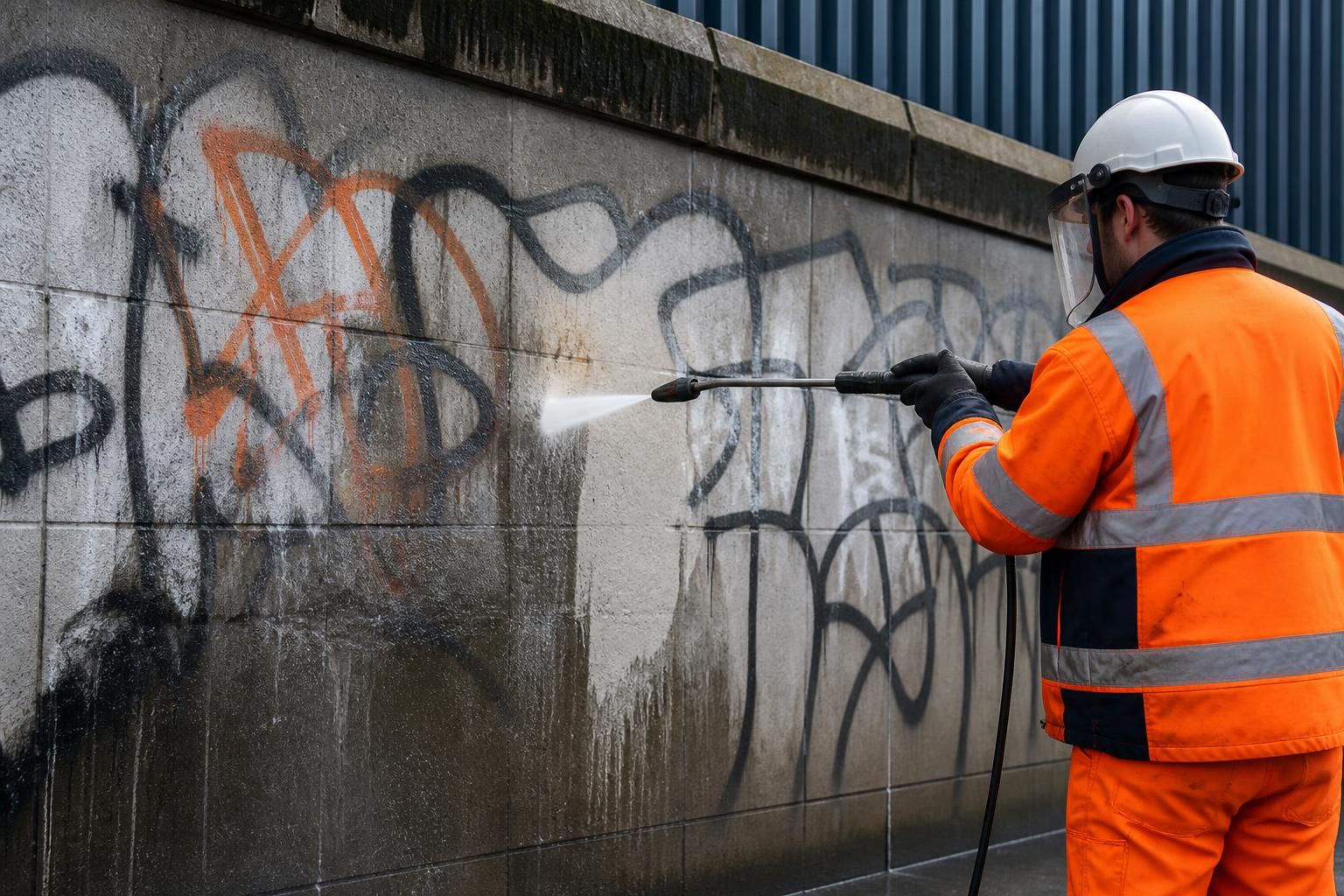
We protect structural integrity by assessing the surface, graffiti medium and substrate before selecting the least aggressive effective method. Controlled pressure, suitable cleaning agents, low-temperature steam and test patches help remove the graffiti without eroding masonry, lifting coatings, damaging joints or affecting vulnerable finishes.
We protect structural integrity by assessing the substrate, existing finish and graffiti medium before selecting the least aggressive effective removal method. Controlled pressure, suitable cleaning agents, low-temperature steam and localised test patches help remove paint without eroding masonry, opening joints, lifting coatings or weakening vulnerable surfaces.
Before work starts, we inspect the affected area and identify the material beneath the graffiti. Brick, stone, concrete, render, metal, glass, painted surfaces and cladding each respond differently to pressure, heat and chemicals. We also look for existing defects such as cracks, friable mortar, spalling, delamination, failed coatings and water ingress. These conditions determine whether cleaning can proceed normally, needs additional controls or should be referred for specialist conservation advice.
The graffiti itself is assessed because spray paint, marker ink, adhesive residue and bitumen-based products do not respond to the same treatment. Where practical, we establish whether the marking is sitting on the surface or has penetrated a porous substrate. This avoids applying an unnecessarily strong chemical or abrasive process that could remove the surrounding finish along with the graffiti.
- Test patches: We test the proposed method in an inconspicuous area and inspect the result after cleaning and drying. The test checks for colour change, etching, staining, coating loss, mortar damage and changes in texture.
- Pressure control: Water pressure, flow rate, nozzle type and working distance are adjusted to suit the substrate. We avoid concentrating force on damaged masonry, open joints, edges, seals and architectural details.
- Suitable cleaning agents: The chemical is selected for the graffiti and surface rather than using a single product for every job. Dwell time is controlled, and the area is thoroughly rinsed or neutralised where required to prevent prolonged chemical contact.
- Steam cleaning: Low-temperature steam can be useful on sensitive or detailed surfaces because it applies heat and moisture with limited mechanical force. It is still controlled carefully around coatings, timber, sealants and vulnerable joints.
- Mechanical methods: Abrasive cleaning is only considered where the substrate can tolerate it. We use the least aggressive option available and avoid removing sound material simply to achieve a uniformly stripped appearance.
Particular care is required on porous brick and stone. Excessive pressure can enlarge pores, dislodge the face of the brick or wash out mortar joints. Strong chemicals can also draw pigment deeper into the substrate or create light and dark patches. We work progressively, removing softened graffiti in stages rather than repeatedly attacking the surface with high pressure.
Coated façades, painted render, powder-coated cladding and previously treated walls are assessed for adhesion before cleaning. Graffiti removal can expose a weak or poorly bonded coating that was already failing. Where the finish is unstable, we record the condition, limit the treatment to what can be removed safely and advise on localised repair or recoating rather than forcing the cleaning process beyond the surface’s tolerance.
We also manage water and cleaning residues to protect the building during the work. Openings, vents, electrical points and sensitive fixtures are protected, and runoff is controlled so that contaminated water does not migrate into joints, drainage systems or adjacent materials. The cleaned area is inspected for residue, staining and moisture-related issues before protective coverings are removed.
After removal, we compare the treated area with the surrounding surface and check joints, edges, coatings and details for any signs of damage. If a surface cannot be cleaned without an unacceptable risk to its fabric, we explain the limitation and recommend a safer alternative, such as localised repainting, coating repair or specialist conservation treatment. This measured approach preserves as much original material and finish as possible while achieving a clean, maintainable result.
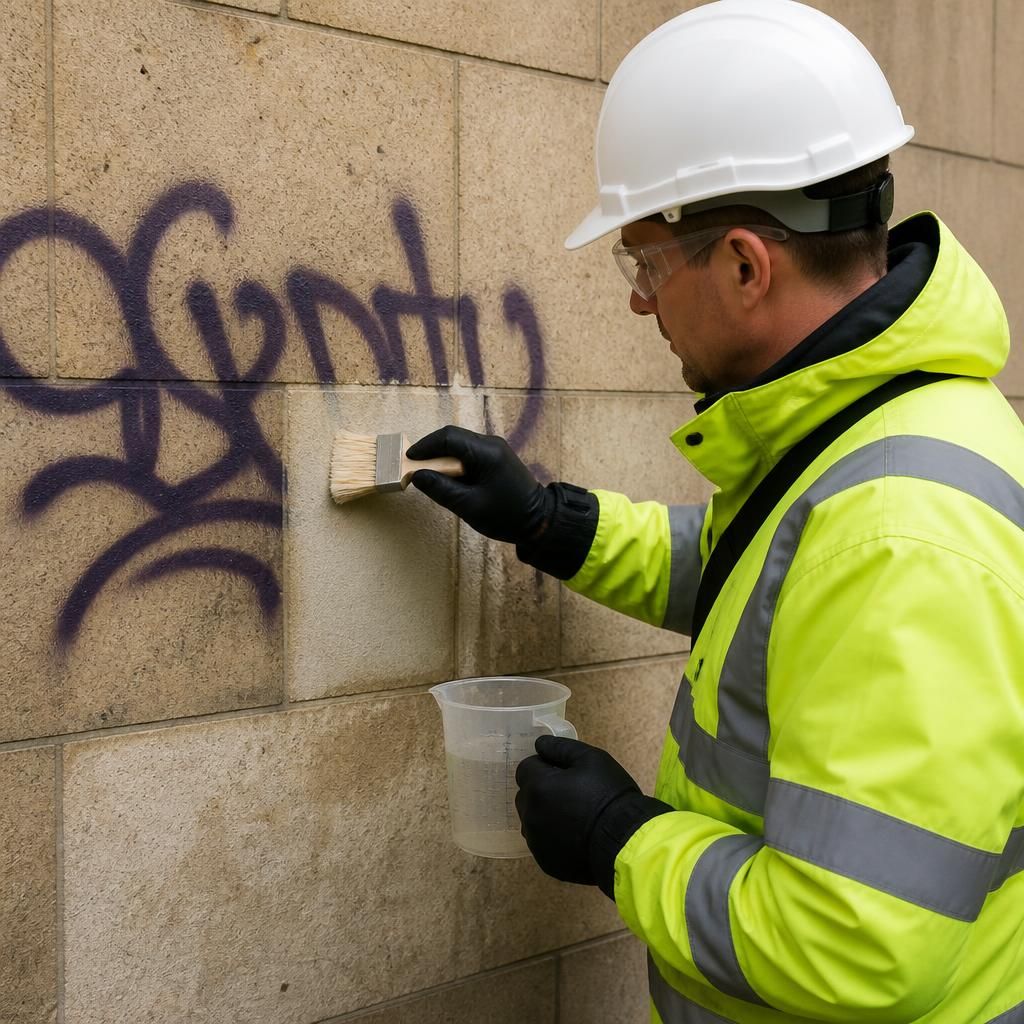
A localised test patch is the main safeguard against damage during graffiti removal. Before treating the full area, we apply the proposed method to an inconspicuous section and assess the surface once it has been cleaned and dried. This confirms whether the pressure, steam or cleaning agent removes the graffiti without causing etching, colour change, staining, coating loss or mortar damage.
The result also helps us refine the working method. We can adjust pressure, nozzle distance, dwell time, steam intensity or agitation before progressing across the façade. If the test shows that cleaning could affect the substrate or an existing finish, we stop and recommend a safer option, such as localised repainting, coating repair or specialist conservation treatment. This controlled approach removes graffiti while preserving sound masonry, joints and surface finishes.
Protect Your Surfaces with Expert Graffiti Removal
If you need graffiti removed without risking damage to the underlying surface, contact Encanto Exterior Cleaning to arrange a site assessment. We can review the substrate, existing finish and graffiti type before recommending a controlled removal method.