
How do you ensure environmental responsibility during graffiti removal?
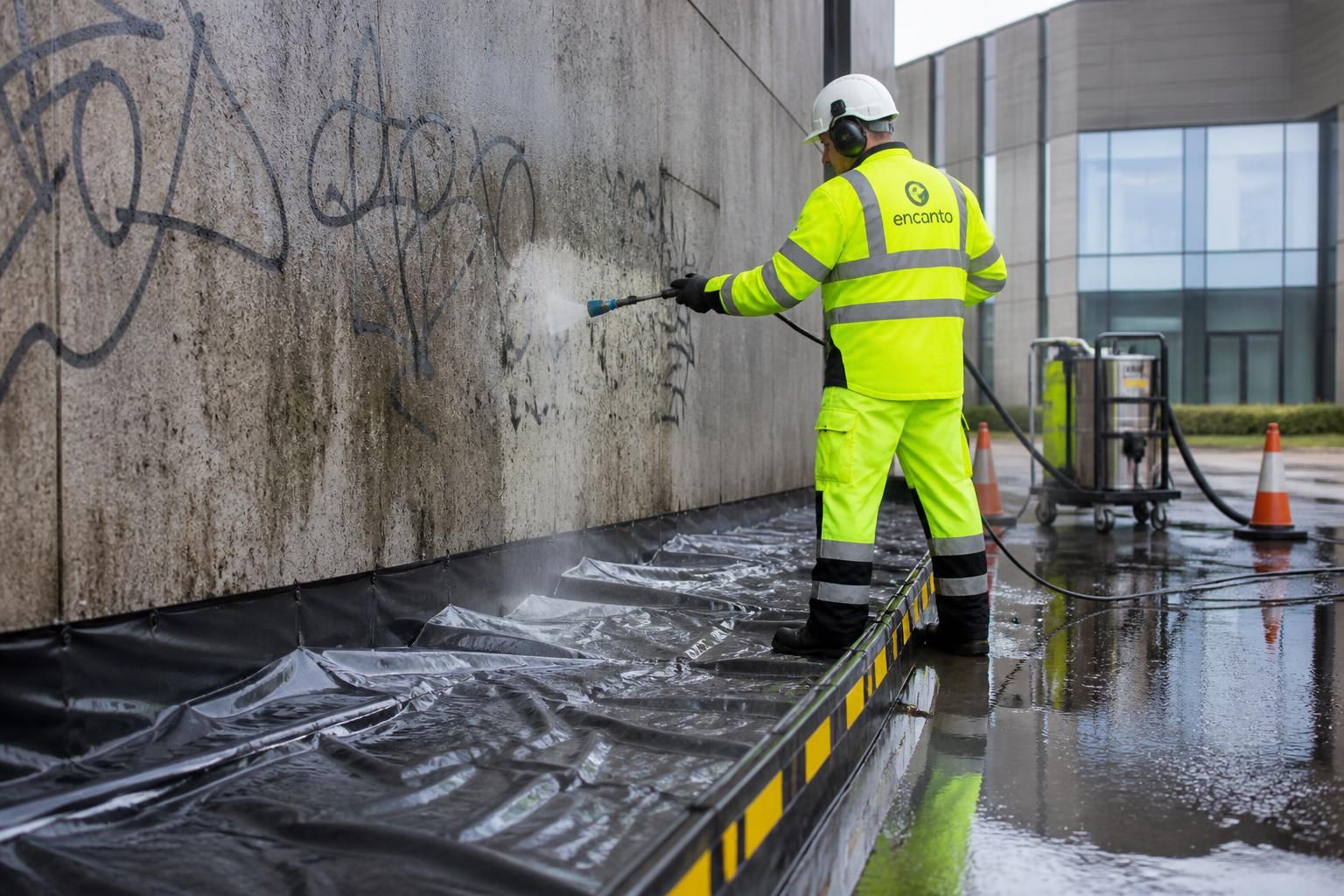
We ensure environmental responsibility during graffiti removal by selecting the least aggressive effective method, limiting chemical and water use, and protecting nearby soil, drains, vegetation and watercourses from contamination. Removed residue and wastewater are contained, recovered where practicable and disposed of in line with relevant UK waste and environmental requirements.
Environmental responsibility during graffiti removal means removing the paint effectively while preventing avoidable harm to the surface, surrounding environment and people nearby. We achieve this by choosing the least aggressive effective treatment, using only the water and cleaning product required, controlling run-off and debris, and managing all waste in accordance with relevant UK environmental and waste-handling requirements.
Before work begins, we assess the graffiti, substrate and surrounding area. The type and age of the paint, the porosity and condition of the surface, and the proximity of drains, planting, soil, watercourses or occupied areas all influence the method selected. This assessment helps us avoid unnecessary chemical use, excessive pressure and repeated cleaning attempts that could increase water consumption or damage the substrate.
Where appropriate, we begin with mechanical or low-impact techniques, such as controlled pressure washing, steam cleaning or specialist abrasive systems. Chemicals are used only where they are necessary for the coating being removed and compatible with the surface. Product instructions, safety data and site conditions are considered before application, with dwell times and quantities controlled to prevent overuse. We do not assume that a stronger product or higher pressure is the most responsible option.
Water management is an important part of the process. We use controlled application rather than allowing water to spread across the site, and we take practical steps to prevent contaminated wash water entering surface-water drains, soil or nearby watercourses. Drain protection, temporary bunding, collection equipment or wet-vacuum recovery may be used where the site and cleaning method require it. The appropriate controls depend on the location, surface, drainage layout and volume of residue involved.
Paint flakes, sludge and other removed material are collected rather than left to disperse. Wastewater and solid waste are assessed and handled through suitable disposal arrangements, with hazardous characteristics considered where relevant. We do not pour contaminated water into drains or onto land. Where waste is removed from site, it is managed using appropriate documentation and authorised waste arrangements applicable to the work.
We also protect features that are not being cleaned. Nearby vegetation, planters, vehicle areas, entrances, signage, lighting and drainage points can be screened, covered or isolated during the work. Any temporary protection is removed carefully afterwards, and the area is checked for residue, fragments and pooled water. This is particularly important on public-facing sites and around schools, public buildings, transport areas and landscaped commercial premises.
Surface preservation is part of environmental responsibility. Unnecessary damage can lead to additional repairs, replacement materials and repeat work, all of which increase resource use. We therefore test the proposed approach in a discreet area where practicable, monitor the result and adjust pressure, temperature, product concentration and technique as needed. Historic masonry, painted finishes, coated cladding and weathered surfaces may require a more conservative treatment.
Our operatives follow site-specific risk assessments and method statements, including controls relating to chemical handling, water run-off, waste, access equipment and public or employee protection. Suitable personal protective equipment and exclusion zones help prevent accidental contamination and ensure that the work is carried out in a controlled manner. On larger projects, we coordinate these controls with the client’s facilities, environmental and health and safety requirements.
After completion, we inspect the cleaned area and surrounding ground, drains and access routes. Any remaining residue or waste is dealt with before the site is handed back. For recurring graffiti, a planned maintenance arrangement can also be more environmentally responsible than repeated reactive visits, because early treatment is often less intensive and can reduce the amount of product, water and equipment time required.
Environmental controls are confirmed against the particular site rather than applied as a fixed procedure. When arranging graffiti removal, it is helpful to identify drainage points, nearby planting or water features, sensitive surfaces, site access restrictions and any client-specific waste requirements in advance. This allows the cleaning method and containment measures to be planned accurately before work starts.
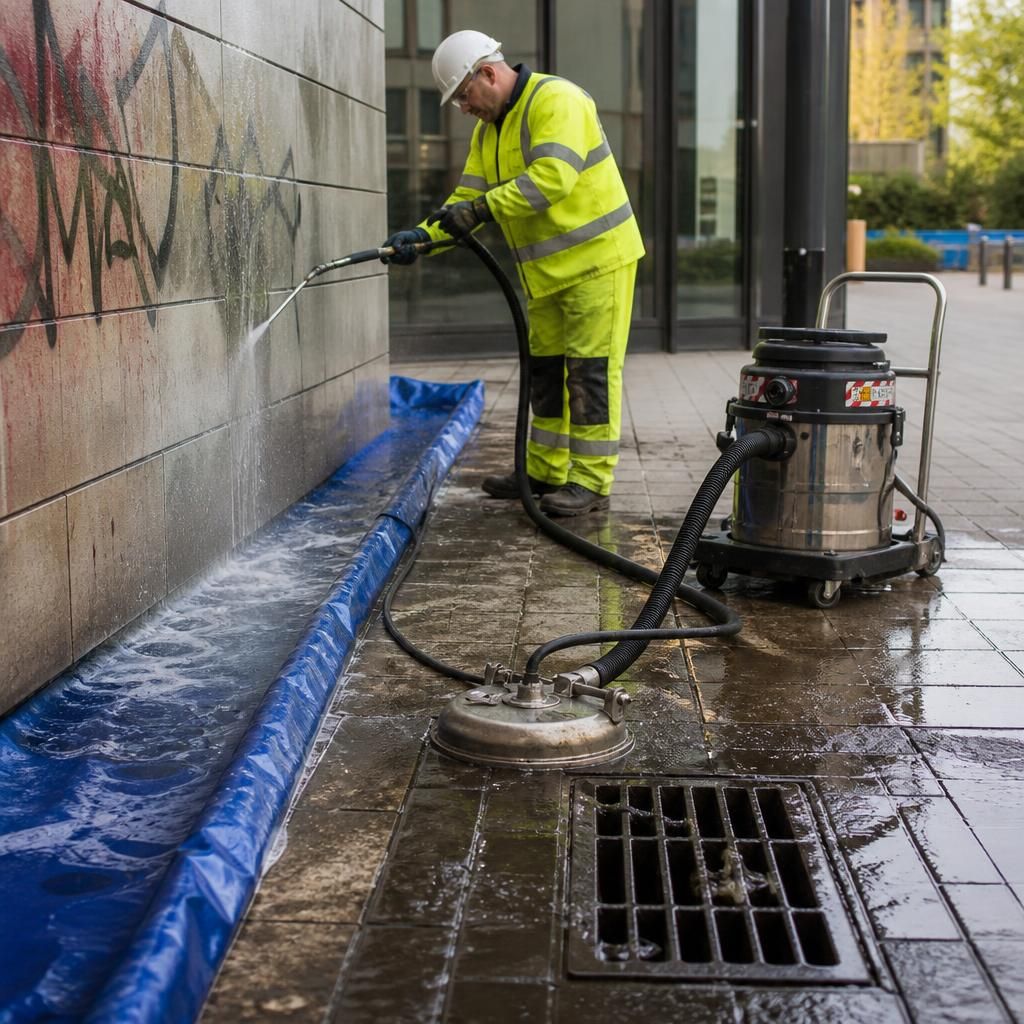
Controlling contaminated wash water is a central part of environmentally responsible graffiti removal. Paint residues, cleaning products and fine particles must not be allowed to flow into surface-water drains, soil, planted areas or nearby watercourses.
Before cleaning starts, we identify drainage points and assess the direction water is likely to travel. Where necessary, we use drain protection, temporary bunding, controlled water application and wet-vacuum recovery to contain or collect the run-off. Paint flakes, sludge and other solid residues are collected rather than brushed into surrounding areas.
Collected wastewater and solid waste are then assessed and handled through suitable disposal arrangements, with hazardous characteristics considered where relevant. Once cleaning is complete, we check the work area, drainage points and surrounding ground for residue, pooled water or displaced debris before the site is handed back.