
How do you assess the type of graffiti to determine the most effective removal method?
We assess the graffiti by identifying the paint or marker type, how long it has bonded, the condition and porosity of the surface, and its surrounding environment. This determines whether low-pressure washing, steam cleaning, a suitable chemical remover, or a controlled combination will remove it effectively without damaging the substrate.
The most effective graffiti removal method is selected after assessing both the graffiti medium and the surface beneath it. We examine what has been applied, how firmly it has bonded, the age and condition of the affected area, and the surrounding risks. This allows us to choose between steam cleaning, controlled low-pressure washing, a compatible chemical remover, or a carefully managed combination without causing unnecessary damage to the substrate.
We begin by identifying the graffiti medium. Spray paint, marker ink, masonry paint, adhesive residue and bituminous products respond differently to cleaning. Some paints are solvent-based and have penetrated into porous materials, while others remain closer to the surface. Marker inks can spread if the wrong chemical or excessive water pressure is used. Where the material cannot be identified visually, we use controlled testing rather than assuming that one product will suit every mark.
The condition and age of the graffiti also influence the assessment. Fresh paint may be easier to remove before it fully cures or weathers into the surface. Older graffiti can become more firmly bonded, while repeated cleaning or exposure to sunlight and rain may have altered its appearance. We also check whether previous removal attempts have left staining, a shadow, a chemical residue or an area of altered surface texture. These details affect the treatment sequence and the level of control required.
The substrate is assessed as carefully as the graffiti itself. Brick, concrete, render, natural stone, metal, painted surfaces, glass, cladding and external paving all have different levels of hardness, porosity and chemical resistance. A dense, sound surface may tolerate a different approach from soft brick, weathered render or a delicate historic façade. We look for open joints, friable material, cracks, flaking coatings, corrosion, previous repairs and areas where water could enter the building.
Porosity is particularly important. On porous brick, stone or concrete, paint can travel below the visible surface, so aggressive pressure may remove the mark at the expense of the face of the material. On a painted wall or coated panel, the graffiti and the original finish may react similarly to a cleaning chemical, making spot testing essential. We also consider whether the surface has a protective treatment, as some chemicals, heat or pressure can reduce its performance.
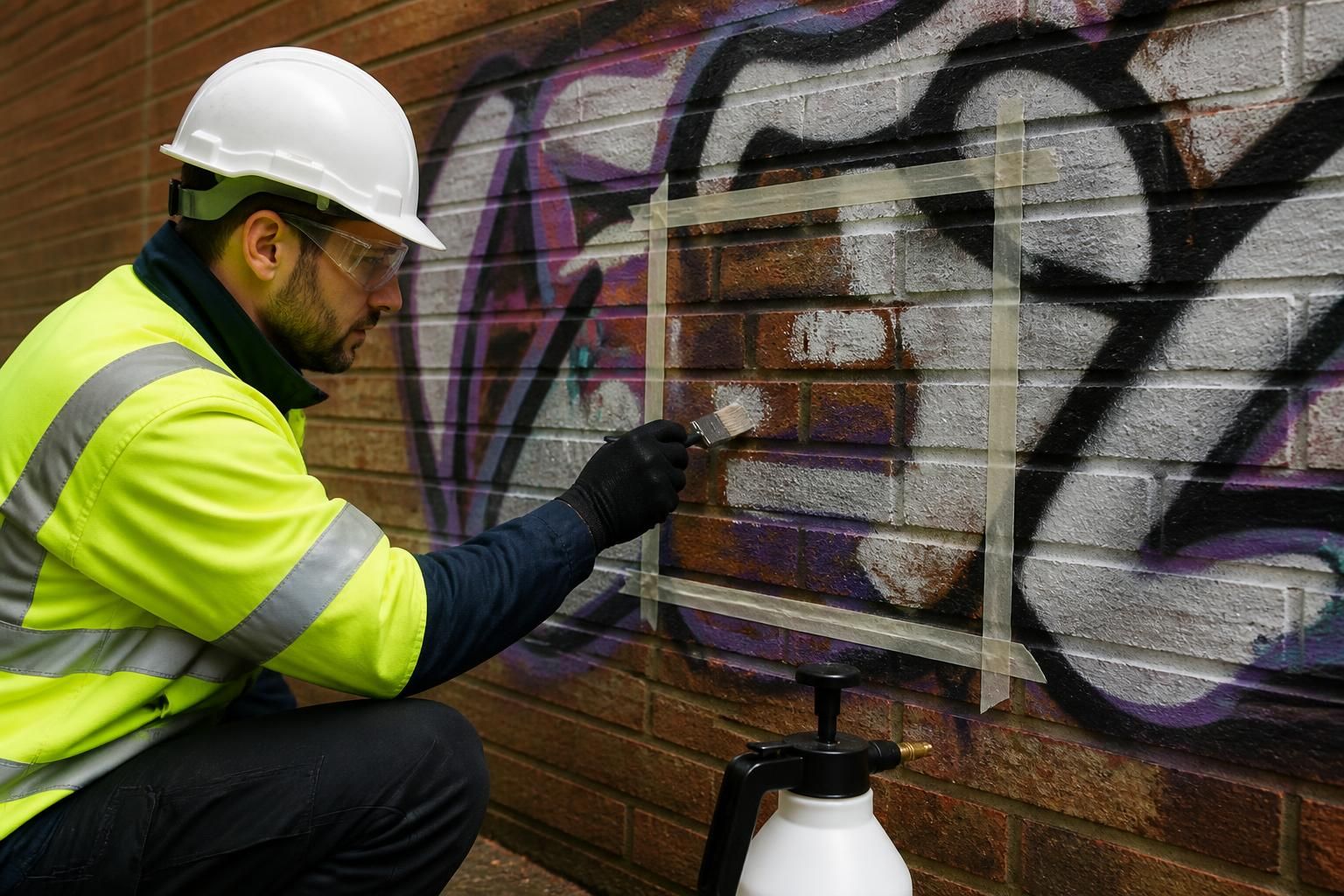
A small test area is normally used to confirm the safest effective approach. The test allows us to compare the response to a suitable remover, steam, water pressure and dwell time while checking for colour change, etching, surface loss, staining or the spreading of pigment. The result is not judged solely by whether the graffiti disappears. We also assess the condition of the surrounding finish and whether the cleaned area blends acceptably with the rest of the surface.
Our method may then involve:
- Low-pressure washing where the graffiti is sufficiently loose and the substrate can safely accept controlled water cleaning.
- Steam cleaning where heat can soften the paint or residue while reducing the need for high mechanical pressure.
- A compatible graffiti remover where the coating needs to be broken down before rinsing or gentle agitation.
- A controlled combination of chemical treatment, dwell time, agitation, steam or low-pressure rinsing when a single method would be less effective or more damaging.
- Specialist stain treatment or poulticing where pigment has penetrated deeply into a porous or sensitive material and surface cleaning alone is unlikely to provide a consistent result.
Surrounding conditions are included in the assessment. We identify nearby doors, windows, vehicles, planted areas, drainage points, electrical equipment, public routes and occupied premises that need protection. Run-off controls, collection and disposal requirements can influence which cleaning products and rinsing methods are appropriate. On commercial, public or industrial sites, we also consider access, pedestrian safety, working hours and the need to keep adjacent areas operational.
Historic or delicate surfaces require a particularly conservative approach. The objective is not simply to remove every visible trace at maximum speed; it is to remove the graffiti while retaining the original texture, coating, mortar joints and weathered character of the building. Where complete removal would risk permanent damage, we explain the limitation and agree a treatment that provides the best balance between appearance and preservation.
After cleaning, we inspect the treated area for remaining shadowing, changes in colour, surface damage and residue. If the first treatment has not achieved a suitable result, the next step is based on the observed response rather than an automatic increase in pressure or chemical strength. This assessment-led process helps ensure that graffiti is removed effectively while protecting the surface, controlling environmental risks and reducing the likelihood of avoidable repeat work.
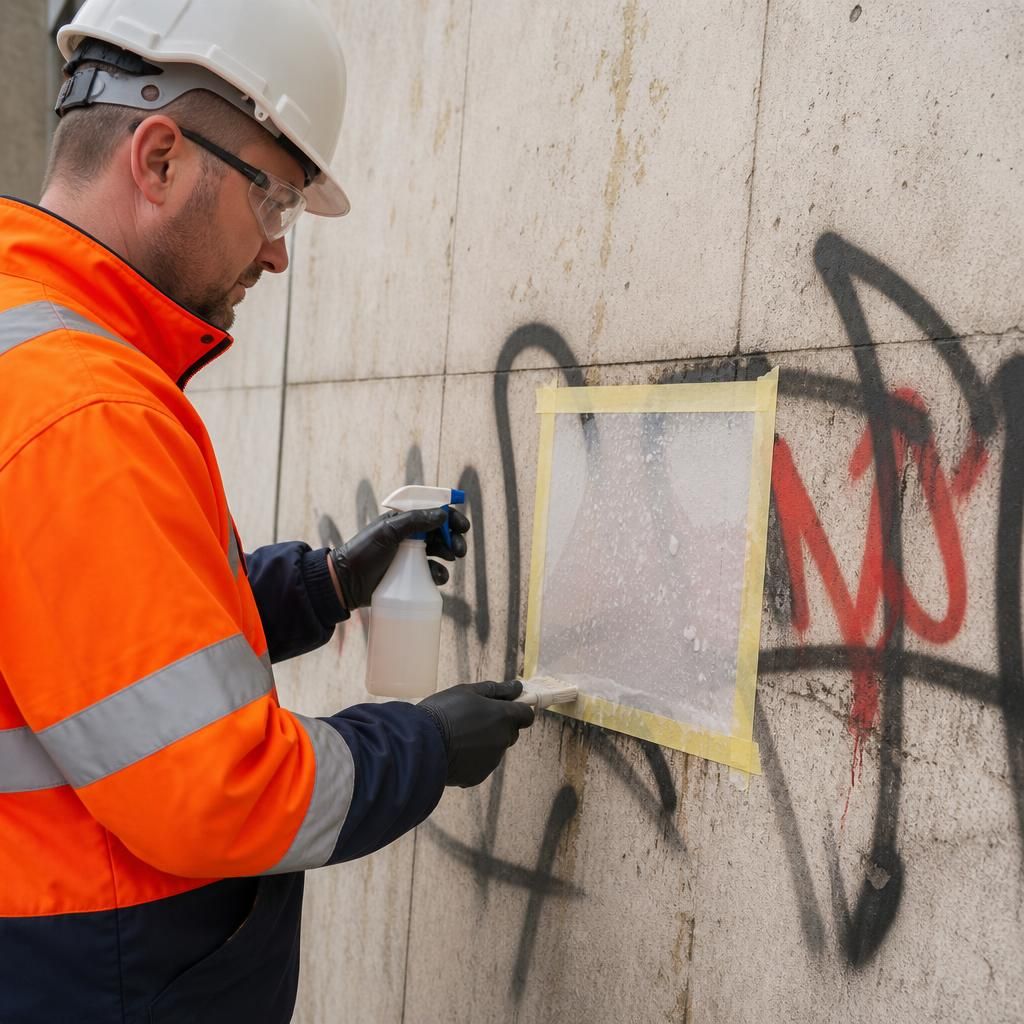
A controlled test patch is used to confirm the safest effective graffiti removal method before wider cleaning begins. We apply a suitable treatment to a small, discreet area and assess how the graffiti and underlying surface respond.
The test helps identify whether steam, low-pressure rinsing, a compatible remover or a combination is appropriate. We check for pigment spreading, colour change, etching, staining, surface loss and damage to protective coatings. The result also shows whether the graffiti has penetrated the substrate, which is particularly important on porous brick, stone, concrete and render.
Cleaning proceeds only when the test provides an acceptable balance between removal and surface protection. If the graffiti does not respond as expected, we adjust the treatment based on the observed reaction rather than increasing pressure or chemical strength automatically.