
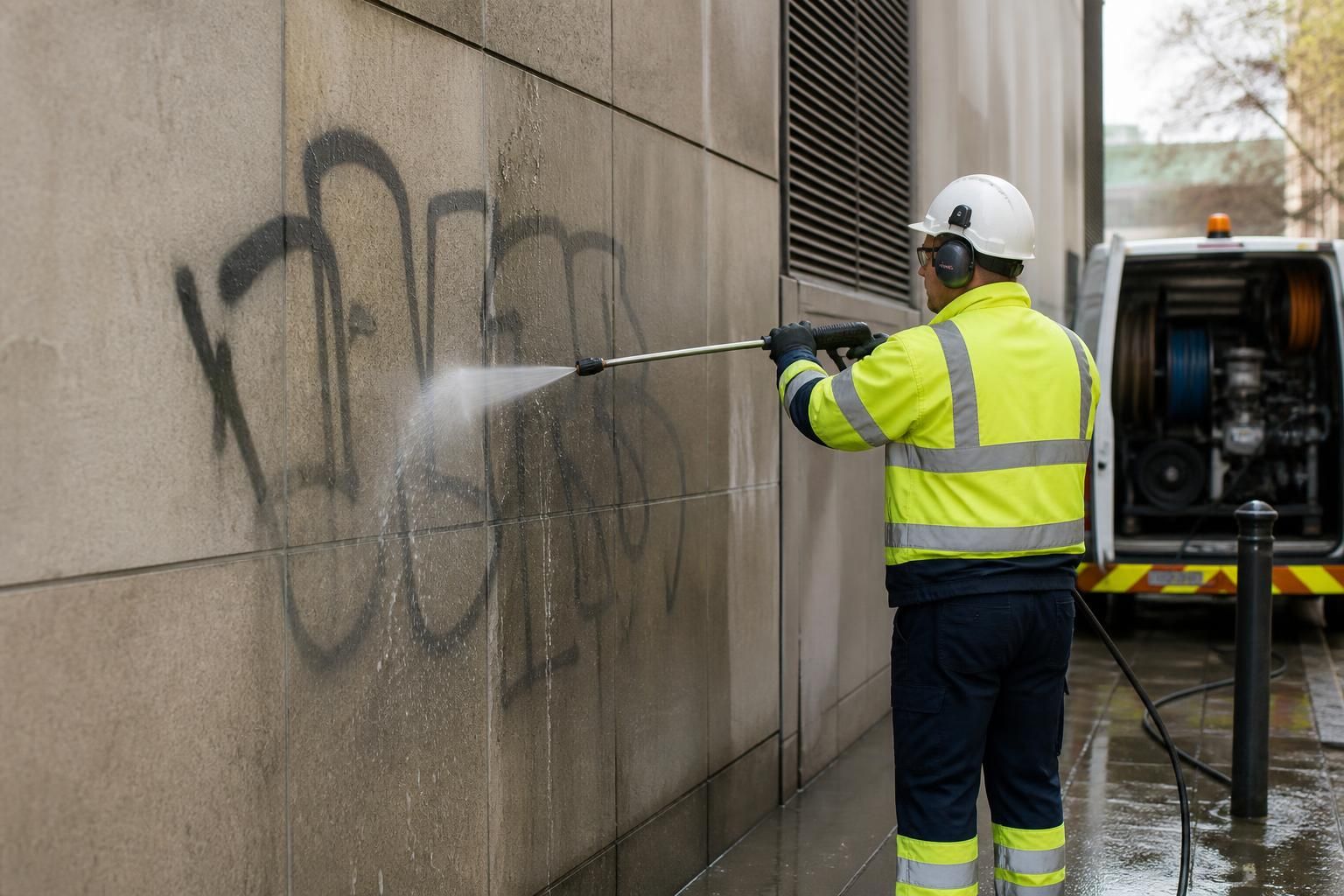
How can regular maintenance contracts prevent graffiti recurrence on commercial properties? Regular maintenance contracts deter repeat vandalism through scheduled inspections, prompt graffiti removal and early treatment of vulnerable surfaces, helping commercial properties remain clean, presentable and easier to maintain.
Regular maintenance contracts help prevent graffiti recurrence by combining scheduled inspections, prompt removal and early treatment of vulnerable surfaces. This reduces the time graffiti remains visible, deters repeat vandalism and keeps commercial properties clean, presentable and easier to maintain.
Regular maintenance contracts help prevent graffiti recurrence by ensuring that new markings are identified and removed promptly, vulnerable areas are inspected routinely and any underlying site risks are addressed. They cannot guarantee that further vandalism will not occur, but they reduce the time graffiti remains visible and make a property less likely to become an established target.
Graffiti can attract further graffiti when existing markings remain in place. A prompt removal response interrupts this cycle before a wall, façade, boundary or service area becomes associated with repeated vandalism. Maintenance agreements provide an agreed process for reporting, attending to and treating new markings, rather than relying on an occasional clean when the problem has already spread.
Key ways a maintenance contract reduces recurrence include:
- Scheduled inspections: Planned visits identify fresh graffiti, attempted markings, paint drips, stickers and damage to previously treated areas. Inspections can cover façades, shutters, doors, signage, car parks, plant enclosures, boundary walls and less visible service areas.
- Prompt removal: Removing graffiti while it is still recent can prevent it becoming a permanent visual feature and may allow a more controlled treatment approach. Early action is particularly important on porous brick, stone, concrete and unsealed render, where paint can penetrate the surface.
- Consistent presentation: A clean and well-maintained site gives staff, visitors and contractors a clear standard to report. It also prevents isolated areas of neglect from becoming overlooked locations for repeat vandalism.
- Early identification of vulnerable points: Recurring marks may indicate poor lighting, concealed access, unsecured gates, exposed shutters or a boundary that is easy to reach. Recording these patterns allows the property team to consider practical changes alongside cleaning.
- Protective surface treatment: Where suitable, an anti-graffiti coating can make future markings easier to remove and reduce the risk of repeated cleaning damaging the substrate. The coating must be compatible with the surface and applied after suitable preparation; it is not appropriate for every façade or historic material.
A contract also creates a site-specific cleaning plan. Before work begins, the surface type, previous coatings, age, condition and likely graffiti materials should be considered. Spray paint, marker ink, adhesive residue and etching require different approaches. Pressure washing, steam cleaning, chemical treatment or a combination of methods may be selected according to the substrate and the severity of the marking. Using the least aggressive effective method helps preserve brick, stone, cladding, render, painted surfaces and architectural details.
For commercial and industrial properties, the agreement should define which areas are included, how incidents are reported, the expected response arrangements, access requirements and any restrictions around occupied buildings or public spaces. Clear procedures are particularly useful for managed estates, retail environments, transport-related sites, construction premises and public-sector properties where several people may need to report or authorise remedial work.
Records from each visit provide useful information about recurrence. A suitable service record can note the location, surface, type of marking, treatment used, condition of the area and any recommendation for follow-up work. Over time, this helps identify repeat hotspots and distinguish between isolated incidents and a recurring access or security issue. It also supports budgeting, planned maintenance and communication between property managers, facilities teams and cleaning contractors.
Regular removal should be combined with sensible prevention measures. Depending on the site, these may include improving lighting, reducing concealed areas, securing access points, repairing damaged fencing, repositioning signs or protecting suitable surfaces with a sacrificial coating. Cleaning alone cannot address every cause of vandalism, so recommendations should be proportionate to the property and based on observed conditions rather than assumptions.
Environmental and safety controls are also part of responsible ongoing maintenance. Work should be planned to protect pedestrians, vehicles, landscaping and drainage systems. Run-off, removed paint residues and cleaning products must be managed appropriately, while access equipment and traffic controls should be selected for the site conditions. On delicate or historic surfaces, testing and a controlled trial area can help confirm that the proposed method will remove the graffiti without causing unnecessary alteration.
The most effective contract is therefore a preventative maintenance arrangement rather than an open-ended reactive cleaning service. It combines inspection, rapid reporting, technically appropriate removal, surface protection where suitable, documented recommendations and periodic review. This approach does not eliminate the possibility of further graffiti, but it limits visibility, reduces avoidable surface damage and helps commercial properties remain easier to manage over the long term.
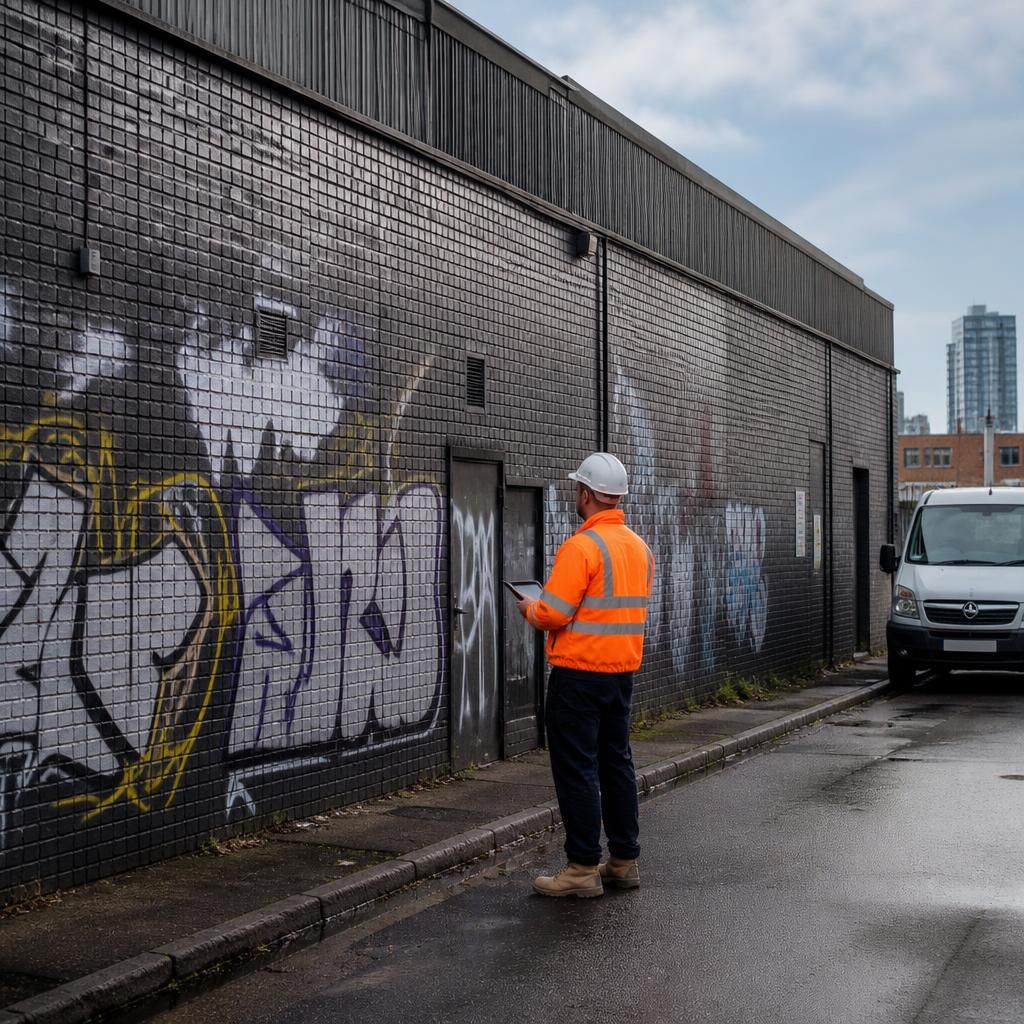
Regular maintenance contracts help prevent graffiti recurrence by ensuring fresh markings are identified and removed before they become an established feature of the property. Prompt treatment reduces the time graffiti remains visible, interrupts repeat tagging and helps prevent paint from penetrating porous brick, stone, concrete or unsealed render.
Scheduled inspections and agreed reporting procedures mean that façades, shutters, service areas, boundary walls and other vulnerable locations can be checked consistently. Each incident can also be recorded by location, surface and marking type, helping identify repeat hotspots and any access, lighting or security issues that may need attention alongside the cleaning.
Arrange a Regular Graffiti Maintenance Contract
Arrange a regular graffiti maintenance contract with Encanto Exterior Cleaning to keep your commercial property monitored, treated promptly and easier to manage. Contact our team to discuss scheduled inspections, response arrangements and surface protection options.