
What steps can be taken to prepare a brick surface for graffiti removal effectively?
Prepare a brick surface for graffiti removal by inspecting and documenting its condition, identifying the brick and mortar type, removing loose dirt and debris, and protecting nearby surfaces, plants and drainage points. Carry out a small test patch with the proposed cleaning method to confirm it removes the graffiti without eroding the brick, damaging the mortar or spreading the stain.
Effective graffiti removal from brick begins with careful preparation. The surface should be inspected, documented and tested before cleaning so the chosen method removes the paint without stripping the brick face, eroding mortar joints, spreading the stain or creating avoidable water and run-off problems.
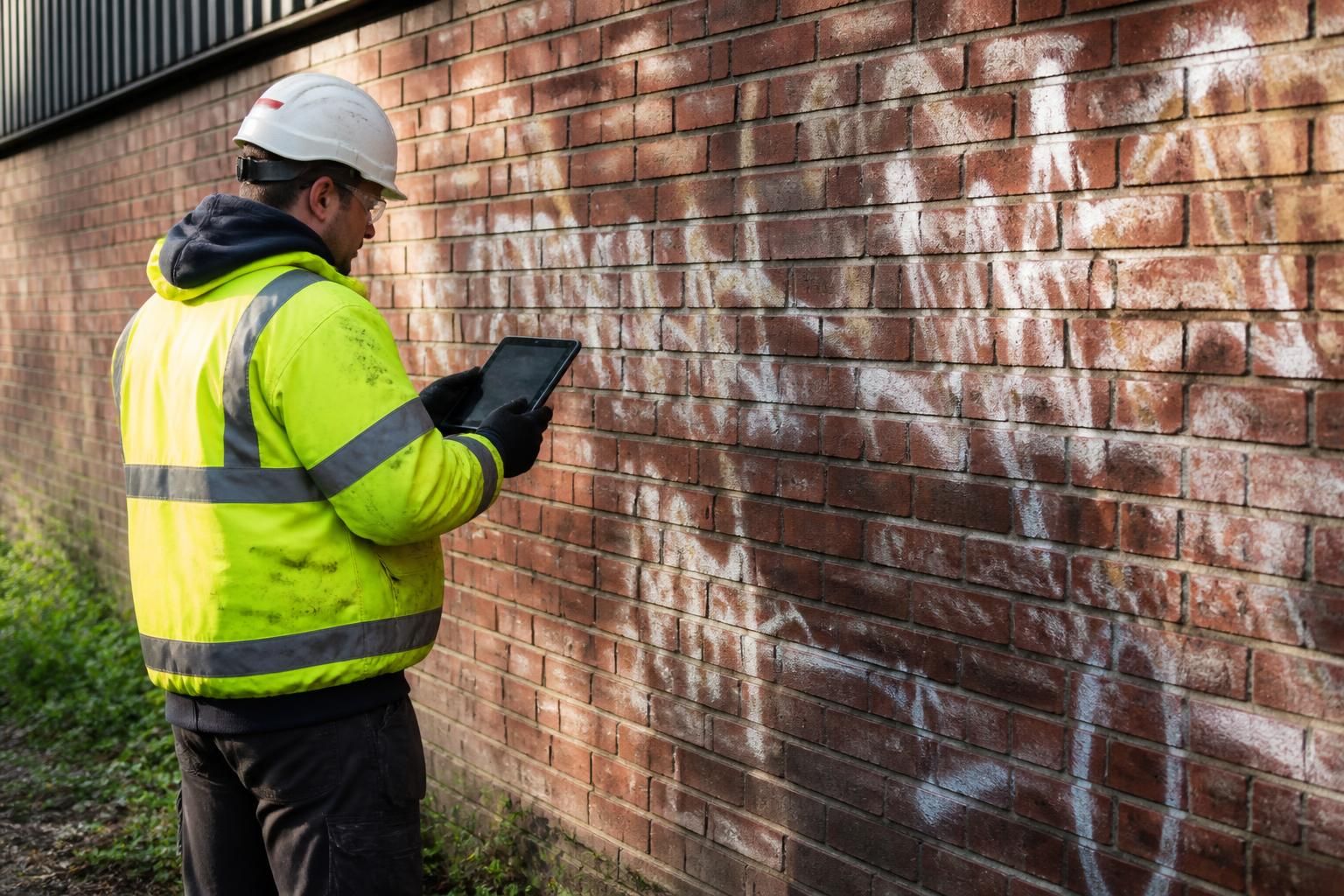
- Inspect the brickwork and graffiti. Record the location, size and apparent age of the graffiti, and photograph the affected areas before work starts. Check for cracked or spalled bricks, open mortar joints, previous coatings, damp patches, salts, biological growth and signs of structural movement. These defects may affect the cleaning method or need attention separately.
- Identify the surface materials. Brick varies in hardness, porosity, finish and condition. Older or softer bricks and weathered mortar can be damaged by aggressive pressure or abrasive treatments. Establish whether the wall includes painted sections, render, stone, sealants or repointed areas, as each material may respond differently to water, steam or cleaning agents.
- Assess the graffiti coating. Identify, where possible, whether the marking is spray paint, marker ink, adhesive residue or another coating. Consider how deeply it has penetrated the brick and whether previous removal attempts have driven pigment further into the pores. The age and composition of the graffiti will influence dwell time, agitation and the safest removal process.
- Remove loose surface contamination. Brush away loose dust, cobwebs, flaking material and other debris using a suitable soft brush. A gentle pre-rinse may be appropriate where it will not drive contaminants into the brick. This preparation helps the operative distinguish the graffiti from general soiling and prevents grit from causing unnecessary abrasion during cleaning.
- Protect surrounding areas. Cover or isolate doors, windows, vents, signage, electrical fittings, finished surfaces and vulnerable building details. Protect nearby plants and soil where cleaning products or contaminated water could reach them. Drainage points should be identified and protected or controlled so that paint residues and cleaning solutions are not discharged without suitable collection or treatment.
- Plan access and work controls. Confirm how the wall will be reached and whether access equipment, barriers or exclusion zones are required. Keep pedestrians, vehicles and building occupants away from the work area. Review the relevant risk assessment and method statement, and where chemicals are involved, follow the product safety data and applicable COSHH controls. Suitable personal protective equipment should be selected for the task rather than relied on as a substitute for safe planning.
- Choose a compatible cleaning approach. Select between low-pressure washing, steam cleaning, a suitable chemical treatment, controlled agitation or a combination of methods. High pressure is not automatically the most effective option on porous brick; it can open the surface, damage mortar and force pigment deeper into the wall. The least aggressive method capable of achieving the required result is generally the best starting point.
- Carry out a discreet test patch. Test the proposed method on an inconspicuous section that matches the affected brick and mortar. Check the result after the surface has dried, as staining and colour variation can be less apparent while the wall is wet. Look for loss of the brick face, mortar erosion, etching, colour change, staining migration and damage to adjacent materials. Adjust the pressure, temperature, product concentration, dwell time and agitation only within the safe limits established by the test.
- Confirm run-off and waste arrangements. Decide how contaminated water, paint residue and used absorbent materials will be contained, collected and disposed of before cleaning begins. Do not allow wash water to enter surface-water drains unless it is legally suitable to do so. The correct arrangements depend on the site, the cleaning products used and local drainage requirements.
- Agree the finish standard. Brick is porous, so a faint shadow or residual staining may remain even after careful treatment, particularly where the graffiti has weathered or penetrated deeply. Agree what can reasonably be achieved without damaging the masonry. Further treatment should only be considered if the test results show that it can be completed safely.
Once these steps are complete, clean from the least affected areas towards the main graffiti where practical, keep the process controlled and inspect the wall throughout. Thorough preparation reduces the risk of permanent brick and mortar damage, limits contamination beyond the work area and gives a clearer basis for deciding whether further treatment or protective measures are appropriate.
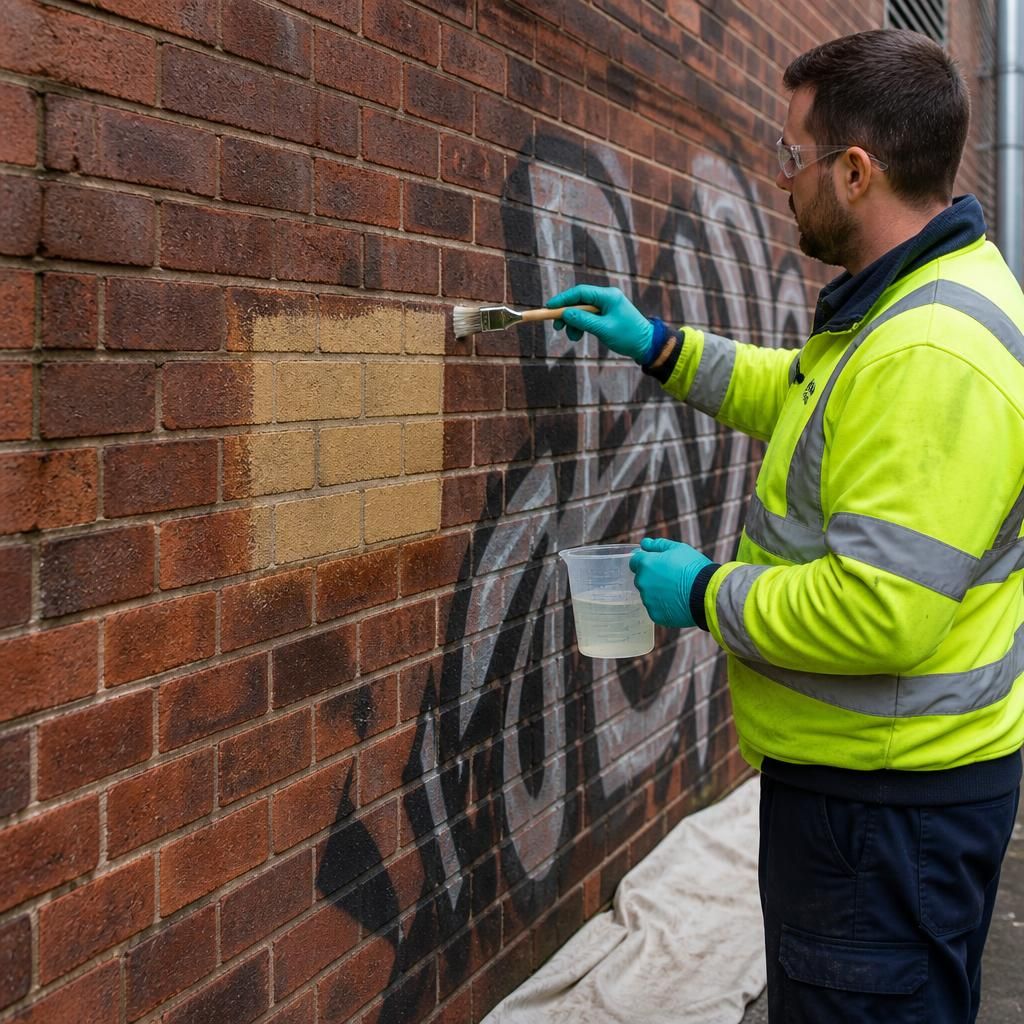
A discreet test patch is an essential preparation step before removing graffiti from brick. Apply the proposed method to an inconspicuous area containing the same brick, mortar and graffiti, then assess the result after the surface has dried.
Check for mortar erosion, loss of the brick face, colour changes, etching, staining migration or damage to nearby materials. Use the test to refine pressure, temperature, chemical concentration, dwell time and agitation. If the graffiti is removed only by risking damage to the masonry, the cleaning approach should be reassessed rather than applied across the full surface.