
What specialised equipment is required for effective graffiti removal from brick surfaces?
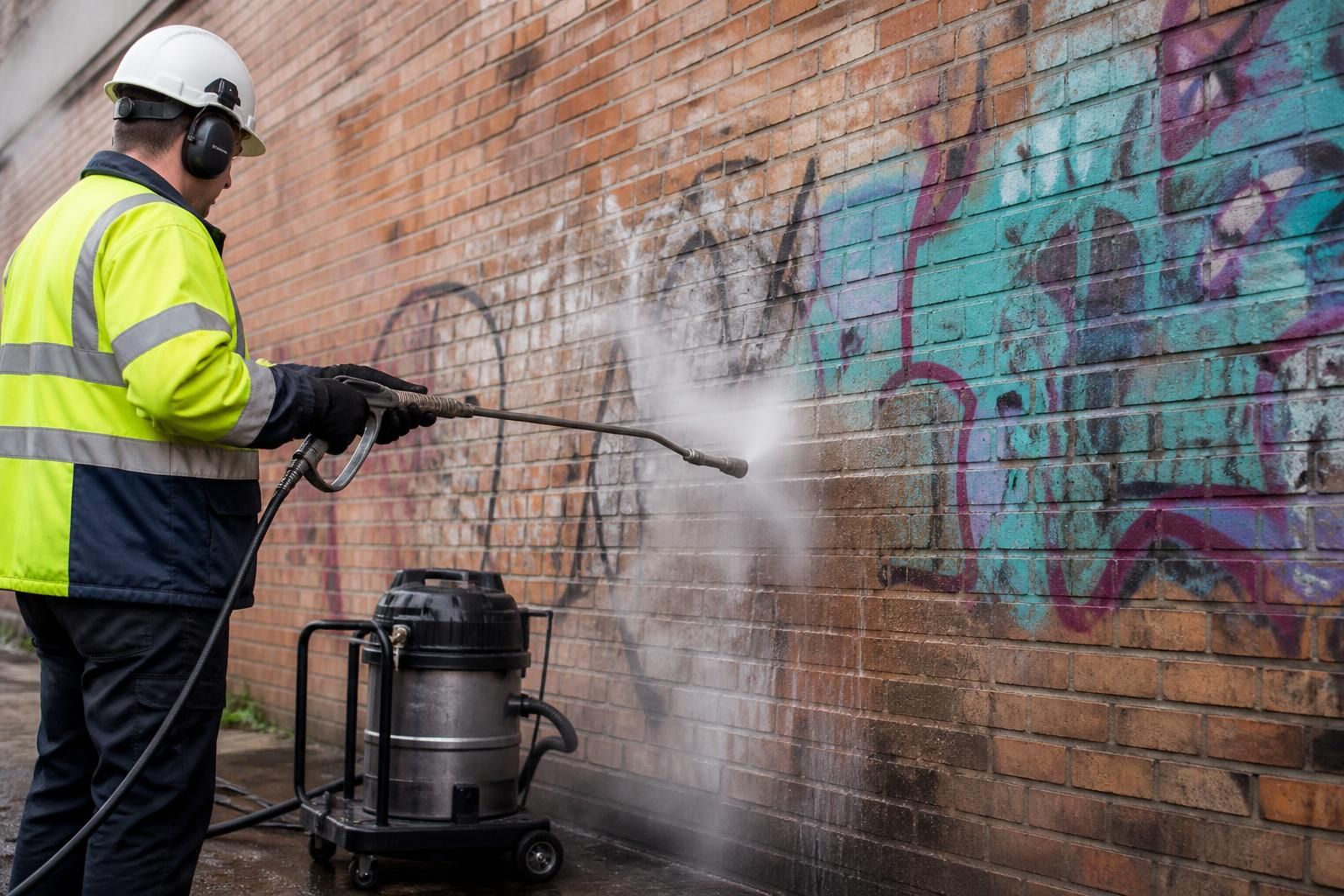
Effective graffiti removal from brick surfaces typically requires adjustable-pressure washing equipment, steam or hot-water cleaning systems, suitable low-abrasion media, and carefully selected chemical applicators. Professionals may also use wet vacuums, wastewater containment, access equipment and appropriate personal protective equipment to remove residues safely while limiting water penetration and damage to the brick.
Effective graffiti removal from brick usually requires a combination of adjustable-pressure washing equipment, hot-water or steam cleaning, suitable chemical application tools, low-abrasion media, and systems for capturing wastewater and residue. The equipment must be selected for the brick type, the paint or marker used, the age of the graffiti and the condition of the surrounding mortar, because excessive pressure or aggressive abrasion can permanently damage porous masonry.
Adjustable-pressure washing equipment is used to rinse away softened paint, cleaning products and loose residue. Professional systems allow the operator to control pressure, flow and spray pattern rather than applying one setting to every surface. A variable-pressure lance, appropriate nozzle and controlled working distance help reduce the risk of eroding the brick face, opening the pores or dislodging mortar. Rotary or turbo nozzles are not automatically suitable for brick; they can create visible surface marks if used too aggressively.
For delicate, weathered or highly porous brick, low-pressure washing may be combined with a suitable detergent or graffiti remover. The operator can apply the product, allow it to work for the specified dwell time and rinse gradually, checking the surface throughout the process. Pressure washing should generally be treated as a controlled rinsing method rather than the sole solution for bonded paint.
Hot-water pressure washers and steam-cleaning systems can improve the removal of many paints, inks, adhesive residues and oily contaminants. Heat helps soften coatings and can reduce the need for abrasive action or prolonged chemical treatment. Steam systems are useful where a lower volume of water is preferred, particularly on detailed brickwork or areas where water penetration needs to be limited. They must still be operated carefully, as heat can affect old coatings, friable mortar and previously repaired areas.
Chemical application equipment allows graffiti removers to be applied evenly and in a controlled way. Depending on the product, this may include pump sprayers, low-pressure applicators, foam applicators, brushes and non-abrasive pads. A foam application can help keep the product in contact with a vertical wall for longer, while brushes can work the cleaner into textured brick without relying on high pressure. Chemical selection should be based on the coating and substrate, not simply on how powerful the product appears to be.
Professional operators may use different products for spray paint, permanent marker, aerosol primer and water-based coatings. They should check the manufacturer’s instructions, carry out a discreet test patch and confirm that the cleaner will not cause staining, colour change, salt movement or mortar deterioration. Chemical application equipment also needs to be compatible with the product being used to prevent leaks, blockages or uncontrolled spraying.
Low-abrasion cleaning equipment may be required where paint has penetrated the surface and chemical treatment alone cannot remove the remaining residue. Controlled micro-abrasive or wet-abrasive systems can use a fine, suitable media with water and regulated air pressure. The objective is to remove the coating while preserving the brick’s fired surface and the original profile. Abrasive cleaning is not appropriate for every brick, particularly soft, historic or already eroded masonry, so it should be considered only after less aggressive methods have been assessed.
Examples of equipment used for controlled abrasive work include:
- Regulated air-abrasion machines with adjustable pressure and media flow.
- Wet-abrasive systems that suppress dust and help cool the working area.
- Fine, low-abrasion media selected for the hardness and condition of the brick.
- Small precision nozzles for edges, joints and detailed masonry.
- Dust extraction or local containment where dry processes cannot be avoided.
Sandblasting with unsuitable media or excessive pressure can strip the hard outer face from a brick, leaving it more absorbent and vulnerable to frost and further staining. The same risk applies to aggressive wire brushing and grinding equipment. These methods should not be used as a routine shortcut.
Water recovery and wastewater containment equipment is important on commercial and industrial sites. Wet vacuum systems, drain covers, bunds, temporary barriers, collection mats and filtration equipment can help prevent paint particles, chemical residue and contaminated water from entering surface-water drains or spreading across adjacent areas. Where the site layout requires it, recovered water may need to be stored and disposed of in accordance with the relevant site procedures and environmental requirements.
Containment equipment also protects nearby façades, entrances, vehicles, landscaping and pedestrian routes. On larger projects, operators may use hose management, temporary sheeting and controlled drainage routes to keep the work area separated from occupied parts of the premises. Water recovery is especially important when graffiti is removed above finished paving or near drainage channels.
Inspection and access equipment supports safe, consistent cleaning. A bright inspection light, moisture assessment tools and suitable cameras can help identify paint remaining in recessed brick texture or mortar joints. Small scrapers and soft detailing brushes may be used for isolated residue, provided they do not gouge the surface. For high walls, equipment may include mobile elevated work platforms, towers, scaffold access or telescopic cleaning systems. The choice depends on height, ground conditions, overhead hazards, public access and the need to keep the equipment stable.
Access equipment should allow the operator to maintain a controlled spray angle and working distance. Stretching from a ladder or working beyond a safe position can lead to uneven cleaning and increases the likelihood of damage or an accident. Any access method used on a commercial site should be inspected, operated by a competent person and coordinated with the site’s risk assessment.
Personal protective equipment and site controls are essential because graffiti removal can involve pressurised water, chemical vapour, paint particles and contaminated runoff. Depending on the method, the work may require chemical-resistant gloves, protective clothing, eye and face protection, suitable respiratory protection, hearing protection and slip-resistant footwear. Respiratory protection must be selected for the specific product and process rather than assumed to be suitable for every task.
Barriers, warning signs and controlled exclusion zones help protect members of the public, occupants and other contractors from spray, wet surfaces and falling residue. Where chemical products are used, operators should have access to the relevant safety information and suitable spill-response materials. Electrical equipment must also be protected from water, and hoses should be routed to minimise trip hazards.
A suitable equipment sequence normally begins with a close inspection and test patch. The operator identifies the brick type, mortar condition, coating and nearby materials, then selects the least aggressive method likely to work. Chemical application or steam may loosen the graffiti first, followed by gentle agitation and a controlled rinse. If a shadow or deeply embedded residue remains, a carefully regulated abrasive treatment may be considered. The surface is then inspected again, residues are removed, and the wall is allowed to dry before its final condition is assessed.
Specialised equipment does not remove the need for judgement. A powerful machine used with the wrong nozzle, pressure, temperature or chemical can cause more damage than the graffiti itself. Effective brick cleaning depends on matching the equipment to the masonry, testing before full treatment, controlling runoff and stopping when the brick or mortar begins to show signs of distress.
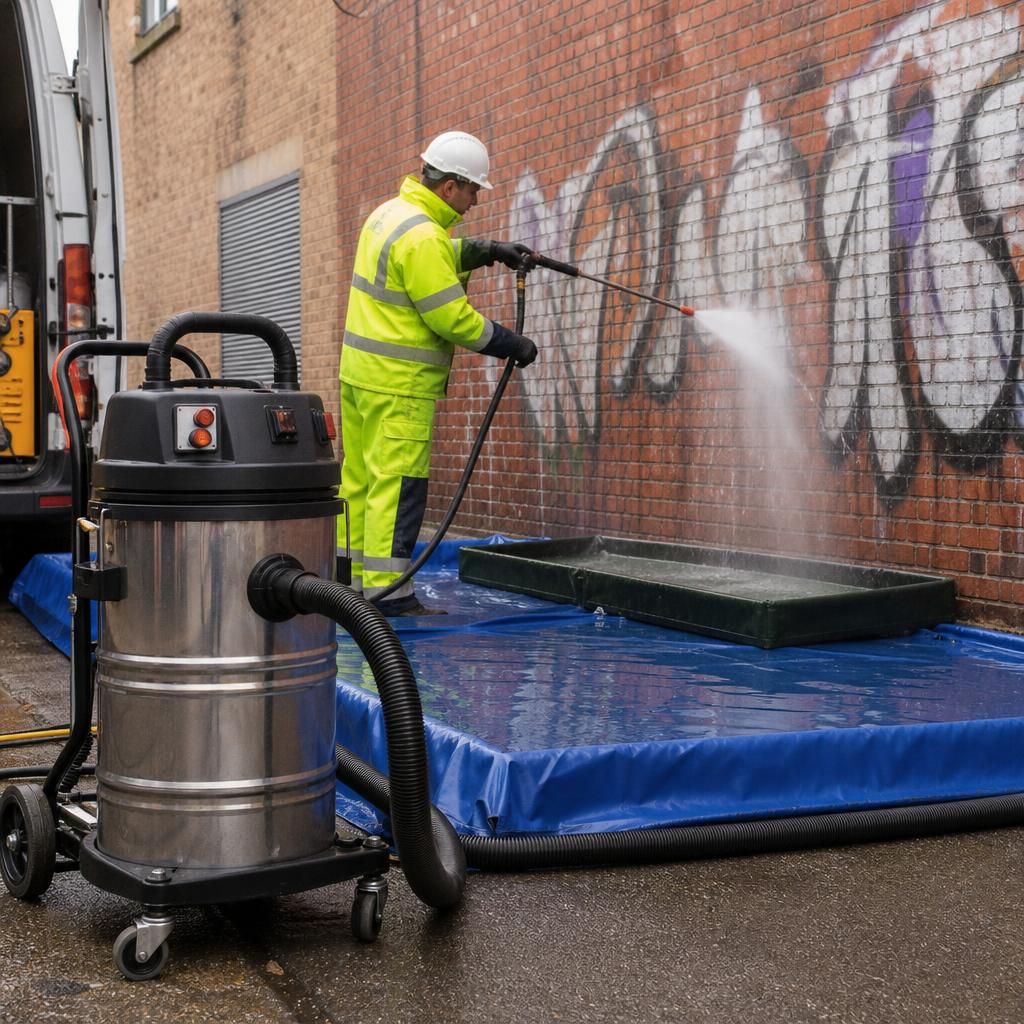
Water recovery equipment is an important part of professional graffiti removal from brick, particularly on commercial sites. Wet vacuums, drain covers, collection mats, bunds and filtration systems help capture paint particles, chemical residue and contaminated rinse water before it reaches surface-water drains or spreads across paving.
Containing the wastewater also protects nearby entrances, vehicles, landscaping and pedestrians. The equipment should be selected according to the site layout and cleaning method, with recovered water handled in line with site procedures and applicable environmental requirements. This allows the brick to be rinsed effectively while keeping the surrounding area controlled and safe.