
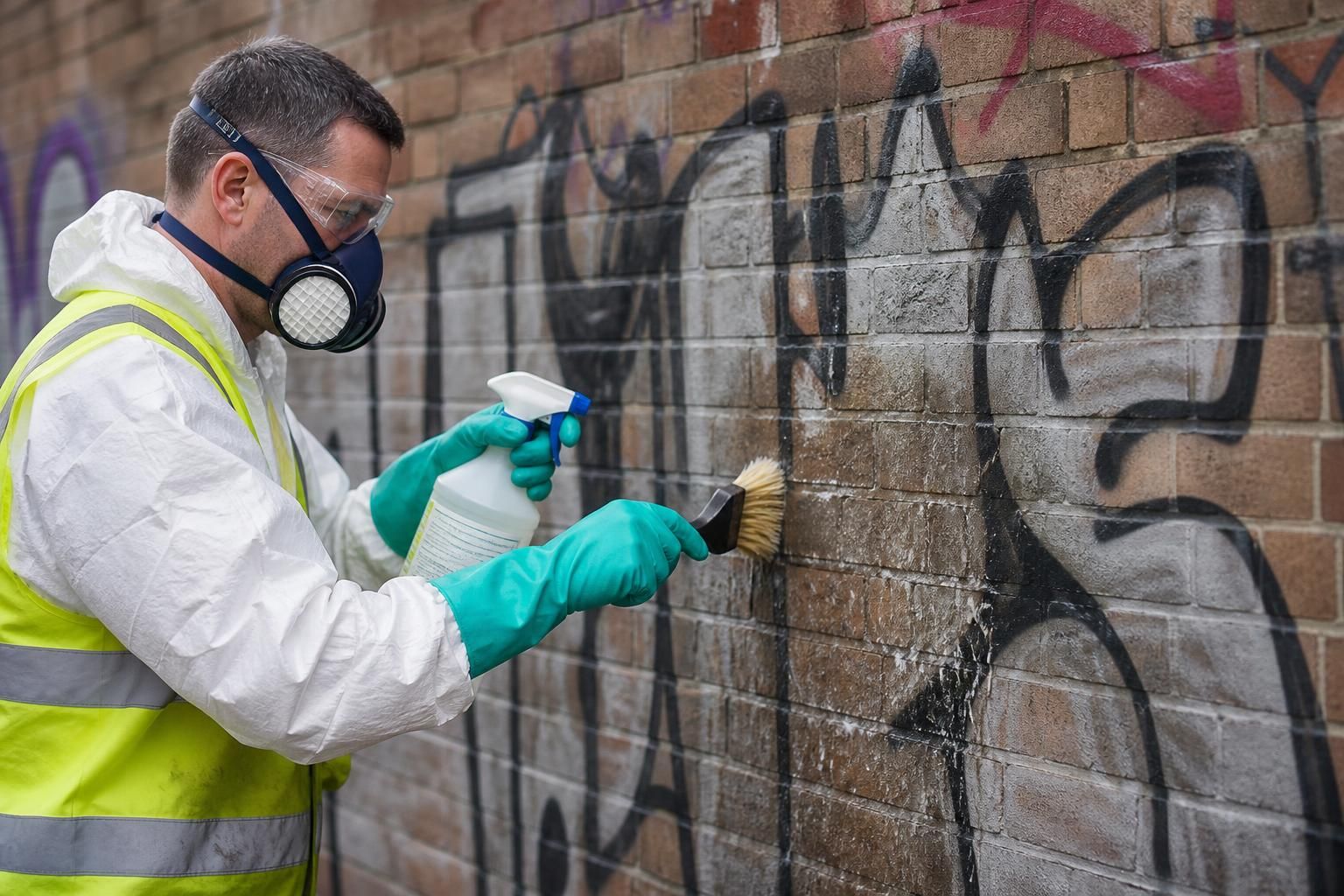
What precautions should be taken when using chemical agents for graffiti removal from brick?
When using chemical agents to remove graffiti from brick, follow the product’s safety data sheet, wear suitable PPE, provide adequate ventilation, protect nearby surfaces and vegetation, and test the product on an inconspicuous area first. Use the correct dilution and dwell time, never mix chemicals, control runoff and rinse thoroughly without driving contaminants deeper into the masonry; hazardous or extensive work should be handled by trained professionals.
Chemical agents used for graffiti removal from brick must be selected for the specific paint, brick type and surrounding environment, then applied in accordance with the product label and Safety Data Sheet (SDS). The essential precautions are to assess the risks, wear suitable personal protective equipment (PPE), test the treatment, prevent chemical contact with people and adjacent materials, control runoff, and rinse the masonry thoroughly without spreading contamination or driving it deeper into the brick.
Assess the site and the product before starting
- Identify the brick type, mortar condition, surface coatings and any existing damage. Old, soft, weathered or highly porous brick can be affected more readily by aggressive solvents, caustic products or acids.
- Establish what type of graffiti is present where possible. Paint, marker ink, adhesive residue and bitumen may require different treatment methods. Using a stronger chemical than necessary increases the risk of staining, salt movement, mortar erosion and colour change.
- Read the product label and SDS in full before use. Check the required PPE, ventilation, first-aid measures, storage requirements, incompatibilities, disposal instructions and environmental hazards.
- Complete a site-specific risk assessment and COSHH assessment where required. Consider members of the public, other contractors, traffic, access equipment, nearby windows and doors, drainage systems, planted areas and watercourses.
Wear PPE that matches the chemical hazard
Protective clothing should prevent the product reaching the skin and should remain suitable for the method of application. Chemical-resistant gloves, protective coveralls, suitable safety footwear and eye protection are normally required. A face shield may be needed where splashing is possible. If the SDS specifies respiratory protection, it must be suitable for the chemical and correctly fitted; ordinary dust masks do not protect against solvent vapour or corrosive mist.
Inspect PPE before use, replace contaminated or damaged items, and avoid taking chemical residues into vehicles, welfare areas or clean parts of the building. Wash hands and exposed skin after the work, even if gloves have been worn. Eating, drinking and smoking should be prohibited in the treatment area.
Control access, ventilation and ignition risks
- Cordon off the work area and display appropriate warning signs. Prevent unauthorised people, children and animals from entering while chemicals are being applied or the surface is drying.
- Provide good ventilation, particularly when using solvent-based products in recesses, enclosed yards, under canopies or near building openings. Do not allow vapour to enter occupied areas through windows, vents or air-conditioning intakes.
- Follow the SDS requirements for ignition sources. Some solvent-based graffiti removers can produce flammable vapours, so keep them away from flames, sparks, hot surfaces and unsuitable electrical equipment.
- Use secure access equipment and maintain safe handling practices. Chemical exposure can make gloves, platforms and tools slippery, while wind can carry spray or vapour beyond the intended work area.
Protect the brick and adjacent materials
Carry out a small test patch in an inconspicuous location before treating the full elevation. Allow the test area to dry and inspect it for colour change, gloss, tide marks, etching, softened mortar, residue or altered water absorption. A successful removal result on one brick does not automatically confirm that the same dwell time or dilution is suitable for every elevation.
Protect windows, painted frames, sealants, metals, plastics, stone, render, timber and decorative finishes from chemical contact. Masking materials must be compatible with the product and secured against wind and runoff. Particular care is needed around aluminium, galvanised components and natural stone, as some chemicals can stain, corrode or etch them. Do not assume that pre-wetting or covering a surface makes it resistant to the treatment.
Apply the chemical in a controlled manner
- Use the lowest effective concentration and the shortest effective dwell time stated by the manufacturer. Do not improvise stronger dilutions to speed up the work.
- Prepare dilutions in a controlled area using the correct measuring and handling procedure. Add products in the manner specified by the manufacturer and avoid splashing during transfer.
- Never mix graffiti removers with bleach, acids, alkalis, solvents, detergents or other cleaning products. Incompatible chemicals can create toxic gases, excessive heat or violent reactions, even when each product is safe when used alone.
- Apply only enough product to work on the graffiti. Avoid uncontrolled spray, atomisation and over-application, especially on porous brick where liquid can travel into the wall.
- Monitor the surface throughout the dwell period. Do not let the product dry onto the brick unless the instructions specifically permit this, and remove softened graffiti before it is redistributed across clean masonry.
Mechanical agitation should be gentle and appropriate to the condition of the brick. Harsh brushing can spread softened pigment into pores, while excessive pressure can remove the fired surface or damage mortar joints. Work in manageable sections and keep clean water, absorbent materials and emergency equipment available.
Contain runoff and protect the environment
Prevent contaminated wash water from entering surface-water drains, soil, planted areas or watercourses. Use drain covers, bunding, collection points, absorbent barriers or a suitable recovery system as appropriate to the site. Keep chemical containers closed when not in use, and never pour surplus product or contaminated rinse water onto the ground or into a drain.
Recovered liquid, used absorbents, empty containers and contaminated PPE may require controlled disposal as hazardous or controlled waste, depending on the product and local requirements. Follow the SDS, the site waste procedure and current environmental regulations. If runoff reaches a drain, watercourse or unprotected area, stop work and follow the site emergency procedure rather than attempting to dilute the contamination with uncontrolled water.
Rinse and inspect the masonry properly
Once the graffiti has been removed and the product has been neutralised or otherwise treated as instructed, rinse the brick using a controlled method and suitable water pressure. The objective is to remove chemical and pigment residues without forcing them further into the pores or damaging the face of the brick. Collect or manage the rinse water rather than allowing it to spread to clean elevations.
Inspect the completed area after rinsing and again when dry. Look for remaining shadowing, alkaline or solvent residue, streaks, colour variation, mortar damage and signs that chemical has reached adjacent materials. If residue remains, do not automatically apply a stronger product; reassess the brick, the graffiti type, the previous dwell time and the removal method.
Know when specialist handling is required
Professional assistance is appropriate where the product is corrosive, solvent-based, highly alkaline or otherwise hazardous; where the elevation is large or difficult to ventilate; where public access cannot be fully controlled; or where the brick is historic, listed, highly porous or already deteriorated. Trained operatives can select a less aggressive method, use suitable containment and access equipment, and manage COSHH, runoff and waste requirements.
If chemical enters the eyes or contacts the skin, follow the SDS first-aid instructions immediately and obtain medical assistance where specified. For inhalation, ingestion, a reaction between products or an uncontrolled spill, stop work, move people away from the hazard if it is safe to do so, and contact the relevant emergency or specialist advice service. Chemical safety is part of the graffiti removal process, not a separate final check.
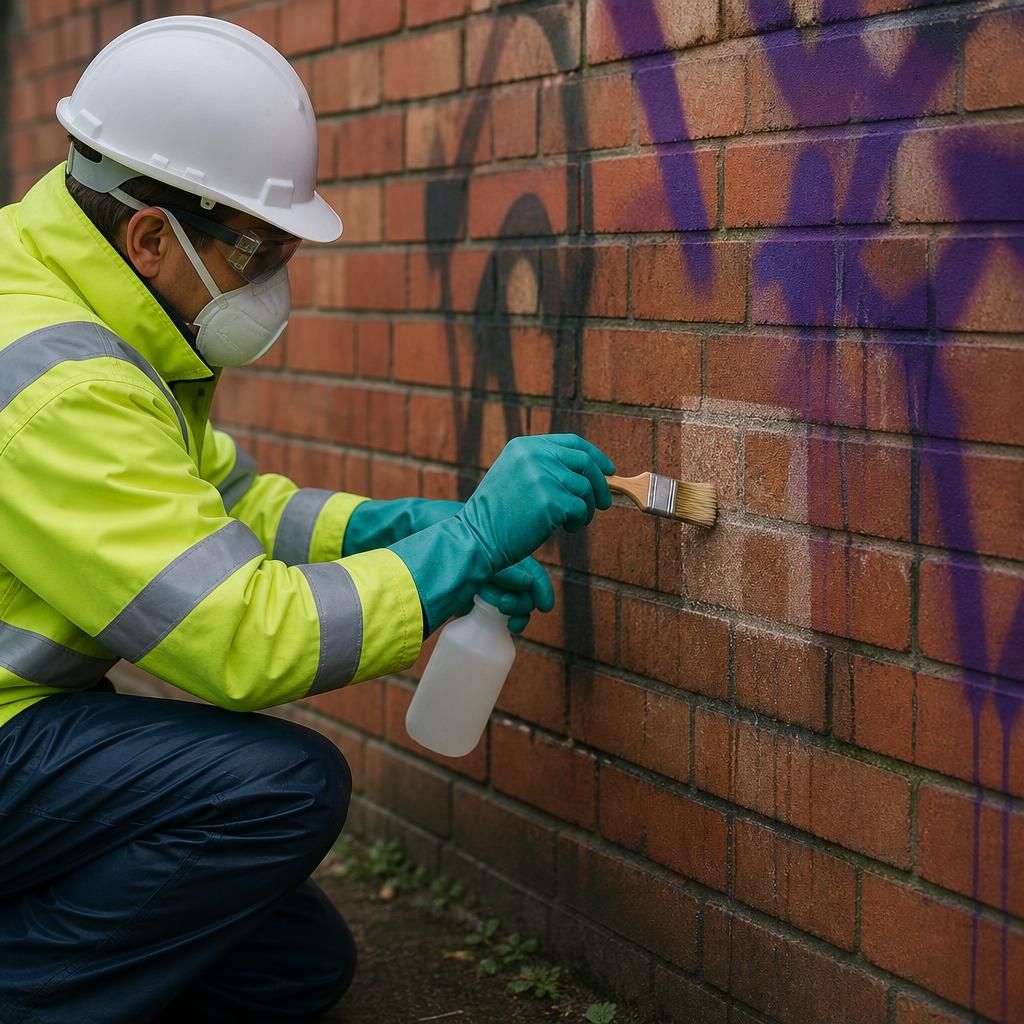
Testing a chemical graffiti remover on an inconspicuous area is an essential precaution before treating the full brick elevation. The test should confirm that the product removes the graffiti without changing the brick colour, softening the mortar, etching the surface or affecting nearby coatings.
Allow the test area to dry fully before assessing it, as staining and tide marks may not be obvious while the brick is wet. If the result is unsuitable, stop and reassess the product, dilution and application method rather than increasing the chemical strength. Protect windows, metals, painted surfaces, sealants, stone and vegetation from splashes and runoff, since these materials may be more vulnerable than the brick itself.
Arrange a Safe Brick Graffiti Removal Assessment
Arrange a safe brick graffiti removal assessment with Encanto Exterior Cleaning to identify the graffiti type, brick condition, chemical risks and runoff controls required. We can recommend a suitable treatment method and confirm whether specialist equipment or controlled chemical handling is needed.