
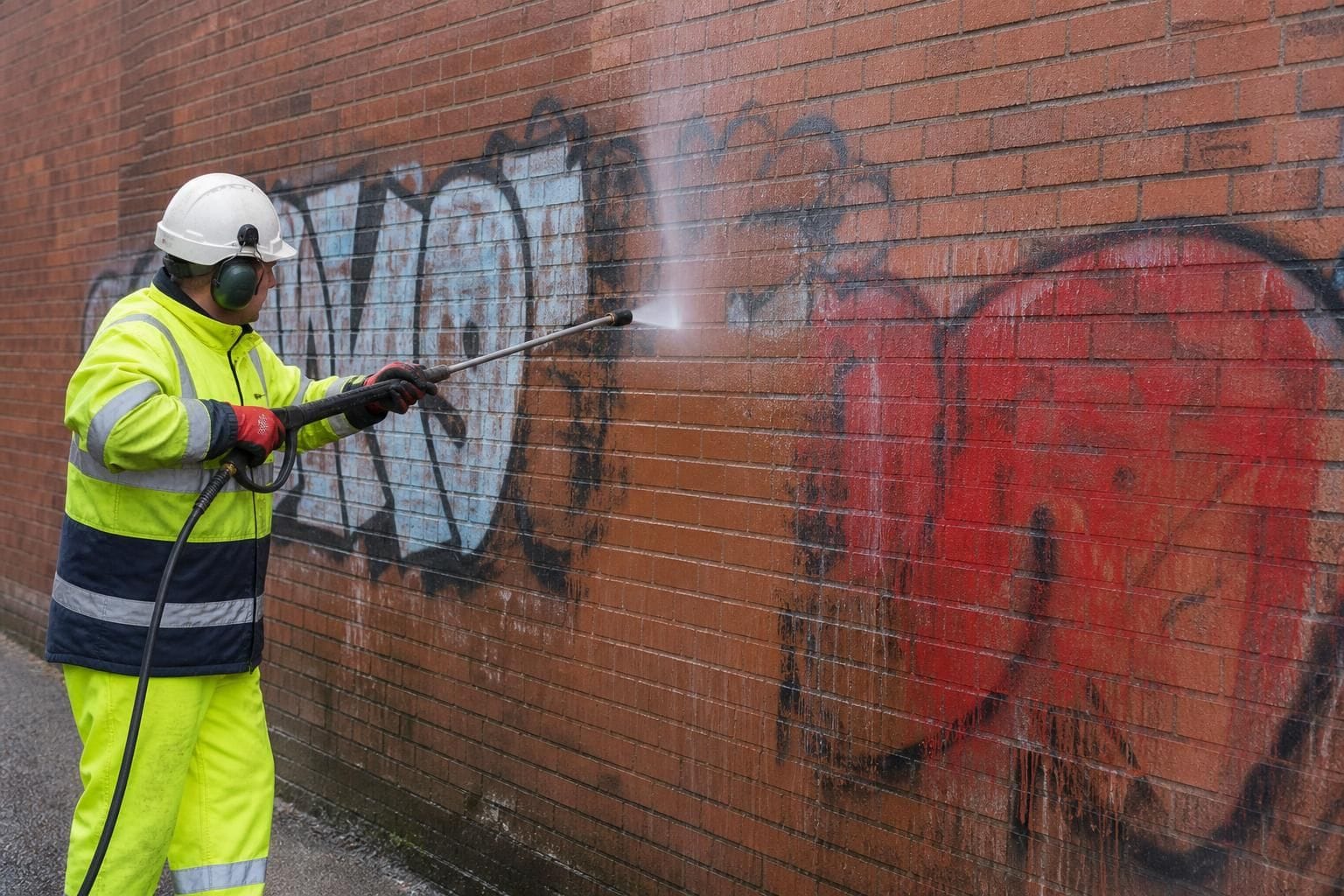
What factors should be considered when selecting a graffiti removal service for brick surfaces?
When selecting a graffiti removal service for brick surfaces, assess its experience with porous and historic masonry, cleaning methods, chemical safety controls, insurance, waste-water handling and evidence of comparable commercial work. The contractor should inspect and test the brick first, explain the proposed process, and confirm how it will minimise surface damage, staining and water ingress.
The right graffiti removal service for brick surfaces should combine proven masonry experience with a carefully tested cleaning process, suitable equipment, safe chemical handling, effective wastewater control and appropriate insurance. The contractor should inspect the brick before quoting, explain how the proposed method will protect the surface, and provide evidence of comparable commercial or industrial work.
Experience with brick and other porous masonry
Brick is absorbent, so paint and marker can penetrate below the surface rather than remaining as a removable film. A contractor experienced with brick should understand how different materials respond to pressure, steam, detergents and specialist graffiti-removal products. This is particularly important where the surface includes soft-fired brick, aged mortar, decorative brickwork, painted brick, reclaimed materials or listed and historic masonry.
Ask whether the service has dealt with similar surfaces and whether it can provide relevant examples from commercial premises, public buildings, housing stock, construction sites or other large-scale environments. Experience with non-porous metal or smooth painted panels does not necessarily demonstrate the skills needed to clean porous brick safely.
A proper inspection before work begins
A reliable contractor should assess the brick, mortar joints, previous coatings, existing weathering and the type of graffiti before recommending a method. The inspection should also identify nearby materials that could be affected, such as stone, render, timber, glazing, signage, sealants and planted areas.
Where the surface is vulnerable or the graffiti is difficult to identify, a small test area should be cleaned before full treatment. The test should establish whether the paint can be removed without excessive colour change, surface roughening, mortar loss or visible tide marks. It also allows the contractor to confirm whether a second treatment or a different technique is needed. A quotation made without examining the surface may not reflect the risks or the actual work required.
Suitability of the proposed cleaning method
The service should be able to explain why it has selected pressure washing, low-pressure cleaning, steam, a graffiti-removal product or a combination of techniques. The least aggressive effective method is generally preferable for brick, but the correct approach depends on the graffiti medium, the depth of penetration, the age and hardness of the brick, and the condition of the mortar.
High pressure can remove paint while also eroding the brick face, opening the surface or dislodging mortar. Excessive water can drive contamination further into porous masonry or create problems around internal finishes and vulnerable building details. Steam or controlled low-pressure cleaning may be more appropriate in some situations, while a carefully selected chemical treatment may be necessary where paint has penetrated the surface. The contractor should be able to discuss these trade-offs rather than offering one method for every site.
Controls for chemical products
Graffiti-removal products vary considerably in strength and composition. Ask what type of product will be used, how it will be applied, how long it will remain on the surface and how residues will be neutralised or rinsed away. Products should be selected for the brick and graffiti rather than applied routinely.
The contractor should provide suitable product information where required, follow the relevant control measures, protect adjacent surfaces and prevent contact with people, vegetation, drainage systems and watercourses. Strong chemicals can cause staining, discolouration, mortar damage or hazardous run-off if they are poorly controlled. A competent service will also explain what will happen if the first treatment does not remove all traces, rather than repeatedly increasing chemical strength or pressure without reassessing the surface.
Protection against damage and water ingress
Brick-cleaning work should preserve the face of the brick and the integrity of the joints. Confirm how the contractor will limit water penetration, protect openings and mask vulnerable features. Particular care is needed around vents, door thresholds, windows, electrical equipment, sealant joints and areas where the internal finish could be affected by moisture.
It is also worth asking how the service will deal with ghosting, which is the residual outline or staining left after the visible paint has been removed. Complete visual removal is not always possible without damaging the substrate, especially where pigment has penetrated deeply. The contractor should set out realistic expectations and identify whether the objective is full removal, substantial reduction or a visually consistent finish across the affected area.
Health, safety and access arrangements
Commercial graffiti removal may involve wet surfaces, chemical products, spray equipment, traffic, pedestrians and work at height. The contractor should provide suitable risk assessments and method statements where appropriate, establish exclusion zones and use trained operatives with the necessary personal protective equipment.
Where access equipment is required, check that the planned equipment is suitable for the ground conditions, building layout and working height. The service should also explain how it will protect the public, building users, parked vehicles and nearby businesses. If the work takes place beside a road or in a busy car park, traffic and pedestrian management should form part of the plan rather than being treated as an afterthought.
Wastewater and environmental controls
Graffiti residues, cleaning agents and contaminated wash water should not be allowed to enter surface-water drains or nearby land without proper consideration. Ask how the contractor will contain, collect, filter, treat or dispose of wastewater and solid residues. The answer should reflect the site conditions, the products used and the applicable environmental requirements.
A responsible service should also consider the quantity of water used, the potential impact of detergents, the protection of vegetation and the risk to nearby watercourses. Environmentally preferable methods can still require careful containment, so a claim that a process is simply “eco-friendly” is not enough without an explanation of how residues and run-off will be managed.
Insurance, competence and documentation
Check that the contractor holds appropriate public liability cover and, where relevant, employers’ liability insurance and cover for specialist access work. For larger commercial projects, request evidence of relevant training, site-safety competence and documented procedures for chemical handling and waste management.
The quotation or work plan should record the areas to be treated, the proposed method, access requirements, preparation and protection, wastewater arrangements, exclusions and any limitations caused by permanent staining or substrate damage. Clear documentation reduces the risk of disagreement about what constitutes a completed clean.
Quality of the quotation
A suitable quotation should be based on the surface condition and access requirements, not just the visible size of the graffiti. It should distinguish between removing the paint, treating residual staining, cleaning surrounding areas and applying any protective coating. The contractor should also identify whether additional visits may be needed if the graffiti has soaked into the brick.
Be cautious of an unusually low quote that gives no information about testing, surface protection, equipment, labour, waste handling or reinstatement. Cost matters, but the cheapest process can become more expensive if it leaves etched brick, damaged mortar, staining or a need for remedial work.
Aftercare and protective treatments
Ask whether the contractor can advise on reducing repeat cleaning requirements. A breathable anti-graffiti treatment may be suitable for some brick surfaces, but it must be compatible with the masonry and applied only after the surface has been properly cleaned and allowed to dry. The service should explain the expected appearance, maintenance requirements and whether future graffiti can be removed without stripping or damaging the brick.
For managed sites, it can also be useful to agree a reporting process for new incidents, inspection visits and planned maintenance. Prompt treatment is often easier than allowing paint to weather, absorb further into the brick or become concealed by later coatings.
Questions to ask before appointing a contractor
- Have you cleaned this type of brick and mortar before?
- Will you inspect and test a discreet area before full treatment?
- Why is the proposed method suitable for this surface and graffiti type?
- How will you protect windows, doors, signage, landscaping and drainage?
- How will contaminated water and chemical residues be contained and disposed of?
- What precautions will be used for pedestrians, vehicles and work at height?
- What insurance, training and method statements can you provide?
- What result is realistically achievable if the pigment has penetrated the brick?
- Will the quotation include preparation, protection, access, cleaning and aftercare?
For commercial and industrial brickwork, the strongest choice is therefore a contractor that demonstrates careful assessment rather than relying on a standard pressure-washing service. Evidence of comparable work, a tested and proportionate method, clear safety and environmental controls, and realistic communication about the final finish are the main indicators that the brick will be restored without unnecessary damage.
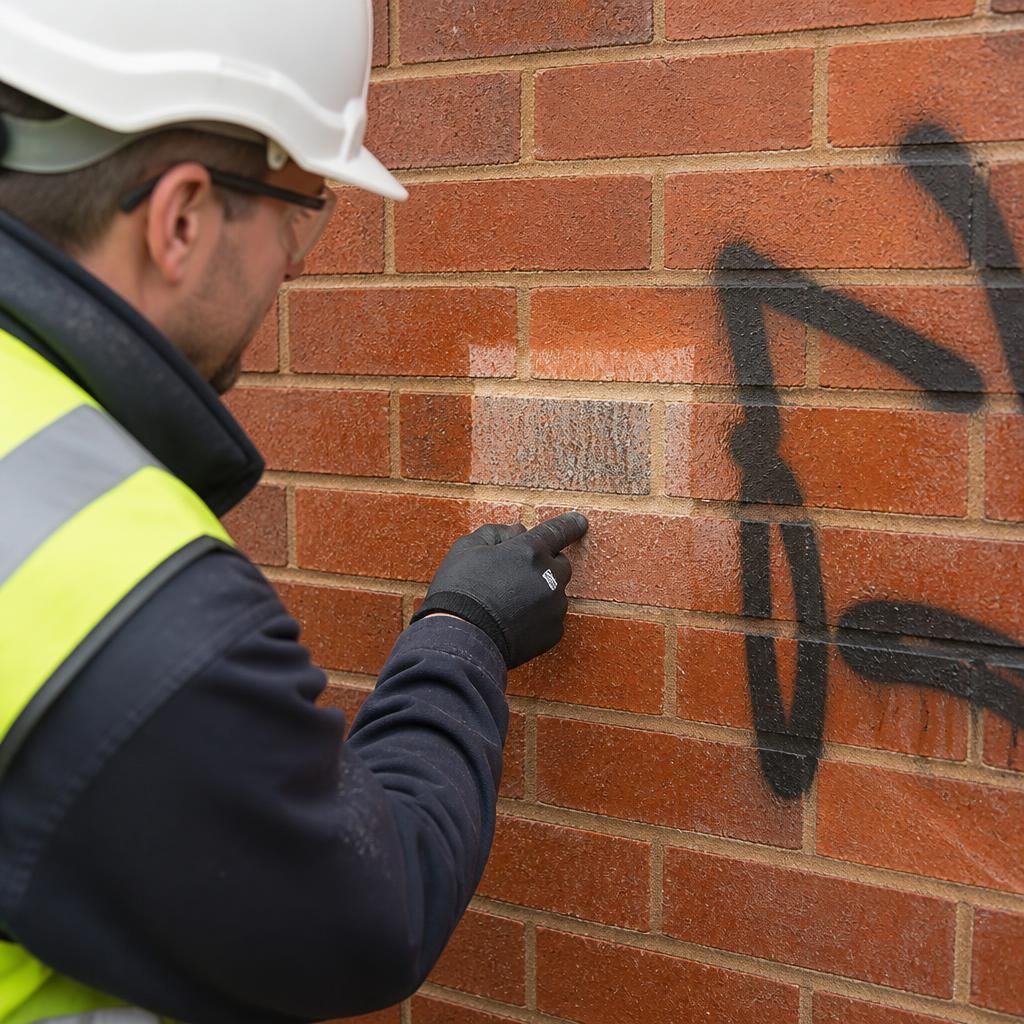
A test patch is a small, discreet area of brick cleaned before the full graffiti removal treatment begins. It shows how the masonry, mortar and graffiti respond to the proposed combination of pressure, steam or cleaning products, helping the contractor choose an effective method without unnecessarily damaging the surface.
The test should check for colour change, surface roughening, mortar loss, staining and water penetration. It should also consider nearby materials such as stone, render, glazing, sealants and painted finishes. A reputable service will explain the result and set realistic expectations if pigment has penetrated deeply or ghosting remains after the visible paint is removed.
This assessment is particularly important for soft-fired, weathered, reclaimed or historic brick. A quotation based only on photographs may overlook access difficulties, fragile joints or the need for wastewater containment. Confirm that the proposed work includes testing, protection of surrounding areas and a clear explanation of the achievable finish before the full clean is authorised.
Arrange a professional brick graffiti removal assessment
Arrange a professional assessment of your brickwork so the graffiti, masonry condition, access requirements and safest removal method can be evaluated before treatment begins. Contact Encanto Exterior Cleaning to discuss a suitable commercial or industrial cleaning plan.