
What environmentally friendly graffiti removal options are best suited for brick surfaces?
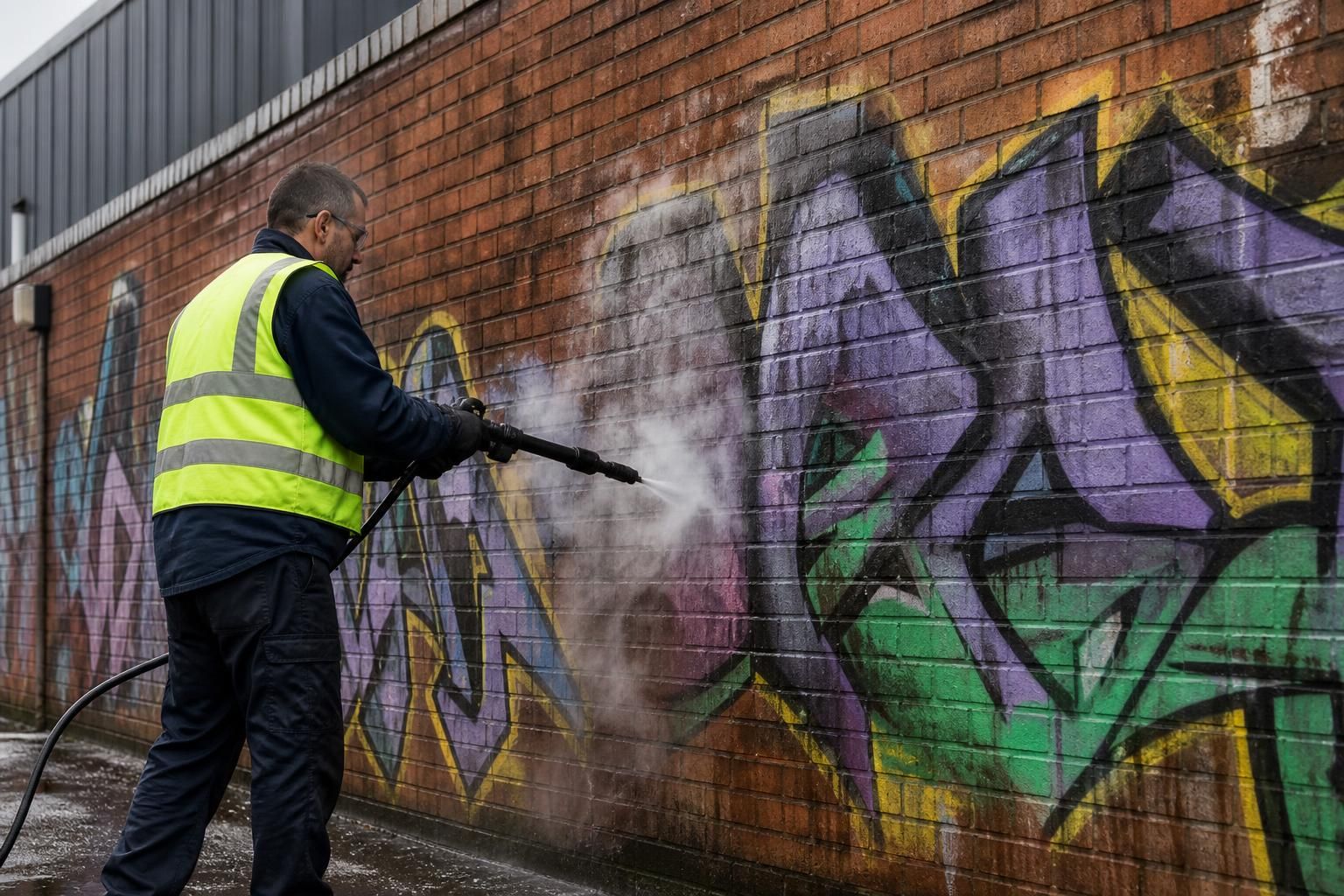
The most environmentally friendly graffiti removal options for brick are low-pressure steam cleaning, controlled hot-water washing, and biodegradable, brick-safe cleaning agents used only where necessary. The method should minimise water and chemical use, avoid damaging porous masonry, and include proper collection and disposal of contaminated runoff.
The most environmentally friendly graffiti removal options for brick are low-pressure steam cleaning, carefully controlled hot-water washing and biodegradable, brick-safe cleaning agents used only when necessary. The best approach depends on the paint or marker, the brick’s porosity and condition, and the sensitivity of the surrounding site. In every case, environmental performance depends on using the least aggressive effective method, limiting water and chemical consumption, and containing contaminated runoff.
Low-pressure steam cleaning is often the preferred first option for sound brickwork. Steam softens many paints, aerosols, stickers and marker residues using relatively little water, while the low-pressure application reduces the risk of eroding the brick face or forcing moisture deeper into the masonry. It can be particularly suitable for older or porous brick where abrasive cleaning would remove the fired surface, known as the||||“||||”|||| brick’s protective outer layer.
Steam cleaning is not suitable for every coating. Some modern paints, baked-on residues and deeply absorbed pigments may require a compatible detergent or a different controlled cleaning process. A trained operative should test a small, inconspicuous area first and assess whether the treatment is lifting the graffiti without altering the brick colour, mortar joints or surface texture.
Controlled hot-water washing is another relatively low-impact option. Heated water can loosen paint more effectively than cold water, allowing the operator to work at a lower pressure and reduce the need for strong chemicals. The temperature and pressure must be adjusted to the brick type, mortar condition and coating being removed. Excessive pressure can open the surface, damage friable mortar and drive water and dissolved contaminants into the wall.
Hot-water cleaning should be carried out with suitable ground protection and runoff controls. Water contaminated with paint particles, pigments, detergents or other residues should not be allowed to enter surface-water drains, watercourses or unprotected soil. Collection methods may include drain covers, temporary bunding, wet vacuums and controlled recovery of wastewater, subject to the site and local requirements.
Biodegradable graffiti removers can be appropriate where water or steam alone will not remove the coating. Products should be selected specifically for masonry and used at the lowest effective concentration and contact time. “Biodegradable” does not automatically mean harmless to brick, mortar, vegetation or aquatic environments. The product’s safety information, dilution instructions and disposal requirements still need to be followed.
Brick-safe formulations are generally preferable to aggressive solvents, highly caustic products or unapproved household chemicals. A suitable treatment should not leave excessive salts, discolour the brick, soften the mortar or create a residue that attracts dirt. Chemical application should be precise rather than widespread, with the treated area rinsed or recovered in a controlled way according to the product instructions.
Absorbent poultices and gel-based treatments may offer an environmentally controlled alternative for sensitive, historic or highly porous brick. These products hold the cleaning agent against the graffiti, limiting run-off and reducing the amount of liquid entering the wall. After the coating has softened, the spent poultice and removed residue must be collected and disposed of appropriately. This method is usually slower and more labour-intensive, but it can be valuable where water use must be tightly controlled.
Dry and abrasive methods require particular caution. Techniques such as dry blasting, soda blasting and abrasive powders can create airborne dust, spread paint particles and remove the brick’s weathered surface. They may be suitable for selected robust substrates under strict containment, but they are not automatically environmentally friendly simply because they use little water or no chemical detergent. On porous or historic brick, non-abrasive steam or a carefully selected chemical treatment is often safer.
An environmentally responsible graffiti removal process should include:
- Site and substrate assessment: identify the brick type, age, porosity, previous repairs, mortar condition and any nearby sensitive materials such as timber, glazing, painted surfaces or vegetation.
- Paint identification: establish whether the graffiti is aerosol paint, masonry paint, marker ink, adhesive residue or another coating, as different materials respond to different treatments.
- Small-area testing: compare suitable methods in an inconspicuous location and allow the area to dry before judging colour or surface changes.
- Minimal treatment: use the lowest practical pressure, temperature, chemical strength and volume of water that will remove the graffiti effectively.
- Runoff management: protect drains, collect contaminated water and prevent removed paint, detergent or solvent residues from entering the wider environment.
- Responsible waste handling: store recovered sludge, absorbents, spent poultice and contaminated materials safely and arrange disposal in line with applicable waste requirements.
- Post-cleaning inspection: check for remaining staining, exposed defects, mortar damage, moisture retention and any need for further treatment before applying a protective coating.
For brick surfaces, the greenest option is not necessarily the treatment that uses no chemical or the least water in isolation. A method that causes permanent brick damage can create a need for repair, replacement materials and repeat cleaning. The more sustainable choice is the least invasive process that removes the graffiti, preserves the masonry and controls all residues from the work.
Once the brick has been cleaned and fully assessed, a breathable sacrificial anti-graffiti coating may reduce the environmental impact of future incidents by making subsequent removal quicker and less intensive. The coating must be compatible with the brick and mortar, particularly on older or listed buildings, and it should not trap moisture within the wall. Planned inspections and prompt removal of new graffiti can also prevent pigments from weathering deeper into porous brick, reducing the need for stronger treatments later.
Where the building is historic, heavily weathered, close to a watercourse or affected over a large area, professional testing and runoff planning are especially important. The cleaning specification should record the proposed method, product information, test results, protection measures and waste arrangements before full removal begins.
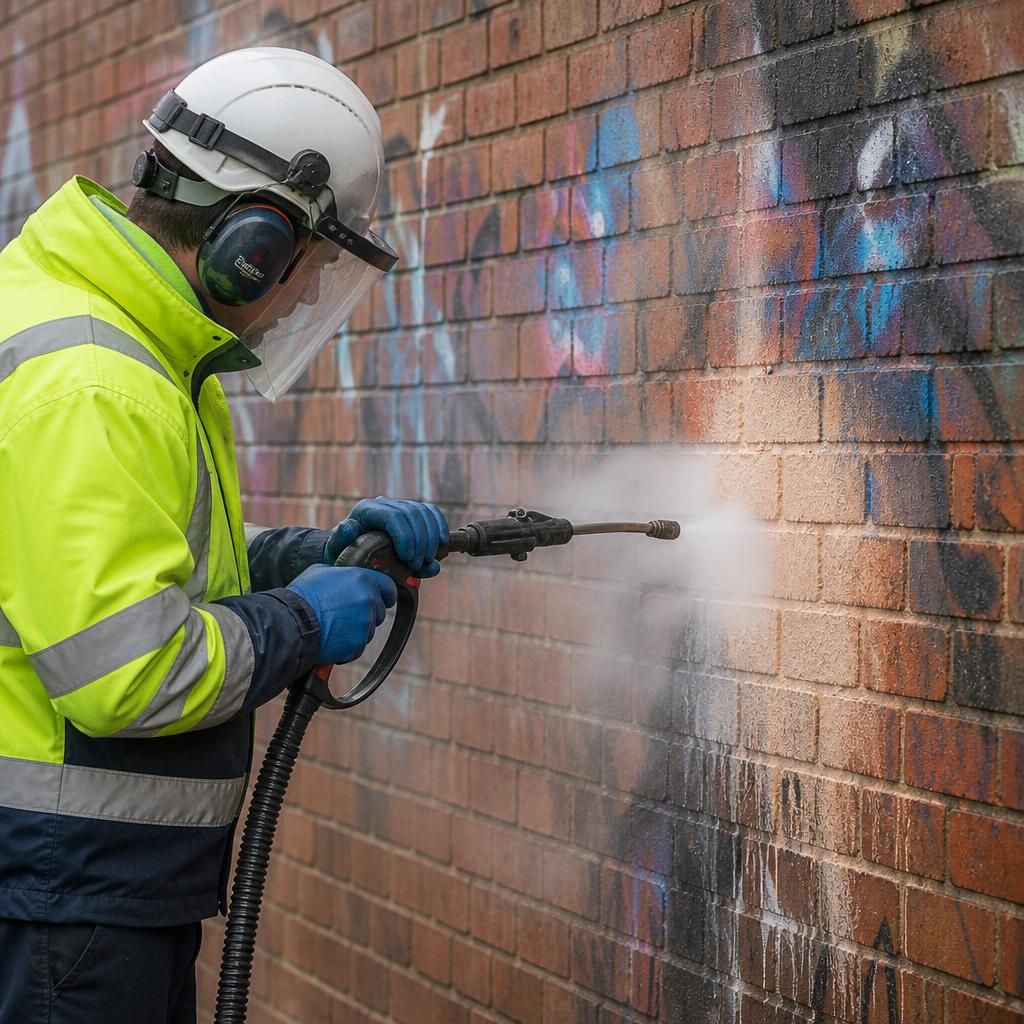
The most environmentally responsible option for graffiti on brick is usually low-pressure steam cleaning, provided the masonry is sound and the graffiti can be removed without aggressive chemicals. Steam uses relatively little water and can soften paint, marker residue and adhesive deposits while reducing the risk of eroding the brick face or forcing moisture into porous masonry.
Where steam alone is insufficient, a biodegradable, brick-safe remover can be applied precisely to the affected area and at the lowest effective strength. The product must still be treated as contaminated waste: drains should be protected, loosened paint and residues collected, and wastewater or spent absorbent materials disposed of correctly. A small test area should always be assessed first, particularly on older brick, weak mortar or historic façades.