
What environmental considerations should be taken into account when removing graffiti from brick surfaces?
Environmentally responsible graffiti removal from brick surfaces requires low-impact cleaning methods, carefully selected products and effective control of wastewater, paint residues and runoff. The process should protect surrounding soil, drains, watercourses, plants and wildlife while avoiding unnecessary damage to the brick or repeated cleaning.
Environmentally responsible graffiti removal from brick means choosing the least aggressive effective cleaning method, preventing paint residues and wastewater from entering drains or soil, and disposing of captured waste lawfully. The approach should also protect the brick, surrounding vegetation, wildlife and nearby watercourses, because repeated or overly harsh cleaning can create a greater environmental impact than the original graffiti.
Assess the site before cleaning. Identify surface drainage, gullies, inspection chambers, planted areas, ponds, streams and other sensitive receptors before work begins. Check whether the brick is historic, heavily weathered, porous or already damaged, as vulnerable masonry may require a slower, lower-impact process. Consider the paint type, the size and position of the graffiti, weather conditions and the access equipment needed. This assessment helps prevent unnecessary use of chemicals, water and energy.
Select the least harmful effective method. Test a small, inconspicuous area before treating the full surface. Depending on the coating and condition of the brick, suitable options may include controlled low-pressure washing, steam cleaning, specialist poultices or a biodegradable graffiti-removal product. Abrasive blasting and very high-pressure water can remove the graffiti but may also erode the brick face, open the pores and increase the likelihood of future staining. A damaged surface may require more frequent cleaning, increasing its long-term environmental burden.
Product selection requires particular care. Use a product that is suitable for brick and has clear instructions, safety information and disposal guidance. Biodegradable does not mean that a product can be allowed to enter a drain or watercourse. Some products can still harm aquatic life, vegetation or soil organisms, particularly at concentrated strength. Avoid unnecessary solvents, strong acids and caustic agents, and use the lowest effective concentration with the shortest practical contact time. Follow the product safety data sheet and relevant COSHH controls throughout the work.
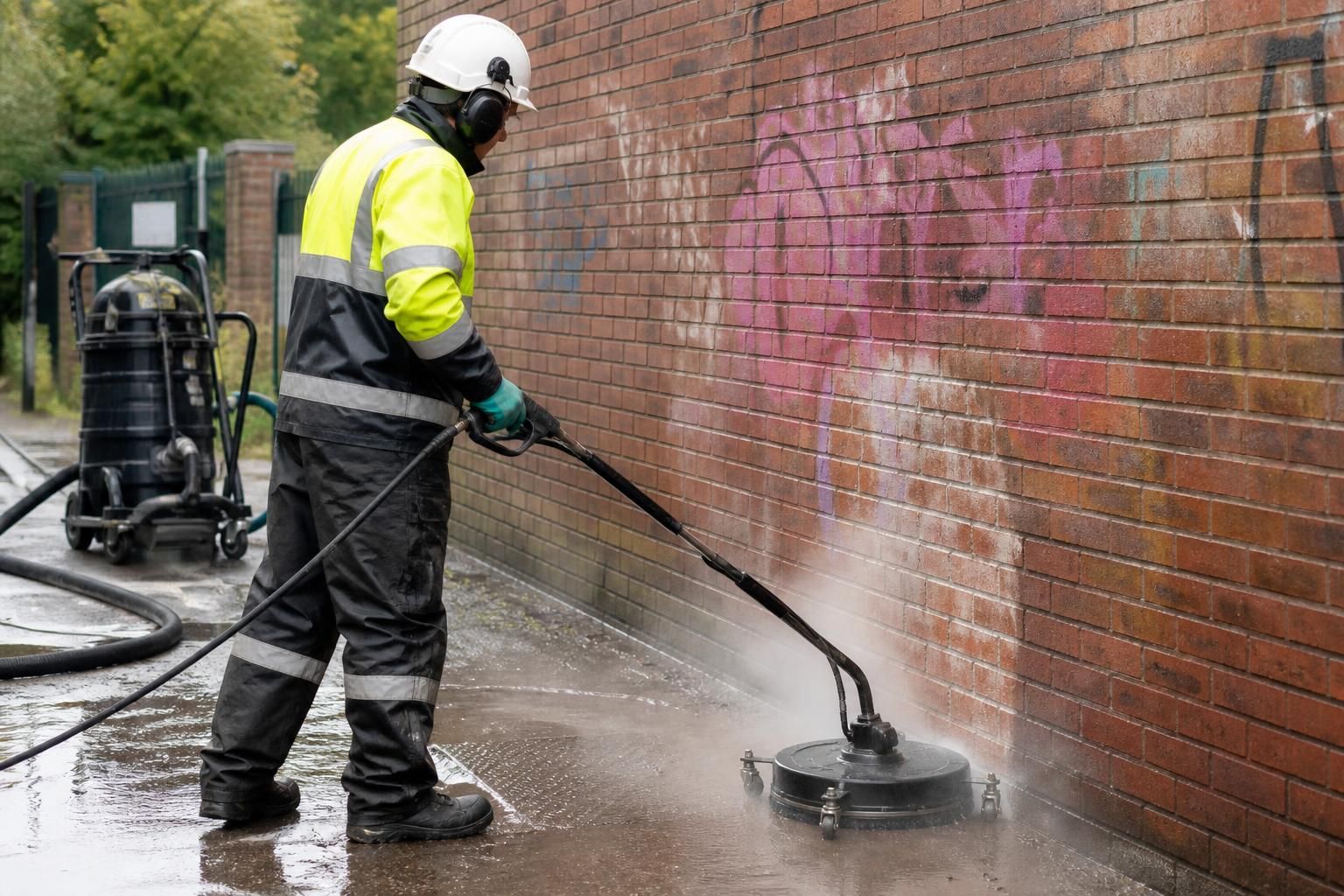
Control water and chemical runoff. Before cleaning, protect nearby drains with suitable drain covers or temporary bunding, while ensuring that collected water cannot bypass the containment. Use the minimum volume of water needed and work in manageable sections. Wet-vacuum recovery, booms, absorbent materials, temporary collection tanks and other suitable measures can help capture rinse water, dissolved products and loosened paint. Do not allow dirty water to flow across pavements, into planted beds or towards surface-water drains.
Collected wastewater should be assessed before disposal. It may contain paint particles, pigments, detergents, chemical residues, dirt and metals from the coating or substrate. It must not automatically be discharged to the ground, a surface-water drain or a watercourse. Confirm the requirements of the site owner, local water company and relevant environmental regulator before work starts. Trade-effluent consent or other permission may be needed for discharge to a foul sewer, and contaminated liquid or absorbent materials may need to be handled as controlled waste by an authorised contractor.
Prevent solid residues from spreading. Scraped paint, spent poultice, masking materials, contaminated cloths and used absorbents should be gathered rather than swept into gullies or left on the ground. Keep waste in secure, labelled containers and separate incompatible materials where required by the product information. The correct waste classification depends on what the material contains and how it has been contaminated, so disposal should follow the applicable UK waste requirements and the advice of the waste carrier or disposal facility.
Protect plants, soil and wildlife. Shield vegetation from overspray, splashes and chemical contact, and avoid treating areas where runoff could reach roots or planted soil. Do not clean during heavy rain, strong wind or conditions that could carry spray beyond the work area. If birds, bats or other protected species may be using the building, seek appropriate ecological advice before disturbing nesting or roosting areas. Lighting, noise and access equipment can also affect wildlife, especially around parks, waterways and managed green spaces.
Energy and resource use should be considered alongside chemical choice. Efficient equipment, well-maintained pumps and controlled application reduce water and electricity consumption. Steam cleaning can reduce the need for chemical agents in some situations, but it still requires careful management of hot water, runoff and the risk of thermal damage. The most sustainable method is not automatically the one described as chemical-free; it is the method that removes the coating effectively while causing the least overall damage and waste.
Plan for prevention after cleaning. A compatible sacrificial or permanent anti-graffiti treatment may reduce future cleaning, but it should be assessed for vapour permeability, colour change, maintenance requirements and end-of-life removal. On porous brick, an unsuitable coating can trap moisture or alter the appearance of the façade. Prevention measures should therefore be selected with the masonry type and building condition in mind rather than applied as a standard solution.
For commercial and public sites, retain a simple environmental record covering the pre-cleaning assessment, test results, products used, dilution and application controls, drainage protection, wastewater arrangements, waste transfer documentation and any incidents. If a spill occurs, stop the work, contain it immediately, protect nearby drains and report it through the site’s incident procedure. These controls make graffiti removal more defensible, reduce pollution risk and help ensure that the brick remains serviceable without repeated, avoidable intervention.
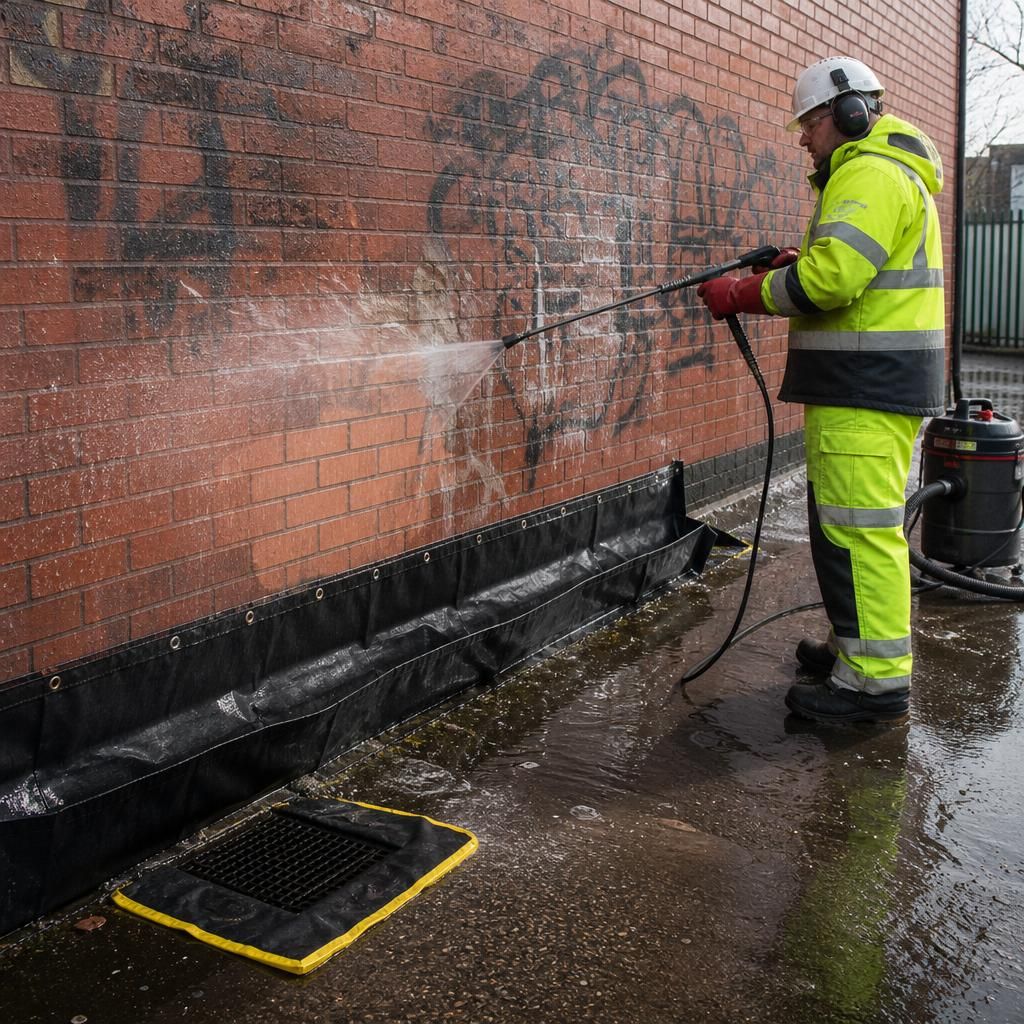
Controlling wastewater is one of the most important environmental considerations when removing graffiti from brick. Rinse water can contain loosened paint, pigments, detergents, chemical residues and contaminants from the masonry, so it must not be allowed to run into surface-water drains, soil, planted areas or nearby watercourses.
Before cleaning begins, identify gullies and drainage routes, then use suitable drain covers, temporary bunding and wet-vacuum recovery where required. Work in manageable sections and use only the water and product necessary to remove the coating. Capture contaminated water and solid residues in secure containers, assess the waste before disposal, and obtain any required permission for discharge to a foul sewer. Biodegradable products still require containment because they may affect aquatic life or soil if released at concentrated strength.