
What are the challenges of using pressure washing for graffiti removal on brick surfaces?
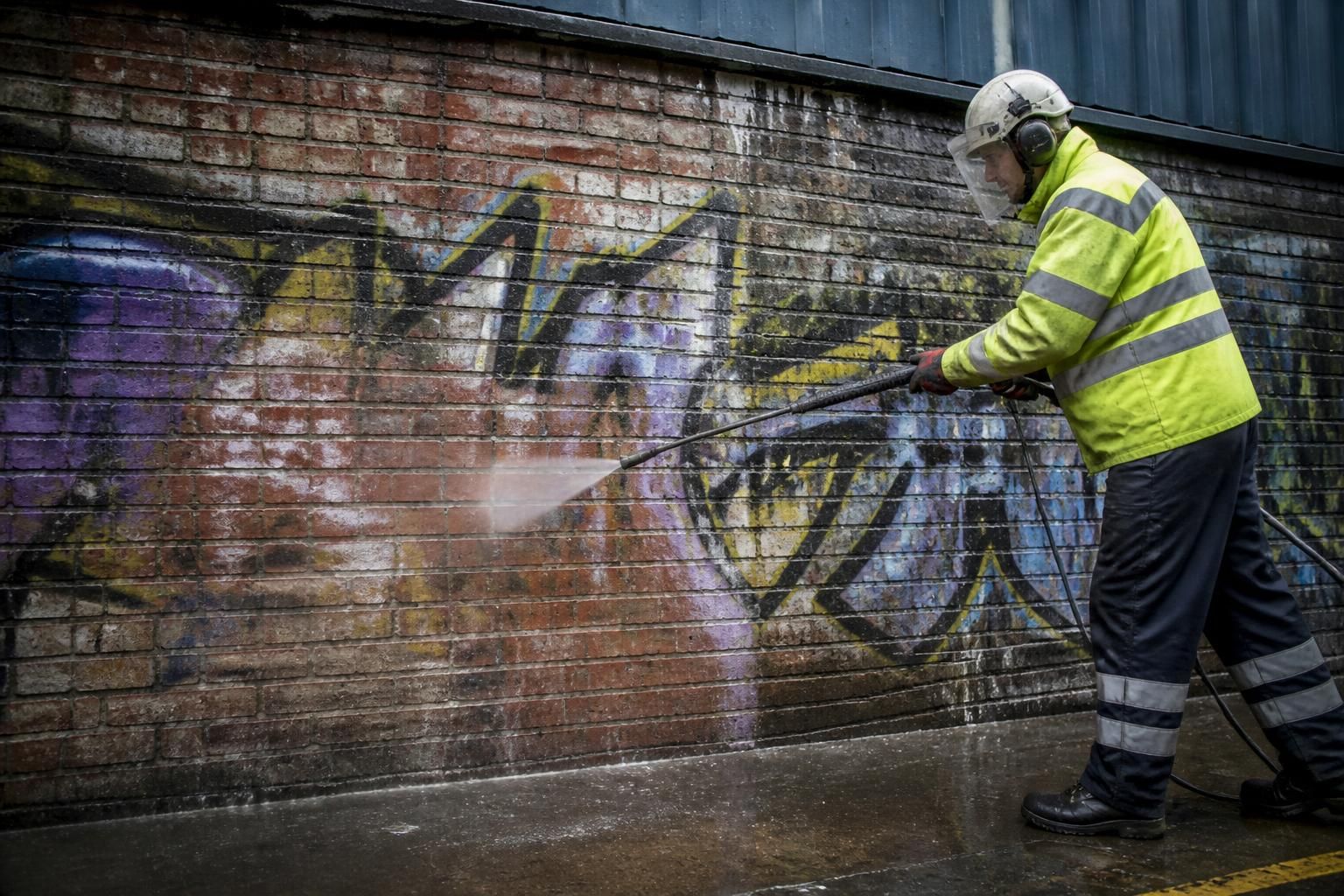
Pressure washing graffiti from brick can drive water and paint deeper into the porous surface, while excessive pressure may erode the brick face, loosen mortar and cause water ingress. It may also leave ghosting or paint residue, so controlled low-pressure cleaning, suitable graffiti-removal products and thorough rinsing are often safer and more effective.
Pressure washing graffiti from brick is challenging because brick is porous, variable in strength and often joined with weaker mortar. Water pressure can remove the visible paint while driving moisture, pigment and dissolved residues further into the wall. If the pressure, nozzle, water temperature or cleaning product is unsuitable, the process may erode the brick face, damage mortar, leave ghosting or create pathways for water ingress.
The main challenges include:
- Water absorption: Unsealed brick absorbs water through its face and joints. Pressure can force water behind the brickwork, into cracks or beneath coatings, where it may take a long time to dry. On vulnerable elevations, this can contribute to damp-related problems, staining or frost damage.
- Damage to the brick surface: Excessive pressure can strip away the harder outer layer of a brick, expose a softer interior and create a roughened or etched appearance. Historic, handmade, weathered or low-fired bricks are particularly susceptible. Damage may not be obvious until the wall dries.
- Mortar erosion: Mortar joints are commonly softer than the surrounding brick. A concentrated jet or prolonged cleaning can wash out the joint surface, widen small defects and leave recessed or uneven pointing. This increases the risk of further water penetration and may require repointing.
- Paint being driven deeper: Graffiti paint can enter pores, hairline cracks and textured brick faces. Pressure may remove the upper layer but leave pigment beneath the surface, producing a shadow or ‘ghost’ image that becomes visible as the wall dries.
- Uneven results: Brick varies in density, texture, age and previous treatment. A setting that is safe on one section may mark another. Different paint types also respond differently to water pressure, so a single pass rarely provides consistent results across the whole elevation.
- Streaking and redistribution: Run-off can carry softened paint across clean brick, into mortar joints or onto paving and adjoining surfaces. Dirty water may also dry as a visible tide mark if it is not controlled and rinsed correctly.
- Existing coatings and repairs: Sealers, painted areas, render repairs and replacement bricks may react differently to pressure. A jet can lift a failing coating, expose colour variations or damage a repaired section that is weaker than the original masonry.
- Environmental and drainage controls: Graffiti residue, detergents and paint particles must not be allowed to enter surface-water drains or nearby soil. Pressure washing produces contaminated run-off, so collection, diversion and appropriate disposal may be necessary.
Pressure alone is also often a poor way to break down graffiti. Many paints, lacquers and marker inks bond strongly to brick, meaning that increasing pressure can cause more damage without removing the underlying stain. A suitable graffiti-removal product may be needed to soften or dissolve the coating first. The product must be compatible with the brick and mortar, and it should be applied only after checking the surface and surrounding materials.
A controlled method normally starts with a close inspection. The type and condition of the brick, the age of the graffiti, previous cleaning, nearby electrical equipment, windows, sealants and drainage arrangements should all be assessed. A discreet test area is then cleaned using the least aggressive practical combination of product, pressure, temperature and dwell time. The test should be allowed to dry before the result is judged, as residual shadowing and changes in colour may not be visible while the brick is wet.
Where pressure washing is appropriate, it should be carried out at the lowest effective pressure, with a suitable fan pattern rather than a concentrated jet. The lance should be kept moving and directed consistently across the surface instead of being held close to one spot. Cleaning from a sound area towards the contaminated area can help limit the spread of softened paint. Mortar joints, damaged bricks and vulnerable details require additional care or may need to be cleaned by another method.
Low-pressure rinsing, hot-water cleaning, steam cleaning or a controlled chemical treatment may be safer alternatives, depending on the paint and the masonry. These methods are not automatically risk-free: heat can affect some coatings, chemicals can discolour brick or harm vegetation, and steam or water can still enter defective joints. The correct approach is the one that removes the graffiti while using the least force and the least aggressive chemistry necessary.
After cleaning, the wall should be rinsed in a controlled manner and inspected once fully dry. Any remaining ghosting may require a further, targeted treatment rather than greater pressure. Cleaned water and loosened residues should be managed before work begins, and adjoining surfaces should be checked for splash marks or run-off staining. If recurring graffiti is a concern, a breathable sacrificial anti-graffiti coating may help future removal, but its suitability should be confirmed for the specific brick and the appearance required.
In practice, pressure washing can form part of a professional graffiti-removal process, but it should not be treated as a simple high-pressure paint-stripping exercise. Testing, surface assessment, controlled settings, suitable products and responsible wastewater management are essential to avoid replacing visible graffiti with permanent brick damage.
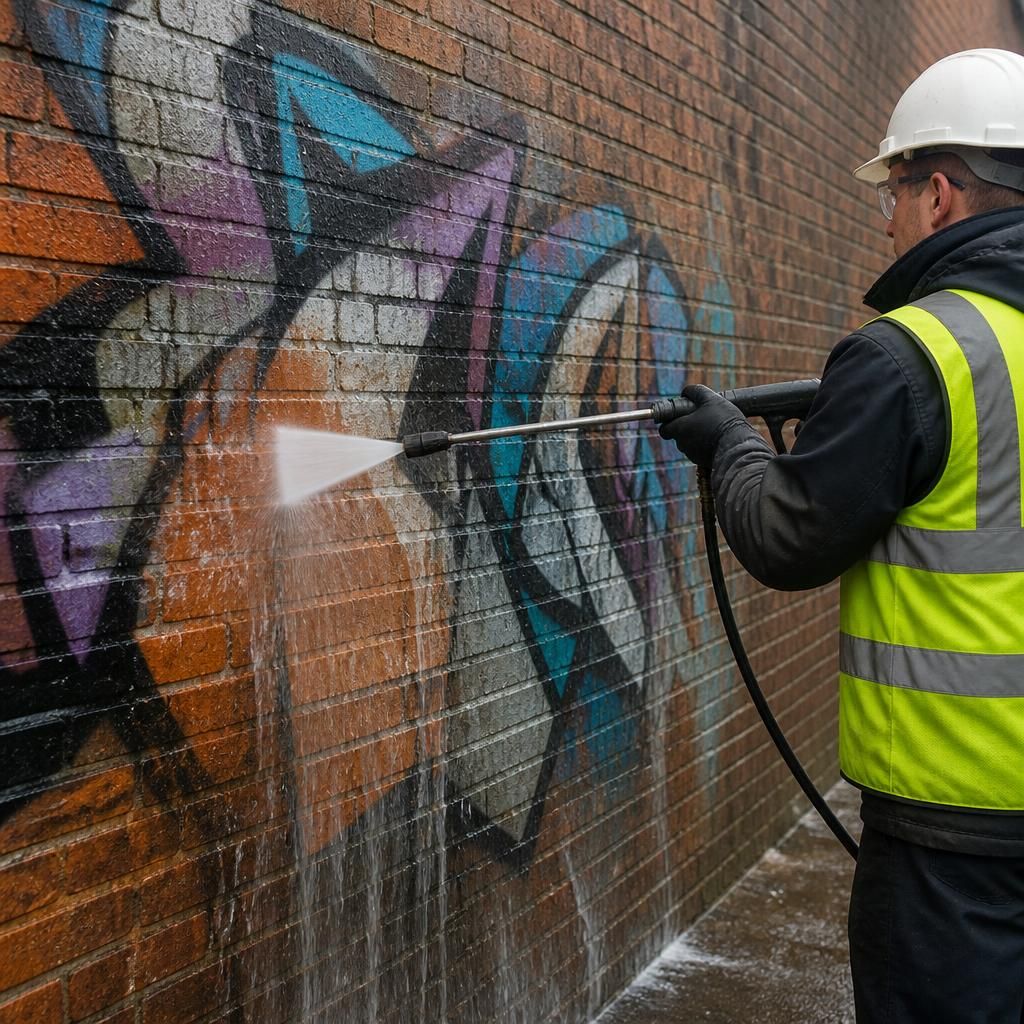
Pressure washing graffiti from brick surfaces is challenging because porous masonry absorbs water and paint residues, while excessive force can erode the brick face or mortar joints. Removing the visible paint does not always remove pigment held within the pores, so aggressive cleaning may leave ghosting while creating permanent surface damage.
The safest approach is to assess the brick, mortar, existing coatings and graffiti before cleaning, then test the least aggressive combination of pressure, water temperature and suitable removal product in an inconspicuous area. The test area should be allowed to dry fully, as staining and residual shadowing may not be apparent while the brick is wet. Where pressure washing is appropriate, a controlled fan spray and low effective pressure are preferable to a concentrated jet, particularly around joints, cracks and weathered bricks.
Run-off also requires control. Softened paint, detergents and contaminated water can spread onto clean masonry, paving or nearby drains. Collection, diversion and responsible disposal should therefore be planned before work begins. If pressure alone cannot remove the graffiti safely, low-pressure rinsing, steam cleaning or a compatible chemical treatment may provide better results with less force.
Arrange a Professional Brick Graffiti Removal Assessment
Arrange a professional brick graffiti removal assessment so the masonry, graffiti and surrounding surfaces can be checked before the most suitable cleaning method is selected. Contact Encanto Exterior Cleaning to plan a controlled, damage-conscious removal approach.