
What are the best methods for removing graffiti from brick without causing water damage?
The safest methods for removing graffiti from brick are low-pressure cleaning, controlled steam cleaning and a graffiti remover selected for the paint type and brick condition. A small test area, careful chemical dwell time and minimal, controlled rinsing help remove the marking without forcing water into porous masonry or damaging the brick surface.
The safest methods for removing graffiti from brick without causing water damage are low-pressure cleaning, controlled steam cleaning and a graffiti remover selected for the paint type and brick condition. A small test area, careful chemical dwell time and minimal, controlled rinsing help remove the marking without forcing water into porous masonry or damaging the brick surface.
Brick is absorbent, and graffiti can penetrate beyond the visible surface, particularly where the masonry is weathered or has open pores. The objective is therefore to dissolve or lift the graffiti while using as little water, pressure and agitation as possible. The correct method depends on the brick type, mortar condition, age of the graffiti, paint formulation and whether the wall has previously been sealed.
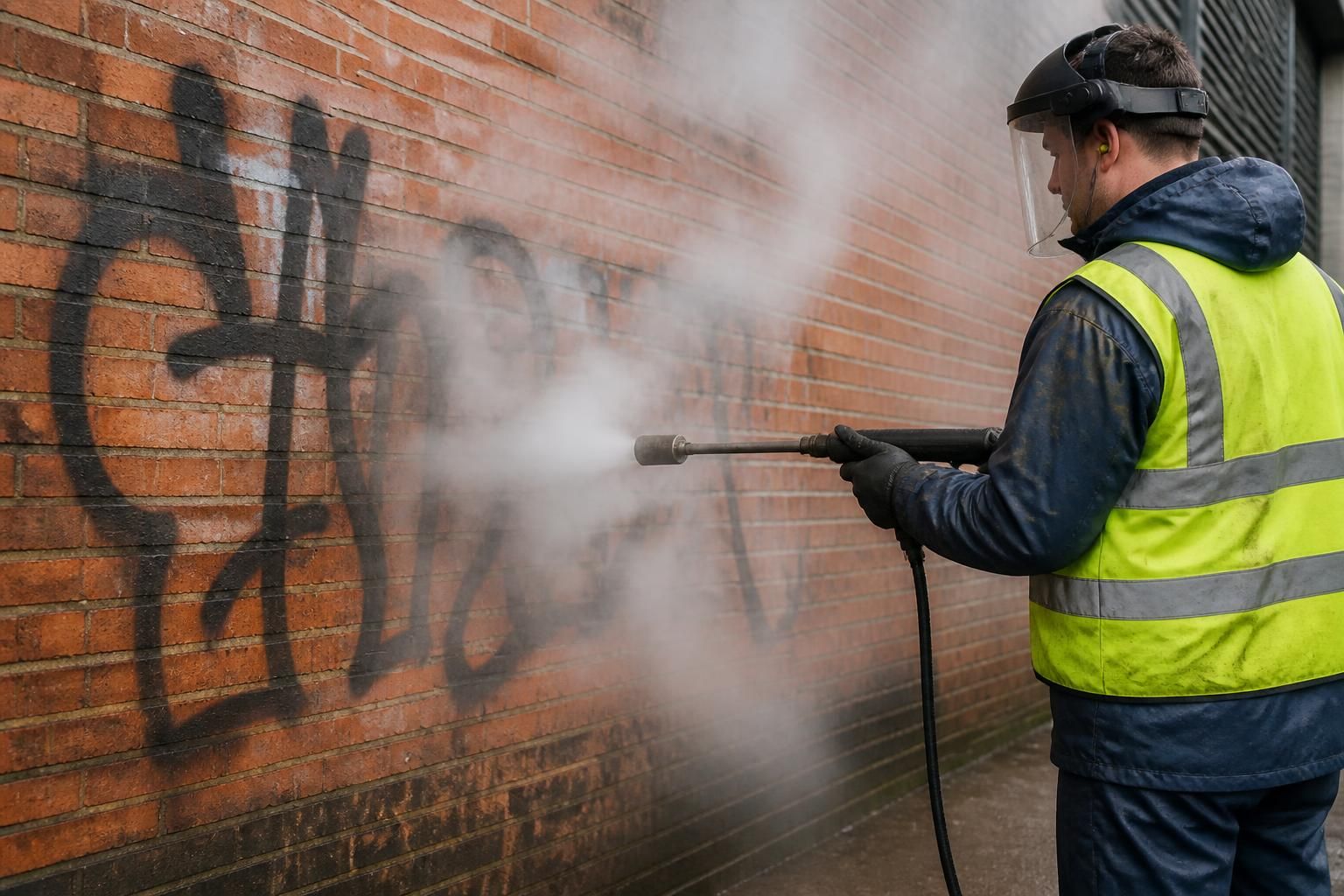
Low-pressure cleaning is often suitable for sound brick when combined with an appropriate graffiti-removal product. The cleaning solution is applied to the affected area and allowed sufficient dwell time to soften the paint. It is then agitated gently with a suitable brush before being rinsed using a controlled, low-pressure application. This is safer than trying to remove the marking with high pressure alone, which can drive water into the brick, strip the surface or erode soft mortar joints.
Rinsing should be targeted rather than excessive. Water should not be allowed to run unnecessarily over unaffected masonry or collect at the base of the wall. Where practical, the area should be cleaned in manageable sections, with runoff contained and removed in accordance with site and environmental requirements. This reduces saturation and helps prevent dissolved paint residues from spreading across the façade.
Steam cleaning can be particularly effective where reducing water use is important. Low-moisture steam softens many paints and marker residues with limited water application, allowing the operator to work gradually across the brick. It is useful for delicate, historic or detailed masonry, although the temperature and exposure time must be controlled. Excessive heat can affect vulnerable coatings, previously repaired areas or weak mortar, so a test patch remains essential.
Specialist chemical graffiti removers may be required for older, layered or strongly bonded paint. The product must be compatible with the brick and mortar rather than chosen solely for its strength. Solvent-based, alkaline and gel formulations behave differently, and some can draw pigment deeper into porous masonry or leave residues if they are not removed correctly. The product should be applied only to the graffiti, kept within its recommended dwell time and prevented from drying on the wall.
Before full application, the cleaning operative should test an inconspicuous section. The test should assess whether the graffiti is lifting, whether the brick colour or texture is changing, whether the mortar is softening and whether any staining is being drawn into the substrate. A method that appears effective on one elevation may be unsuitable on another because bricks can differ in porosity, firing, weathering and previous treatment.
Dry or low-moisture abrasive techniques can sometimes be considered where water must be minimised, but they require particular care. Fine abrasive media, used at controlled pressure and from an appropriate distance, may remove resilient coatings from robust brick. However, abrasive cleaning can alter the brick face, expose aggregate, remove a weathered surface or widen existing defects. It should not be treated as a default solution for soft, historic, glazed or heavily weathered masonry.
Methods that commonly increase the risk of water damage include high-pressure washing, prolonged soaking, directing water into open joints and repeated rinsing without allowing the wall to drain. These practices can saturate the backing of the wall, loosen defective mortar, mobilise salts and increase the risk of frost-related damage in cold conditions. They may also push paint residues further into the brick, making later removal more difficult.
A controlled removal process normally includes:
- Inspecting the brick, mortar, joints, cracks, previous repairs and nearby materials before cleaning.
- Identifying the likely graffiti type and checking whether the surface has a protective coating.
- Protecting doors, windows, signs, paving, planting, vehicles and drainage points from chemicals and contaminated runoff.
- Carrying out a documented test patch using the least aggressive practical method.
- Working from the outside of the affected area towards the centre where appropriate, to reduce the spread of dissolved pigment.
- Using controlled agitation and the minimum effective amount of water for rinsing.
- Checking the surface after drying, since ghosting, staining and residual paint may not be fully visible while the brick is wet.
- Allowing the masonry to dry naturally and checking for trapped moisture, efflorescence or changes to the mortar.
If a brick wall is already damp, cracked, poorly pointed or exposed to water ingress, graffiti removal should be preceded by an assessment of the underlying defect. Cleaning will not resolve failed pointing, defective copings or damaged render, and introducing water before those issues are understood can worsen them. Historic, listed or architecturally important brickwork may also require conservation advice and a method statement before work begins.
After removal, a breathable anti-graffiti treatment can reduce future paint penetration and make subsequent cleaning easier. The coating must be suitable for the brick and installed only after the surface is clean and sufficiently dry. Impermeable coatings can trap moisture within masonry, so a product should not be selected merely because it offers strong stain resistance.
For commercial premises and larger façades, the safest approach is a site-specific cleaning plan that records the substrate condition, test results, chosen method, chemical controls, runoff arrangements and inspection requirements. This gives the cleaning team a clear limit on pressure, temperature, dwell time and water use, helping restore the brick while avoiding unnecessary saturation or surface loss.
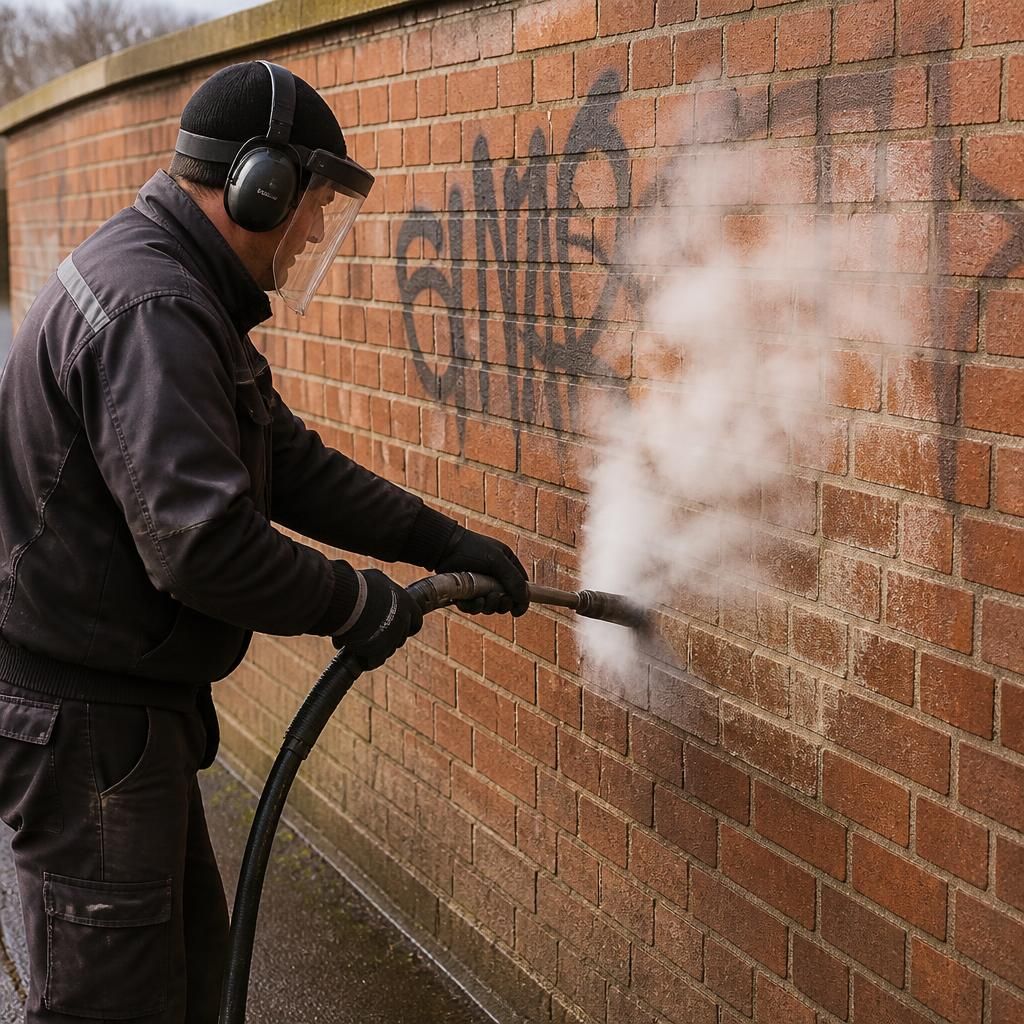
Controlled steam cleaning is often an effective low-water method for removing graffiti from brick. The heat softens paint and marker residues so they can be lifted with limited moisture, reducing the risk of saturating porous masonry compared with prolonged rinsing or high-pressure washing.
Steam must still be used carefully. The operator should test an inconspicuous area first, then work in small sections while monitoring the brick, mortar and any previous repairs. Excessive heat or prolonged exposure can affect weak joints, coatings and weathered surfaces. Once the graffiti has softened, gentle agitation and targeted rinsing can remove the residue without allowing contaminated water to spread across the façade.