
How do you safely remove graffiti from a porous brick surface without causing damage?
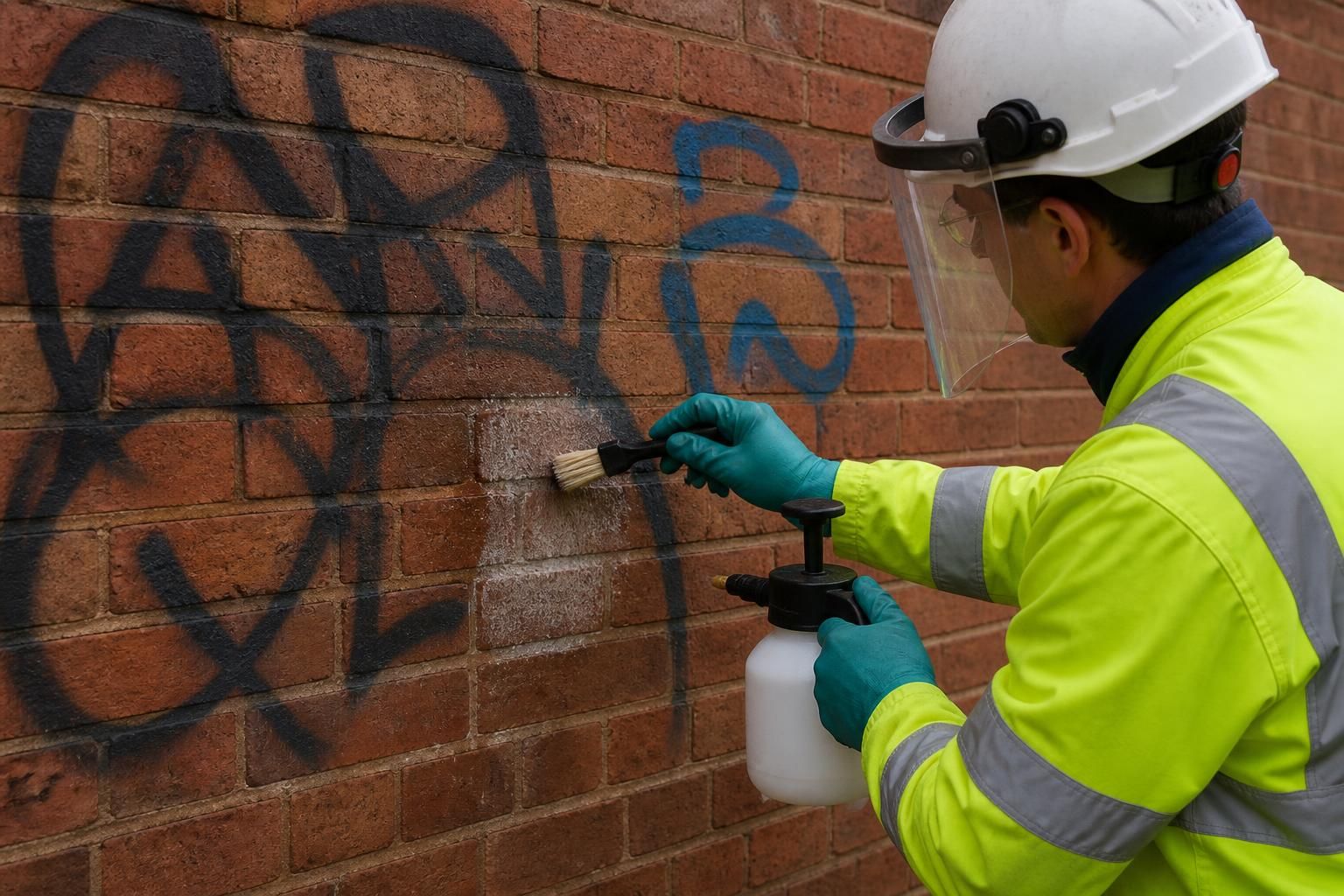
Safely removing graffiti from porous brick requires a tested, brick-compatible graffiti remover, controlled low-pressure cleaning and careful rinsing to lift the paint without driving it deeper into the masonry. A professional should assess the brick first, complete a discreet test patch, protect surrounding areas and adjust the treatment to the brick’s condition and the type of paint.
Safely removing graffiti from porous brick requires a brick-compatible treatment, a discreet test patch and controlled cleaning that lifts the paint from the masonry rather than driving it further into the pores. The method should be selected after assessing the brick’s age, hardness, surface finish, condition and the type of graffiti present. Low pressure, suitable steam or a carefully controlled chemical treatment may be appropriate, but no single method is safe for every brick surface.
Begin with a condition assessment. Before applying any product or water, inspect the brickwork for cracks, open joints, spalling, erosion, previous coatings, weak mortar and areas affected by damp. Historic, handmade, soft or weathered bricks can be damaged by aggressive pressure washing, abrasive cleaning or unsuitable chemicals. Check whether the graffiti has penetrated deeply, whether several paint layers are present and whether the surface has previously been treated.
It is also important to identify the graffiti material as far as possible. Aerosol paint, marker ink, masonry paint and adhesive residues do not respond identically to cleaning products. A treatment that works on one coating may spread another, leave a stain or remove the brick’s natural surface. If the paint cannot be identified, the safest approach is to start with the least aggressive compatible method and increase the treatment only where testing shows it is necessary.
Protect the surrounding area before cleaning. Mask or shield adjacent render, windows, doors, signage, painted surfaces, metalwork, plants and drainage points. Preventing runoff from entering surface water drains is essential, particularly where chemical residues, paint fragments or contaminated wash water could be carried into the drainage system. Suitable collection, filtration and disposal arrangements should be established before work starts.
Always carry out a test patch. Select an inconspicuous area that represents the main brickwork, including its mortar joint if possible. Test the proposed product, dwell time, agitation and rinsing method in a small area, then allow the brick to dry before judging the result. Wet brick can temporarily appear darker and cleaner than it will when dry. The test should confirm that the graffiti is being removed without lightening the brick, loosening the mortar, opening the surface or leaving a visible halo.
Use the least aggressive effective method. Depending on the test results, this may involve a specialist graffiti remover formulated for masonry, controlled steam cleaning or low-pressure rinsing. Chemical products should be applied only as directed by their technical information and never mixed with other agents. Allowing the product to dwell can help soften the paint, reducing the need for pressure, but it must not be allowed to dry on the brick. Soft brushes or non-abrasive agitation can assist with textured surfaces without cutting into the masonry.
Pressure should be kept as low as practicable and adjusted to the brick’s condition. A narrow, powerful jet can erode the face of soft brick, enlarge pores, remove the weathered surface and damage mortar joints. The operator should keep the nozzle moving, avoid concentrating on one spot and work from a suitable distance. Abrasive blasting and harsh mechanical methods are generally unsuitable for porous or historic brick because they can remove brick fabric along with the graffiti.
Control water and rinsing carefully. Excessive water can drive dissolved pigment into the brick, spread the stain to clean areas and saturate the wall. Rinse in a controlled manner, normally working from clean areas towards the treated section and avoiding unnecessary flooding. The aim is to remove softened paint and residues, not to force large volumes of water into the masonry. Particular care is needed around cracked brick, damaged joints, internal finishes and areas where water could enter the building.
Where water sensitivity is a concern, steam cleaning may reduce the amount of free water used, although it still requires careful control. Steam is not automatically harmless: heat can affect some coatings, sealants and fragile surfaces, and repeated treatment may stress already damaged brick or mortar. The selected method should therefore be based on the test patch rather than on the equipment alone.
Take additional precautions with chemical removers. Use the correct personal protective equipment, provide adequate control of overspray and follow the product’s handling, storage and first-aid instructions. Keep chemicals away from incompatible materials and protect workers and members of the public from contact. Acidic products are particularly risky on brick and mortar because they can etch the brick face, alter its colour and attack cementitious joints. Products containing strong acids, caustic agents or solvents should not be used unless their suitability for the specific masonry has been established.
After treatment, inspect the surface from several angles and allow it to dry before deciding whether further work is needed. Repeated aggressive passes can cause more damage than a small amount of residual staining. If a second application is required, repeat the controlled process rather than immediately increasing pressure or using a harsher product. Some deeply absorbed pigments may need specialist poultice treatment or further assessment, especially on listed, historic or highly weathered buildings.
Once the graffiti has been removed, check the brick and mortar for raised fibres, colour changes, softened joints or remaining residue. Do not apply a protective anti-graffiti coating simply to conceal an uneven result. If a coating is being considered for future maintenance, it should be compatible with the brick’s breathability, appearance and intended cleaning method, and it should first be tested on the same type of masonry.
Professional removal is advisable where the brick is soft, historic, painted, heavily weathered or close to delicate finishes, and where access or runoff controls are required. A competent contractor should document the test patch, explain the proposed cleaning system, identify how wastewater will be controlled and agree the expected finish before treating the full elevation. This measured approach reduces the risk of permanent brick damage while achieving the cleanest practical result.
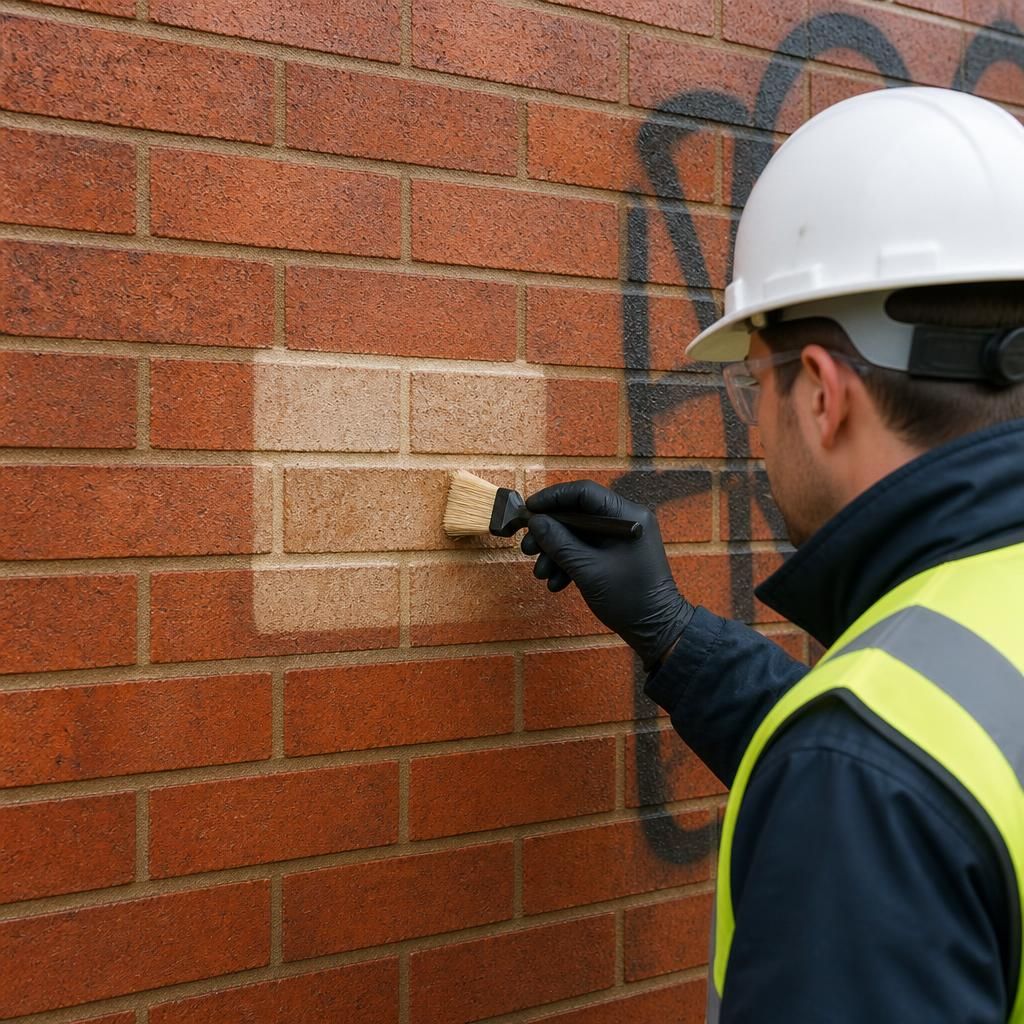
A discreet test patch is the safest way to confirm that a graffiti removal method will clean porous brick without changing its colour, eroding the surface or weakening the mortar. The test should use the proposed remover, dwell time, agitation and rinsing method on an area that represents the main elevation.
Allow the patch to dry fully before assessing the result, as wet brick can appear temporarily darker or cleaner. Check for staining, a visible halo, surface loss, opened pores, softened joints or chemical residue. If any damage is evident, stop and revise the treatment rather than increasing pressure. This controlled approach helps identify the least aggressive effective method before the full area is cleaned.