
How can property managers effectively maintain graffiti-free brick surfaces over time?
Property managers can maintain graffiti-free brick surfaces by arranging regular inspections, removing new markings promptly, and applying a breathable anti-graffiti coating suited to the brick. A planned maintenance schedule, accurate records and rapid reporting help prevent repeat vandalism and reduce the risk of permanent staining or damage.
Property managers maintain graffiti-free brick surfaces most effectively through a planned cycle of inspection, prompt removal, suitable protection and targeted prevention. Graffiti should be reported and removed as soon as it is discovered, because paint and marker residues can weather into porous brick, become more difficult to lift and encourage repeat tagging. The cleaning method and any protective coating must be selected for the brick type, the existing finish and the building’s exposure conditions.
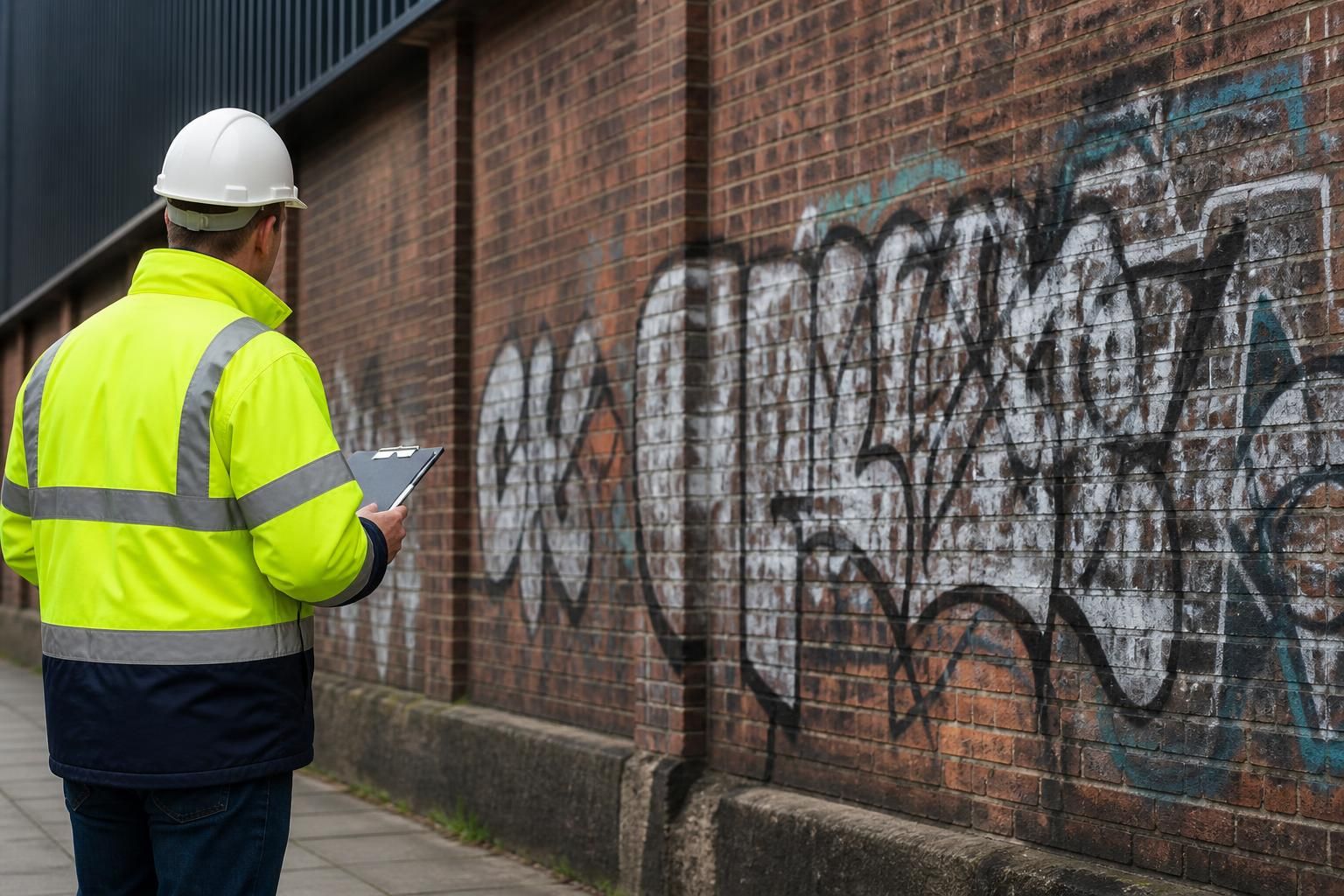
Start with a documented condition assessment
Before establishing a maintenance programme, record the condition of each relevant elevation, boundary wall, entrance, service area and other accessible brick surface. The assessment should identify:
- brick type, age, porosity and general condition;
- existing paint, sealants, coatings, repairs or previous cleaning;
- areas that are vulnerable because they are concealed, poorly lit or easily accessible;
- cracking, open joints, spalling, loose faces or damaged pointing that could be affected by cleaning;
- drainage routes, nearby planting and surfaces that may receive cleaning runoff; and
- signs of previous graffiti removal, including colour variation, etching or persistent staining.
Photographs and location references provide a useful baseline. They help distinguish new graffiti from older marks and show whether repeated cleaning is affecting the brick or mortar. Where the property is listed, located within a conservation area or built with historic brick, the proposed treatment should also be checked against any relevant conservation requirements.
Use a clear reporting and response process
Staff, tenants, security teams and maintenance contractors should know how to report graffiti, including its precise location, approximate size, height and apparent medium. Photographs taken from a safe position can help the cleaning contractor assess access and likely treatment, but people should not attempt to scrub or chemically treat the surface themselves.
Agree an appropriate response time for different parts of the site. Prominent entrances, customer-facing areas and safety-critical locations may require priority attention, while less visible areas can be scheduled within routine maintenance. The important point is consistency: a reported mark should be logged, assessed and either removed or formally scheduled rather than left until the next general clean.
Rapid removal can also reduce the visual reward for repeat vandalism. It does not prevent every incident, so records should be reviewed to identify recurring locations, times or access routes.
Choose removal methods that preserve the brick
Brick is porous and varies considerably in hardness, firing, surface texture and condition. A treatment that is suitable for dense modern brick may damage soft, handmade or historic brick. Pressure, temperature, dwell time and chemical strength should therefore be controlled rather than increased simply to remove a stubborn mark.
A professional assessment may identify low-pressure washing, steam cleaning, a carefully selected chemical treatment, or a combination of methods as appropriate. A test area should be completed in an inconspicuous location and allowed to dry before wider work proceeds. The test should check for colour change, surface erosion, salt movement, mortar damage, staining and changes in water absorption.
Cleaning should not be used to disguise defective brickwork or failing pointing. Open joints, damaged brick faces and water ingress routes may need repair before or after graffiti removal, depending on the condition and the proposed cleaning process. Any rinse water and removed residues should also be managed so that they do not spread across clean brick, enter drains improperly or affect planted areas.
Apply a compatible anti-graffiti coating where appropriate
An anti-graffiti coating can make future marks easier to remove, but it is not suitable for every brick surface and should not be treated as a universal seal. The selected system should be compatible with the substrate and allow appropriate moisture vapour movement. A non-breathable film on a damp or traditionally constructed wall can trap moisture and contribute to blistering, salt deposits or frost-related deterioration.
Coating selection should consider whether the system is sacrificial or permanent, how it responds to repeated cleaning, its appearance when dry, and whether it is suitable for exposed elevations. A sacrificial coating is removed or renewed during graffiti cleaning, whereas a permanent system is designed to remain in place through repeated treatments. The manufacturer’s preparation, application and reapplication requirements should be followed, and a test patch should confirm that the finish is acceptable before the full area is treated.
Protection is most useful on surfaces that are repeatedly targeted, such as low-level façades, alley entrances, boundary walls, shutters and transport-facing elevations. Coating an entire building without considering exposure, appearance and maintenance requirements may add cost without providing equivalent benefit.
Build prevention into the site design
Environmental measures can reduce opportunities for graffiti without making the premises feel hostile. Depending on the site, useful measures include:
- improving uniform lighting around recessed entrances, blind corners and service yards;
- removing unnecessary hiding places while retaining required security and accessibility;
- controlling access to plant rooms, roofs, yards and boundary routes;
- maintaining gates, fences and doors so that unauthorised access is more difficult;
- using suitable planting or physical barriers to protect vulnerable walls without trapping moisture against the brick; and
- positioning signage, bins, storage and street furniture so they do not provide convenient access to high-level surfaces.
Cameras and lighting should be installed and operated in accordance with applicable privacy, planning and safety requirements. They should support, not replace, physical inspections and a reliable reporting process.
Schedule inspections and routine maintenance
Inspection frequency should reflect the property’s history, visibility, public access, neighbouring land use and exposure to vandalism. Include graffiti checks in routine estate inspections and complete additional checks after reported incidents or changes to access arrangements. Inspectors should look beyond obvious tags for faint marker lines, paint mist, stickers, residue and attempted cleaning damage.
Keep a site log showing the location and type of graffiti, date reported, date treated, treatment used, photographs, coating condition and any follow-up repairs. This information helps identify repeat hotspots, assess whether a coating remains effective and decide where lighting, access control or cleaning frequency should change. It also gives the property manager a clear record when coordinating work across several buildings or sites.
Use competent contractors and review the plan
Graffiti removal from brick can involve chemicals, pressurised equipment, steam, elevated access and contaminated runoff. Work should be planned around safe access, public protection, electrical equipment, traffic, weather and the condition of the façade. Contractors should be able to explain their proposed method, test-patch process, waste controls and approach to protecting adjacent materials.
Review the maintenance plan after each significant treatment and at agreed property-management intervals. If marks are recurring in one location, reassess access, lighting and surface protection rather than repeatedly applying stronger cleaning. If brick colour or texture is changing, pause routine treatment and obtain a further condition assessment. This measured approach keeps the surface presentable while reducing cumulative cleaning damage, unnecessary water and chemical use, and avoidable maintenance costs.
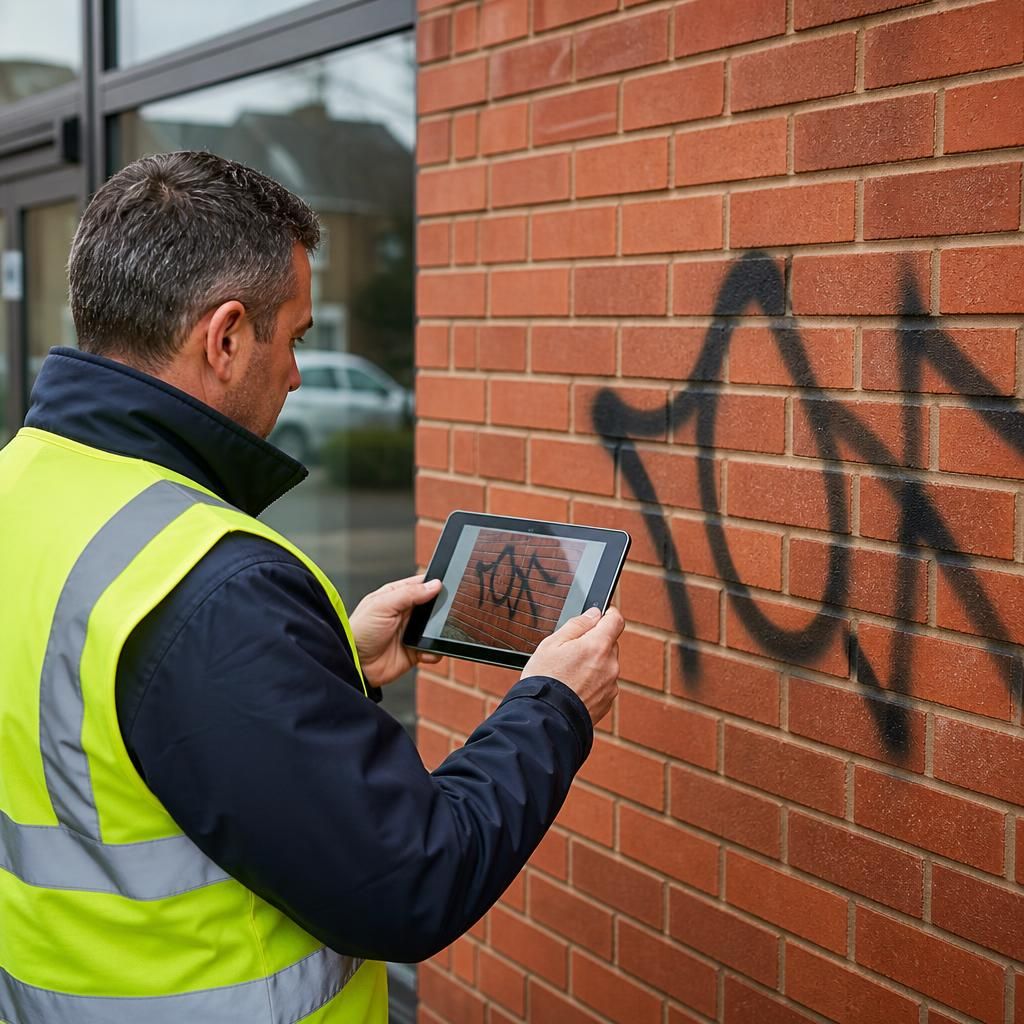
A planned inspection and rapid response process is one of the most effective ways to keep brick surfaces graffiti-free over time. Record the location and condition of each affected area, ask staff or tenants to report new markings promptly, and arrange removal before paint or marker residue weathers into the porous brick.
Review recurring hotspots after each incident. Where the brick is suitable, a breathable anti-graffiti coating can make future marks easier to remove, but it should be tested first and maintained according to the manufacturer’s guidance. Combining prompt treatment with inspections, access control and improved lighting reduces repeat cleaning and helps protect the brick from cumulative damage.
Arrange a Professional Graffiti Removal Assessment
Arrange a professional graffiti removal assessment with Encanto Exterior Cleaning to review your brickwork, existing markings and suitable long-term protection. We can recommend a practical maintenance plan based on the surface condition, access requirements and recurring hotspot risks.