
What precautions should be taken to protect sensitive government site materials during graffiti removal?
Protect sensitive government site materials during graffiti removal by surveying and testing the affected surface first, then selecting the least aggressive compatible treatment. Isolate surrounding areas, control water and chemical run-off, protect fixtures and security equipment, and use trained operatives under the site’s access, environmental and security procedures.
Protecting sensitive government site materials during graffiti removal requires a documented surface assessment, controlled test cleaning and the least aggressive treatment that will remove the marking without damaging the substrate, coatings, fixtures or security systems. The work should be planned around the site’s access, environmental, operational and information-security requirements, rather than treating the graffiti in isolation.
Inspect and identify the affected materials first. Before selecting equipment or chemicals, the cleaning team should inspect the substrate, the graffiti medium and the surrounding area. Government sites may contain natural stone, brick, concrete, painted façades, powder-coated metal, glazing, timber, composite panels and specialist protective coatings. These materials can react differently to pressure, heat, solvents and alkaline or acidic products. The assessment should also identify joints, sealants, membranes, vents, drainage channels, lighting, cameras, access-control equipment and other items that could be affected by water or cleaning products.
Existing defects should be recorded, including loose coatings, corrosion, cracking, staining, failed sealant and previous repairs. Photographs and written notes create a useful baseline, help distinguish pre-existing damage from cleaning-related change, and support the site’s maintenance and audit records.
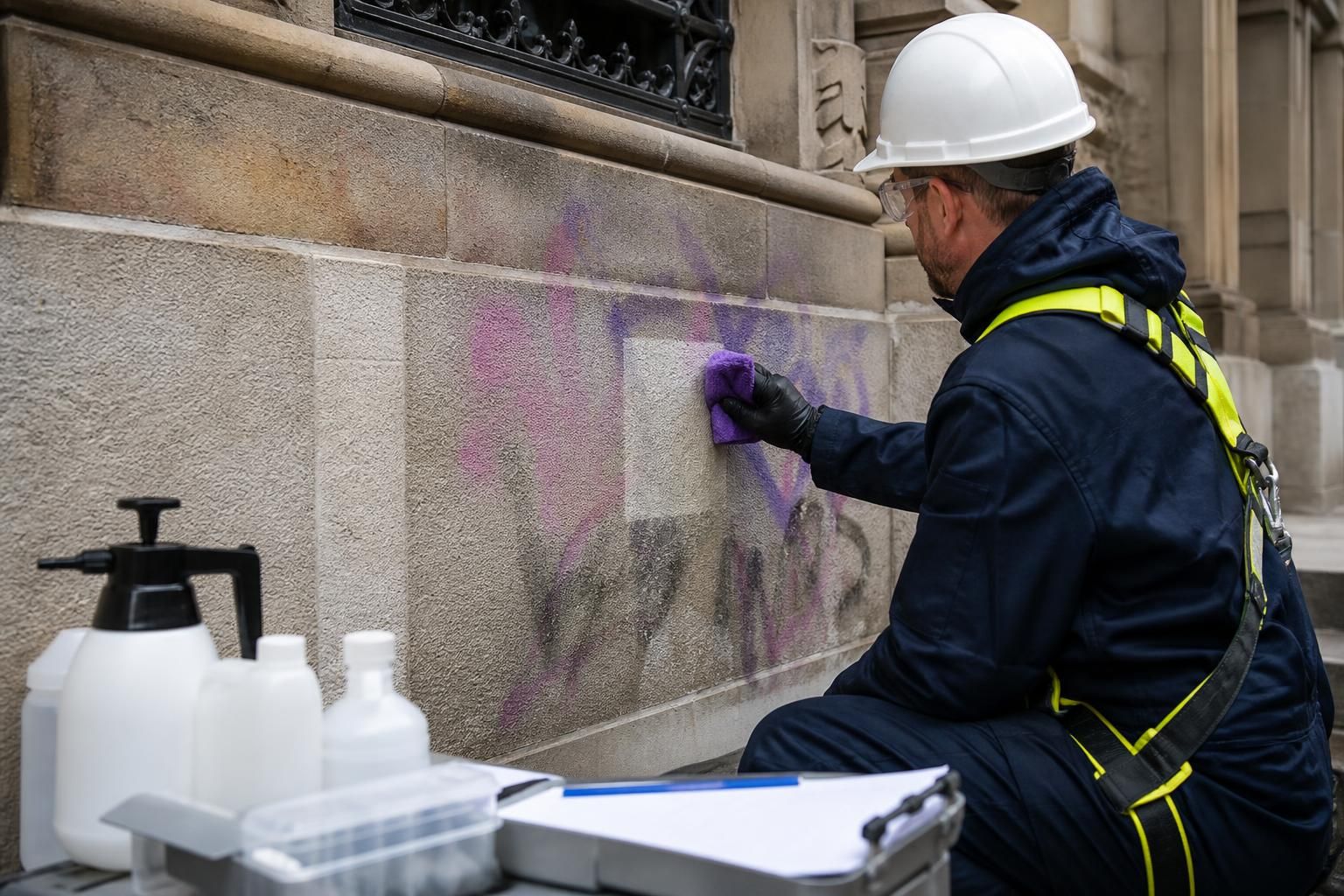
Carry out a controlled test patch. A small, inconspicuous area should be tested before full removal begins. The test should use the proposed product, pressure, temperature, dwell time, agitation and rinsing method, as changing any of these variables can alter the risk to the surface. The area should be inspected after cleaning and again once it has dried, because darkening, blooming, tide marks, coating changes and solvent migration may not be immediately visible.
Testing should confirm that the graffiti can be removed without:
- lifting paint, lacquer or protective coatings;
- etching stone, concrete, glass or metal;
- driving pigment deeper into porous materials;
- roughening the surface or changing its appearance;
- loosening mortar, sealant, render or cladding components; or
- causing staining, corrosion or residue.
The agreed method should be approved by the responsible site contact before wider work starts. If the test produces an unacceptable result, the team should stop, reassess the material and select a different approach rather than increasing pressure or chemical strength automatically.
Use the least aggressive compatible technique. Removal should normally progress from the mildest suitable option to more intensive treatment. Depending on the substrate and paint, this may involve a specialist graffiti remover, low-pressure washing, controlled steam, soft agitation or carefully managed dry cleaning. Pressure should be kept as low as practicable, with the nozzle held at a suitable distance and angle. High pressure can force water and pigment into porous surfaces, damage pointing and remove sound coatings around the graffiti.
Steam can reduce the need for chemicals, but heat may soften coatings, affect sealants or damage some plastics and membranes. Chemical products should be selected for the specific substrate and graffiti type, used strictly in accordance with their safety data and product instructions, and never mixed unless the manufacturer expressly permits it. On historic, fragile or specially coated materials, specialist conservation advice may be needed before cleaning.
Isolate and protect adjacent equipment. Sensitive items should be covered, shielded or temporarily isolated before work starts. This can include CCTV cameras, access readers, intercoms, alarms, sensors, electrical fittings, communications equipment, vents, door hardware, signage and vulnerable glazing. Covers must not obstruct ventilation, conceal security devices from authorised monitoring or create a trip hazard. Where equipment cannot be adequately protected, the relevant facilities or security team should agree whether it needs to be taken offline and reinstated after cleaning.
Care is also needed around expansion joints, drainage outlets and façade interfaces. Water or chemicals forced behind panels, seals or flashings can cause concealed damage even when the cleaned face appears unaffected. Operatives should avoid directing spray into openings and should check protected areas after completion.
Contain water, chemicals and removed pigment. Run-off should be prevented from entering drains, soil, watercourses or building interiors. The work area may require drain covers, bunding, absorbent barriers, collection equipment and controlled rinsing. Wastewater and contaminated absorbents should be handled in accordance with the site’s environmental procedures and applicable waste requirements. Operatives should never allow dissolved paint, solvent or detergent residue to spread across adjacent façades or public routes.
Weather conditions should be considered as part of the control plan. Rain, wind, freezing temperatures and strong sunlight can affect dwell times, run-off, drying and chemical performance. Cleaning should be postponed or adapted where conditions make containment or surface control unreliable.
Control access and protect site operations. Government premises may have restricted zones, security classifications, escorted-access rules and strict requirements for tools, vehicles and waste removal. The cleaning team should work to the agreed method statement, risk assessment, permit arrangements and site induction requirements. Only authorised personnel should enter the work area, and equipment should be managed so it cannot obstruct emergency routes, security lines or essential access.
Barriers, warning signs and a defined exclusion zone help protect staff and visitors from spray, residues, noise and falling debris. If the location is operationally sensitive, the work should be scheduled with the site representative so that cleaning, rinsing and inspection do not interfere with deliveries, public access, emergency response or security procedures.
Use trained operatives and maintain clear records. Personnel should understand the behaviour of the relevant substrates, chemical controls, pressure-washing risks, work-at-height requirements and emergency arrangements. They should have access to the product safety information and suitable personal protective equipment, including eye, hand, respiratory and protective clothing controls where the assessment requires them.
Records should include the initial condition survey, test-patch results, approved products and settings, photographs, run-off controls, waste arrangements, weather conditions, incidents and the final inspection. A completion check should confirm that the graffiti has been removed to the agreed standard, adjacent materials are undamaged, protective covers have been removed safely and any isolated equipment has been returned to service by the authorised person.
Where the substrate, coating or security equipment cannot be confidently identified, cleaning should pause until the responsible specialist provides direction. This precaution is particularly important on listed or historic structures, specialist façades and sites containing critical electrical, communications or surveillance systems.
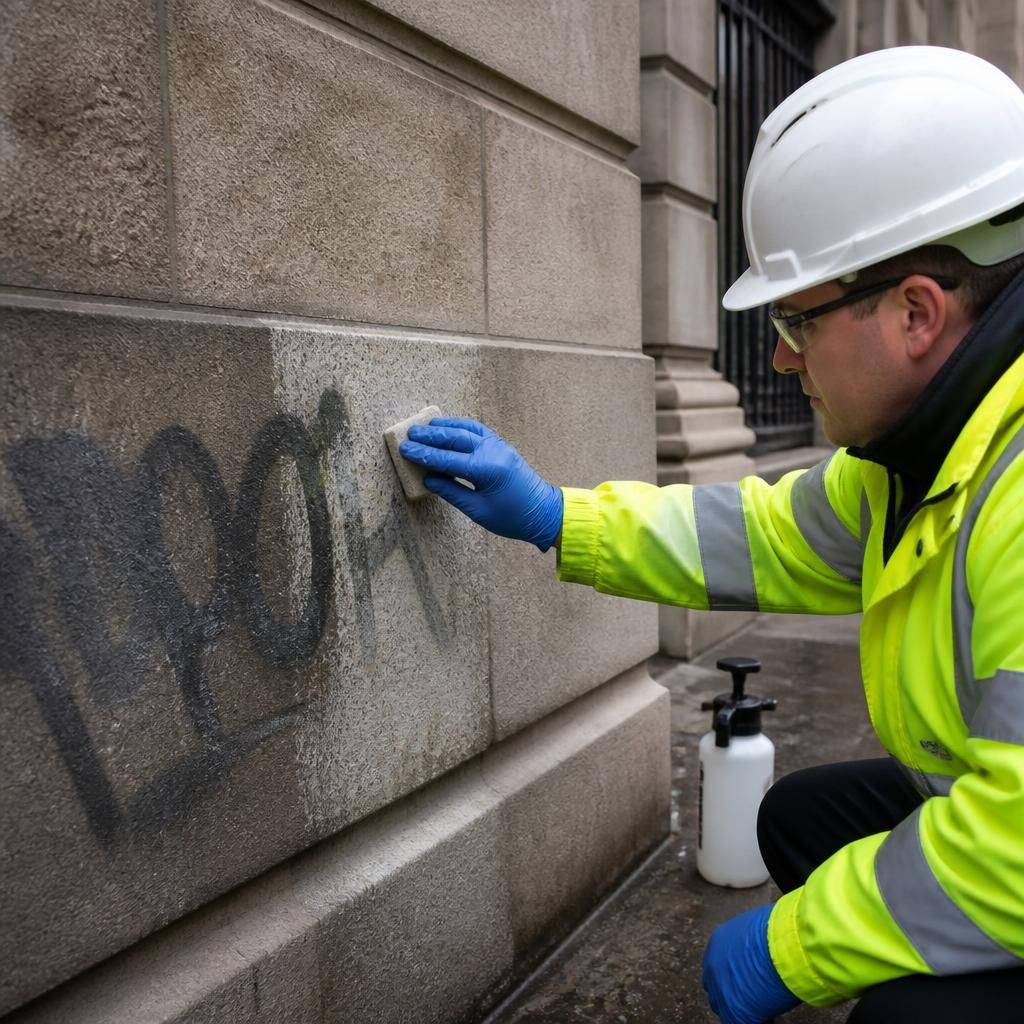
The most important precaution is to test the proposed graffiti removal method on a small, inconspicuous area before treating the full surface. Government buildings may combine stone, brick, painted coatings, metal, glazing, cladding and sealants, each of which can react differently to pressure, heat and cleaning products.
The test should replicate the intended pressure, temperature, chemical strength, dwell time, agitation and rinsing process. Inspect the area immediately after cleaning and again once it has dried, checking for coating loss, etching, staining, pigment migration, corrosion or changes in appearance. Work should only proceed after the responsible site contact has approved the result. If the test indicates a risk to the substrate or surrounding materials, the method should be revised rather than made more aggressive.
Arrange a Secure Graffiti Removal Assessment for Your Government Site
Arrange a secure graffiti removal assessment for your government site, including surface testing, equipment protection and run-off controls. Contact Encanto Exterior Cleaning to agree a compliant method around your site’s security and operational requirements.