
What methods are most effective for removing graffiti from government buildings?
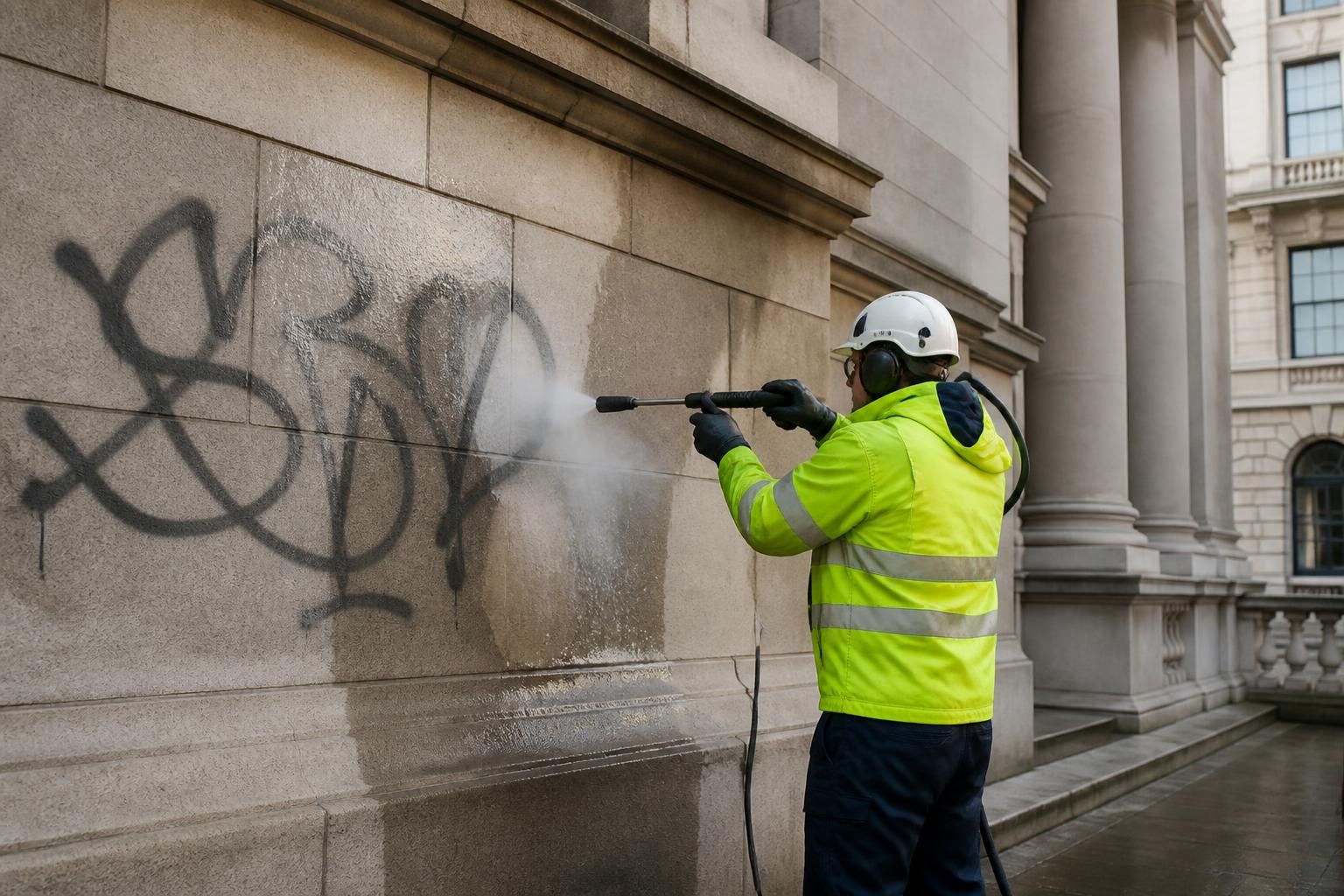
The most effective method depends on the graffiti paint, the substrate and the surrounding environment, but professional removal commonly uses controlled pressure washing, steam cleaning and suitable graffiti-removal detergents. Technicians should test the surface first and use the least aggressive method that removes the marking without damaging masonry, cladding, coatings or historic materials, while containing wastewater where required.
The most effective method for removing graffiti from a government building is the least aggressive technique that removes the marking completely without damaging the underlying surface. In practice, this usually means a controlled combination of steam cleaning, low- to medium-pressure washing and a surface-appropriate graffiti-removal product, selected after identifying the paint, substrate and environmental constraints.
Assessment should come before cleaning. Technicians inspect the graffiti and the surrounding area to establish whether it is aerosol paint, marker ink, adhesive, bitumen or another coating. They also assess the substrate, including brick, natural stone, render, concrete, metal, glass, painted cladding and historic fabric. A small test patch in an inconspicuous location confirms how the surface reacts and helps determine the required temperature, pressure, dwell time and cleaning agent.
Steam cleaning is often suitable for sensitive or detailed surfaces because high-temperature steam can soften paint and reduce the need for mechanical abrasion or harsh chemicals. It is useful around masonry details, street furniture, signs and areas where limiting water use is important. Steam must still be controlled carefully: excessive heat can affect coatings, sealants, plastics or friable historic materials.
Pressure washing is effective on robust, non-porous surfaces such as sealed concrete, some brickwork, external walls and hardstanding. Professional operators adjust pressure, nozzle selection, distance and water flow to avoid etching masonry, forcing water into joints or lifting existing coatings. Pressure washing is not automatically appropriate for every façade, particularly soft stone, weathered brick, render or decorative surfaces.
Specialist graffiti-removal detergents can dissolve or loosen paint, marker and adhesive residues before rinsing or steam treatment. The product must be compatible with the substrate and any existing protective coating. It should be applied only for the recommended dwell time, prevented from drying on the surface and thoroughly removed afterwards. Chemical selection also needs to account for occupants, ventilation, nearby vegetation, drainage and the requirements for collecting contaminated wash water.
Gentle mechanical methods, such as soft brushing or controlled agitation, may help remove softened residues from textured surfaces. Abrasive blasting, aggressive wire brushing and uncontrolled high-pressure cleaning should generally be avoided unless a specialist assessment confirms that the substrate can tolerate them. These methods can remove the surface layer, alter the appearance of masonry and make future graffiti more difficult to remove.
Different materials require different approaches:
- Brick and concrete: use a test-led combination of suitable detergent, controlled rinsing and, where appropriate, steam or pressure washing. Mortar joints and porous areas require particular care.
- Natural stone: start with the mildest viable process. Soft or historic stone may be damaged by aggressive chemicals, heat, pressure or abrasives.
- Painted metal and cladding: confirm that the cleaning product will not soften, discolour or strip the factory finish. Low-pressure methods are normally preferable.
- Glass and glazed surfaces: remove paint with a compatible product and non-damaging tools, taking care around seals, frames and solar-control coatings.
- Render and coated façades: use low-impact cleaning and avoid exposing the underlying substrate or creating visible patches.
- Historic or listed buildings: obtain the necessary conservation advice and approvals before testing or cleaning. The objective is to remove the graffiti while retaining patina, tooling marks and original fabric.
On government premises, the cleaning method must also protect people and operations. Work areas may need to be segregated, with pedestrian routes, entrances, public counters, vehicles and sensitive equipment kept clear. Cleaning schedules should be coordinated with the site contact, and operatives should use appropriate personal protective equipment and follow the product safety data. Where chemicals or contaminated runoff are involved, wastewater should be contained and disposed of in accordance with site procedures and applicable environmental requirements rather than allowed to enter surface-water drains.
After removal, the surface should be rinsed or neutralised as appropriate, inspected in suitable lighting and checked for shadowing or residual staining. A breathable anti-graffiti coating may be considered where repeated incidents are likely, provided it is suitable for the building material and does not conflict with conservation or façade requirements. Such coatings can make subsequent cleaning easier, but they do not replace prompt removal and routine inspection.
For large or sensitive government sites, the most reliable process is therefore an assessment, test patch, controlled treatment, responsible wastewater management and final inspection. This approach achieves effective graffiti removal while reducing the risk of surface damage, visible cleaning marks and disruption to the building’s normal use.
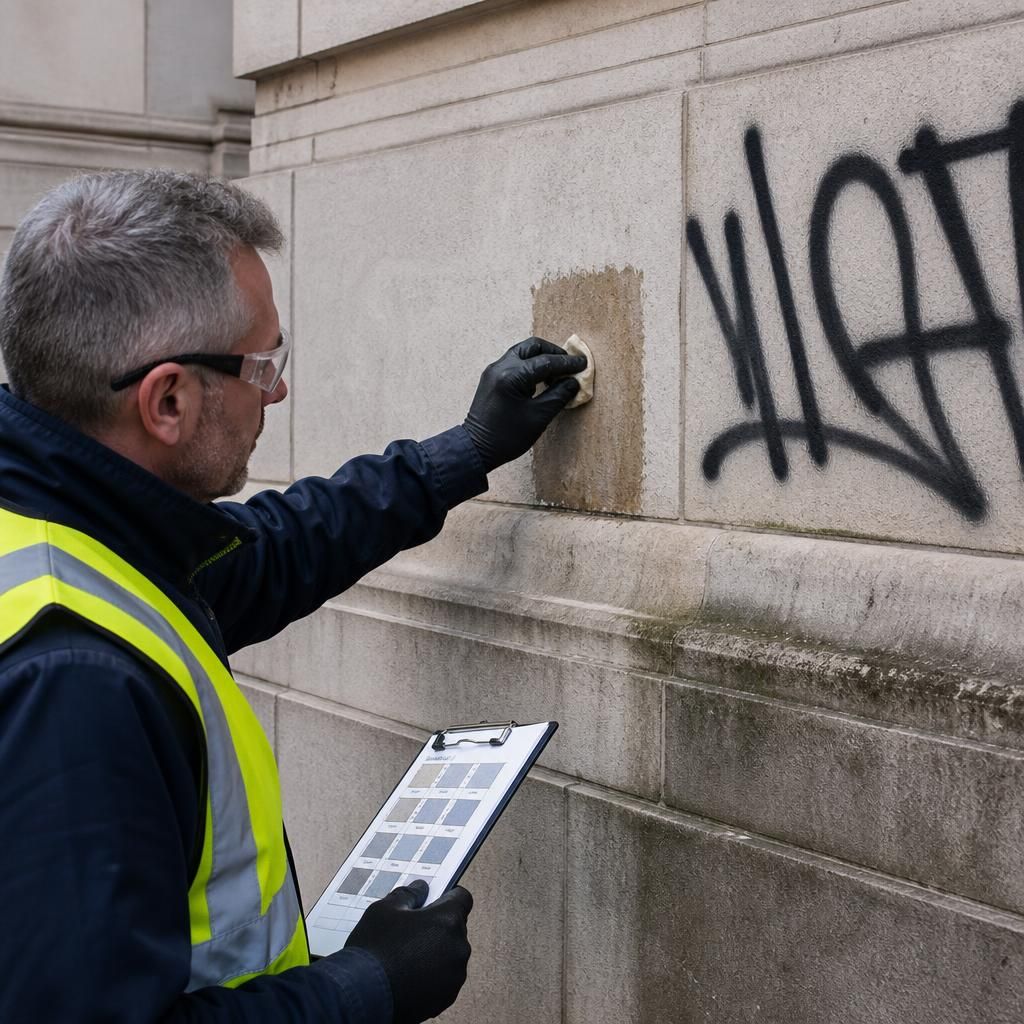
The safest effective approach to graffiti removal from a government building is to test the proposed treatment before applying it across the affected area. A small, inconspicuous test patch shows whether the surface, existing coating and graffiti respond safely to steam, pressure washing or a compatible removal product.
Professional operatives use the test to refine pressure, temperature, nozzle distance, dwell time and agitation. The method can then be matched to the material: controlled washing for robust concrete, steam or low-impact cleaning for sensitive masonry, and compatible products for painted cladding, glass or coated surfaces. This prevents etching, colour changes, coating failure and visible cleaning marks while helping the work proceed with minimal disruption to the building.