
What is the process for coordinating graffiti removal at government sites to minimise disruption?
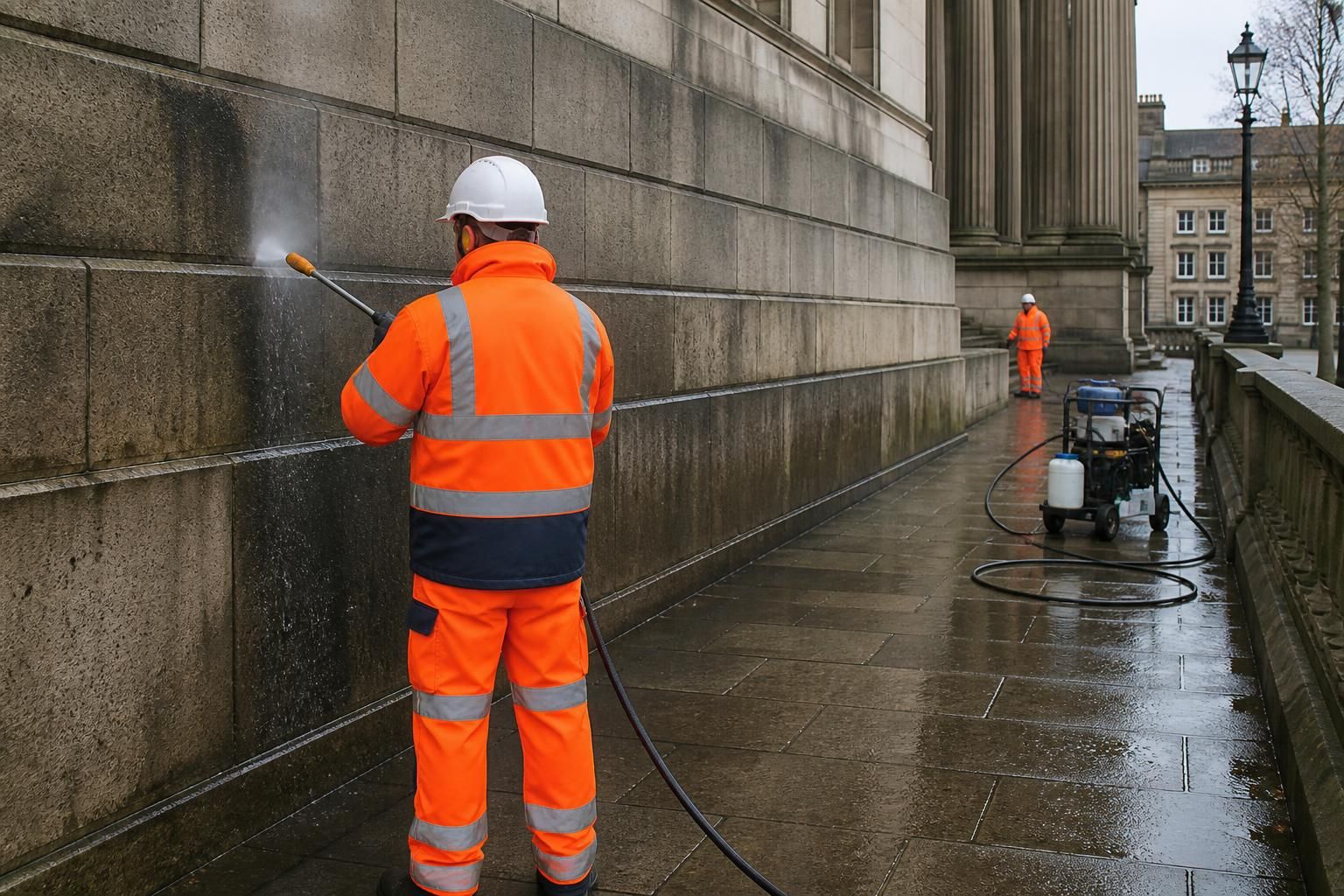
Graffiti removal at government sites is coordinated through a site survey, liaison with the responsible facilities and security teams, and an agreed method statement, risk assessment and work schedule. Works are then planned around site operations, using controlled access, suitable equipment and staged cleaning where necessary, followed by inspection and handover.
Graffiti removal at a government site is coordinated through a controlled process that combines a site survey, security and facilities liaison, documented risk controls, an agreed work schedule and formal inspection. The objective is to remove the graffiti effectively while protecting the public, staff, sensitive materials, security arrangements and normal site operations.
1. Confirm the site requirements and responsible contacts
Before attending, the cleaning contractor should establish who is responsible for authorising and supervising the work. This may include the facilities manager, estates team, security personnel, principal contractor, building manager or local authority representative. Clear lines of responsibility prevent delays on the day and ensure that access, isolation and operational decisions are made by the appropriate person.
The initial discussion should confirm:
- The location, extent and apparent age of the graffiti.
- Whether the affected area is publicly accessible, secure, occupied or operationally sensitive.
- Any access restrictions, induction requirements, escort arrangements or photographic controls.
- Working hours, quiet periods, public events, deliveries and other activities that could be affected.
- Available water, drainage, electricity and suitable areas for equipment.
- Requirements for traffic management, barriers, permits or notifications to neighbouring occupiers.
Where the site has security-sensitive areas, the cleaning team should receive only the information needed to complete the work and should follow the site’s established confidentiality and access procedures.
2. Carry out a detailed survey
A survey identifies both the graffiti and the risks associated with removing it. The operative assesses the substrate, such as brick, stone, render, painted masonry, metal, glass, cladding or a protected historic surface. The type of paint, marker or adhesive residue is also considered, together with the condition of the surface beneath it.
The survey should record whether the area is close to entrances, cameras, alarms, electrical equipment, ventilation systems, public footways, vehicles or sensitive landscaping. It should also identify potential run-off routes and any drainage restrictions. A small test area may be cleaned using the proposed method so that dwell time, pressure, temperature and chemical compatibility can be checked before larger-scale work begins.
Photographs and site notes can support the survey, but government clients may have specific rules about taking, storing or sharing images. Records should therefore be created and handled in accordance with the site’s security and data-control requirements.
3. Agree the cleaning method and work controls
The removal method is selected according to the surface, coating, graffiti medium and surrounding environment. Options may include controlled pressure washing, steam cleaning, a suitable graffiti remover, or a combination of techniques. The least aggressive effective method is normally preferred, particularly on older masonry, painted finishes, historic structures and surfaces with existing deterioration.
The planned approach should be set out in the method statement and risk assessment. These documents typically cover:
- Equipment, cleaning products and the intended application method.
- Protection of adjacent surfaces, fixtures, signs, cameras, doors and ventilation points.
- Control of water, chemical use and contaminated run-off.
- Work at height, access equipment and falling-object controls where relevant.
- Public protection, exclusion zones and safe movement around the work area.
- Personal protective equipment, COSHH controls and emergency arrangements.
- Waste collection, storage and disposal requirements.
- Stop-work conditions, including unexpected substrate damage or security concerns.
For occupied or high-security sites, the documents may need review and approval by the client before the visit. Any permit-to-work, hot-work restriction, roof-access approval, traffic-management plan or other local control should be completed in advance rather than improvised on site.
4. Schedule the work around site operations
Graffiti removal should be placed into an agreed access window that minimises contact with staff, visitors and essential services. Depending on the location, this may mean working before opening, after closing, during a planned maintenance period or in sections while the remainder of the site stays operational.
The schedule should allow time for set-up, surface testing, cleaning, drying, inspection and removal of barriers. It should also account for weather when work is outdoors. Rain, wind, freezing conditions or excessive heat can affect cleaning products, run-off control, access equipment and the final appearance.
For larger areas, staged cleaning is often more practical than closing an entire frontage or courtyard. Sections can be isolated, cleaned, checked and reopened progressively. The client should be told in advance how long each stage is expected to remain restricted and what signs or barriers will be used.
5. Coordinate security, access and public safety
On arrival, the team should report to the nominated contact, complete any required induction and confirm the work area before equipment is unloaded. Security staff can then verify identities, authorise access and confirm that the agreed location and conditions have not changed.
Barriers, warning signs and, where necessary, a banksman or marshal should separate the work from pedestrians and vehicles. Hoses and cables must be routed to avoid trip hazards, while equipment should not obstruct fire exits, emergency routes or security infrastructure. Noise, mist, steam and visibility should also be considered where the work is close to entrances or occupied rooms.
If the graffiti is evidence of a wider security incident, staff should follow the client’s reporting procedure before cleaning begins. The contractor should not remove potentially relevant evidence without authorisation.
6. Complete the cleaning in a controlled sequence
The team should protect surrounding surfaces and confirm the test result before proceeding. Cleaning is then carried out using controlled pressure, temperature, product concentration and dwell time. Water and residues are contained wherever possible, and drainage arrangements are monitored throughout the work.
Where the surface is delicate or the graffiti is extensive, cleaning may be completed in small sections. This allows the operative to compare results, prevent over-cleaning and identify any difference between the original surface and areas hidden beneath the graffiti. If the substrate begins to erode, the coating lifts unexpectedly or the planned controls are no longer adequate, work should stop and the client should be consulted.
7. Inspect, rectify and hand over the area
After cleaning, the responsible client representative and contractor should inspect the area together where practicable. The inspection should consider graffiti removal, surface condition, staining, residues, run-off, protection of adjacent features and the safe removal of equipment and barriers.
Some porous surfaces can retain shadowing or staining even after the paint has been removed. This should be explained accurately, along with any recommendation for a further treatment, repainting, sealing or planned follow-up. The aim is to distinguish between remaining graffiti, permanent substrate staining and pre-existing surface defects rather than applying unnecessary aggressive cleaning.
Handover records may include the completed work area, cleaning method, products used, waste arrangements, photographs where permitted, outstanding observations and any maintenance recommendation. The area should only be returned to normal use once it is clean, safe, dry where necessary and formally released by the authorised contact.
8. Maintain a clear communication trail
For recurring government-site work, a consistent communication process makes future responses faster and more controlled. Agree who reports new graffiti, who authorises attendance, how urgent work is prioritised and which records must be retained. A planned inspection or maintenance arrangement can also identify repeat locations, vulnerable surfaces and opportunities to improve lighting, protective coatings or site security.
Effective coordination is therefore not simply a matter of arriving with cleaning equipment. It is the controlled integration of cleaning expertise with the site’s security, operational, environmental and health-and-safety requirements. A documented plan, a suitable method and regular communication allow graffiti to be removed promptly without creating avoidable disruption.
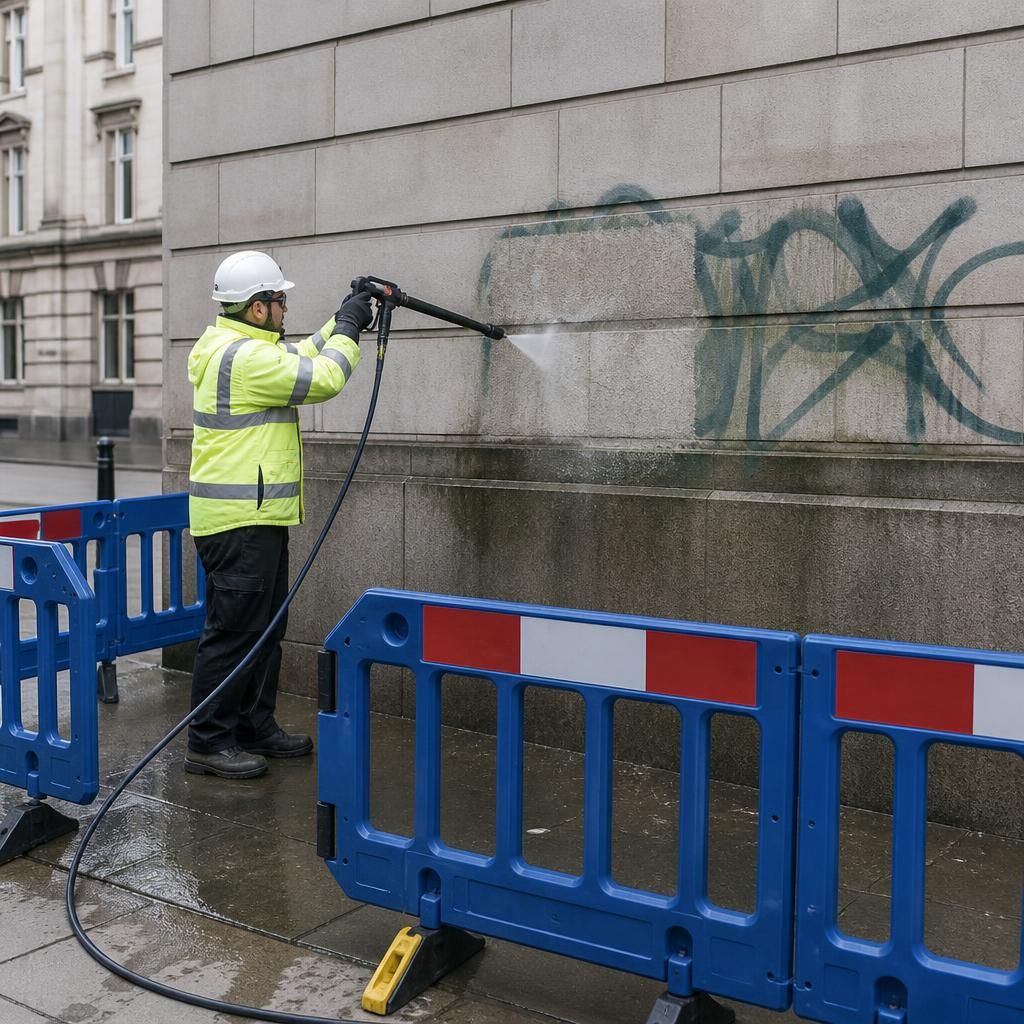
Coordinating graffiti removal at a government site means agreeing the access window, work controls and communication arrangements before cleaning begins. The schedule should be set with the facilities and security teams so the work avoids public opening periods, deliveries, official activity and other essential operations wherever possible.
For larger or occupied sites, staged cleaning can reduce disruption. The work area is divided into manageable sections, with barriers and warning signs protecting staff and visitors while each section is cleaned, inspected and released. The plan should allow time for equipment set-up, surface testing, cleaning, drying and final checks rather than treating the cleaning time alone as the full restriction period.
Before attendance, the contractor and site representative should confirm access arrangements, escort requirements, emergency routes, drainage controls and the nominated person for authorisation. If conditions change, such as increased footfall, a security issue or unsuitable weather, the team should pause and agree a revised approach instead of compromising site safety or surface protection.