
What eco-friendly methods are available for graffiti removal from government sites?
Eco-friendly graffiti removal for government sites can use low-pressure steam, water-efficient cleaning and biodegradable, surface-safe detergents selected for the substrate. Operators should also contain and responsibly dispose of contaminated wash water, while using access and application methods that minimise runoff, chemical use and disruption.
The most suitable eco-friendly graffiti removal methods for government sites are low-pressure steam cleaning, controlled hot-water cleaning, biodegradable surface-safe detergents, dry or low-waste abrasive techniques, and specialist laser cleaning. The right option depends on the graffiti medium, substrate, surrounding environment and the site’s wastewater controls. In practice, the lowest-impact approach is usually the least aggressive method that removes the marking without damaging the surface or creating avoidable waste.
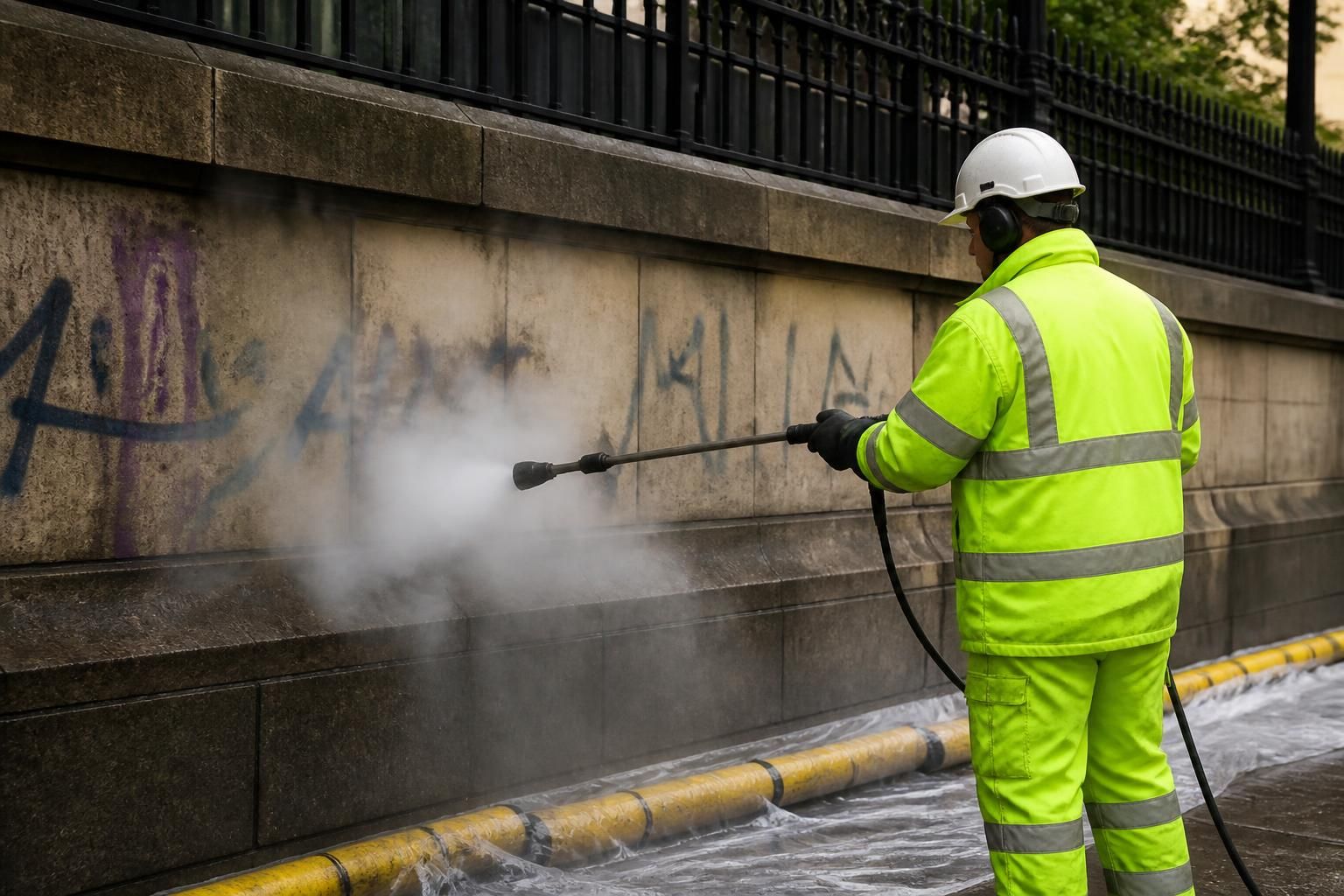
Low-pressure steam cleaning is often effective on masonry, painted surfaces, street furniture and some metal finishes. Steam softens paint, marker ink and adhesive residues using very little water compared with conventional pressure washing. Lower water use can reduce runoff and the volume of contaminated water requiring collection. Pressure and temperature must still be controlled carefully, particularly on historic masonry, joints, coatings and surfaces that could be affected by heat.
Low-pressure hot-water cleaning can remove graffiti efficiently while using less mechanical force than high-pressure washing. Heat helps break down paint binders, oils and marker residues, allowing operators to work at a lower pressure and reduce the risk of etching or surface erosion. Where water is needed, it should be applied in a controlled manner rather than allowed to run freely across paths, drains or planted areas.
Biodegradable, surface-safe detergents and graffiti removers may be appropriate where steam or water alone cannot remove the marking. Products should be selected for the specific surface and used only at the required concentration and dwell time. A biodegradable product is not automatically harmless to aquatic life, historic materials or protective coatings. The product’s safety data, environmental information and disposal requirements should therefore be reviewed before use.
For sensitive government premises, a detergent may be applied locally with a brush, pad or controlled spray before being removed with a low-pressure rinse or wet vacuum. This limits chemical use and helps prevent the cleaning solution spreading beyond the affected area. Detergents should not be permitted to enter surface-water drains, watercourses, planted areas or unprotected ground.
Dry ice blasting can remove some coatings and residues without water or chemical cleaning agents. The process uses solid carbon dioxide pellets that sublimate on impact, leaving little or no secondary blasting media. It can be useful where water is unsuitable, although it generates displaced paint and debris that must still be captured and disposed of correctly. Noise, ventilation, operator protection and the condition of the substrate also need assessment.
Low-impact abrasive cleaning, including carefully selected mineral or other specialist media, may be considered for robust masonry and certain metal surfaces. The media, pressure and nozzle distance must be matched to the substrate. Abrasive methods are not automatically environmentally preferable: they can remove the surface layer, create airborne dust and leave contaminated media behind. They should not be used as a default on historic stone, soft brick, render or delicate coatings.
Laser cleaning is a specialist option for some stone, metal and historic surfaces. It can remove selected graffiti without detergents or large volumes of water, and the process can be precisely controlled. However, laser cleaning requires competent operators, suitable risk controls and a thorough test area. Reflected radiation, fumes, surface discolouration and damage to coatings must be considered before approval, particularly in publicly accessible locations.
Effective wastewater and debris management is as important as the cleaning method itself. Eco-friendly graffiti removal should include measures such as:
- isolating the work area so wash water, softened paint and debris cannot spread;
- using drain covers, bunding, temporary barriers or ground protection where appropriate;
- recovering contaminated water with wet vacuums or suitable extraction equipment;
- filtering or storing recovered water for authorised treatment rather than discharging it to surface-water drainage;
- collecting paint flakes, abrasive media, wipes and other residues as controlled waste where required; and
- keeping records of products used, waste transfer arrangements and any necessary environmental checks.
Before work begins, the surface should be identified and a small test area completed using the proposed method. The test should check cleaning performance, colour change, coating adhesion, texture, moisture penetration and any reaction with sealants or historic finishes. A method that appears environmentally efficient but causes permanent surface damage is not a sustainable solution, because it can lead to replacement materials, repeat repairs and additional cleaning.
Government sites also require careful consideration of operational and environmental constraints. The assessment should cover nearby drains and watercourses, protected planting, nesting or wildlife areas, public access, ventilation, noise, electrical equipment and the possibility of lead- or solvent-containing paint residues. COSHH controls, risk assessments, access planning and site-specific waste procedures should be in place before cleaning starts. Where the building or structure is listed or historically significant, the proposed treatment may also need approval from the relevant conservation authority.
In many cases, the most responsible specification is a combination of methods: local steam cleaning for the main marking, a small amount of biodegradable remover for stubborn residue, and controlled recovery of all contaminated water and debris. This approach avoids relying on one aggressive technique across every surface. It also supports the government site’s wider environmental obligations while maintaining a clean and presentable public facility.
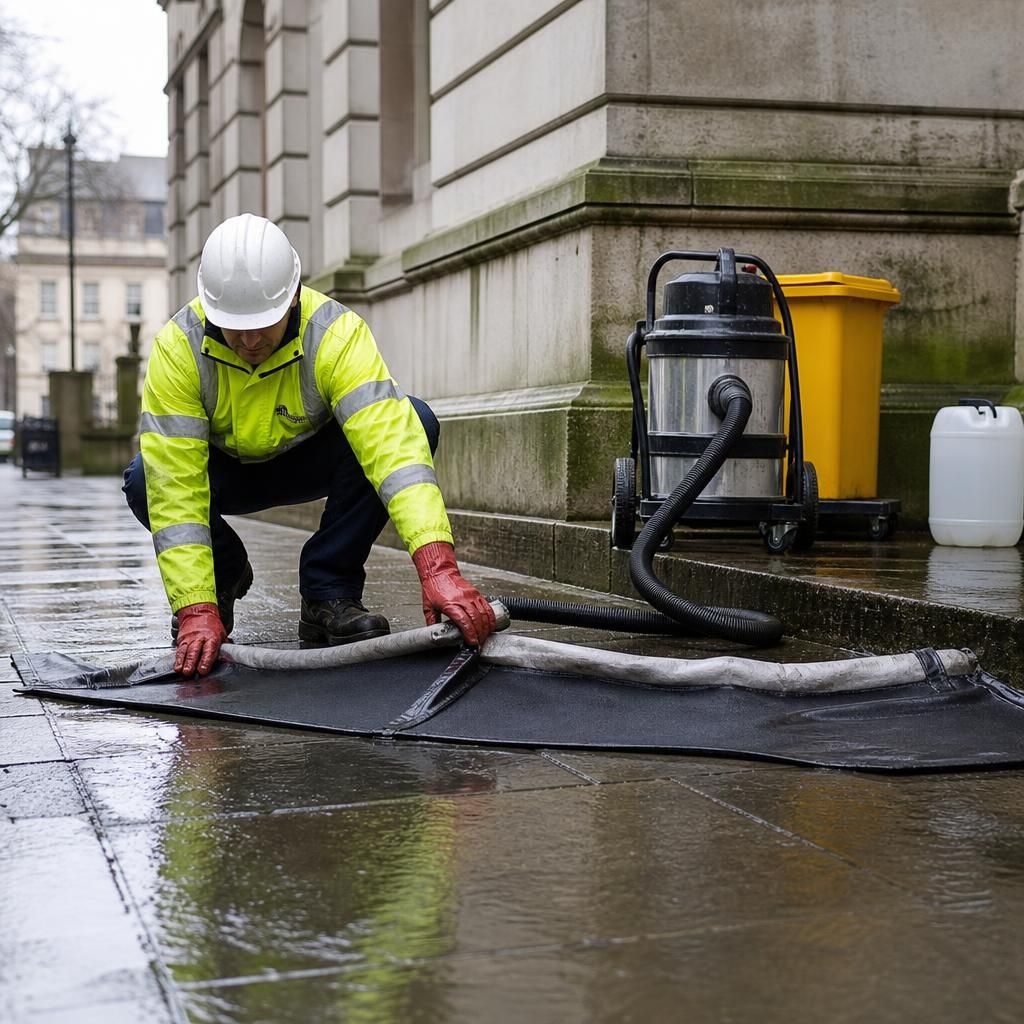
Responsible wastewater and debris control is a key part of eco-friendly graffiti removal at government sites. Contaminated rinse water, softened paint, flakes and cleaning residues should be prevented from entering surface-water drains, planted areas or nearby watercourses.
- Isolate the work area with drain covers, bunding or ground protection where required.
- Use low-water methods, such as controlled steam or local detergent application, to reduce runoff.
- Recover contaminated water with suitable extraction equipment and arrange authorised treatment or disposal.
- Collect paint fragments, used wipes and abrasive media as controlled waste where applicable.
This approach reduces environmental risk while helping the cleaning team protect paving, landscaping, drainage systems and the public areas surrounding the site.