
What eco-friendly measures are taken during graffiti removal at government sites?
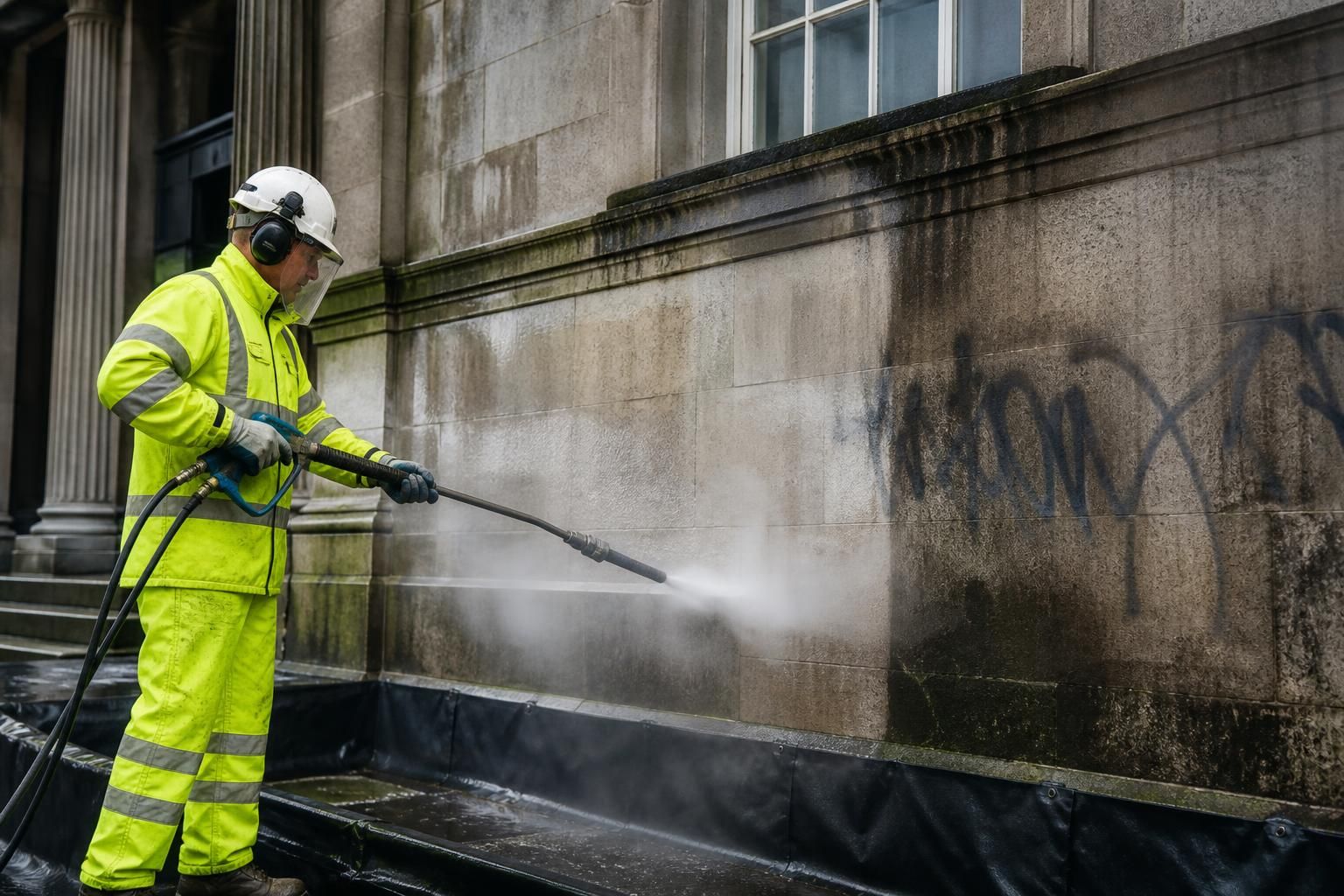
Eco-friendly graffiti removal at government sites combines low-impact methods, such as steam cleaning and carefully controlled pressure washing, with biodegradable products selected for the surface and type of paint. We also minimise water use, contain run-off, protect nearby soil and drainage systems, and dispose of removed paint, chemicals and wastewater responsibly in line with UK environmental requirements.
Eco-friendly graffiti removal at government sites involves selecting the least aggressive effective cleaning method, reducing water and chemical use, containing all residues and disposing of waste through appropriate, traceable routes. The process should protect the building, surrounding environment, drainage network and members of the public while meeting the site’s operational and environmental requirements.
Before work begins, the surface, graffiti medium and surrounding area are assessed. This determines whether steam cleaning, controlled pressure washing, a suitable poultice or a specialist graffiti remover is appropriate. Using the mildest method that will remove the marking helps prevent unnecessary abrasion, coating damage and repeat cleaning. It also avoids using strong chemicals where a lower-impact approach would achieve the same result.
Common environmental controls include:
- Low-impact cleaning methods: Steam cleaning and carefully regulated pressure washing can remove many types of graffiti while limiting chemical use. Pressure, temperature, nozzle selection and working distance are adjusted to suit masonry, render, brick, metal, glass, cladding or painted surfaces.
- Responsible product selection: Where a chemical remover is required, the product is selected for the paint or marker and the substrate. Biodegradable or water-based products may reduce environmental impact, but they are not automatically harmless. Safety data, dilution requirements and disposal instructions must still be followed, with appropriate controls under COSHH.
- Reduced water consumption: Operators avoid excessive rinsing, use controlled application and select equipment suited to the task. Where practical, water is collected rather than allowed to enter the ground or surface-water drainage system.
- Run-off containment: Drain covers, bunding, absorbent barriers, wet vacuums and temporary collection systems can prevent paint particles, cleaning agents and contaminated water from reaching drains, soil or nearby watercourses. The controls used depend on the site layout and the volume and nature of the waste.
- Wastewater recovery: Collected slurry and wastewater are assessed and handled as controlled waste where necessary. They should not be discharged to a drain without confirmation that the discharge is permitted. Trade effluent or other approvals may be required from the relevant sewerage provider or authority.
- Waste segregation: Used absorbents, paint residues, containers, protective materials and contaminated solids are separated where appropriate. Waste is transferred using authorised routes and managed in line with the UK duty of care and any applicable hazardous-waste requirements.
- Protection of surrounding areas: Vegetation, soil, watercourses, drainage points, vehicles and adjacent finishes are covered or isolated before cleaning. Overspray and airborne dust are controlled, particularly where work takes place near public areas or sensitive equipment.
- Efficient site operations: Work is planned to reduce unnecessary equipment movement, repeat visits and idling. Noise, dust and access requirements are considered when choosing equipment and scheduling the work.
Environmental protection also depends on preventing damage during removal. Excessive pressure, aggressive abrasives or unsuitable solvents can strip protective coatings and create a larger restoration requirement. On listed or historically significant government property, testing is carried out in an inconspicuous location and the method is agreed with the responsible client or conservation adviser before wider cleaning begins.
At operational sites, the environmental plan is coordinated with the site’s procedures. This may include identifying drainage points, checking for protected planting or watercourses, confirming waste-transfer arrangements, establishing exclusion zones and agreeing how contaminated materials will be stored temporarily. Any permits, consents, risk assessments or method statements required by the client should be in place before work starts.
After removal, the area is inspected to confirm that graffiti and residues have been removed without unacceptable surface change. Equipment and containment materials are cleared without spreading contamination, and waste documentation is retained where required. A suitable anti-graffiti coating may also be considered for vulnerable surfaces, as extending the service life of the finish can reduce the need for repeated chemical and water-intensive cleaning. The coating must be compatible with the substrate, appropriate to the building and approved by the relevant authority before application.
For government sites, the most sustainable approach is therefore not simply choosing a product labelled “eco-friendly”. It is a controlled process that combines accurate surface assessment, minimal effective cleaning, prevention of polluted run-off, responsible waste management and compliance with the site’s environmental controls.
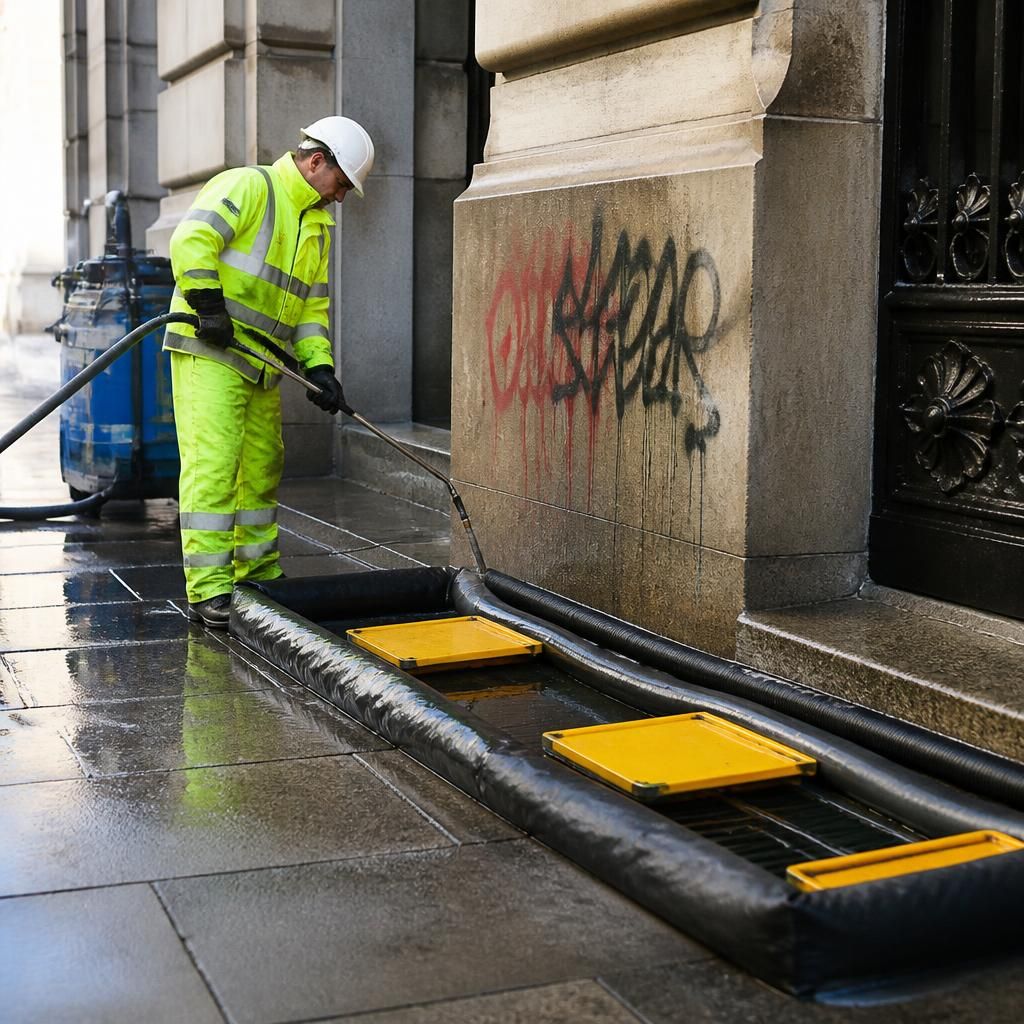
Containing contaminated run-off is a key eco-friendly measure during graffiti removal at government sites. Paint particles, cleaning products and wastewater are prevented from reaching soil, surface-water drains or nearby watercourses by using drain covers, absorbent barriers, bunding and wet-vacuum recovery where appropriate.
The collected material is then assessed and handled through an approved waste route rather than being discharged without permission. This approach reduces pollution risk, supports the site’s environmental procedures and creates a clear record of how wastewater and removed graffiti residues were managed.
Arrange an Eco-Friendly Graffiti Removal Assessment
Arrange an eco-friendly graffiti removal assessment for your government site, including surface checks, run-off controls and responsible waste handling. Contact Encanto Exterior Cleaning to agree a compliant method statement around your operational requirements.