
What are the best graffiti removal techniques for preserving historical landmarks on government sites?
The best graffiti removal techniques for historical landmarks are controlled, low-pressure steam cleaning, carefully selected conservation-grade chemical treatments and poulticing, chosen after identifying the substrate and testing an inconspicuous area. Specialist operatives should use the least aggressive effective method, protect surrounding fabric, control run-off and document the work to preserve original masonry, stone, brick, metal or painted finishes.
The best graffiti removal techniques for historical landmarks on government sites are controlled, conservation-led methods selected for the particular substrate, coating and graffiti medium. In practice, this usually means starting with low-pressure steam or a carefully controlled hot-water treatment, followed by a conservation-approved chemical gel or poultice where necessary. The least aggressive effective method should always be used, with test patches, protected surrounding fabric, controlled run-off and full documentation before the main work begins.
Historic buildings cannot be treated like modern concrete or painted walls. Original brick, natural stone, terracotta, lime render, timber, metalwork and decorative finishes may be porous, weathered or already weakened. Aggressive cleaning can remove the building’s patina, open the surface, dislodge mortar, spread pigment deeper into pores or leave visible cleaning marks. Graffiti removal therefore requires both an understanding of the vandalism and a conservation assessment of the material beneath it.
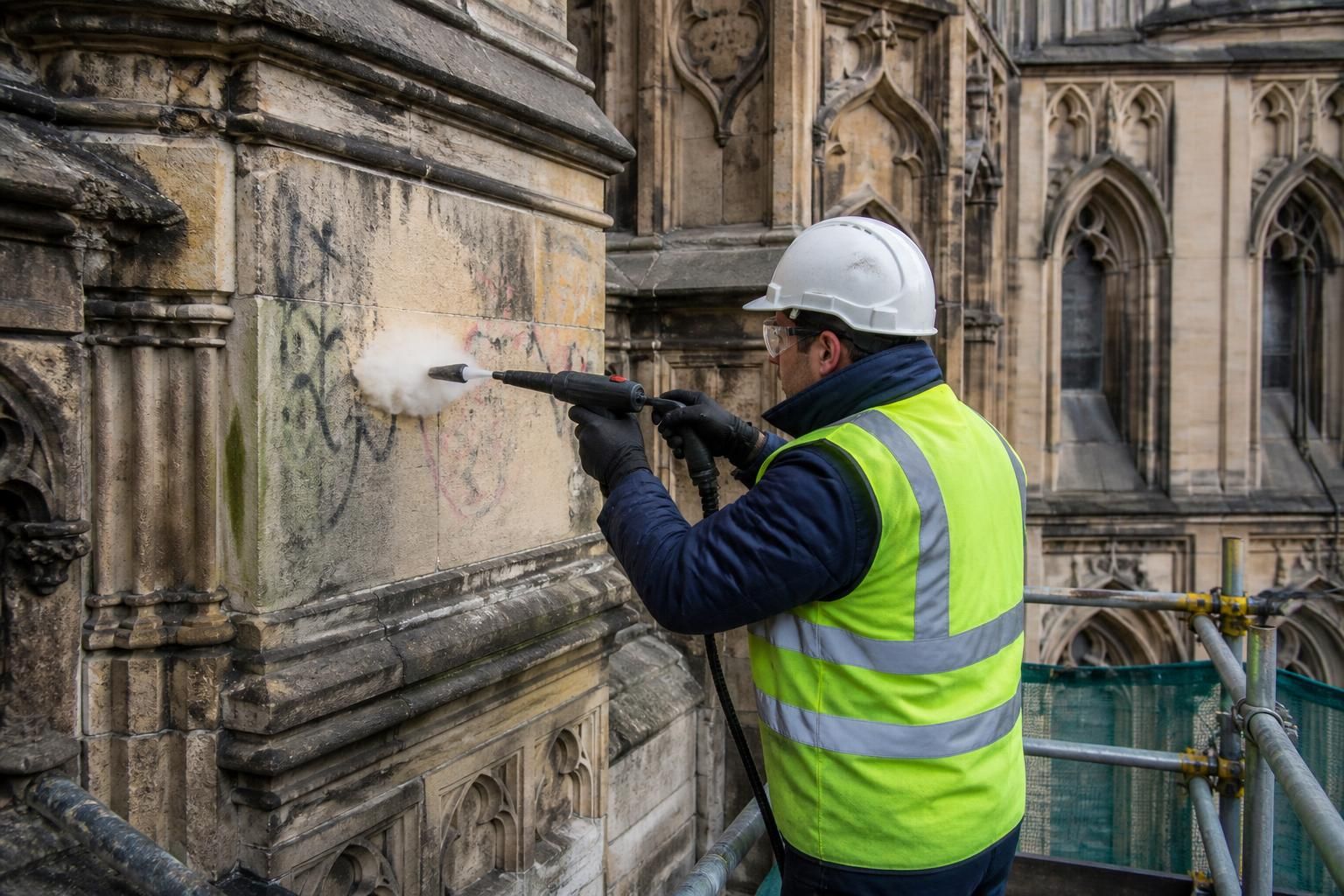
Low-pressure steam cleaning is often the preferred first option for suitable masonry and robust, stable surfaces. Steam softens many paint, marker and adhesive residues while using limited water and relatively low mechanical force. The operative can work gradually, keeping the nozzle at a controlled distance and adjusting the temperature and pressure to avoid damaging the surface. It is particularly useful where the graffiti is recent or where chemical use and extensive run-off would be undesirable.
Steam is not automatically safe for every historic surface. Heat and moisture can affect friable stone, loose pointing, flaking paint, historic render, timber and areas containing salts. It must also be used cautiously around joints, cracks, embedded metal and decorative details. A test area should confirm that the treatment removes the graffiti without altering the colour, texture or surface hardness of the original material.
Conservation-grade chemical gels and emulsions can be effective where paint, marker ink or adhesive has penetrated a porous surface or cannot be removed by steam alone. A suitable product is selected according to the graffiti medium and the substrate, rather than applied as a standard treatment. Gel formulations are often preferable to free-flowing liquids because they remain in contact with the affected area and reduce penetration and run-off. They should be applied for the shortest effective dwell time, kept away from vulnerable adjacent materials and removed thoroughly using a compatible low-pressure rinse or extraction method.
Chemical treatments require particular care on limestone, sandstone, marble, historic brick, limewash and painted finishes. Strong acids, caustic products and indiscriminate solvent use can etch stone, dissolve binders, bleach colour or create a patch that is more conspicuous than the original graffiti. Product compatibility should be confirmed before use, with current safety data, COSHH assessments and suitable containment arrangements included in the method statement.
Poulticing is valuable when pigment or solvent-based graffiti has migrated into porous stone or masonry. A suitable absorbent material is combined with an appropriate cleaning agent and placed over the affected area. As the poultice dries, it draws contaminants towards the surface, where they can be removed without relying on heavy abrasion. Several controlled applications may be safer than one aggressive treatment. The poultice must be removed completely and the surface allowed to dry before its effectiveness is assessed.
Micro-abrasive cleaning should normally be reserved for situations where gentler methods have been tested and found unsuitable. Fine abrasive media, low pressure and carefully controlled application can sometimes remove firmly bonded coatings from durable stone or metal. However, even fine abrasives may remove the surface layer of historic masonry, alter tooling marks or create a texture that attracts future soiling. It should not be used as a routine method on friable stone, carved details, soft brick, lime render or delicate painted surfaces.
Laser cleaning may be appropriate for highly sensitive details or localised contamination where a specialist conservation contractor has the required equipment and experience. It can offer precise treatment with minimal contact, but the wavelength, energy and operating parameters must be matched to the graffiti and the underlying material. It is not a universal solution and requires careful testing to avoid discolouration, thermal damage or uneven results.
A suitable process for a historic government site normally includes:
- Reviewing the building’s historic significance, construction materials, previous repairs and any listed-building or conservation requirements.
- Identifying the graffiti medium, including spray paint, marker ink, bitumen, stickers, adhesive residue or etching.
- Inspecting for cracks, flaking coatings, open joints, salts, biological growth and areas of existing deterioration.
- Carrying out documented test patches in an inconspicuous location, then allowing the surface to dry before checking for colour or texture change.
- Selecting the least aggressive effective technique and defining pressure, temperature, dwell time, product concentration and rinsing requirements.
- Protecting adjacent stone, windows, signage, landscaping, electrical equipment and vulnerable historic details.
- Containing and recovering contaminated water, chemical residue and paint particles so that they do not enter drains, soil or watercourses.
- Working in small, controlled sections to prevent over-cleaning and to maintain a consistent appearance.
- Recording products, equipment settings, test results, photographs, waste arrangements and any changes made during the work.
Uniform cleaning is not always the correct objective on a historic landmark. Weathering and age may have produced an established appearance, so removing graffiti from one elevation should not leave a sharply contrasting bright patch. Where a faint shadow remains after safe treatment, further cleaning may cause more harm than benefit. The decision should be based on the condition and significance of the fabric, not simply on achieving a visually blank surface.
For government sites, the work should be coordinated through an agreed method statement, risk assessment and access plan. Listed buildings or historically significant structures may require consultation with the relevant conservation officer or heritage adviser before cleaning starts. Specialist operatives should also plan for public protection, restricted access, security requirements, noise, working-at-height controls and minimal disruption to the site’s normal operations.
The most reliable approach is therefore a documented, test-led treatment rather than a fixed cleaning package. Controlled steam is often the starting point; targeted gels, emulsions or poultices can address more persistent residues; and abrasive or laser techniques should be considered only where their risks are understood and justified. This preserves original fabric while removing graffiti as effectively as the condition of the landmark allows.
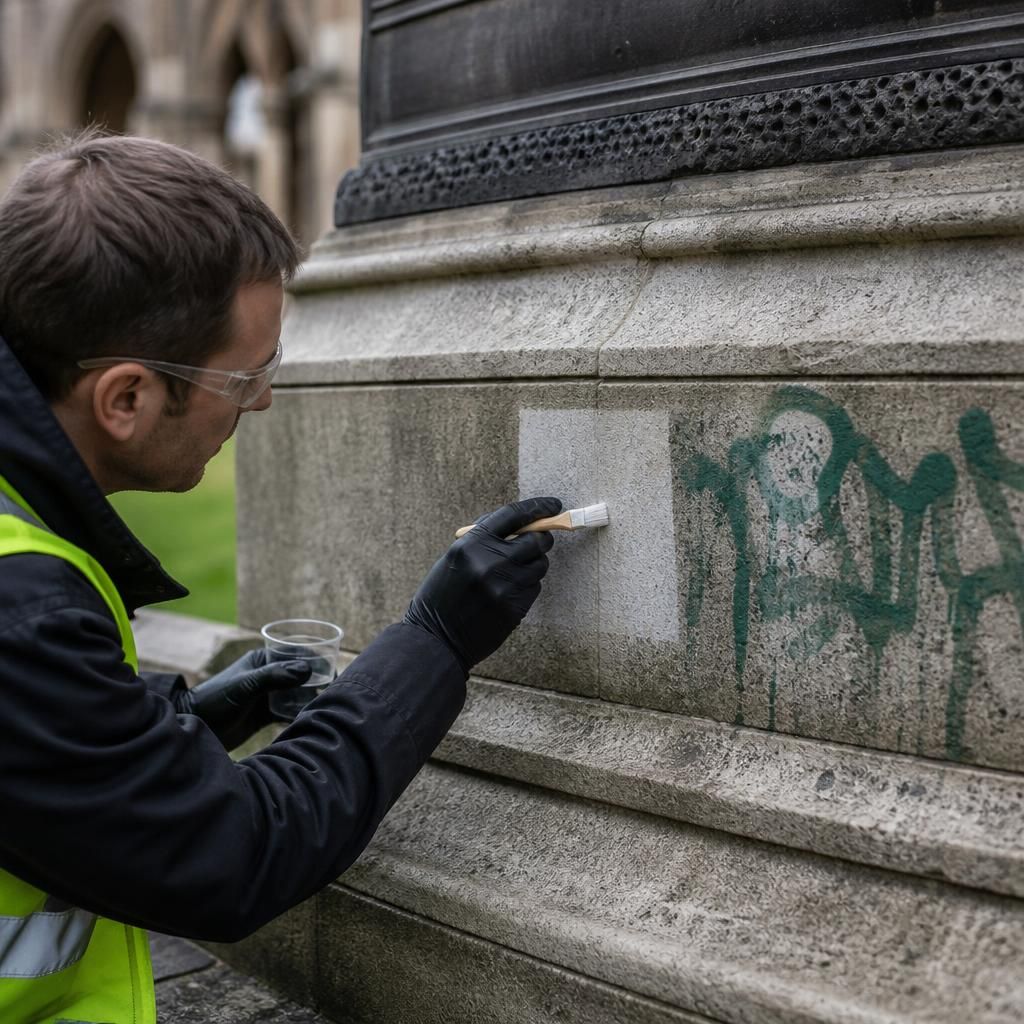
Test patches are essential when removing graffiti from a historical landmark because they show whether a cleaning method will remove the marking without altering the original fabric. A small, discreet area should be treated using the proposed product, temperature, pressure and dwell time, then assessed after the surface has dried.
The assessment should check for changes to colour, texture, sheen, mortar joints, tooling marks and any surrounding finishes. If the graffiti remains, the treatment can be adjusted gradually; if the substrate shows damage or noticeable cleaning contrast, a less aggressive method should be selected. This test-led approach helps protect porous stone, historic brick, lime render, painted surfaces and decorative details from over-cleaning.
Results should be recorded in the method statement with photographs, product details and equipment settings. This provides a clear reference for consistent work across the affected area and supports conservation approvals where the site is listed or historically significant.