
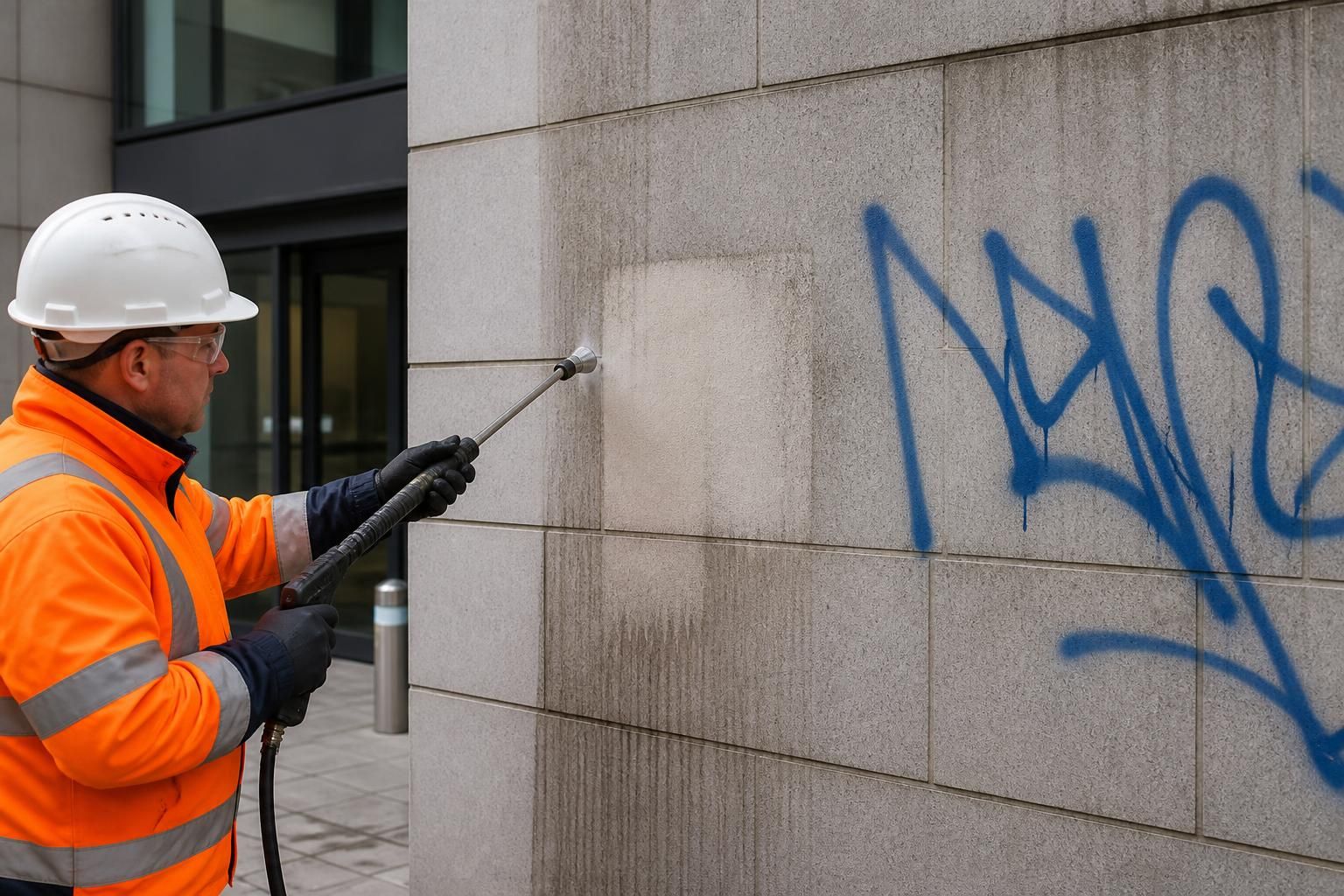
How do you ensure the safety of surfaces when removing graffiti from government sites?
Surface safety is ensured by inspecting and testing the affected area first, then selecting the least aggressive suitable cleaning method for the material and type of graffiti. We control pressure, temperature and cleaning products carefully, protect surrounding areas, and check the surface during and after removal to prevent damage, staining or unwanted surface changes.
Surface safety is ensured by assessing the substrate and graffiti before cleaning, testing the proposed method in an inconspicuous area, and using the least aggressive technique that will remove the paint effectively. Pressure, temperature, steam, cleaning products and dwell time are controlled throughout the work, while nearby surfaces, fixtures, landscaping and drainage systems are protected from damage or contamination.
Initial inspection and risk assessment
Before removal begins, the affected area is inspected to establish what the surface is made from and how it may react to cleaning. This can include brick, stone, concrete, render, painted masonry, metal cladding, glass, timber, signage or a surface with an existing protective coating. The condition of the substrate is also checked for cracks, loose material, failing paint, corrosion, water ingress and previous repairs.
The graffiti itself is assessed because different paints, marker inks and adhesive materials respond differently to cleaning. The age of the marking, number of layers, colour, coverage and location can all affect the method selected. Where site records or maintenance information are available, these are reviewed to identify coatings, treatments or materials that require particular care.
Testing before full removal
A small test patch is cleaned in a discreet location or on a comparable section of material. The test checks whether the method removes the graffiti without:
- lifting paint, render or protective coatings;
- roughening, etching or polishing the substrate;
- causing colour change, ghosting or staining;
- driving paint deeper into porous materials;
- spreading contamination into adjacent areas; or
- leaving chemical residues or visible cleaning marks.
The test area is inspected both immediately and after it has dried. This is important because some effects, including tide marks, colour variation or residue, may not be obvious while the surface is wet. The agreed approach is adjusted if the test indicates that a lower pressure, different product, shorter dwell time or alternative technique is needed.
Choosing the least aggressive effective method
The cleaning method is selected according to the substrate and graffiti rather than applying one process across the whole site. Low-pressure washing, controlled steam cleaning, specialist graffiti removers or gentle abrasive techniques may each be appropriate in different circumstances. On delicate or historic materials, the aim is to remove the marking while retaining the original surface texture and patina.
Pressure is kept as low as practical, with the nozzle, distance, angle and working pattern controlled to avoid forcing water or paint into the substrate. Steam can be useful where heat helps soften the graffiti and reduces the need for mechanical action or strong chemicals, but temperature and exposure time still need to be carefully managed. Abrasive cleaning is only considered where testing shows that the material can tolerate it, as excessive abrasion can permanently alter a façade.
Cleaning products are chosen for compatibility with the surface and used in accordance with the product instructions and site requirements. They are applied only for the time needed to break down the graffiti, then removed thoroughly. Products are not mixed unless the manufacturer specifically permits this, and extra care is taken around painted finishes, sealants, jointing compounds, glazing and sensitive metalwork.
Protecting surrounding areas
Adjacent surfaces are covered or isolated before cleaning starts. This may include doors, windows, vents, electrical equipment, cameras, signs, public fixtures, planted areas and vulnerable building details. Run-off is controlled so that dissolved paint and cleaning residues do not migrate across the façade, enter buildings or reach surface-water drains.
Where water or chemicals are used, suitable collection, containment and disposal arrangements are put in place in line with the site’s environmental requirements. The work area is kept controlled to protect staff, visitors and members of the public from spray, residues, slips and falling debris. Access equipment is positioned to avoid contact damage, and surfaces are not used as anchorage points unless they have been assessed as suitable.
Controlled cleaning and ongoing checks
Cleaning is carried out in manageable sections rather than treating the entire elevation without interruption. The operator checks the surface regularly for changes in texture, colour, coating condition and moisture. If the substrate begins to react adversely, work stops while the method is reviewed.
Care is taken not to over-clean a surrounding area in an attempt to create a uniform appearance. On older or weathered façades, removing graffiti may reveal a difference between the protected area beneath the marking and the exposed surface around it. This is assessed separately from cleaning damage, and any further treatment is discussed before it is undertaken.
Final inspection and records
After removal, the area is rinsed or neutralised where required by the cleaning system and allowed to dry sufficiently for a proper inspection. The surface is checked for remaining graffiti, staining, residue, coating loss, water penetration and damage to adjoining materials. Any protective coating or sacrificial treatment is reinstated only when the substrate is clean, dry and suitable for application.
Photographs and job records can document the pre-clean condition, test area, method used, products applied and final result. This provides a useful maintenance record for government property teams and helps inform future graffiti removal at the same location. If the substrate is unusually fragile, listed, historically significant or affected by existing defects, specialist conservation advice may be required before cleaning proceeds.
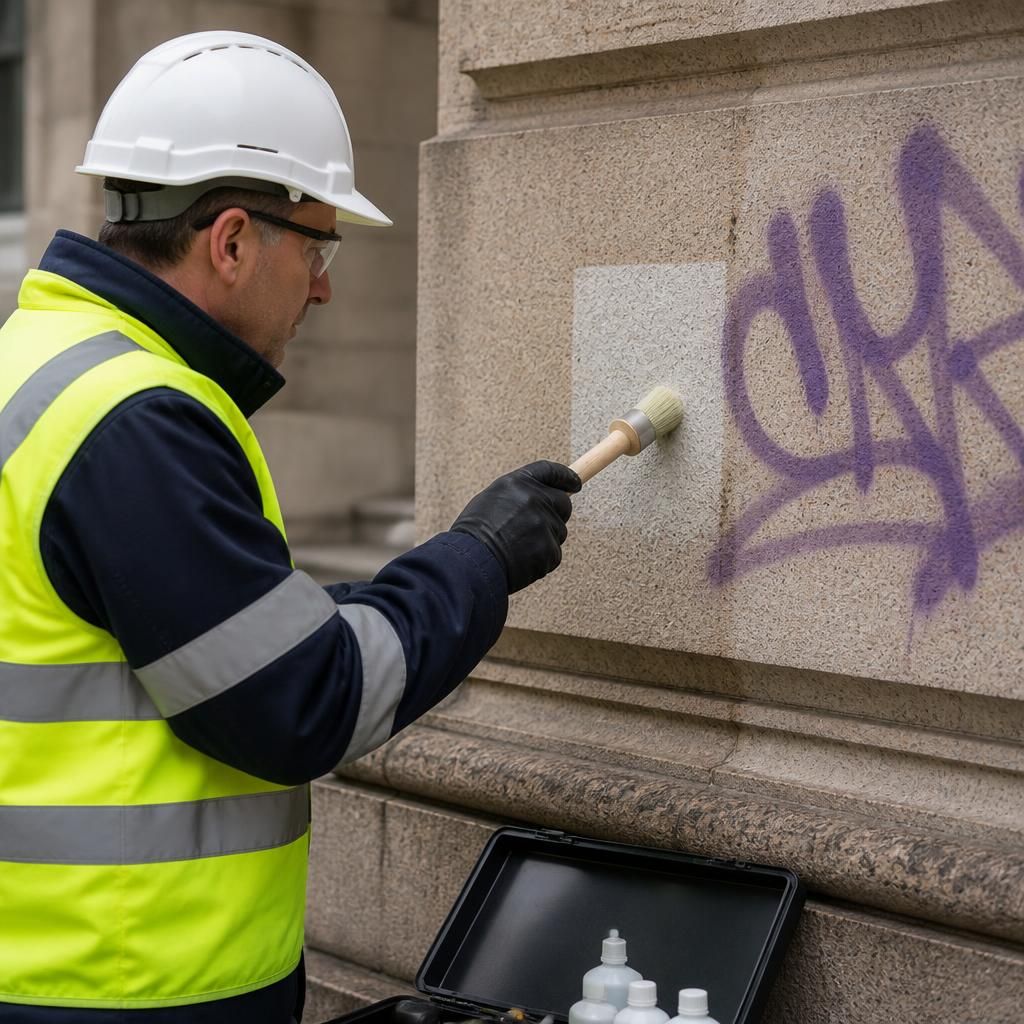
Surface safety during graffiti removal is confirmed by carrying out a controlled test patch before full cleaning begins. The test shows whether the proposed pressure, steam setting, abrasive action or cleaning product will remove the graffiti without damaging the government site’s underlying material or protective coating.
The test area should be placed discreetly or on a comparable section of the same surface. It is checked for paint lifting, colour change, etching, roughening, staining, residue and changes to the finish. The area must also be inspected after drying, as tide marks and colour variation may not be visible while the surface is wet.
If the result is unsuitable, the method is adjusted before work continues. This may involve reducing pressure or temperature, shortening product dwell time, changing the cleaning solution or selecting a gentler technique. Recording the test result provides a clear basis for the agreed method and helps protect sensitive façades, signage, coatings and historic materials from avoidable damage.