
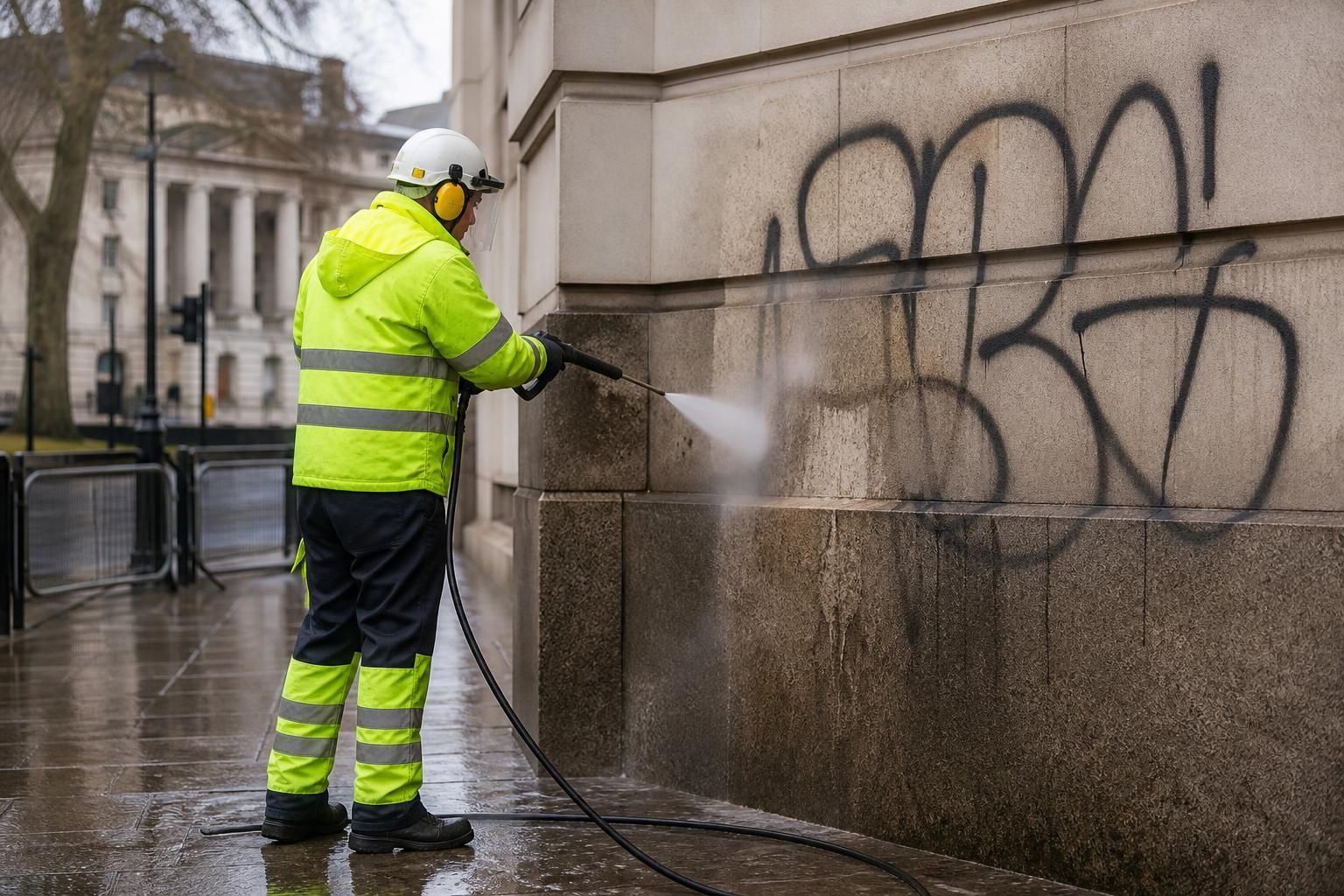
How do you determine the most suitable cleaning technique for different surfaces during graffiti removal at government sites?
The most suitable graffiti removal technique is determined by assessing the surface material, the type and age of the graffiti, the condition of the substrate and the surrounding environment. A controlled test area then confirms whether low-pressure washing, steam cleaning, a compatible chemical treatment or gentle abrasion will remove the marking without damaging the government site.
The most suitable graffiti removal technique is selected by matching the treatment to the surface, graffiti medium, age of the marking and condition of the underlying material. At a government site, the process also has to account for public access, sensitive assets, drainage, environmental controls and the need to keep normal operations running. A controlled test area is therefore completed before the wider treatment begins, allowing the cleaning method, pressure, dwell time and rinsing approach to be refined without risking visible damage.
Surface assessment comes first. Different materials respond very differently to water, heat, chemicals and abrasion. The assessment considers:
- Whether the surface is porous, sealed, painted, coated or polished.
- The age, condition and previous repair history of the material.
- Existing cracks, erosion, staining, flaking paint or weakened joints.
- Whether the surface has a protective coating that must be retained.
- The visibility of the area and the importance of achieving a consistent finish.
- Nearby fixtures, signs, electrical equipment, landscaping, drainage points and public access routes.
Photographs and site notes are useful before cleaning starts. They record pre-existing defects and help confirm whether any apparent shadowing, colour variation or surface loss was present before the graffiti was removed.
The graffiti itself also determines the treatment. Water-based paint, aerosol paint, marker ink, adhesive stickers and etching products do not respond in the same way. Fresh graffiti may be removed with a relatively gentle process, while aged markings can have penetrated pores or bonded strongly to coatings. Multiple layers may require separate treatments, and aggressive cleaning can spread softened pigment into an absorbent surface. The operator therefore considers the graffiti medium, thickness, number of layers and the likely response to heat, water and a compatible cleaning agent.
Typical surface-specific approaches include:
- Brick and concrete: Low-pressure washing, controlled hot-water or steam cleaning and suitable graffiti-removal products may be used, depending on porosity and surface condition. Highly porous masonry may require a carefully selected gel or poultice-style treatment to draw pigment out rather than drive it further into the substrate. Mortar joints are treated cautiously because they can erode or lose their surface finish.
- Natural stone: The stone type, finish and mineral content are checked before treatment. Softer or weathered stone normally requires a low-impact approach, such as steam or a compatible non-aggressive cleaning product. Abrasive methods are avoided unless testing demonstrates that they will not alter the face, texture or colour of the stone.
- Painted render and coated façades: The priority is to remove the graffiti without lifting the original coating. Gentle chemical treatment, low-pressure rinsing or steam may be appropriate. If the graffiti has bonded with or damaged the paint, complete removal may not be possible without localised recoating, which should be agreed before work proceeds.
- Metal and powder-coated surfaces: Solvents and abrasive tools can dull, scratch or attack the coating. A compatible product with controlled dwell time and gentle rinsing is generally considered first, with particular care around joints, fixings and exposed edges.
- Glass and glazed surfaces: Cleaning is usually controlled to avoid scratching, seal damage and residue. Paint may be softened and lifted using an appropriate method, but care is required where the graffiti includes etching or where films, tints and specialist glazing are present.
- Plastic, composite panels and signage: These materials can stain, craze or lose their surface sheen when exposed to unsuitable solvents or excessive heat. The exact product and finish must be identified, and testing should include an inconspicuous area of the same material.
- Timber: Painted, varnished and untreated timber each require a different approach. Excess water can raise the grain or cause swelling, while abrasion can create a patch that is difficult to blend. A gentle, localised treatment is normally preferred, followed by consideration of whether the protective finish needs reinstating.
Test panels confirm the safest working method. A small, representative area is treated using the least aggressive practical option. The test checks whether the graffiti is removed, whether pigment has been redistributed, and whether the surface changes in colour, texture, gloss or absorbency. It also shows whether rinsing leaves residue or creates run-off concerns. If the first method is unsuitable, the approach can be changed before the main façade, wall or structure is affected.
Testing should reflect the different conditions across the site. A sheltered section may behave differently from a weathered elevation, and a repaired patch may react differently from original masonry. Where several materials meet, each material should be assessed separately rather than treating the whole area as one surface.
Method selection is based on controlled escalation. The preferred sequence is usually to begin with the least aggressive effective process and increase intensity only when testing shows that it is necessary. Depending on the surface, this may involve:
- Dry or damp wiping for light marks and loose residues.
- Steam or low-pressure hot-water cleaning for suitable robust surfaces.
- A compatible chemical remover applied locally and for a controlled contact period.
- Careful rinsing or extraction to prevent dissolved graffiti from drying back onto the surface.
- Very gentle abrasion only where other methods are ineffective and the substrate can tolerate it.
High pressure, harsh solvents and abrasive blasting are not default solutions. They can remove the graffiti while also stripping protective coatings, opening pores, eroding masonry, damaging pointing or creating a visible cleaned patch. Any abrasive process must be justified by the test results and carried out with strict control of the media, equipment and surrounding area.
Government-site controls are part of the technical decision. Cleaning may need to be coordinated around staff, visitors, security arrangements, vehicles and essential services. Work areas are segregated, warning signs are displayed and equipment is positioned to avoid trip hazards or obstruction. Sensitive items such as access-control equipment, cameras, plaques, electrical cabinets and information displays are protected from water, chemicals and overspray.
Run-off is managed according to the site drainage arrangements and the cleaning product selected. Where contaminated water or chemical residue could enter surface-water drainage, the area may require containment, recovery or a controlled disposal procedure. Product assessments, COSHH requirements, personal protective equipment and any site-specific permits are reviewed before work begins. Steam or low-water methods may be preferred where water use, run-off or nearby public access makes conventional washing unsuitable.
After treatment, the surface is inspected in suitable lighting and from normal viewing distances. The inspection looks for remaining pigment, ghosting, streaks, residue, coating loss and unintended differences between the treated and untreated areas. If a mark cannot be removed without unacceptable damage, the appropriate solution may be localised repainting, coating repair or specialist conservation advice rather than more aggressive cleaning.
The final method, products, test results, affected surfaces and any limitations should be recorded for the government site’s maintenance history. This provides a clear reference if further graffiti occurs and helps ensure that future removal uses a proven process rather than repeating unnecessary testing or applying a treatment that could damage the asset.
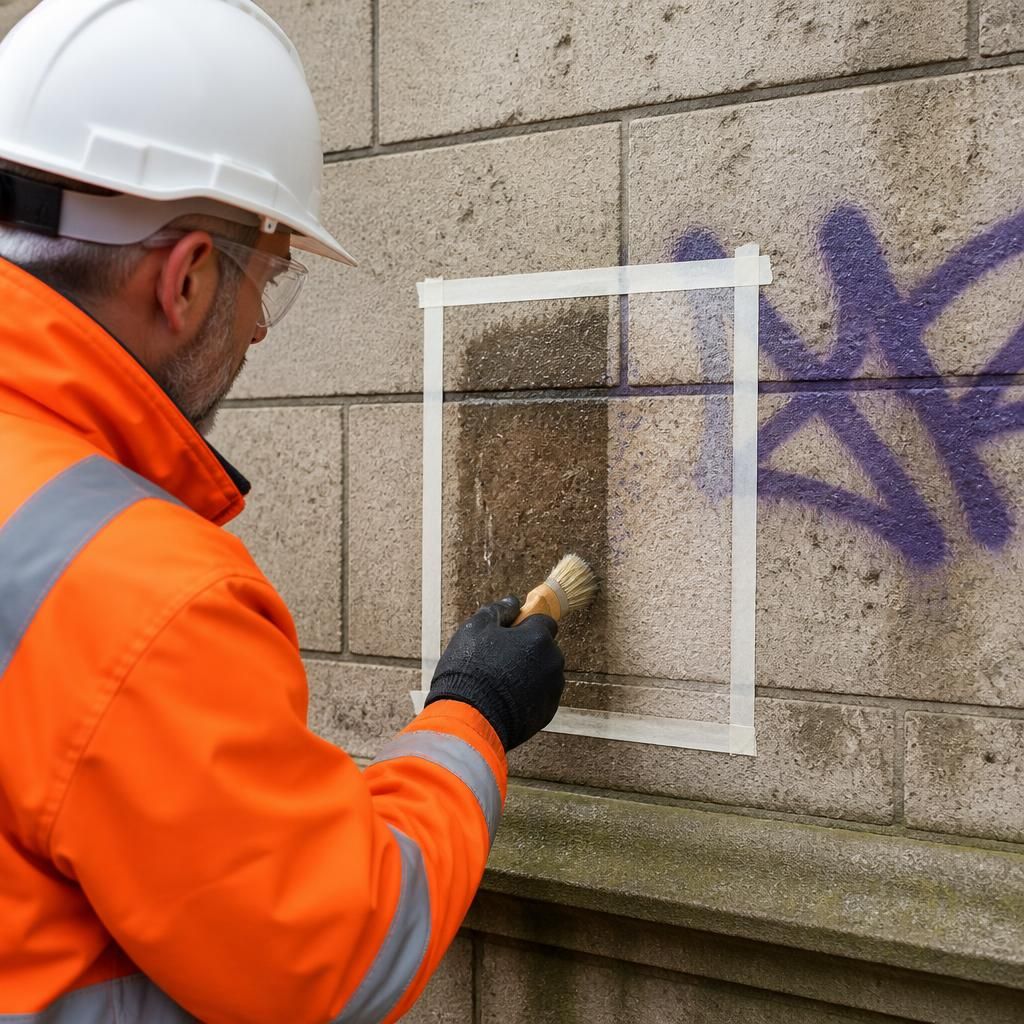
A controlled test area is the safest way to confirm which graffiti removal technique suits a government-site surface. A small, representative section is treated with the least aggressive practical method, then checked for graffiti removal, colour change, coating loss, texture alteration, residue and pigment spreading.
Testing should reflect the materials and conditions across the affected area. Weathered masonry, repaired sections, painted coatings and surfaces beside joints or fixtures may respond differently, so each significant substrate should be assessed separately. The results help determine the correct pressure, temperature, product, dwell time and rinsing method before wider cleaning begins.
If the graffiti cannot be removed without unacceptable damage, the appropriate solution may be localised repainting, coating repair or specialist conservation advice rather than more intensive cleaning. Recording the test result also provides a reliable reference for future incidents at the site.