
How can government sites ensure effective graffiti removal without impacting daily operations?
Government sites can minimise disruption by planning graffiti removal around operational requirements, using targeted cleaning methods and scheduling work during quieter periods where possible. Clear access controls, low-impact equipment and close coordination with site managers help protect staff, visitors, sensitive areas and essential services while the work is completed.
Effective graffiti removal at a government site depends on treating the work as a planned operational activity rather than an isolated cleaning task. A site-specific risk assessment, agreed access arrangements, suitable removal method and carefully managed work area allow the graffiti to be removed while protecting staff, visitors, contractors, sensitive materials and essential public services.
Coordinate the work with the site manager
Before attending, the cleaning contractor should liaise with the person responsible for the building or estate. This confirms what the site does, which areas are publicly accessible, when activity is busiest and whether any restricted, secure or confidential zones are nearby. The plan should also identify entrances, emergency routes, fire points, security systems, ventilation intakes, delivery areas and locations where cleaning activities could interfere with normal operations.
For government buildings, the contractor may need to follow additional security, identification, escort and access requirements. These should be agreed before the visit so that operatives do not cause delays at reception or security checkpoints. Where access permissions are required, they should be arranged in advance and clearly communicated to everyone involved.
Schedule cleaning during the least disruptive period
Work should be scheduled around the site’s operating pattern wherever possible. Quieter periods, planned maintenance windows, staff changeovers or building closure periods may provide better conditions than busy public-facing hours. However, the best time is determined by the site rather than assumed to be overnight; some government facilities operate continuously or have increased security requirements outside normal hours.
If the graffiti is highly visible, offensive or likely to attract further vandalism, rapid attendance may be more important than waiting for a routine maintenance period. In that situation, the work can be arranged in short, controlled phases so the affected area is treated promptly without closing the whole site.
Divide the work into controlled zones
Separating the affected elevation, entrance, walkway or asset from the rest of the site helps maintain normal movement. Barriers, cones and clear warning signs should guide pedestrians around the work without obstructing accessible routes, emergency exits or vehicle access. Where a public entrance is affected, the site manager should agree an alternative route or a temporary arrangement before cleaning begins.
Large façades, boundary walls and car parks are often best handled in sections. This allows each area to be made safe, cleaned and inspected before the next section is opened. It also limits the effect of equipment, noise, water and temporary access restrictions on nearby operations.
Select a low-impact method suited to the surface
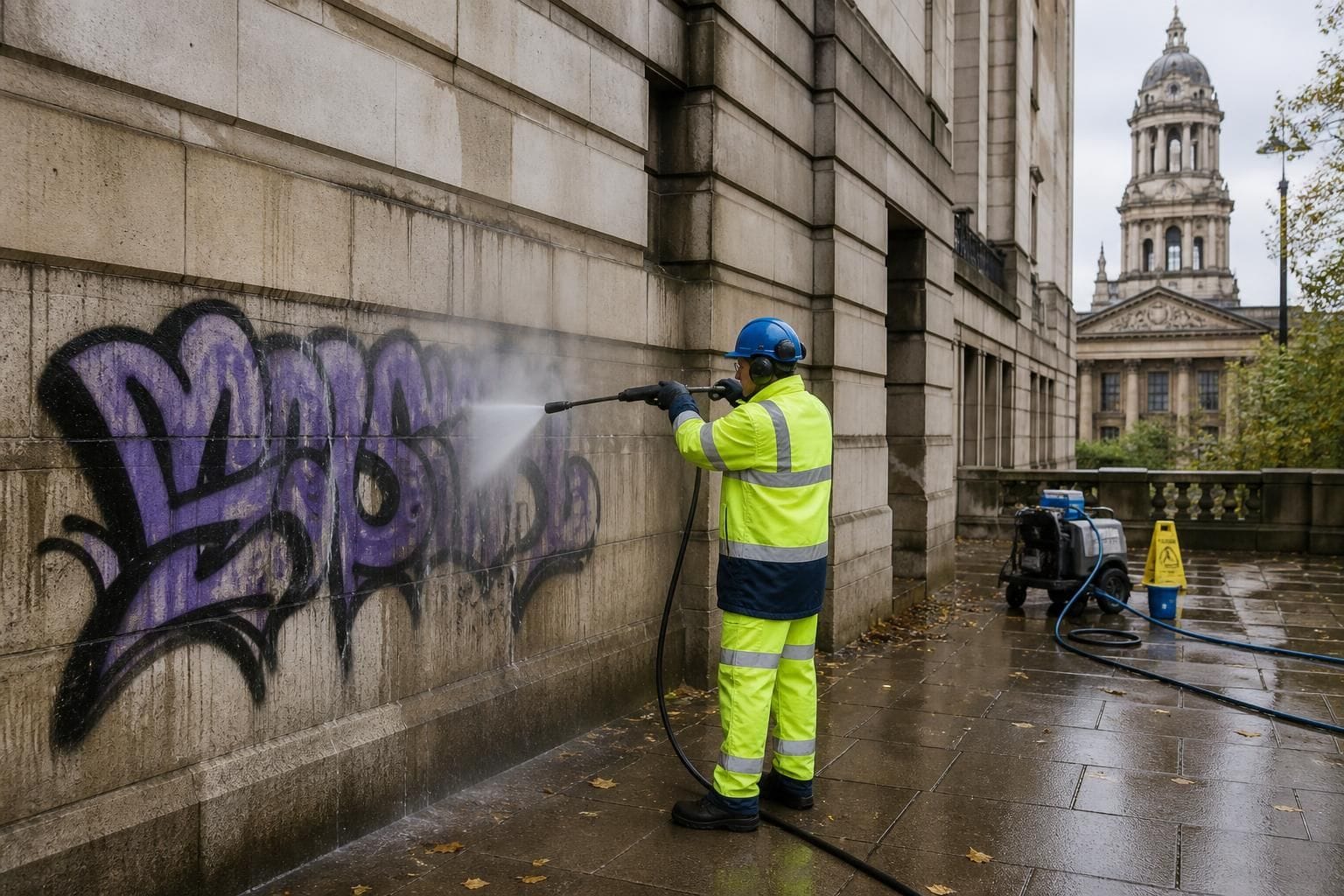
The removal technique should be chosen after assessing the substrate, paint type, age of the graffiti and surrounding conditions. Pressure washing, steam cleaning, specialist chemical treatments, soft washing and abrasive techniques are not interchangeable. Using excessive pressure or an unsuitable chemical can damage masonry, coatings, cladding, stone, brick, render, glass or painted surfaces and create a longer operational interruption than the original graffiti.
Targeted application is generally preferable to treating a broad area unnecessarily. Low-pressure or steam-based cleaning may be suitable for sensitive surfaces, while carefully controlled pressure washing can be effective on robust external materials. Chemical products should be selected for the substrate and removed thoroughly in accordance with the product guidance and the site’s environmental controls. A discreet test patch helps confirm the expected result and identifies potential colour change, staining or coating failure before the main work begins.
Control water, chemicals and run-off
Water and cleaning residues must be prevented from entering buildings, drains, planted areas, watercourses or sensitive equipment. The team should inspect drainage routes, protect nearby doors and vents, use collection or containment measures where needed and follow the site’s requirements for wastewater disposal. Chemical containers and equipment should remain supervised and secured, particularly in publicly accessible areas.
Where water use would create a hazard or interfere with operations, a lower-moisture method may be more appropriate. Operatives should also account for overspray, mist, fumes, slippery surfaces and residue on adjacent walkways. The work area should not be reopened until surfaces are safe and any temporary protection has been removed or made secure.
Maintain clear communication during the task
A named site contact should be able to approve access, respond to unexpected issues and confirm when areas can be reopened. The cleaning team should provide a clear work plan covering the location, method, equipment, access requirements, controls and expected completion point. If conditions change, such as an unexpected public event, security incident, delivery or change in weather, the work should pause or be rescheduled rather than proceeding without approval.
For occupied premises, concise notices can explain temporary restrictions without drawing unnecessary attention to the graffiti. Staff responsible for reception, security, facilities and accessibility should know which routes are affected and how long restrictions are expected to last. This reduces confusion and helps maintain normal visitor management.
Use appropriate access and safety controls
High-level graffiti may require powered access equipment, towers or other access systems. The equipment must be suitable for the ground conditions and working location, operated by competent personnel and positioned so that it does not obstruct essential routes or damage the surrounding surface. A separate assessment is needed for overhead hazards, falling debris, nearby traffic, electrical services and weather conditions.
Operatives should use the necessary personal protective equipment and follow agreed controls for pressure, chemicals, noise, dust and waste. Security-sensitive sites may also require restrictions on photography, equipment storage and movement around the premises. These requirements should be incorporated into the method statement before work starts.
Plan for unexpected findings
Graffiti can conceal damaged render, loose masonry, failed coatings or previously treated areas. Cleaning should stop if the substrate begins to deteriorate, if an unusual coating is exposed or if the product behaves differently from the test area. The site contact can then decide whether a revised method, specialist repair or further approval is required.
Weather is another operational consideration. Wind can carry spray or vapour beyond the controlled area, while rain can dilute products, increase run-off and affect the result. A practical contingency plan should identify when work will be paused and how the site will be left safe if the original programme cannot be completed.
Inspect and hand the area back properly
After removal, the contractor and site representative should inspect the cleaned surface and surrounding area together. This check should cover remaining paint, shadowing, substrate damage, staining, slip hazards, residue, drainage and the condition of access routes. Any barriers or equipment should be removed only after the area has been confirmed safe for normal use.
Keeping records of the location, surface condition, method used and any recommendations supports future maintenance. If repeat tagging is a concern, the site can consider an appropriate sacrificial or permanent anti-graffiti coating, subject to compatibility with the substrate and the building’s appearance or heritage requirements. A planned reporting and maintenance process can then deal with new graffiti quickly, reducing the need for larger closures or more disruptive cleaning later.
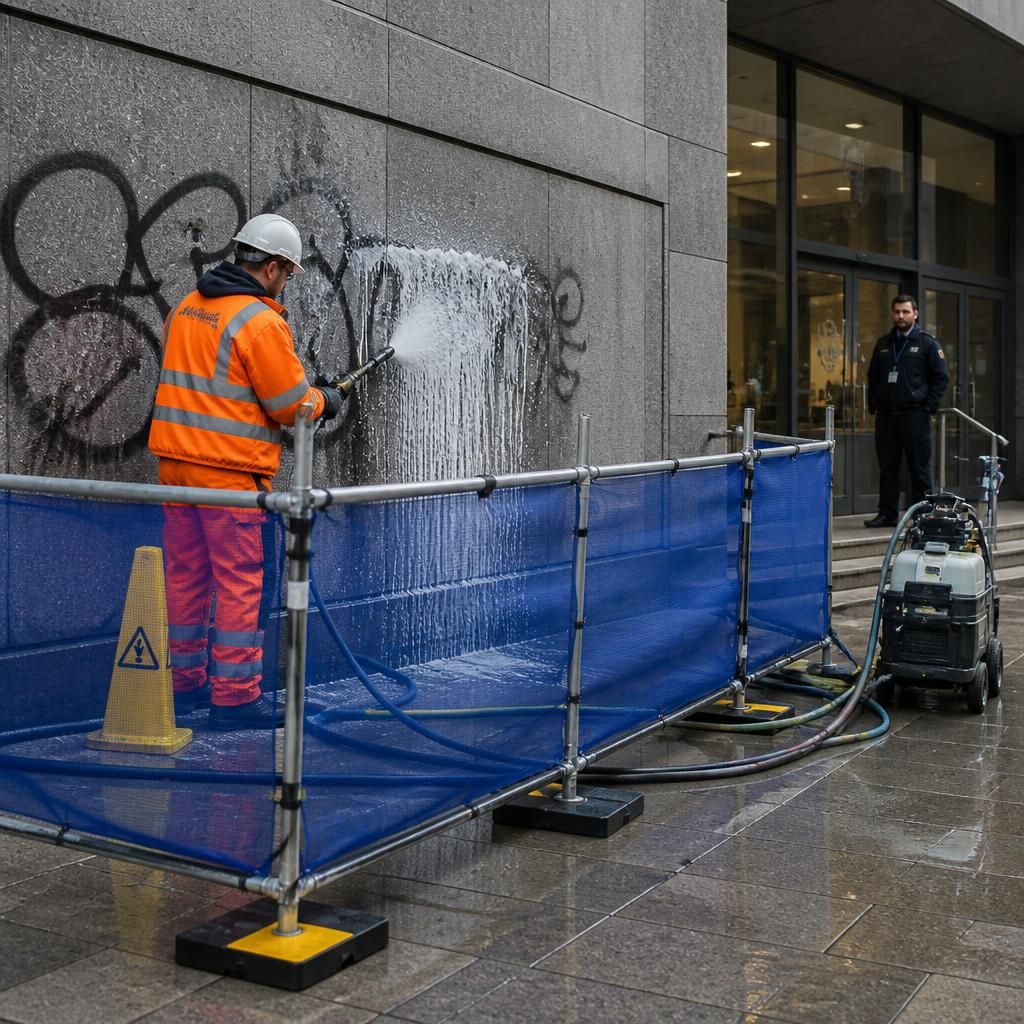
Phased graffiti removal keeps government sites operational by isolating the affected area instead of restricting the whole building or estate. The contractor and site manager can agree which entrance, walkway, façade or boundary section will be treated first, then maintain safe alternative routes for staff, visitors, deliveries and emergency access.
Each section should be enclosed with suitable barriers and signage, with equipment, overspray, wastewater and cleaning residues kept within the controlled work area. Once the surface is clean, dry and free from slip hazards, it should be inspected with the site representative before the route is reopened. This approach limits disruption, provides clear progress points and allows the programme to pause safely if an operational or security requirement changes.
Plan Government Graffiti Removal Around Daily Operations
Contact Encanto Exterior Cleaning to arrange a site assessment and coordinated graffiti removal plan that protects daily operations, access routes and sensitive surfaces. We can agree the cleaning method, timing and site controls with your facilities or security team.