
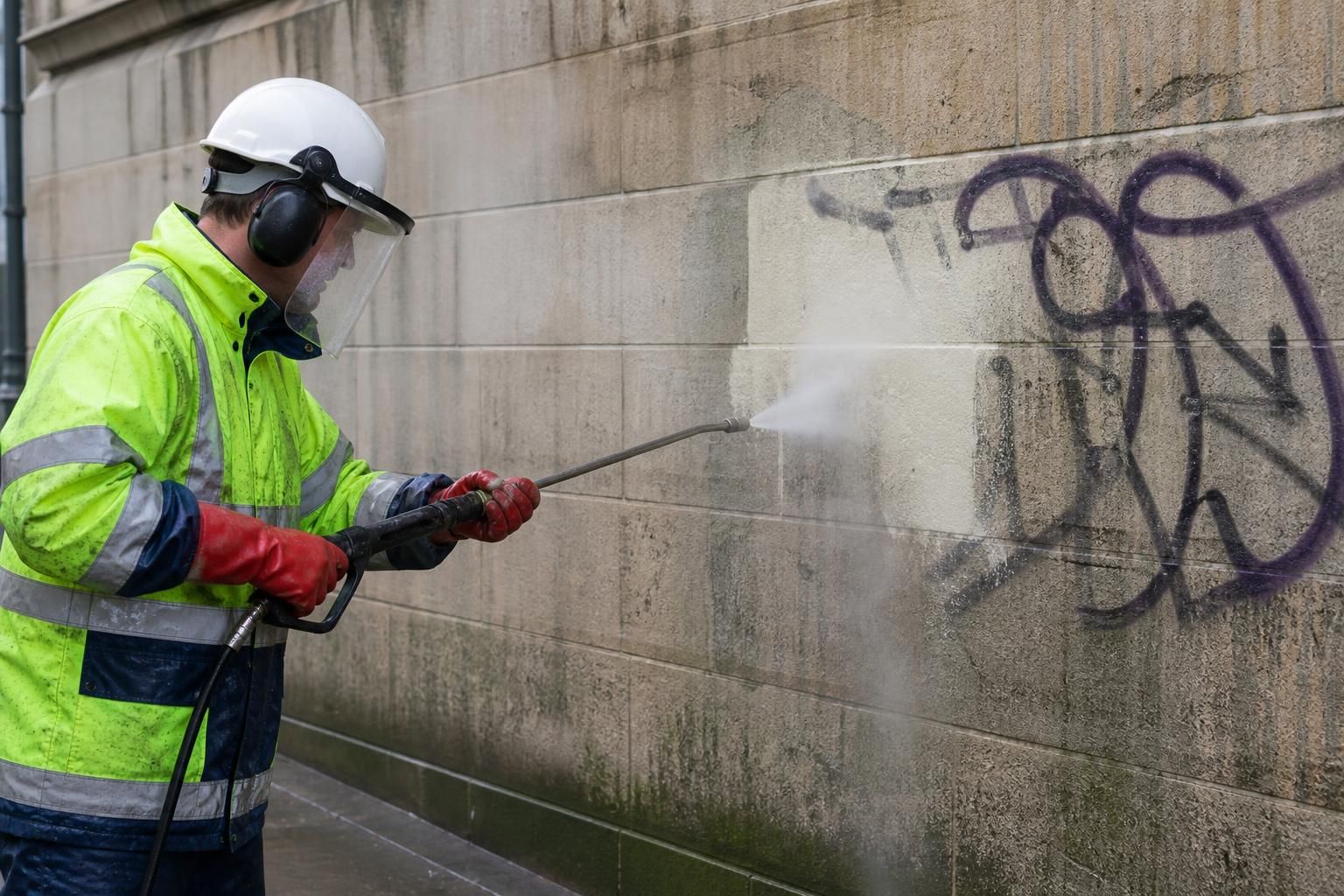
What should I look for in a provider's portfolio to evaluate their graffiti clean up and restoration experience?
To evaluate a provider’s graffiti clean up and restoration experience, review portfolio examples showing the surfaces treated, the removal methods used, the condition before and after cleaning, and whether damaged substrates required restoration. Look for comparable commercial or industrial projects, careful results without surface damage, and clear evidence of follow-up protection or maintenance advice.
A provider’s portfolio should show more than attractive before-and-after photographs. To evaluate graffiti clean up and restoration experience, look for documented examples involving comparable surfaces, graffiti types, access conditions and levels of substrate damage. The strongest portfolios explain the assessment, cleaning method, restoration work, surface protection and final inspection, so you can judge whether the provider can achieve a clean result without causing further damage.
Check whether the examples match your property. Experience is most relevant when the portfolio includes projects similar to yours. Look for work involving:
- Brickwork, stone, concrete, render, painted surfaces, metal, glass, cladding or coated finishes
- Commercial façades, boundary walls, shopfronts, car parks, public buildings, transport areas or industrial premises
- Graffiti applied with spray paint, marker pen, stickers, etching or layered coatings
- Surfaces at height, beside public access routes or in areas requiring specialist access equipment
- Older, porous or weathered substrates where paint may have penetrated below the surface
A provider that mainly shows smooth, recently painted walls may not have the same experience as one that can demonstrate careful work on aged brick, natural stone or textured render. The portfolio should make clear what the original surface was and whether it had existing staining, weathering, coatings or previous cleaning damage.
Look for clear before-and-after evidence. Photographs should be taken from similar angles and in comparable lighting. This helps you assess whether graffiti has actually been removed rather than concealed by cropping, shadow or repainting. Useful evidence may include close-up images showing:
- Reduction or removal of paint shadows, ghosting and colour bleed
- Clean edges without visible halos around the affected area
- No excessive etching, scarring, streaking or patchiness on the substrate
- Consistent texture and colour between the treated area and surrounding surface
- The final condition after the surface has dried fully
Bear in mind that some porous materials may retain a light shadow even after responsible cleaning. A trustworthy portfolio should not imply that every surface can be returned to an entirely new condition. It should explain when a residual mark is caused by penetration into the substrate, previous damage or the limitations of the material.
Assess whether the portfolio demonstrates restoration, not just removal. Graffiti clean up removes unwanted markings, while restoration addresses damage to the underlying surface or its finish. Look for examples where the provider has dealt with issues such as:
- Paint penetration into porous brick, stone or concrete
- Etched glass, metal or masonry caused by scratching or abrasive marking
- Discolouration, coating failure or uneven appearance after previous removal attempts
- Damage to render, paint films, protective coatings or architectural finishes
- Repainting, localised surface repair, colour matching or the application of a suitable protective treatment
The description should distinguish between cleaning, remedial treatment and replacement. If a damaged finish has been repainted or a section has required repair, the portfolio should say so rather than presenting the result as simple graffiti removal.
Review the method selection and technical explanation. A strong case study identifies why a particular method was chosen. Depending on the substrate and coating, this may involve controlled pressure washing, steam cleaning, chemical treatment, gentle agitation, specialist poultice methods or a combination of techniques. The important point is not whether one method is used every time, but whether the process is adapted to the surface.
Look for evidence that the provider considered water pressure, temperature, chemical dwell time, agitation, rinse control and waste-water management. On delicate or historic surfaces, indiscriminate high-pressure cleaning can remove pointing, roughen the face of masonry or strip protective finishes. A portfolio that explains testing and method adjustment indicates a more controlled approach than one that simply claims to use powerful equipment.
Check for evidence of testing before full treatment. Test patches are particularly important where the graffiti is on porous, painted, historic or previously treated material. The portfolio or accompanying project information should show that the provider considered:
- Whether the graffiti coating could be removed without lifting the underlying finish
- How the substrate reacted to the selected chemical or cleaning process
- Whether the surface became lighter, darker, rougher or more absorbent after treatment
- How much of the surrounding area needed to be cleaned to achieve a consistent appearance
A provider should be able to explain that a test patch is not merely a formality. It is used to compare methods, identify risks and establish realistic expectations before the main work begins.
Look for projects completed in realistic commercial conditions. Portfolio examples should show how the work was managed as well as how it looked afterwards. Relevant details include working around pedestrians, vehicles, tenants, neighbouring properties, security arrangements, restricted access, operating businesses and public highways. For larger sites, look for evidence of planned work zones, suitable access equipment, controlled overspray and arrangements for keeping the area safe and usable.
Commercial and industrial experience is especially relevant where graffiti is spread across several elevations or where removal must be coordinated with other maintenance work. A useful portfolio will indicate the size and complexity of the project without relying on unsupported claims about performance.
Examine safety and environmental information. Graffiti removal can involve chemicals, contaminated rinse water, work at height and public-facing areas. Portfolio material should indicate that the provider considered risk assessments, personal protective equipment, access controls, exclusion zones and safe handling of equipment and cleaning products. Where water or chemical products are used, look for information about preventing uncontrolled discharge and protecting drains, planting, vehicles and adjacent finishes.
This information does not need to disclose every operational document in a public portfolio, but the provider should be able to explain how these risks were managed for the specific project. Vague references to professional standards are less useful than a clear description of the controls used.
Check whether surface protection and follow-up are included. A portfolio should show what happened after the graffiti was removed. Depending on the surface, a suitable sacrificial or permanent anti-graffiti coating may make future clean up easier, but it must be compatible with the substrate and the appearance required. Look for information about:
- Whether protection was applied, renewed or deliberately excluded
- How the surface was prepared before coating
- Whether the finish changes the colour, sheen or texture of the material
- How future markings should be removed without compromising the coating
- Inspection, maintenance or rapid-response recommendations
Protection is not a substitute for correct removal. If the portfolio only shows a coating being applied over an inadequately cleaned surface, it does not demonstrate complete restoration experience.
Ask for supporting project details. Photographs can be useful, but they do not prove who carried out the work, what method was used or whether the result remained satisfactory. Before appointing a provider, ask for a concise case study, site reference or explanation covering the surface, graffiti type, initial condition, test process, equipment, treatment, restoration and final outcome. Where confidentiality prevents a site being named, the provider should still be able to describe the project accurately.
Be cautious of portfolios that contain only uncaptioned images, identical-looking projects, heavily edited photographs or claims that every surface was restored without compromise. A credible portfolio acknowledges difficult materials, limitations and occasions where replacement, repainting or specialist restoration was more appropriate than aggressive cleaning.
Overall, the best portfolio demonstrates a repeatable decision-making process: inspect the graffiti and substrate, test a suitable method, clean with controlled techniques, restore any affected finish, protect the surface where appropriate and verify the result. That evidence is more valuable than the volume of photographs because it shows whether the provider can manage the technical, safety and operational demands of commercial graffiti clean up and restoration.
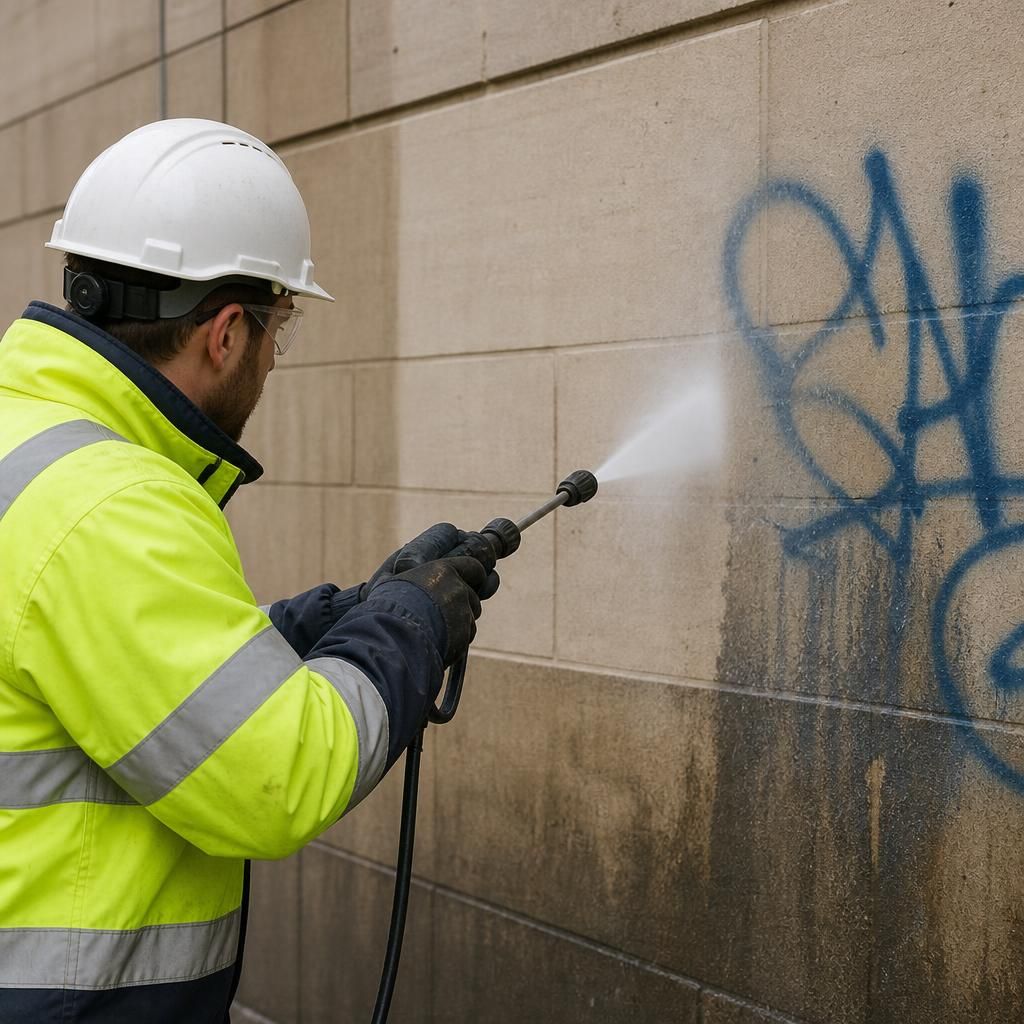
A reliable graffiti clean up and restoration portfolio should show how the provider protected the underlying surface, not just how the finished wall looked. Before-and-after images are most useful when they include the same viewpoint, comparable lighting and close-up detail of the treated area.
- Look for reduced paint shadows, colour bleed and ghosting.
- Check for consistent texture and colour between the cleaned area and the surrounding surface.
- Ensure there are no visible halos, scarring, streaks or excessive loss of the original finish.
- Look for captions explaining the substrate, graffiti type, cleaning method and any restoration or protective coating applied.
On porous brick, stone, concrete and textured render, a faint residual shadow may remain because paint has penetrated the material. A credible portfolio should explain such limitations rather than claim that every surface can be returned to an untouched condition.
Discuss Your Graffiti Clean Up and Restoration Requirements
Discuss your graffiti clean up and restoration requirements with our team, including the affected surface, extent of the damage and any access or protection considerations. We can assess the appropriate treatment and advise whether cleaning, localised restoration or protective coating is required.