
What environmentally friendly methods are used in graffiti clean up and restorations?
Environmentally friendly graffiti clean up uses methods such as steam cleaning, controlled low-pressure washing and carefully selected biodegradable, low-impact cleaning products to remove paint while limiting damage to the underlying surface. Professionals also contain and recover contaminated wash water, minimise chemical use, and select the least intensive effective method for each façade, wall or other material.
Environmentally friendly graffiti clean up and restoration relies on using the least intensive effective method for the affected surface, while controlling products, water use, paint residues and run-off. In practice, this usually involves steam cleaning, controlled low-pressure washing, biodegradable or low-impact products where necessary, and appropriate collection or treatment of contaminated wash water.
The correct approach depends on the substrate, the type and age of the graffiti, its location and whether the surface has previously been painted or protected. A method that is suitable for smooth metal may mark porous brick, stone, render or heritage masonry. Professionals should therefore inspect and test a discreet area before carrying out the full clean.
Steam cleaning
Steam cleaning uses heated water vapour to soften and lift many paints, marker inks, stickers and adhesive residues. It can reduce the need for strong solvents and may use considerably less water than conventional pressure washing. The controlled heat is particularly useful on masonry, street furniture, signs and other hard surfaces where excessive pressure could cause etching or remove pointing.
Steam is not suitable for every material. Heat can affect certain plastics, coatings, sealants and painted finishes, so the temperature and working distance must be controlled. Operators should also avoid directing heat at vulnerable joints, electrical components or surfaces that could be damaged by thermal shock.
Low-pressure washing
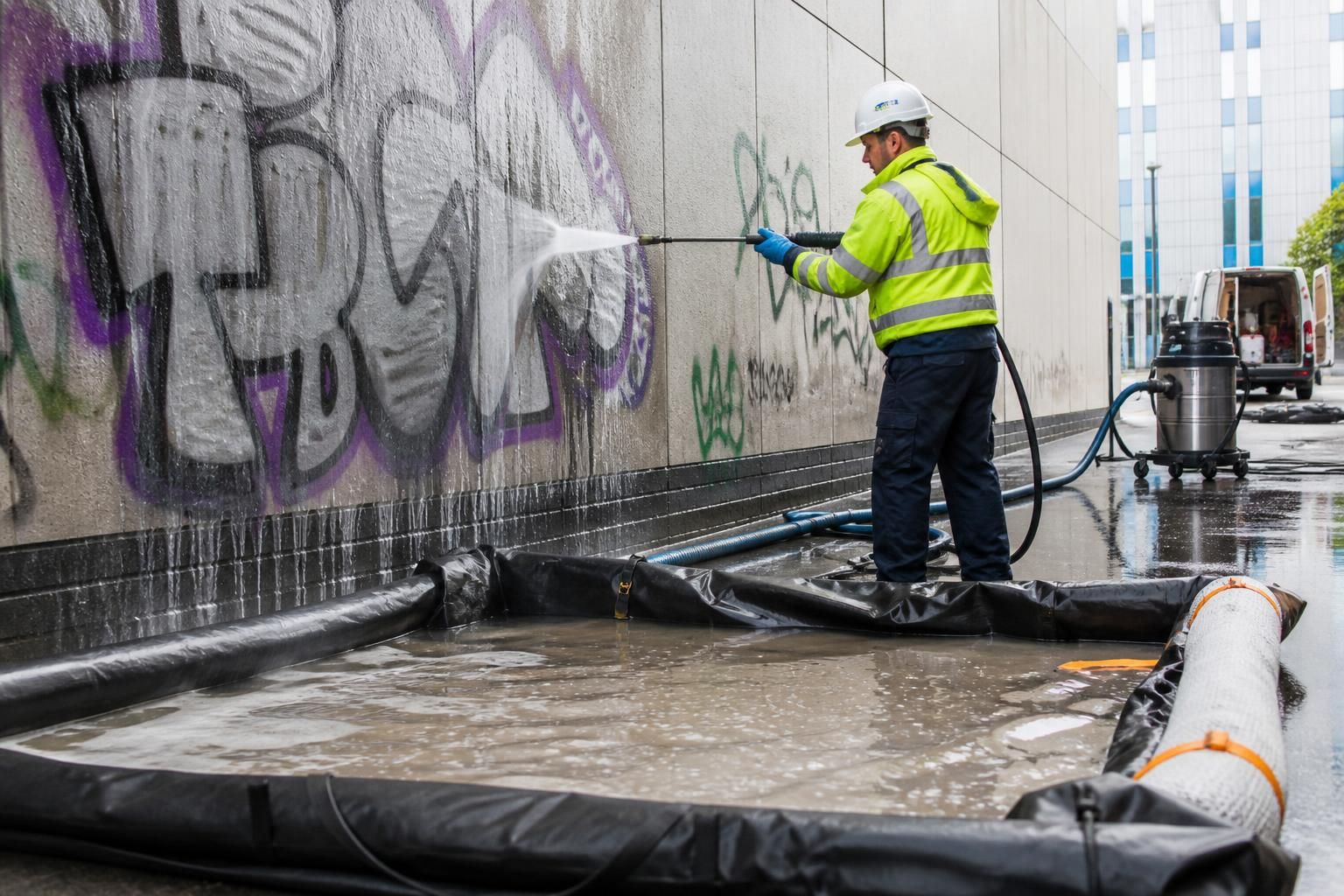
Controlled low-pressure washing removes softened graffiti and loosened residues without the aggressive impact associated with high-pressure cleaning. The operator can adjust the pressure, nozzle, water flow and working distance to suit the substrate. This helps protect brick faces, mortar joints, render, painted façades and delicate coatings.
Low-pressure cleaning is often combined with a mild, biodegradable detergent or specialist graffiti remover. The product should be applied only where needed, allowed to work for the recommended period, and rinsed in a controlled manner. Using more product or pressure than necessary does not make the process more environmentally responsible and can increase surface damage and contaminated run-off.
Carefully selected cleaning products
Where water and steam alone cannot remove the paint, professionals may use water-based, biodegradable or otherwise lower-impact products formulated for graffiti removal. The choice should be based on the paint, substrate and surrounding environment rather than on a general claim that a product is “green”. Biodegradability does not mean that a chemical can be discharged directly into a drain or watercourse.
Responsible product selection involves checking the safety data sheet, following the manufacturer’s dilution and contact-time instructions, and avoiding unnecessary use of highly corrosive, volatile or solvent-heavy products. Products should be stored, handled and disposed of in line with applicable control of substances hazardous to health requirements. They must also be kept away from planting, watercourses, food preparation areas and sensitive building components.
Targeted application rather than blanket treatment
Applying remover only to the affected marks reduces chemical consumption and limits contact with sound coatings and surrounding materials. Small areas can often be treated with a controlled gel, poultice or hand-applied product, which helps prevent the cleaner from spreading across the façade. This is particularly useful on vertical surfaces, porous masonry and locations where run-off must be tightly controlled.
For some materials, dry or minimally wet techniques may be preferable. Mechanical removal of stickers, careful scraping of thick paint, absorbent poultices or specialist surface-cleaning systems can reduce water use. These methods still require care: abrasive action can open the surface, alter its texture or create a visibly lighter patch, so they should be selected only after testing.
Containing and recovering wash water
Environmental protection depends on what happens to the removed paint and cleaning solution after it leaves the surface. Work should be planned to prevent contaminated water, paint particles and chemical residues entering surface-water drains, soil or nearby watercourses. Drain covers, bunding, temporary barriers, wet vacuums and water-recovery equipment can be used according to the site conditions.
Recovered water should be assessed and handled through an appropriate disposal or treatment route. It should not be released to a drain simply because it appears clear, as dissolved cleaning agents and fine paint particles may remain. Site conditions, local drainage arrangements and the requirements of the relevant water authority should be considered before work begins.
Protecting surrounding areas
A low-impact graffiti clean should include protection for nearby planting, vehicles, windows, vents, pedestrian routes and building entrances. Sheeting, absorbent materials and temporary exclusion zones can prevent overspray and residues from spreading. On busy commercial sites, the work may also need to be timed to reduce disruption and keep members of the public away from wet surfaces and equipment.
Access planning is part of environmental responsibility as well. Using suitable access equipment can allow an operator to work close to the affected area, reducing overspray, unnecessary cleaning and the risk of damage caused by unstable or improvised access methods. Equipment should be selected for the height, shape and condition of the structure.
Repairing and restoring the surface
Graffiti removal may reveal staining, paint shadowing, scarring or an earlier failed cleaning attempt. Restoration should be limited to what is needed to achieve a consistent appearance. Over-cleaning an entire façade can consume additional water and products and may create a larger colour variation than the original graffiti.
Where appropriate, restoration may include localised redecoration, compatible masonry repairs or the application of a breathable sacrificial anti-graffiti coating. Any coating should be compatible with the substrate, allow the building to manage moisture correctly and be applied only after the surface is clean and sufficiently dry. A protective coating can make future removal easier, but it is not a substitute for prompt reporting and controlled cleaning.
How to judge whether the method is genuinely environmentally responsible
- The contractor has inspected the surface and tested the proposed method before full-scale cleaning.
- The least aggressive effective technique is selected instead of defaulting to high pressure or strong chemicals.
- Products are used sparingly, with safety information and disposal requirements understood.
- Run-off, paint debris and used materials are contained and managed appropriately.
- Nearby drains, planting, watercourses, occupants and public areas are protected.
- The cleaning plan considers surface repair and future protection, rather than repeating damaging treatments.
For commercial and industrial premises, the method statement should explain the proposed equipment, products, access arrangements, surface testing, run-off controls and waste handling. This provides a practical basis for checking that the graffiti clean up protects both the building and the surrounding environment while still achieving a suitable restoration result.
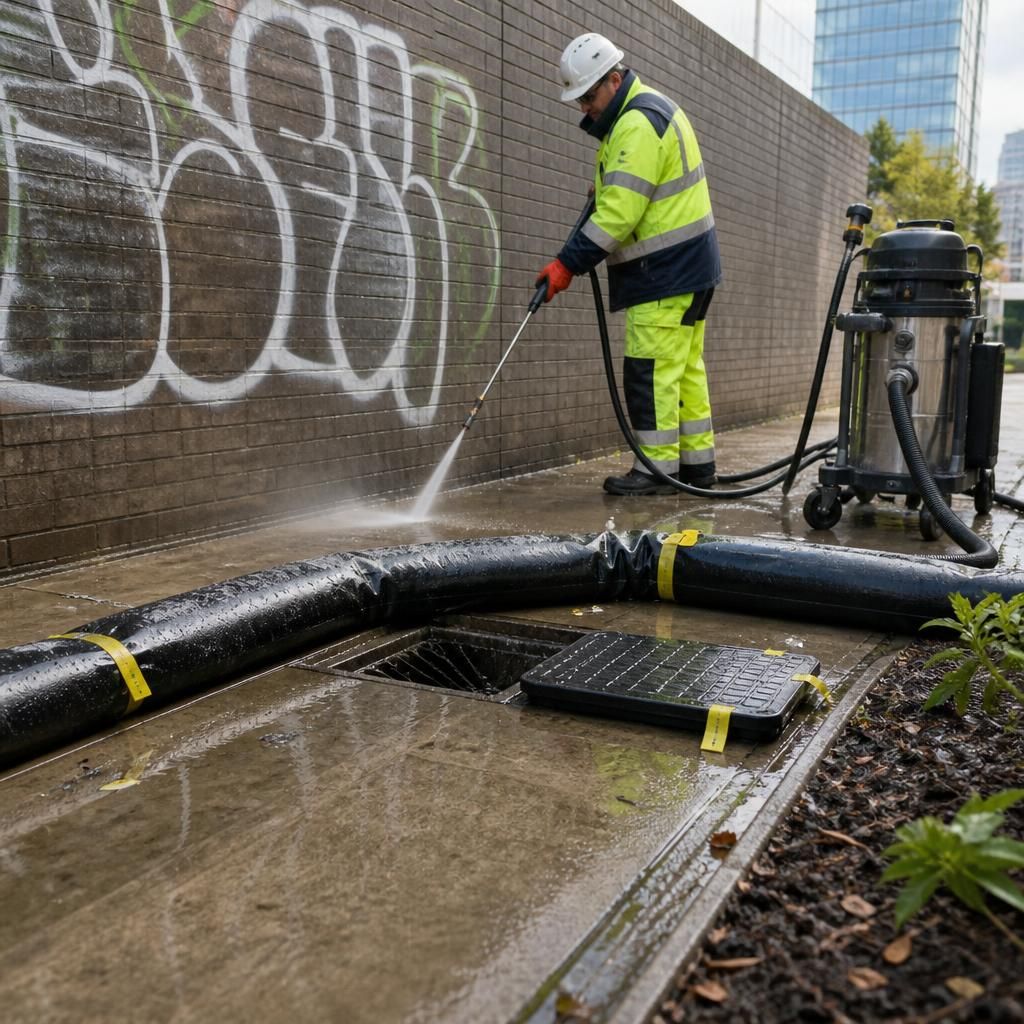
Containing and recovering contaminated wash water is a key part of environmentally friendly graffiti clean up. Removed paint particles, cleaning products and dissolved residues must be prevented from entering surface-water drains, soil or nearby watercourses, even when the water appears clear.
Professionals may use drain covers, temporary bunding, absorbent barriers and wet vacuums to control run-off. The recovered water and paint debris should then be assessed and managed through an appropriate treatment or disposal route, in line with site conditions and relevant water authority requirements. Biodegradable products still require responsible disposal; biodegradability does not make them suitable for direct discharge.
- Protect nearby drains, planting, entrances and pedestrian routes before cleaning begins.
- Use the minimum amount of water and cleaning product needed for the surface and graffiti type.
- Include run-off controls and waste handling in the method statement for the project.