
What are the most effective methods for removing graffiti without damaging underlying surfaces?
The most effective graffiti removal method is a surface-specific combination of a suitable cleaning agent, controlled pressure or steam, and careful rinsing. Professionals first assess and test the substrate, then use the least aggressive technique that removes the paint without eroding brick, discolouring stone, or damaging metal and cladding.
The most effective graffiti removal method is a surface-specific combination of a suitable cleaning agent, controlled pressure or steam, and careful rinsing. Professionals first identify the substrate and paint type, carry out a discreet test, and use the least aggressive technique that removes the graffiti without eroding brick, discolouring stone, lifting coatings or damaging metal and cladding.
Assessment comes before cleaning. Graffiti can include aerosol paint, marker ink, adhesive, bitumen or multiple layers of different products. The correct treatment depends on the material beneath it, its condition, the age of the graffiti and whether the surface has previously been sealed or painted. A professional inspection should check for cracks, loose pointing, flaking coatings, corrosion, staining and existing water or chemical damage.
A small test area should then be cleaned using the proposed product and method. This confirms whether the remover affects the colour, texture, protective coating or finish of the substrate. It also establishes the appropriate dwell time, agitation and rinsing approach before work begins across the full affected area.
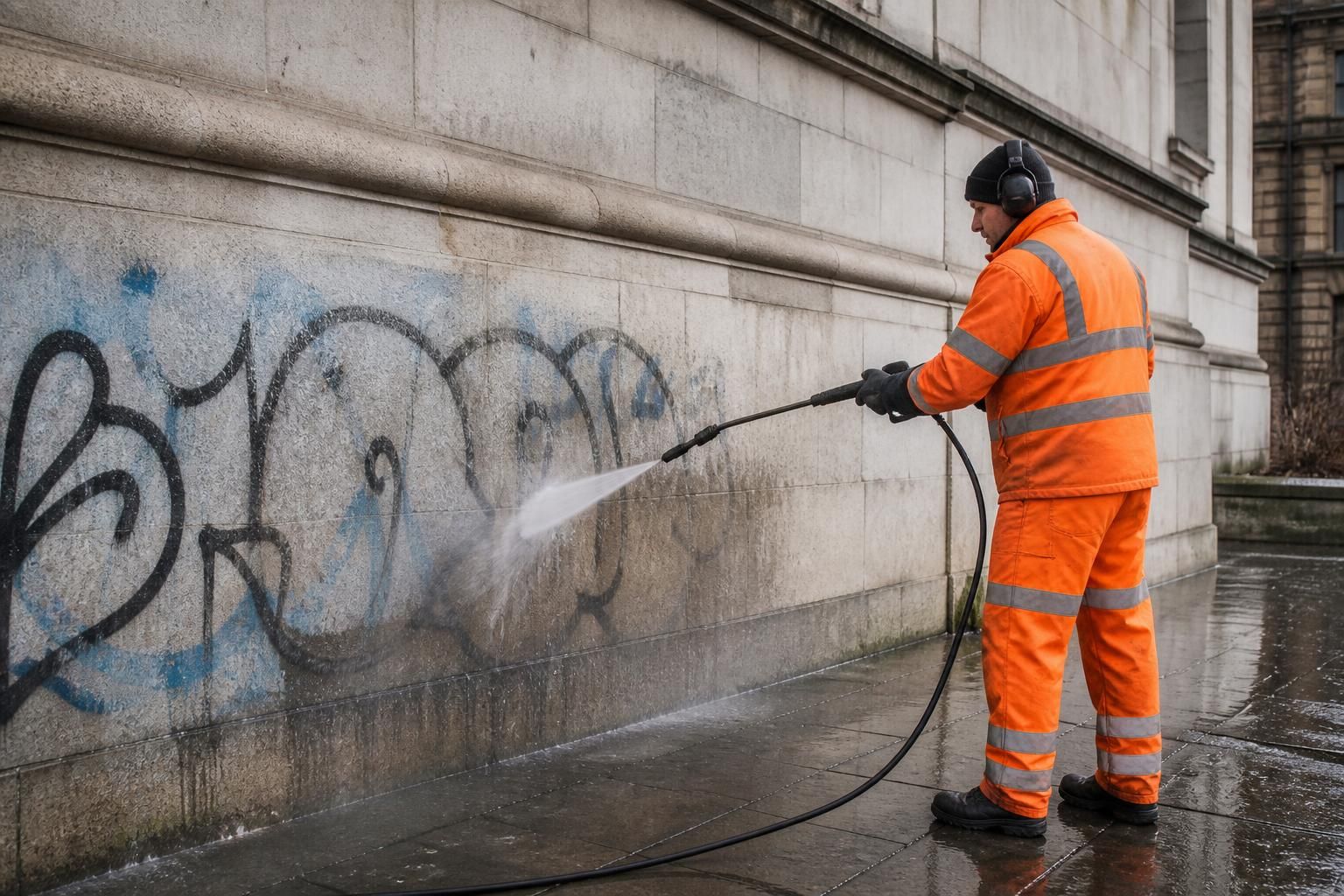
Low-pressure chemical cleaning is often the preferred method for sound brickwork, masonry and many hard external surfaces. A graffiti remover is selected to soften or dissolve the paint, then applied for the required dwell time. The residue is gently agitated with a suitable brush or pad and rinsed away using controlled pressure. This is safer than relying on high pressure alone, which can drive pigment deeper into porous materials or remove the face of weathered brick.
Graffiti removers must be matched to the substrate. Alkaline products may be suitable for some painted surfaces and masonry, while solvent-based products can be useful against certain solvent-borne paints and marker inks. Neither should be used automatically: an unsuitable chemical can bleach stone, soften a coating, stain render or damage sealants. Product instructions, safety data and the results of the test patch should guide the treatment.
Steam cleaning uses heat and controlled moisture to soften paint and loosen residues, often with less mechanical force than conventional pressure washing. It can be particularly useful on masonry, street furniture, metalwork and sensitive areas where aggressive abrasion would be inappropriate. Steam is not universally suitable, however. Heat may affect certain plastics, laminates, painted finishes, sealants and delicate coatings, so the surface must be assessed first.
Controlled pressure washing can remove softened graffiti efficiently when the pressure, nozzle, distance and water volume are carefully managed. The operator should work progressively rather than begin at maximum pressure. Broad fan patterns are generally safer than concentrated jets, and the lance should not be held close to fragile joints, edges or damaged coatings. Pressure washing without a suitable pre-treatment is rarely the safest option for porous or weathered surfaces.
Soft brushing and specialist pads provide useful mechanical assistance after the graffiti has been chemically softened. They help lift remaining pigment from textured surfaces without the aggressive action of wire brushes or hard abrasive tools. Wire brushing, scraping and harsh scouring can leave scratches, polished patches, exposed aggregate or permanent changes in texture.
Abrasive techniques, including blasting, should be reserved for situations where less aggressive methods have been tested and found unsuitable. Fine abrasive media, dry ice or other specialist systems may have a role on robust surfaces, but they can erode masonry, expose the substrate, damage pointing and spread contaminated debris. Their use requires careful control, suitable containment and an experienced operator.
The cleaning method should reflect the surface.
- Brick and masonry: use a compatible graffiti remover with low-pressure rinsing or steam where appropriate. Avoid excessive pressure, prolonged chemical contact and abrasive blasting, particularly on soft, historic or weathered brick.
- Natural stone: identify whether the stone is porous, calcareous or silicate-based before choosing a product. Strong acids can damage susceptible stone and create etching or colour changes. Gentle chemical treatment, steam and controlled rinsing are often safer, subject to testing.
- Concrete: sound concrete may tolerate controlled chemical cleaning and pressure, but rough or porous concrete can retain pigment below the surface. Repeated aggressive cleaning may expose aggregate or create a visibly cleaner patch around the graffiti.
- Painted walls and render: the objective may be to remove the graffiti while preserving the original coating. Solvents, heat and pressure can soften or strip that coating, so a mild remover and gentle agitation may be preferable. In some cases, localised repainting is the only way to achieve a uniform finish.
- Metal: use a product that will not attack the metal, powder coating or protective finish. Rinse thoroughly and dry the area to reduce the risk of corrosion. Abrasive methods can expose bare metal and leave visible scoring.
- Cladding and plastics: these materials can stain, craze, fade or lose their surface finish when exposed to unsuitable solvents, heat or pressure. Testing is especially important, with attention paid to joints, seals and printed finishes.
- Glass and glazed surfaces: remove paint using compatible products and non-scratching tools. Blades, abrasive pads and contaminated cloths can create permanent scratches.
Rinsing is an important part of safe removal. Remaining chemical and dissolved paint can continue to affect the substrate after the visible graffiti has gone. Rinse water should be directed away from doors, vents, planting, drainage channels and adjacent surfaces. Where required, wastewater and paint residue should be contained, collected and disposed of in accordance with site and environmental requirements.
Professionals should also protect nearby assets before cleaning. This may include masking signs, electrical equipment, vehicle surfaces, windows and vulnerable landscaping. The work area should be controlled to prevent contact with pedestrians, staff and vehicles, and appropriate personal protective equipment should be used when handling cleaning chemicals or contaminated residue.
Some graffiti leaves a shadow or ghosting after the surface paint has been removed. This usually occurs when pigment or binder has penetrated a porous substrate, or when the exposed area has weathered differently from the surrounding surface. Further cleaning is not always the best answer. Repeated treatment can enlarge the affected area or damage the substrate, so the next step may be a compatible poultice, localised restoration, colour blending or repainting.
After removal, a suitable anti-graffiti coating can make future cleaning easier, provided it is compatible with the substrate and the appearance required by the property owner. The coating should not be treated as a substitute for correct removal: applying it over residual paint or moisture can trap staining and make later restoration more difficult. The finished area should be inspected in dry conditions and viewed from normal distances to check for shadows, patching, surface marks or coating changes.
In practice, the safest process is to assess the substrate, test the chosen treatment, soften the graffiti with a compatible product, use controlled steam or pressure only where necessary, rinse and contain the residue, then inspect for remaining staining or damage. High pressure, strong chemicals and abrasive methods may all be effective in the right circumstances, but none is universally safe. Surface protection depends on choosing the least aggressive method that achieves a complete and even result.
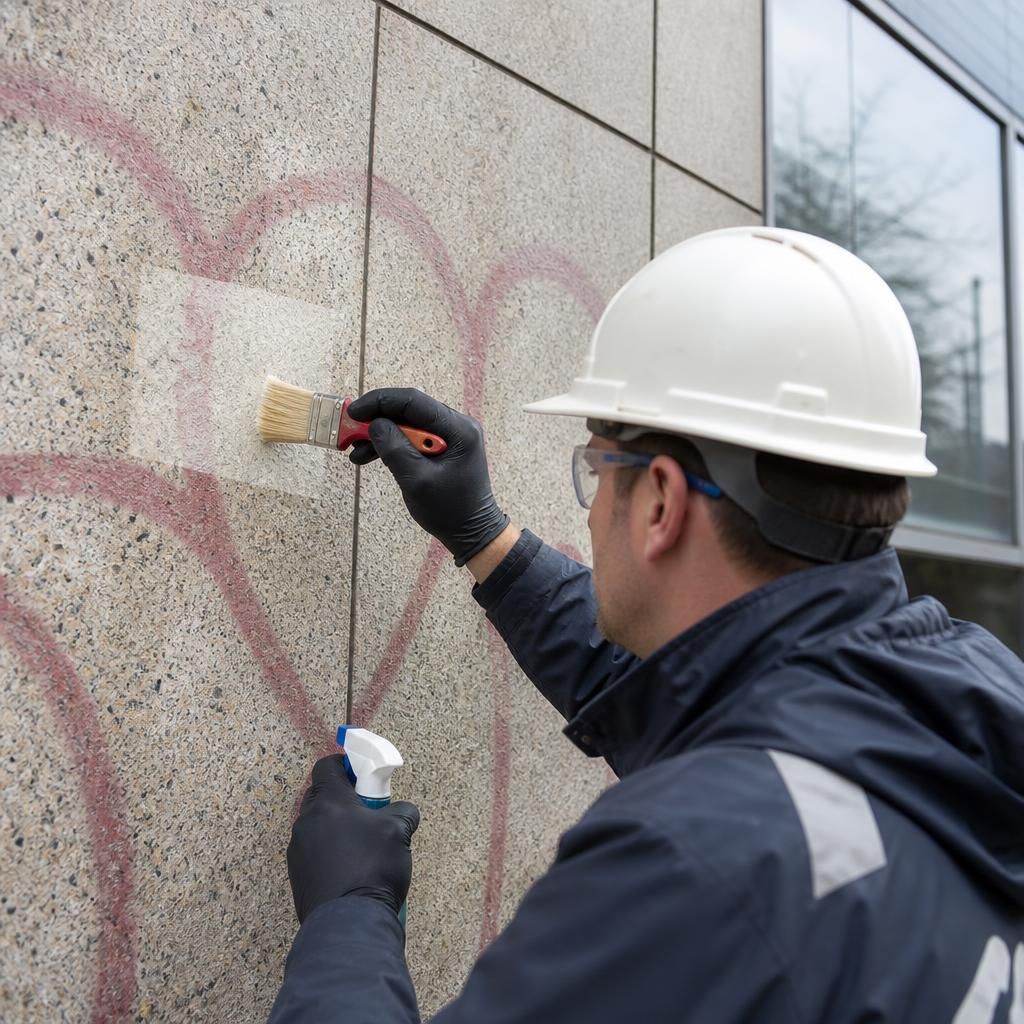
The safest graffiti removal process begins with a discreet test patch on the affected surface. This confirms whether the chosen remover, steam or pressure setting will lift the graffiti without changing the substrate’s colour, texture or protective coating.
Professionals then use the least aggressive method that achieves a clean result. Graffiti is commonly softened with a compatible chemical or controlled steam before gentle brushing and low-pressure rinsing. This reduces the risk of eroding brick, etching stone, lifting paint or exposing bare metal. The test area should also establish the correct dwell time and rinsing approach before the treatment is applied across the full surface.