
What are the common signs of graffiti damage that may require restoration instead of simple removal?
Graffiti may require restoration rather than simple removal when paint has penetrated porous materials, caused staining, etched or stripped the surface, or exposed underlying damage. Other warning signs include visible ghosting after cleaning, uneven colour or texture, failed coatings, and deterioration that means the surface needs repair, re-coating or protective treatment as well as graffiti removal.
Graffiti damage requires restoration rather than simple removal when the paint, ink or marker has altered the surface beneath it. Removal takes away the visible graffiti; restoration addresses staining, etching, coating failure, surface deterioration and changes in colour or texture that remain afterwards. The decision depends on the substrate, the graffiti material, how long it has been present and the cleaning methods previously used.
Common signs that restoration is needed include:
- Persistent staining or ghosting: A shadow, outline or discolouration remains after the visible graffiti has been removed. This is common on porous brick, concrete, render, natural stone and unsealed masonry, where pigment has entered the surface rather than remaining on top of it.
- Etching or roughened texture: Acidic markers, aggressive solvents and some aerosol paints can react with or soften the substrate. If the affected area feels rougher, pitted or more open than the surrounding surface, further cleaning alone may make the difference more noticeable.
- Loss of the original finish: Cleaning can expose a dull, bleached or polished patch where the surrounding surface has weathered differently. This may occur on painted walls, powder-coated cladding, stone, signage and other finishes with a consistent sheen.
- Flaking, blistering or peeling coatings: Graffiti may conceal failing paint, render, sealant or protective coating. If the coating lifts during cleaning or is already detached around the affected area, the surface will generally need preparation and re-coating rather than repeated pressure washing.
- Damage to the substrate: Cracks, spalling concrete, loose render, eroded mortar joints or chipped masonry indicate an underlying repair requirement. Removing graffiti without addressing these defects can leave the surface vulnerable to water penetration and further deterioration.
- Multiple graffiti layers: Older tags beneath newer paint can create deeply embedded colour and uneven cleaning results. Removing every layer may require carefully controlled treatments, followed by blending, sealing or localised surface restoration.
- Uneven colour or texture after cleaning: A clean patch that is visibly lighter, darker, smoother or rougher than the surrounding area may need cosmetic blending or treatment across a wider section. This is particularly relevant on façades where localised cleaning can create a noticeable contrast.
- Damage around the graffiti: Overspray, solvent runs, paint splashes and cleaning marks on adjacent panels, frames, paving or signs can extend beyond the main tag. Restoration may involve several materials and finishes rather than one isolated removal treatment.
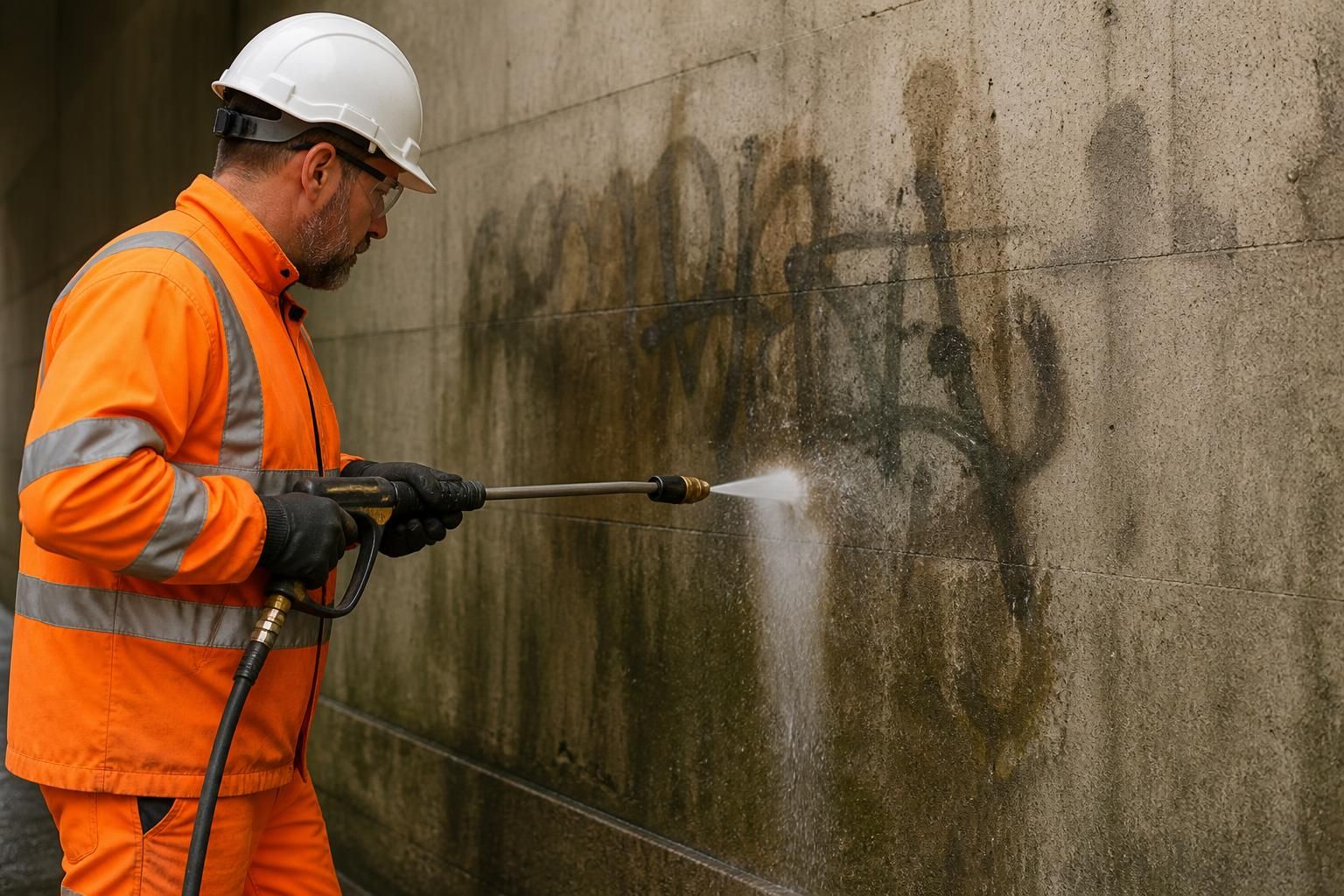
Porous surfaces need particular care. Brick, concrete, sandstone, limestone and unsealed render can absorb paint binders and pigments below the surface. A strong treatment may remove the top layer of graffiti while leaving a deep stain, and excessive pressure can strip the face of masonry or widen existing defects. Restoration may therefore include low-pressure or steam-based cleaning, a carefully selected poultice or chemical treatment, stain reduction, mortar repairs and application of a breathable protective coating where appropriate.
Painted and coated surfaces can also need restoration. If graffiti has bonded to a painted wall or cladding, the graffiti may come away with the original finish. Signs include a visible change in gloss, exposed primer, colour loss, scratches or a feathered edge between the treated and untreated areas. The appropriate solution may be localised preparation and repainting, panel refinishing or replacement of a severely damaged component. Aggressive solvent use should be avoided unless its compatibility with the coating has been established.
Previous cleaning attempts are an important warning sign. Heat, pressure, abrasive methods or unsuitable chemicals can leave marks that are more difficult to correct than the original graffiti. Tell the cleaning contractor what products and equipment have already been used, if known. A professional assessment should identify the substrate, inspect the surrounding area, distinguish graffiti from pre-existing deterioration and use a discreet test patch before a wider treatment is selected.
Restoration does not always mean replacing the affected material. Depending on the condition, it may involve:
- reducing residual pigment or ghosting with a substrate-appropriate treatment;
- repairing loose masonry, render, mortar, concrete or sealant;
- blending a localised colour or texture difference;
- repainting or recoating a damaged finish;
- reapplying a compatible protective or anti-graffiti coating; and
- cleaning adjacent areas so the repaired section does not appear as an isolated patch.
In some cases, simple removal remains the correct approach. If the graffiti is fresh, confined to a sound non-porous coating and has not caused staining, etching or colour loss, a controlled cleaning treatment may restore the appearance without additional work. Restoration becomes more likely when the surface still looks or feels different after a suitable removal method, or when cleaning reveals defects that were hidden by the graffiti.
The safest way to decide is to assess the whole affected area rather than judging the visible paint alone. Document the surface condition before work, identify any pre-existing damage, carry out a test clean and inspect the result after the surface has dried. If ghosting, coating failure, etching or substrate deterioration remains, the work should be specified as graffiti clean up and restoration, with repairs and protective treatment included where necessary. This approach avoids repeated cleaning that can worsen the surface and provides a more consistent, durable finish.
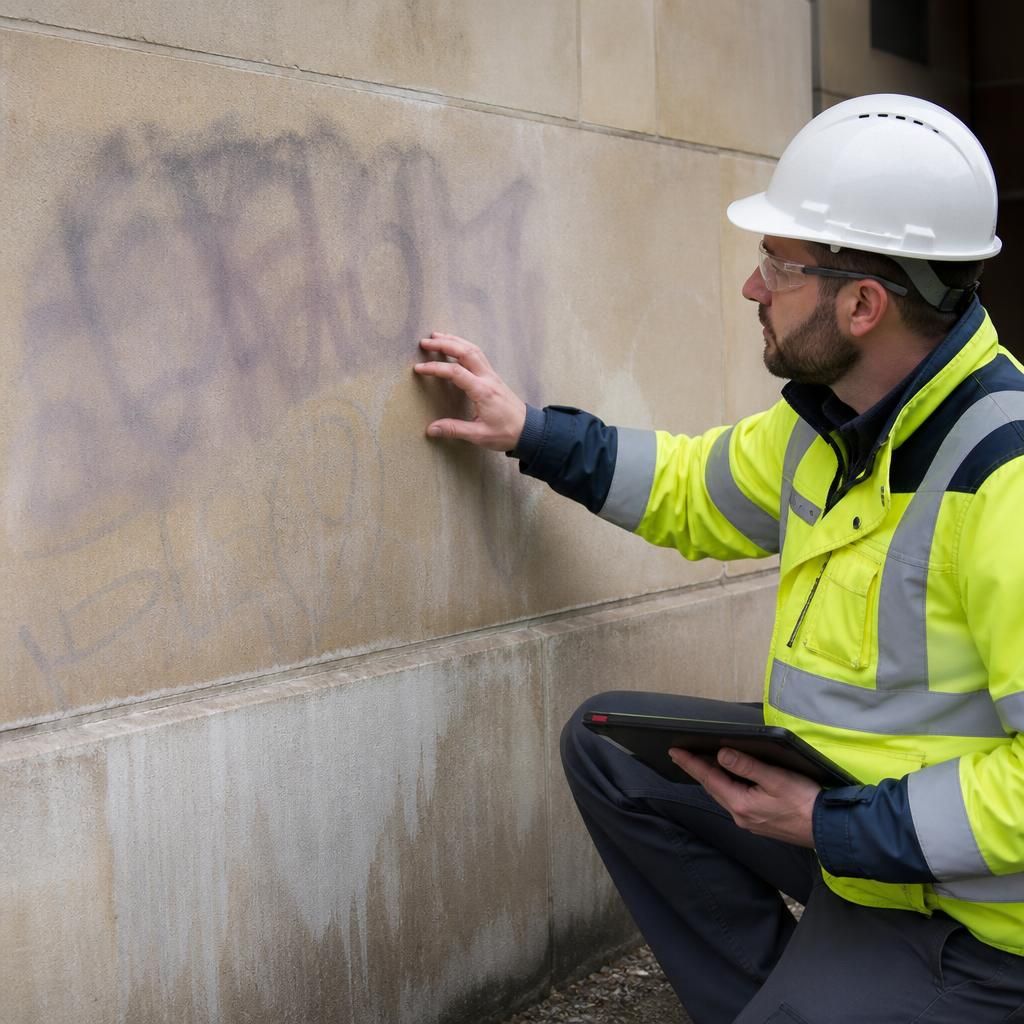
Persistent staining or “ghosting” after graffiti removal is a clear sign that the surface may need restoration rather than another cleaning treatment. This occurs when paint pigments or binders have penetrated porous brick, concrete, render, natural stone or unsealed masonry, leaving a shadow or discolouration beneath the removed graffiti.
Further pressure washing or aggressive chemicals can strip the surface face and make the affected area more noticeable. A professional restoration assessment should identify the substrate, test a suitable stain-reduction method and check for changes in colour or texture. Depending on the result, restoration may include specialist cleaning, localised repairs, colour blending or a compatible breathable protective coating.
Arrange a Graffiti Damage Assessment
Arrange a graffiti damage assessment with Encanto Exterior Cleaning to identify whether the affected surface needs restoration as well as removal. We can assess the substrate, coating condition and any residual staining before recommending an appropriate treatment.