
What are the best practices for maintaining graffiti-free surfaces long-term?
Long-term graffiti prevention combines a suitable protective coating, prompt removal of new markings and routine inspections of vulnerable surfaces. A planned maintenance response helps prevent paint from penetrating substrates, limits repeat vandalism and reduces the risk of permanent staining or surface damage.
Maintaining graffiti-free surfaces long-term requires a planned prevention and response programme rather than occasional cleaning. The most effective approach combines a suitable anti-graffiti coating, regular inspections, rapid removal of new markings, good site management and accurate maintenance records. This limits paint penetration, reduces repeat vandalism and helps preserve the appearance and condition of the underlying surface.
Apply the right protective coating
Anti-graffiti coatings create a barrier between the surface and the graffiti medium, making future markings easier to remove. The coating must be selected for the substrate, location and expected cleaning method. Brick, natural stone, painted render, metal cladding, concrete and coated panels each have different levels of porosity, sensitivity and moisture movement.
Common coating types include sacrificial systems, which are removed and reapplied during cleaning, and permanent or semi-permanent systems, which remain in place through repeated cleaning. A specialist should assess whether the coating may alter the surface appearance, affect breathability, create a sheen or react with an existing finish. Testing a small, inconspicuous area before wider application is an important part of the process.
Remove new graffiti promptly
Fresh graffiti is generally easier to remove than aged paint or marker ink that has weathered and penetrated the substrate. A defined response procedure should identify who reports the damage, who authorises cleaning, how the area is made safe and how quickly the contractor is expected to attend.
Prompt removal also reduces the visual signal that graffiti is tolerated. Where markings reappear repeatedly, simply cleaning each incident may not be enough. The affected area should be reviewed for access points, poor lighting, concealed corners or other conditions that make it attractive to vandals.
Use a method suited to the surface
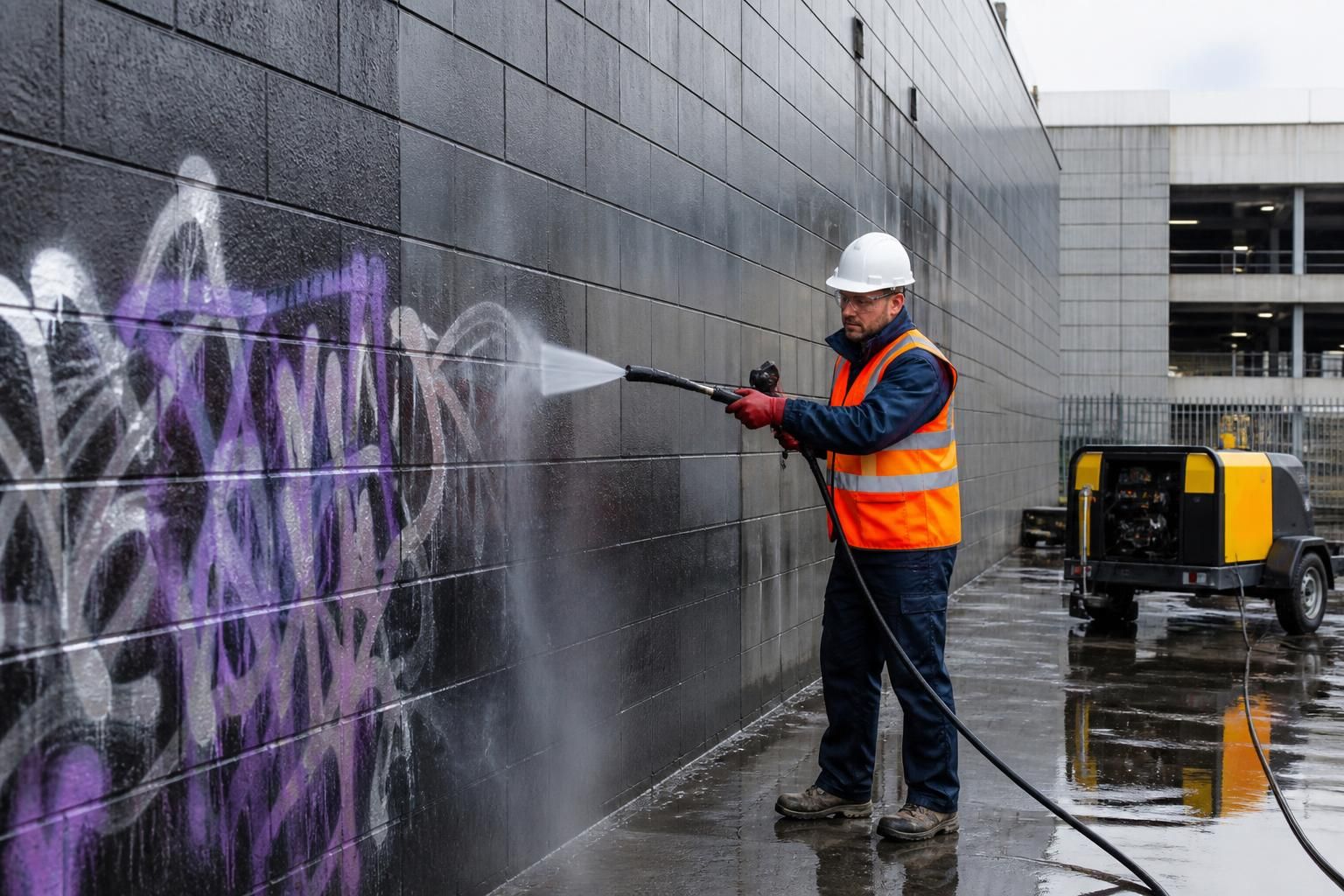
Long-term preservation depends on removing graffiti without stripping coatings, opening the substrate or spreading the marking. The cleaning method should be chosen after identifying the surface and the type of paint or ink involved. Depending on the circumstances, this may involve controlled pressure washing, steam cleaning, a surface-appropriate chemical treatment or a combination of techniques.
Excessive pressure, aggressive chemicals and unsuitable abrasive methods can cause scarring, colour variation, mortar loss or permanent changes to the finish. Cleaning should therefore be tested before full treatment, with particular care around fragile masonry, painted surfaces, joints, sealants and sensitive architectural details.
Inspect vulnerable areas routinely
Regular inspections help identify graffiti while it is still limited and reveal patterns that can inform prevention. Inspections should cover elevations, shutters, doors, boundary walls, service cabinets, signs, walkways, car parks, loading areas and locations that are hidden from normal public view.
Inspection frequency should reflect the site’s exposure, previous incidents, public access and operating environment. High-risk areas may need checks as part of daily or weekly site routines, while lower-risk areas can be incorporated into a wider planned maintenance schedule. Photographs and location notes provide a useful record of changes and recurring hotspots.
Improve the physical security of the site
Cleaning alone will not prevent recurrence if the site remains easy to access. Practical measures may include improving lighting, securing gates, repairing damaged fencing, removing climbable objects and keeping service areas orderly. Clear sightlines can reduce concealed areas, while well-maintained landscaping can prevent walls and signs from becoming hidden.
Where appropriate, access control, monitored CCTV and suitable security patrols can support the cleaning plan. These measures should be proportionate to the site’s use and comply with relevant privacy, planning and safety requirements. Signs explaining that the area is monitored or maintained may also discourage opportunistic marking, although signage should not replace physical security and routine inspection.
Keep a graffiti management record
A record should include the location, date identified, surface type, marking medium where known, cleaning method, coating condition and any repair work required. Reviewing this information can show whether incidents are concentrated around a particular entrance, tenant area, boundary or type of surface.
Records also help ensure that repeated cleaning does not gradually damage the substrate. If the same area requires frequent treatment, it may be more economical and protective to improve access control, apply a more suitable coating, alter the surface finish or plan a broader restoration.
Coordinate responsibilities across the property
On commercial and managed sites, the maintenance team, security staff, tenants, cleaning contractor and property manager should understand their respective responsibilities. A written procedure can specify the reporting route, approval requirements, safe working arrangements, photographic records and escalation process for recurring vandalism.
Staff should know not to paint over graffiti, scrub it with household products or apply solvents without approval. Uncontrolled treatment can spread pigments, create uneven patches or interfere with later professional cleaning. Any suspected hate-related or threatening graffiti should be recorded and escalated through the appropriate internal and local authority procedures before removal where evidence may be required.
Plan safe and environmentally responsible cleaning
Graffiti removal can produce contaminated wash water, chemical residues and paint debris. The work should be planned so that run-off is contained and disposed of in accordance with applicable UK requirements. The choice of low-impact products, controlled water use and steam cleaning where suitable can reduce environmental risk, but the safest method still depends on the substrate and marking.
Work at height, near traffic, around pedestrians or beside electrical equipment also requires suitable controls. Professional cleaning plans should address access equipment, exclusion zones, personal protective equipment, nearby occupants and the protection of drains, planting and adjacent finishes.
Review the coating and surface condition
Protective systems do not remove the need for maintenance. Exposure to weather, repeated cleaning, abrasion and general wear can reduce their effectiveness. During each clean, the coating should be checked for thinning, patchiness, peeling, staining or changes in appearance. Areas that no longer repel the graffiti medium may require local repair, preparation and reapplication.
Where the original surface has already been stained, etched or repeatedly over-cleaned, restoration may be necessary before a new protective system is applied. Matching colour and texture can be difficult, particularly on natural stone, brick and aged render, so early intervention is preferable to repeated uncontrolled cleaning.
Use a planned maintenance agreement where risk is persistent
A scheduled service can combine inspections, incident response, coating reviews and periodic deep cleaning. This gives property managers a consistent process and makes it easier to deal with graffiti before it becomes established. The scope should state which surfaces are included, how urgent incidents are reported, how access is arranged and how additional restoration is authorised.
The best long-term results come from treating graffiti control as part of the site’s wider exterior maintenance plan. Protective coatings, rapid removal, suitable cleaning techniques and sensible security measures work together; none is a complete substitute for the others. A site-specific assessment can establish the most appropriate combination for the building materials, exposure, access arrangements and history of vandalism.
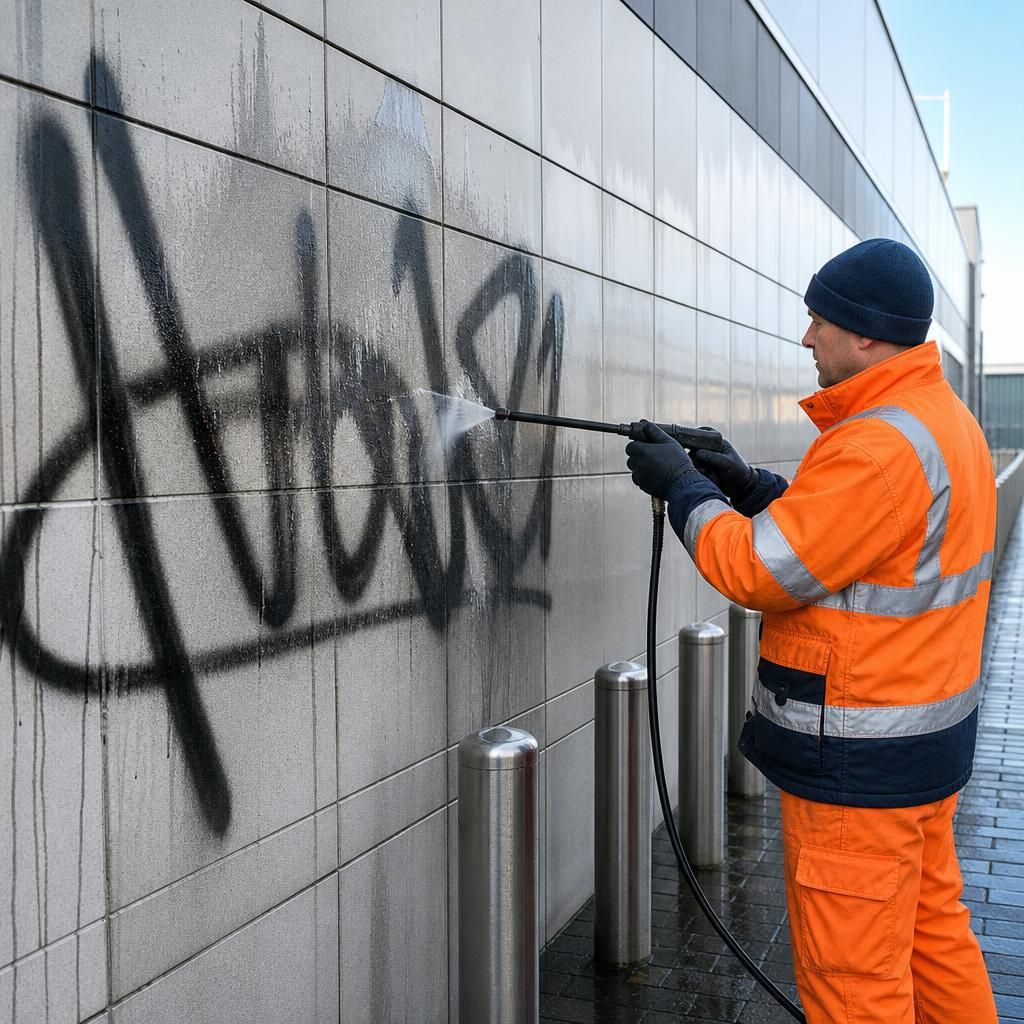
Long-term graffiti prevention depends on combining a suitable anti-graffiti coating with rapid, surface-appropriate cleaning. The coating creates a barrier that helps prevent paint and ink from penetrating porous materials, but it must be compatible with the substrate and the planned cleaning method.
Inspect the coating during each removal visit for thinning, patchiness, peeling or changes in appearance. New graffiti should be reported and removed promptly using a tested method, as aggressive chemicals, excessive pressure or abrasive techniques can damage the coating and underlying surface. Where protection has worn away, local preparation and reapplication may be needed to maintain consistent performance.