
How do I choose the right graffiti clean up and restoration service for my property?
Choose a graffiti clean up and restoration service with proven experience on your property’s surface types, suitable removal methods, appropriate access and safety procedures, and clear plans for preventing further damage. Confirm that the provider will inspect and test the surface first, explain the proposed process and environmental controls, and provide a transparent quotation for removal, restoration and any protective treatment.
The right graffiti clean up and restoration service is one that can identify the paint, marker or coating involved, assess the affected surface, and select a removal method that eliminates the graffiti without causing additional damage. For a commercial or industrial property, the provider should also demonstrate suitable access, safety and environmental controls, explain whether restoration or protective treatment is required, and provide a clear quotation covering the full scope of work.
Start with experience relevant to your property. Graffiti removal is not a single process. Brick, natural stone, concrete, render, painted surfaces, metal cladding, glass and timber all respond differently to pressure, heat, solvents and detergents. Ask whether the contractor has worked on the same or comparable materials, particularly if the graffiti is on a listed, ageing, weathered or previously painted surface. Experience with large façades, car parks, boundary walls and other commercial areas is also important where access, public safety and reinstatement need to be managed alongside the cleaning itself.
Require a proper site assessment before work begins. A reliable provider should inspect the affected area rather than recommend a fixed treatment based only on photographs. The assessment should consider:
- the substrate and its condition, including cracks, friable areas, failed coatings and previous repairs;
- the type, age and depth of the graffiti;
- whether the paint or ink has penetrated porous materials;
- nearby windows, signage, seals, landscaping, vehicles and drainage points;
- the height and location of the work, including any need for access equipment or traffic and pedestrian management; and
- whether the affected area has been cleaned before and may show a visible difference after removal.
Where the surface or coating is sensitive, the contractor should carry out a small test patch in an inconspicuous location. This helps establish the safest combination of product, temperature, pressure, dwell time and agitation. It also allows you to agree the expected result, since older graffiti on porous masonry may leave a shadow or staining even after the visible paint has been removed.
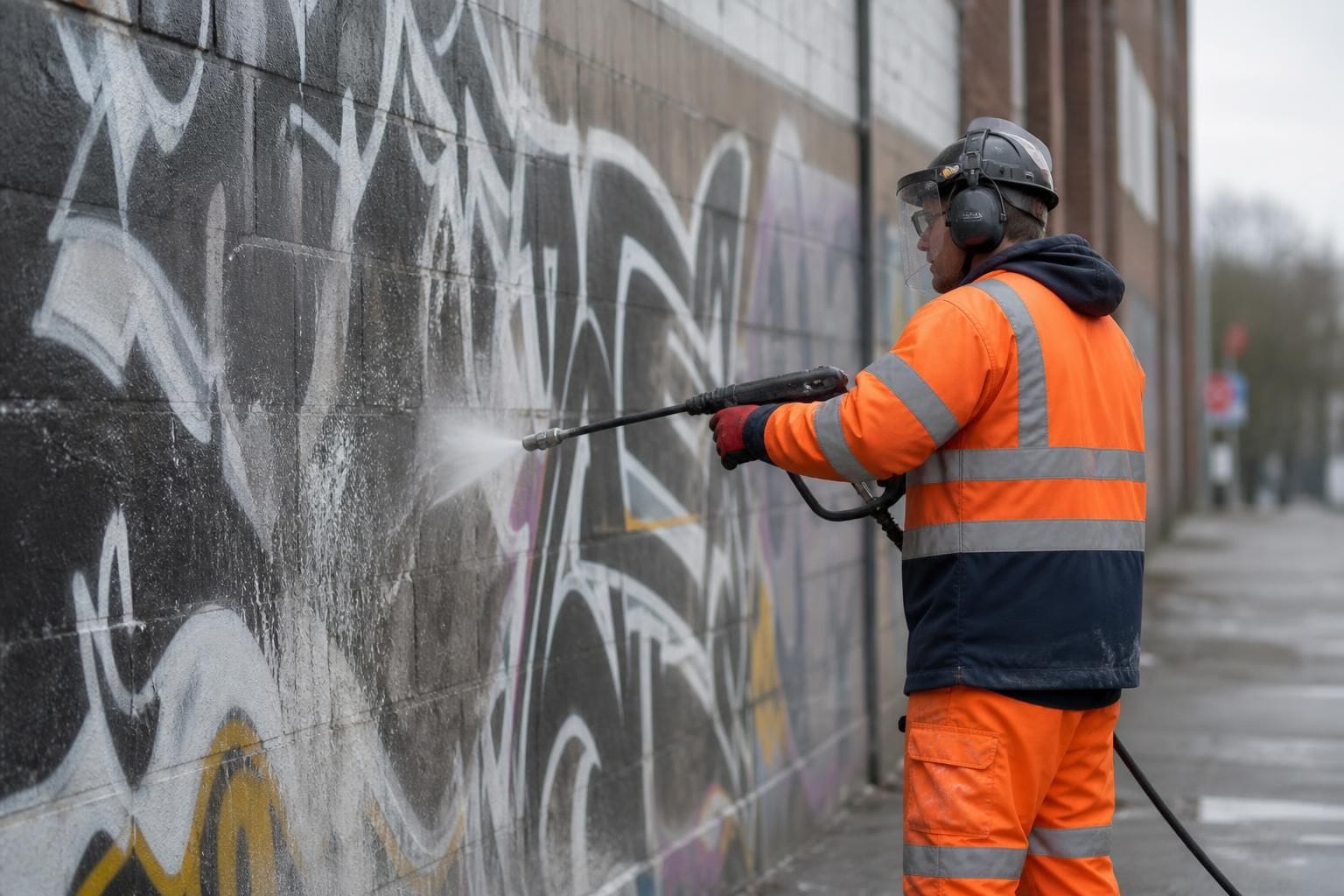
Check that the proposed method is appropriate. Professional removal may involve low-pressure washing, steam cleaning, specialist chemical treatment, controlled abrasion or a combination of techniques. The safest option is not necessarily the most powerful one. Excessive pressure can erode mortar, expose aggregate, drive contamination deeper into masonry or damage surface coatings. Strong chemicals can discolour materials, affect sealants and harm nearby vegetation if they are not selected and controlled correctly.
Ask the provider to explain why the proposed method suits your surface and what alternatives were considered. The explanation should include how the product will be applied, how long it will remain on the surface, how residues will be removed and how runoff will be contained. A competent contractor should be prepared to adjust the process if the test area shows a risk of etching, colour loss or surface failure.
Distinguish simple removal from restoration. Graffiti clean up removes the unwanted marking, but restoration may be needed when the substrate has been stained, etched, weathered or damaged. Restoration can include controlled cleaning of the surrounding area to reduce a patchy appearance, local repair, repainting, coating reinstatement or application of a suitable anti-graffiti treatment. Ask whether these possibilities have been included in the assessment and whether the quotation separates removal from any remedial work.
This is particularly relevant on porous brick, sandstone, concrete and render. Removing graffiti from only a small patch may leave a clean area that contrasts with the surrounding façade. In other cases, repeated cleaning may have weakened a coating or exposed differences caused by earlier maintenance. The provider should explain what can realistically be achieved and identify any limitations before work starts.
Review safety and access arrangements. Graffiti removal may involve working at height, pressurised equipment, hot water, chemical products, electrical supplies and areas used by members of the public. Confirm that the contractor has a suitable risk assessment and method statement, trained operatives, appropriate personal protective equipment and a plan for segregating the work area. Access equipment should be selected for the building and ground conditions, with controls in place for falling objects, slips, spray drift and unauthorised entry.
For occupied premises, agree how the work will be coordinated with staff, residents, tenants, visitors and other contractors. The timing of the clean, noise levels, water use, temporary restrictions and emergency arrangements should be discussed in advance. Evidence of appropriate insurance and any relevant training or site accreditations can provide further assurance, especially where the work forms part of a wider facilities or construction project.
Ask how environmental impacts will be controlled. A responsible provider should explain how detergents and removed residues will be contained, collected and disposed of. Runoff must not be allowed to enter surface-water drains, soil, planted areas or watercourses without suitable controls. The contractor should also consider water consumption, chemical selection, spray drift and the protection of nearby plants, vehicles and building entrances. Where steam cleaning or a lower-water method is suitable, this may reduce runoff, but the correct approach depends on the substrate and graffiti type.
Examine relevant previous work. A portfolio is most useful when it shows comparable surfaces, access conditions and levels of contamination rather than only close-up images of finished walls. Ask for examples involving the type of property being cleaned and find out whether the work included restoration, protective coating or ongoing call-out support. Before-and-after images can help, but they should be considered alongside a clear explanation of the method and any limitations. References from property managers, construction firms or other organisations with similar requirements may also help you assess reliability and communication.
Insist on a transparent quotation. The quotation should identify the areas to be treated, the proposed method, access requirements, preparation, cleaning, rinsing, waste or runoff controls, restoration and any protective coating. It should state whether additional work may be required if the test patch reveals deeper staining or substrate damage. Clarify what happens if further graffiti appears soon after the clean, whether urgent response arrangements are available and how repeat visits will be charged.
Be cautious of a quote that gives no surface assessment, promises complete removal in every case or recommends the same treatment for every material. The lowest initial price may not represent the lowest overall cost if aggressive cleaning causes damage, requires repainting or leaves the façade visibly inconsistent.
Consider prevention as part of the service. Once the graffiti has been removed, ask whether a compatible sacrificial or permanent anti-graffiti coating is suitable for the surface. The provider should explain its appearance, maintenance requirements, reapplication needs and compatibility with future cleaning. Lighting, CCTV, access control, landscaping and prompt reporting may also reduce repeat incidents, although these measures sit alongside rather than replace effective removal and maintenance.
Before appointing a contractor, confirm that you have received a site-specific assessment, a test-cleaning recommendation, a written method and quotation, suitable safety and environmental arrangements, evidence of relevant experience, and a realistic explanation of the expected finish. Choosing on this basis gives you a better chance of removing the graffiti effectively while preserving the underlying surface and avoiding preventable restoration costs.
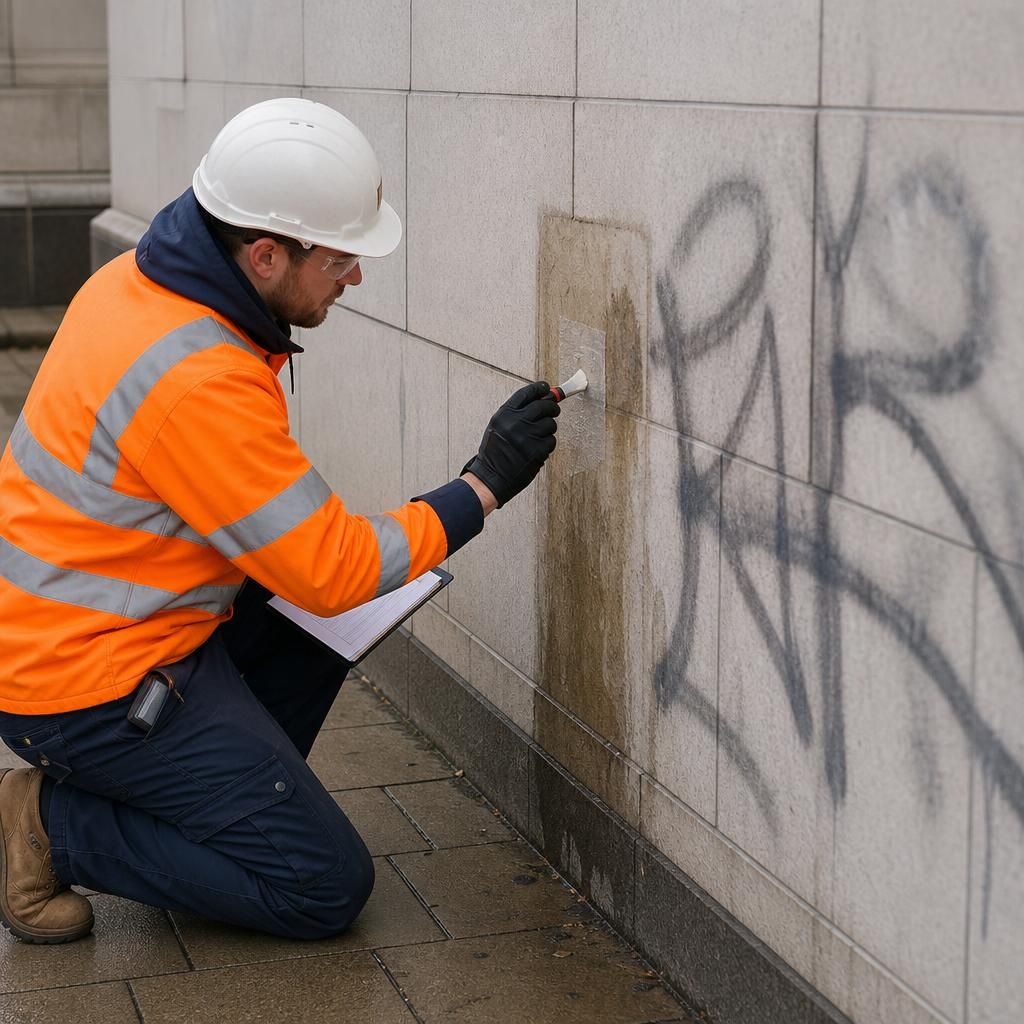
A site assessment and test patch are essential when choosing a graffiti clean up and restoration service because removal methods must match the graffiti and the surface beneath it. Brick, stone, concrete, render, cladding, glass and painted finishes can react differently to pressure, heat and cleaning products.
The contractor should inspect the affected area, identify fragile or previously damaged sections and test the proposed treatment in an inconspicuous location. This helps confirm the correct pressure, temperature, product and dwell time before full-scale work begins. It also provides a realistic indication of whether staining, ghosting or surface damage may remain after the visible graffiti has been removed.
Ask for the findings and recommendations in writing, including any restoration, protective coating or surrounding-area cleaning that may be required. A provider that explains these limitations before work starts is better placed to protect the underlying surface and avoid unexpected remedial costs.
Arrange Your Graffiti Clean Up and Restoration Assessment
Arrange a site-specific graffiti clean up and restoration assessment so the surface, damage and safest treatment method can be reviewed before work begins. You will receive clear recommendations for removal, restoration and any suitable protective coating.