
How can I assess the effectiveness of graffiti clean up techniques on different surfaces?
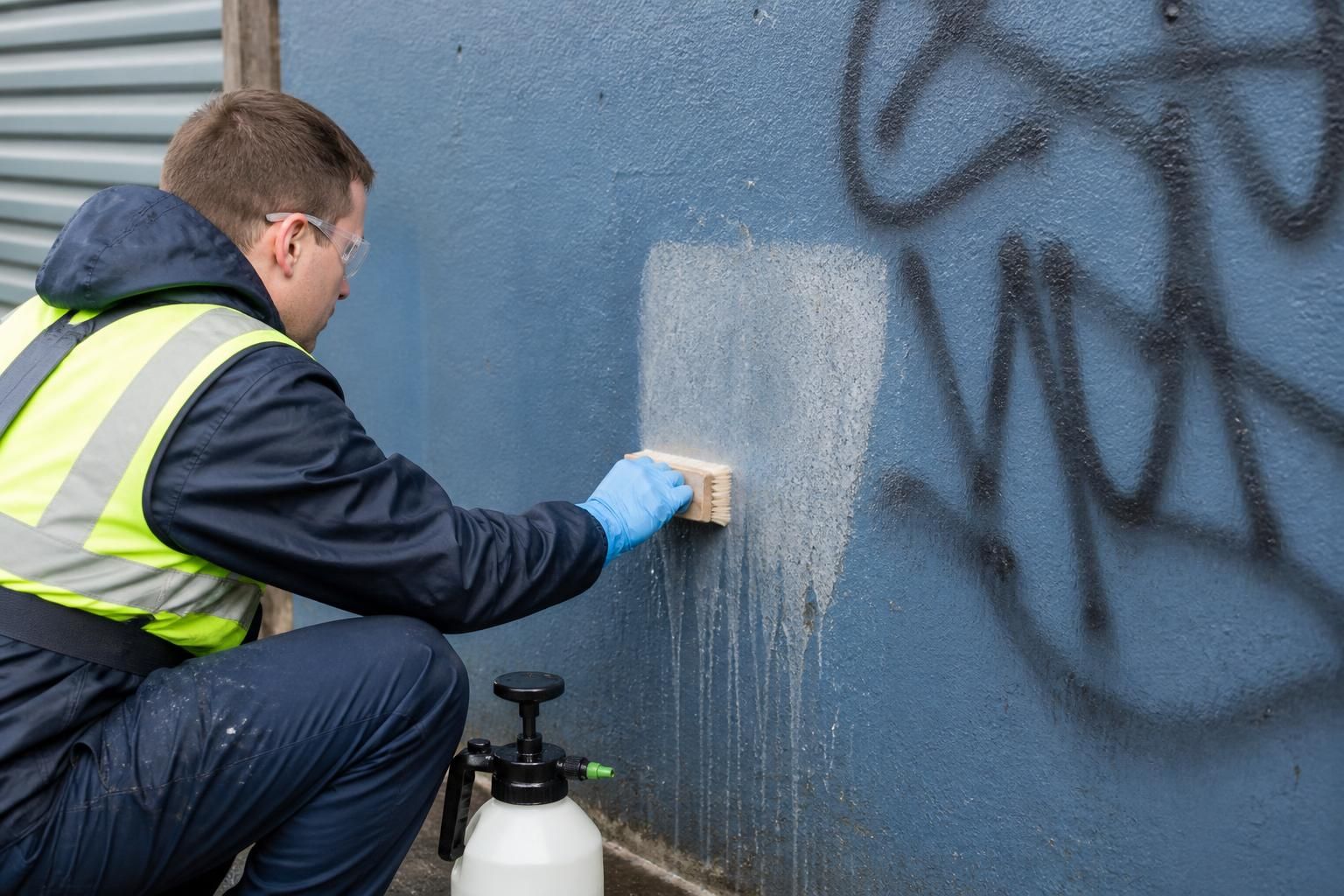
Assess graffiti clean up techniques by testing them on a small, inconspicuous area of each surface first, then checking whether the graffiti and any shadowing are removed without altering the substrate. Compare the test area with the surrounding surface for colour, texture, staining, etching, residue and water absorption before approving the method for wider use.
Assess the effectiveness of graffiti clean up techniques by carrying out a controlled test on a small, inconspicuous area of each surface before full treatment. A suitable method should remove the graffiti, shadowing and residue while leaving the substrate, coating, colour, texture and protective finish unchanged. The test area should be allowed to dry fully and then compared with the surrounding surface before the method is approved.
Start by identifying the surface and its condition. Graffiti can behave differently according to the material beneath it. Establish whether the surface is porous or non-porous, coated or uncoated, painted, weathered, previously treated or already damaged. Also identify the graffiti medium where possible, such as aerosol paint, marker ink, stickers, adhesive residue or etching. Existing cracks, flaking paint, staining, efflorescence and failed sealants should be recorded, because cleaning can expose or worsen these defects.
Photograph the area before testing and note its colour, sheen, texture and general condition. This provides a useful comparison after cleaning. On important façades, use consistent photographs and inspect the surface in natural light as well as from different angles. Some residues and shadows are only visible once the surface has dried or when light falls across it.
Use a discreet test patch for every materially different area. A single successful test on one wall does not prove that the same chemical, pressure or technique is suitable for the entire property. Test separately where the surface changes from brick to render, painted masonry to bare masonry, or one coating system to another. Include areas with different levels of weathering and different types or ages of graffiti.
The test should use the least aggressive method likely to work. This may involve a suitable graffiti remover, controlled steam cleaning, low-pressure washing, gentle agitation, poulticing or a combination of techniques. Apply the product or process according to its technical instructions, controlling contact time, temperature, pressure, nozzle position and rinsing. Avoid increasing the strength or dwell time simply to achieve a faster result. A method that removes paint quickly but strips the substrate or coating is not effective cleaning.
After treatment, rinse or remove residues using a method appropriate for the surface and the site drainage arrangements. Remaining cleaning product can attract dirt, leave a visible tide mark or continue reacting with the material. Where runoff is produced, it should be contained and managed in line with site requirements and environmental controls.
Evaluate the result against the graffiti and the substrate. Check the test area for:
- Complete removal of the visible paint, ink, adhesive or other graffiti material.
- Removal of shadowing, ghost marks, staining and embedded pigment.
- Any remaining oily, sticky, powdery or chemical residue.
- Changes in colour, sheen, texture, profile or surface detail.
- Etching, pitting, abrasion, raised fibres, softened coatings or loss of protective finish.
- Bleeding of pigment into porous material or migration into adjacent areas.
- Water marks, streaks, halos or uneven absorption after drying.
- Damage to mortar joints, sealants, pointing, paint edges, render or decorative features.
The surrounding surface is the control for the comparison. A clean test patch should not be judged only by how bright or new it appears, since over-cleaning can create a visibly lighter area. Compare colour and texture directly with adjacent untreated material. On painted or coated surfaces, check whether the original finish remains intact rather than assuming that removal of the graffiti alone represents a successful outcome.
Allow sufficient time for a reliable assessment. A surface can look satisfactory immediately after rinsing but develop staining, blooming, residue or colour change as it dries. Porous masonry may need particular attention because moisture and dissolved pigments can move below the surface. Reinspect once the area is dry and, where the material is sensitive or the graffiti is deeply absorbed, check it again after a suitable period of weathering. If the test patch continues to change, the treatment should not be extended across the façade.
Consider the characteristics of each common surface.
- Brick and other porous masonry: assess whether the graffiti has penetrated the pores and whether cleaning causes pigment spread, mortar loss or a patchy appearance. Abrasive methods and excessive pressure can alter the face of the brick or remove weathered material.
- Concrete: check for uneven lightening, exposed aggregate, surface scarring and retained pigment in pores. A result that removes the paint but leaves a strong shadow may require a carefully selected secondary treatment rather than more aggressive pressure.
- Painted masonry and render: confirm that the graffiti is removed without softening, lifting or thinning the underlying coating. If the coating is already loose or chalking, local repainting may be part of restoration rather than a cleaning failure.
- Metal, powder-coated surfaces and painted steel: look for dulling, scratches, colour change, corrosion exposure and damage to the coating. Solvents that work on graffiti can also attack the finish beneath it, so compatibility testing is essential.
- Natural stone: assess colour variation, etching, salt movement and changes to the stone’s texture. Porous and calcareous stones may react differently to the same chemical treatment, so the stone type and existing sealant must be considered.
- Glass, plastics and signage: check for scratching, clouding, crazing, adhesive marks and damage to printed or laminated layers. Blades, abrasive pads and unsuitable solvents can permanently affect these surfaces.
Where the first test does not meet the required standard, record what happened rather than repeatedly intensifying the same process. A different remover, lower mechanical action, controlled steam treatment, poultice or staged cleaning approach may be more appropriate. If the graffiti has caused etching, coating failure, deep staining or substrate loss, removal alone may not restore a uniform appearance. The required work may then include local repairs, colour matching, repainting, repointing or application of a compatible protective coating.
For larger commercial or public-facing sites, keep a treatment record showing the surface type, graffiti type, method tested, products used, contact conditions, equipment settings, rinse approach and inspection findings. This creates a consistent specification for the remaining work and helps prevent different operatives from applying incompatible methods. The final decision should be based on complete graffiti removal, preservation of the underlying surface and an even visual result after drying—not simply on speed or the immediate appearance of the test patch.
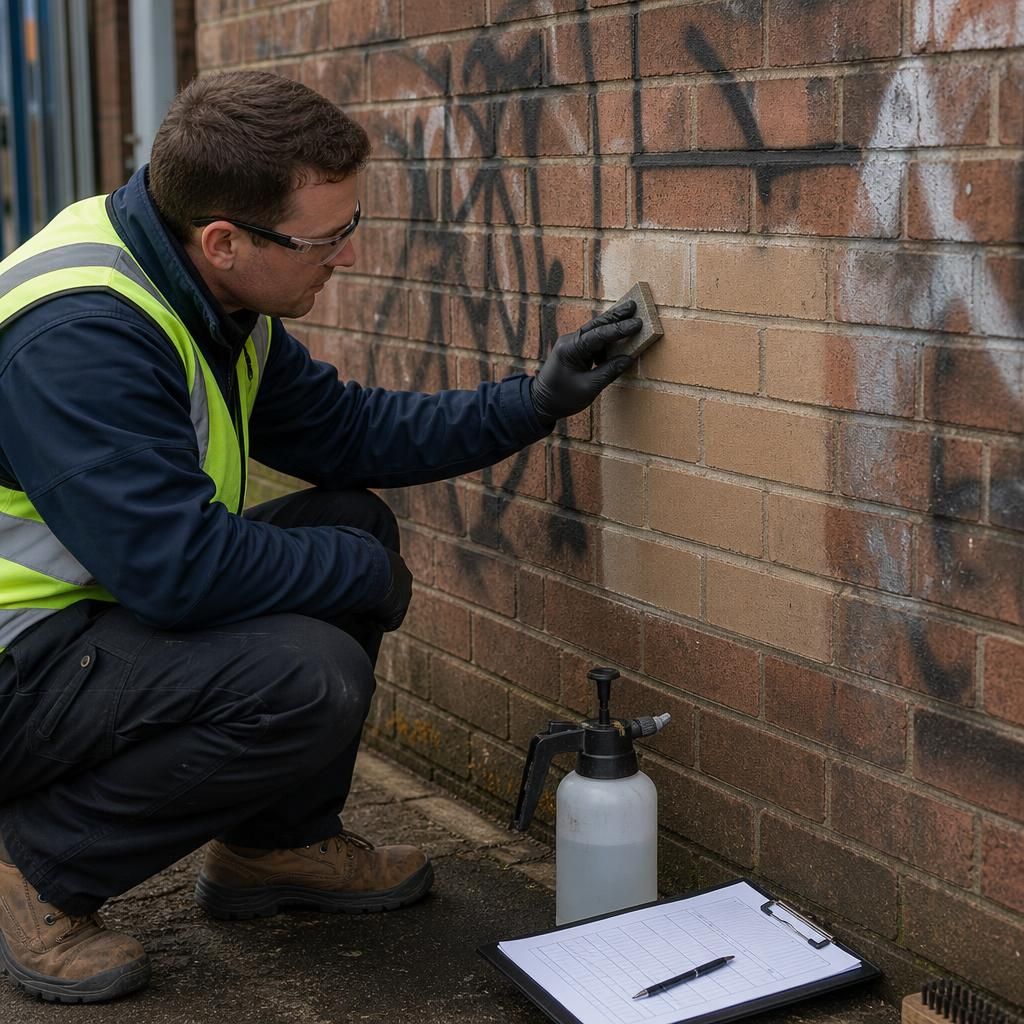
A controlled test patch is the most reliable way to assess whether a graffiti clean up technique is suitable for a particular surface. Test each materially different area separately, using the least aggressive method likely to work. Record the product, pressure, temperature, contact time and agitation used so the result can be repeated consistently.
Do not judge the outcome immediately after rinsing. Allow the surface to dry fully, then compare the patch with the surrounding area for remaining paint or shadowing, colour change, etching, abrasion, residue, streaking and altered texture. On porous brick, concrete and stone, inspect again for pigment migration or uneven absorption. On painted metal, render, signage and coated surfaces, confirm that the original finish has not softened, dulled or lifted. A technique is effective only when it removes the graffiti without creating visible or structural damage to the substrate.
Arrange a Professional Graffiti Clean Up Assessment
Arrange a professional graffiti clean up assessment with Encanto Exterior Cleaning to test suitable techniques on each affected surface and identify any restoration requirements. We can provide a controlled treatment plan for commercial, industrial and public-facing properties across Birmingham, the West Midlands and the UK.