
How can businesses prevent graffiti from reoccurring after clean up?
Businesses can reduce repeat graffiti by removing it promptly, applying a suitable anti-graffiti coating, and improving deterrents such as lighting, surveillance and controlled access. Regular inspections and a clear response plan also help identify fresh markings quickly and prevent them becoming established.
Businesses prevent graffiti from reoccurring by combining prompt removal with suitable anti-graffiti protection, improved site security and a planned inspection and response process. Cleaning alone removes the visible marking, but it does not address the conditions that make the surface easy to target or difficult to clean next time.
Remove new graffiti promptly
Fresh graffiti is generally easier to remove than older, weathered paint. As markings remain exposed to sunlight, rain and temperature changes, pigments and binders can become more firmly established in porous surfaces. A rapid response also reduces the time graffiti is visible to passers-by and can help prevent additional tagging at the same location.
Businesses should have a clear reporting route for staff, tenants, security teams and members of the public. The report should record the location, approximate time, size of the marking and surface affected. Photographs can help determine whether the graffiti is paint, marker ink, adhesive material or another substance, although testing should be carried out carefully before a cleaning method is selected.
Apply the right anti-graffiti coating
An anti-graffiti coating creates a barrier between the substrate and the marking. It can make future graffiti easier to remove and reduce the need for aggressive cleaning. The coating must be selected for the material, appearance and exposure of the surface rather than applied as a standard treatment across the whole site.
- Sacrificial coatings are removed or partially removed during cleaning and then reapplied. They can be suitable for some masonry and heritage surfaces where preserving the substrate is a priority.
- Permanent or semi-permanent coatings remain on the surface through repeated cleaning when correctly specified. They may be appropriate for robust façades, cladding and other heavily targeted areas.
- Penetrating treatments can protect porous materials without creating the same visible film as some surface coatings, but their suitability depends on the condition and absorbency of the substrate.
Before treatment, existing graffiti residues, dirt, failed coatings and salts may need to be removed. A professional should carry out a small test area to check adhesion, colour, sheen, texture and cleaning performance. Poorly chosen coatings can alter the appearance of a façade, trap moisture or make later restoration more complicated.
Improve lighting, visibility and access control
Graffiti is less difficult to deter when a site is well overlooked and unauthorised access is restricted. Practical measures include maintaining lighting around service yards, car parks, entrances and concealed elevations; trimming vegetation that creates hiding places; securing gates and access points; and keeping boundary walls visible from occupied areas.
Lighting should be positioned to reduce shadows rather than simply increase brightness. Motion-activated systems may support security arrangements, but they should be maintained and checked so that failed lamps do not create vulnerable areas. Doors, shutters, plant enclosures and fencing should be kept in good repair, as damaged or unsecured infrastructure can encourage repeated access.
Use surveillance proportionately
Closed-circuit television, monitored alarms and routine security patrols can help identify patterns and provide evidence, particularly at larger commercial or industrial premises. Cameras need suitable coverage, reliable recording and clear maintenance arrangements. They should be positioned to capture approach routes, entrances and repeatedly targeted surfaces rather than relying on a camera that only records the wall after the offence has occurred.
Any surveillance system must be operated in line with applicable privacy and data protection requirements. Signage, access to recordings and retention practices should be reviewed as part of the wider security plan.
Make the surface less attractive to tag
Large, blank and poorly maintained surfaces can be easier targets. Anti-graffiti treatment is most effective when combined with good presentation and sensible design choices. Where refurbishment is planned, businesses may consider textured finishes, patterned façades, protective landscaping or approved artwork in vulnerable locations. These measures do not prevent all vandalism, but they can reduce the visual impact of isolated markings and make repeat targeting less predictable.
Maintenance is also important. Damaged cladding, cracked render, peeling paint and dirty façades can make a site appear neglected, increasing the likelihood that graffiti will remain unnoticed. Keeping the surrounding area clean and repairing defects promptly supports the deterrent effect of the cleaning and protection work.
Inspect vulnerable areas regularly
Routine inspections should cover walls, shutters, plant rooms, car parks, loading bays, boundary features, signage and less visible elevations. The frequency should reflect the site’s history, location, public accessibility and level of risk. Inspection records can identify recurring locations, likely access times and whether a protective treatment is wearing or failing.
It is useful to maintain a simple site plan or photographic record showing treated areas and the products used. This helps cleaning teams avoid incompatible chemicals and allows the condition of the coating to be assessed during future visits.
Agree a response plan before another incident
A written response plan prevents delays and inconsistent cleaning. It should identify who reports graffiti, who authorises removal, which contractor should be contacted, how the area is made safe and how the incident is recorded. The plan should also account for working near pedestrians, vehicles, electrical equipment, drainage systems and occupied premises.
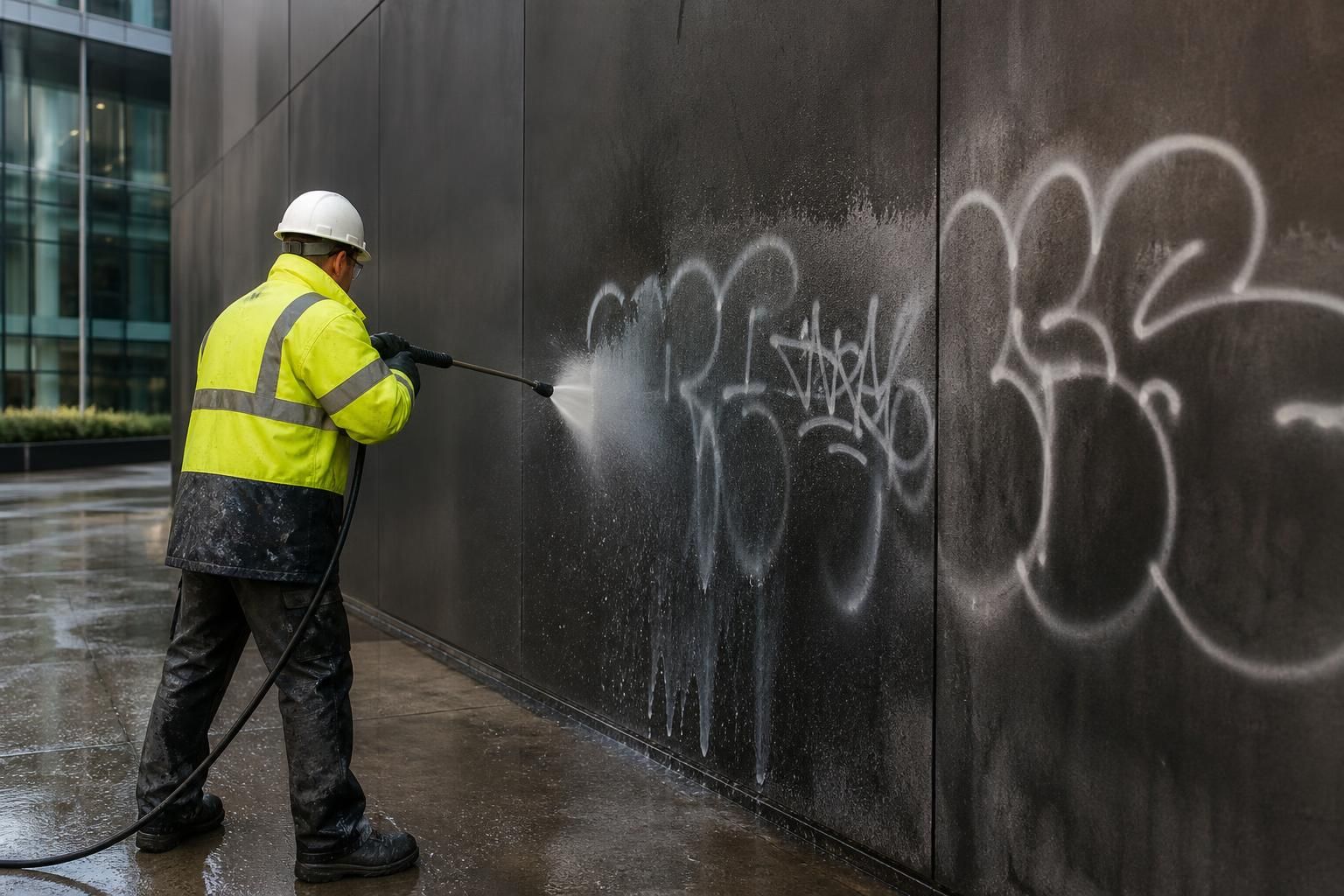
Removal should be matched to the surface and marking. High pressure is not automatically the best option: excessive pressure, unsuitable solvents or repeated abrasive cleaning can strip coatings, open the pores of masonry and leave a visible ghost or shadow. Controlled pressure washing, steam cleaning or specialist chemical treatment may be more appropriate, depending on testing and the substrate’s condition.
Review the results and renew protection when required
After each clean-up, the surface should be checked for staining, coating loss, damage and colour variation. If graffiti becomes harder to remove, the coating may need local repair or renewal. Reapplying protection only to isolated patches can sometimes create differences in sheen or colour, so the treatment area should be agreed after assessing the surrounding surface.
The most reliable long-term approach is therefore layered: remove markings quickly, protect compatible surfaces, reduce unauthorised access, maintain visibility, inspect routinely and keep a documented response process. This reduces the opportunity for repeat vandalism while limiting the risk of damage caused by hurried or unsuitable cleaning.
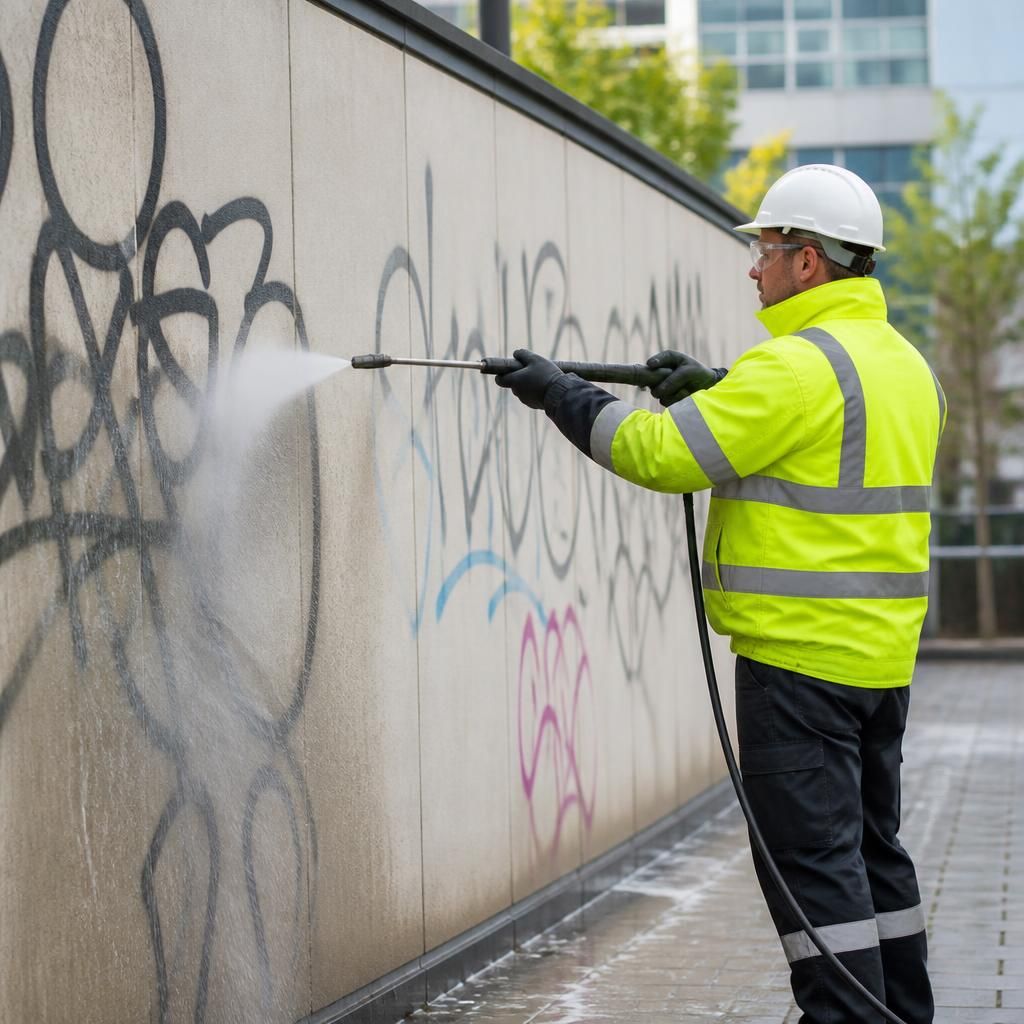
Anti-graffiti coatings help prevent repeat damage by creating a protective barrier between the marking and the underlying surface. They do not stop vandalism, but they can make future graffiti quicker to remove and reduce the need for aggressive cleaning that may damage masonry, render, cladding or painted finishes.
The coating must match the substrate, existing finish and expected cleaning method. Sacrificial coatings are removed and reapplied during cleaning, while permanent or semi-permanent systems remain in place through repeated treatment. A professional test area should be completed first to check colour, sheen, adhesion and cleaning performance. The surface should then be inspected after each removal, with local repairs or renewed protection carried out when the coating begins to wear.