
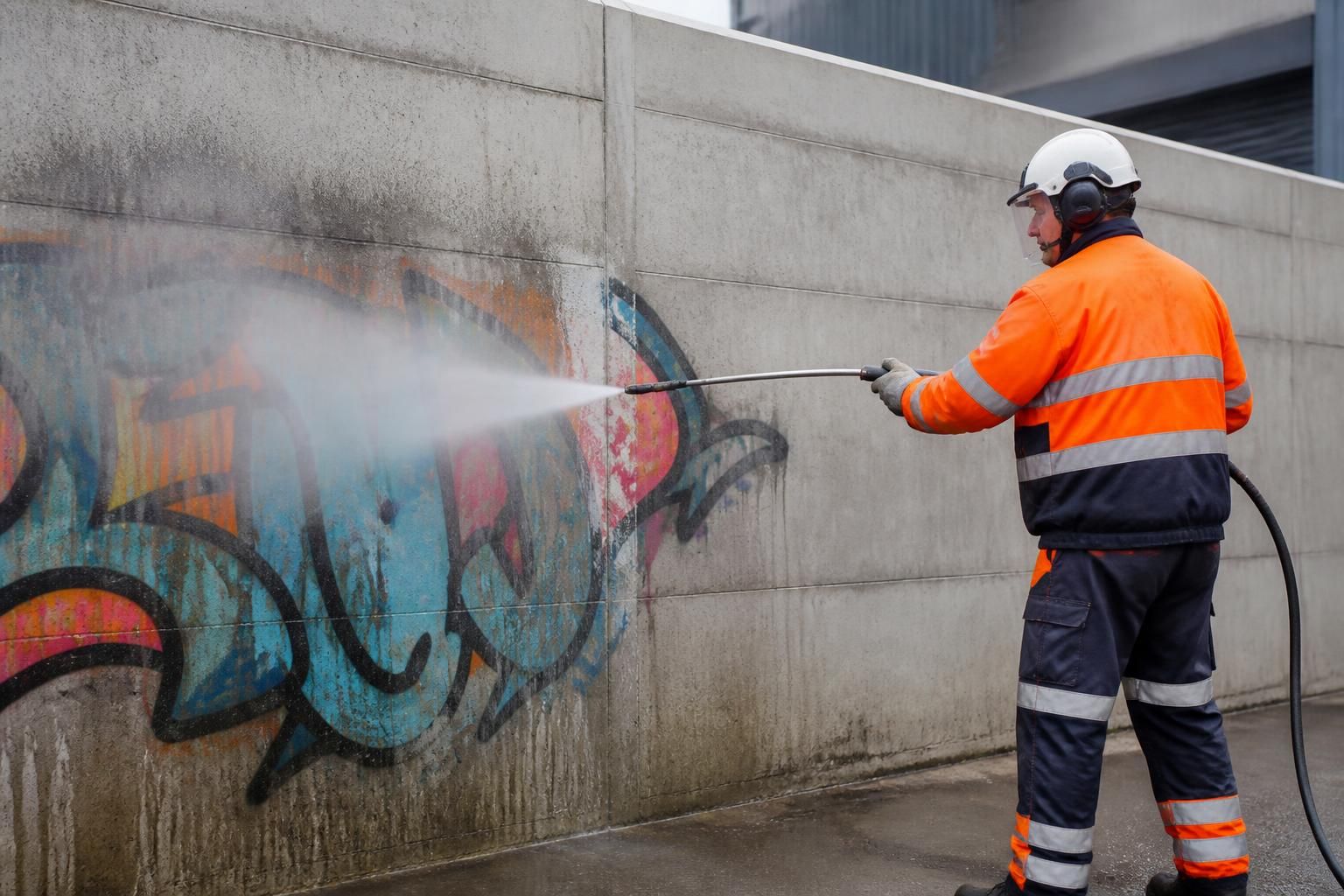
What surfaces can be treated with graffiti and spray paint removers?
Graffiti and spray paint removers can treat many exterior surfaces, including brick, concrete, stone, render, metal, cladding, glass, timber, paving and tarmac. The cleaning method and product must be selected for the specific material, coating and condition to remove paint effectively without etching, staining or damaging the underlying surface.
Graffiti and spray paint removers can be used on many external surfaces, including brick, concrete, natural stone, render, metal, cladding, glass, timber, paving and tarmac. The correct treatment depends on the surface’s porosity, age, coating, condition and sensitivity to chemicals, heat and pressure. A product or cleaning method that is suitable for uncoated masonry may damage painted metal, delicate stone or a sealed façade, so the material must be assessed before work begins.
Brick and masonry
Brick is commonly treated for graffiti, but its porous structure can absorb paint beyond the visible mark. Graffiti remover may be applied to break down the paint, followed by controlled rinsing or low-pressure cleaning to lift the residue from the surface and mortar joints. Older, soft or weathered bricks require particular care because aggressive pressure or unsuitable chemicals can cause surface erosion, colour variation or mortar loss.
Painted, glazed or sealed brick should be treated differently from bare brick. The remover must be compatible with the coating, and a small test area should be checked for colour change, staining and loss of the finish before wider application.
Concrete and precast surfaces
Concrete paving, walls, columns, barriers and other precast elements can generally be treated with graffiti removal products and controlled pressure washing. Smooth concrete is usually easier to clean than heavily textured or weathered concrete, where paint can settle into pores and surface irregularities. On older concrete, excessive pressure may expose aggregate, create visible cleaning marks or worsen existing deterioration.
Sealed or painted concrete needs a coating-safe approach. Some solvent-based products can soften sealants or alter the appearance of decorative finishes, while heat and pressure can also affect coatings. The treatment should therefore be selected according to whether the concrete is bare, painted, polished, sealed or previously repaired.
Natural stone
Granite, slate, sandstone, limestone and other natural stones can be cleaned, but they do not all respond in the same way. Dense stone may resist paint penetration, whereas porous stone can retain pigment and solvent residues. Softer or acid-sensitive materials are particularly vulnerable to etching, surface marking and changes in texture.
Natural stone should be tested before treatment, including the surrounding area where a difference in tone may become visible after cleaning. The cleaning approach may involve a carefully selected remover, steam or low-pressure rinsing rather than a highly aggressive process. Mortar, pointing and adjacent sealants must also be considered because they may react differently from the stone itself.
Render, stucco and painted façades
Rendered walls, stucco and painted façades can be treated when the underlying finish is stable. However, graffiti removal may expose loose paint, friable render or previous repairs. If the graffiti is on a painted surface, removing it may also remove or lighten the original coating, making local repainting or wider redecoration necessary.
Where render is cracked, hollow, chalking or poorly bonded, pressure washing can increase the damage. A gentler chemical or steam-based process may be more suitable, although the product must still be tested for staining and compatibility with the existing finish.
Metal, steel and aluminium
Graffiti removers can treat galvanised steel, painted steel, aluminium, shutters, railings, signage supports, street furniture and other metalwork. The main consideration is whether the metal has a factory coating, powder coating, lacquer, protective paint or anti-graffiti treatment. A remover that is effective on bare metal may dull, soften or strip a protective finish.
Once the graffiti has been removed, the surface should be rinsed or otherwise neutralised as required by the product instructions, then dried and checked for corrosion, coating failure or exposed bare metal. Damaged areas may require preparation and repainting to restore protection.
Cladding and composite panels
Aluminium, steel, plastic, composite and coated cladding panels can often be cleaned, but they are sensitive to differences in product strength, contact time and agitation. Graffiti may be located on the panel face, joints, trims or textured finishes, and these areas can retain residue.
The remover must be compatible with the cladding’s coating and substrate. Strong solvents, abrasive pads and excessive pressure can cause gloss variation, discolouration, scratching or damage to the factory finish. Work should normally progress from a controlled test area, with the treated section viewed in different lighting before the full elevation is cleaned.
Glass and glazed surfaces
Glass, glazed tiles and some ceramic surfaces are non-porous and are often suitable for graffiti removal. Even so, scratches can be caused by abrasive particles, blades used incorrectly or contaminated cleaning equipment. Painted markings around seals, frames and joints also require care because the surrounding materials may be more vulnerable than the glass itself.
Products should be checked for compatibility with window films, tints, printed graphics, silicone joints and architectural coatings. Any residue should be removed without allowing contaminated wash water to dry on adjacent frames or façade materials.
Timber and wooden structures
Painted, stained, treated and unfinished timber can all be affected by graffiti, but timber is porous and may absorb both the paint and the removal product. Cleaning can alter the grain, colour or protective treatment, particularly on weathered decking, fencing, doors, street furniture and timber cladding.
A low-impact approach is generally preferable. The surface should be tested for colour loss and raised grain, and the cleaning method should account for the direction of the grain. If the graffiti has penetrated deeply, complete removal may not be possible without sanding, local repair or refinishing.
Paving, blockwork and hard landscaping
Concrete slabs, paving blocks, kerbs, steps and other hard landscaping can usually be treated with suitable graffiti removers and controlled rinsing. Jointing sand, resin-bound finishes, sealants and nearby planting must be protected from chemical contact and contaminated run-off.
Porous paving may retain a shadow after the surface paint has been removed, particularly where the graffiti has weathered or been repeatedly painted over. Cleaning the whole affected section rather than only the centre of the mark may be needed to achieve a consistent appearance, but this should be agreed after testing.
Tarmac and asphalt
Tarmac and asphalt can be treated, although they are softer and more chemically sensitive than many concrete surfaces. Strong solvents or excessive heat may soften the binder, disturb loose aggregate or leave a visible patch. A compatible product and carefully controlled application are important, especially on car parks, roads, footpaths and access routes.
Where the graffiti is extensive, heavily weathered or applied to deteriorating tarmac, removal may leave a contrast between the cleaned area and the surrounding surface. In some cases, local resurfacing or an agreed level of visual reduction may be more appropriate than aggressive cleaning.
Surfaces requiring additional assessment
Special care is needed with historic masonry, listed or architecturally significant façades, fragile coatings, anti-graffiti films, signage, vehicle finishes, rubber, plastics and surfaces with existing repairs. These materials may be treated, but they require a method specifically selected for their composition and condition. A conservator, coating specialist or asset manager may need to be consulted where the surface has heritage value or the risk of alteration is high.
Before treatment, the cleaning team should identify the substrate, inspect for existing damage, confirm whether a coating or sealant is present and carry out a discreet test patch. The test should assess paint removal, surface appearance, dwell time, rinsing requirements and any effect on adjacent materials. This helps establish whether the graffiti can be fully removed, whether a shadow is likely to remain and whether follow-up sealing or redecoration is required.
In practice, graffiti removers are not chosen simply by the type of paint. They are selected for the combination of paint, substrate, coating and site conditions. Correct assessment allows brick, concrete, stone, cladding, metal and other commercial surfaces to be cleaned effectively while reducing the risk of etching, staining, coating loss and secondary damage.
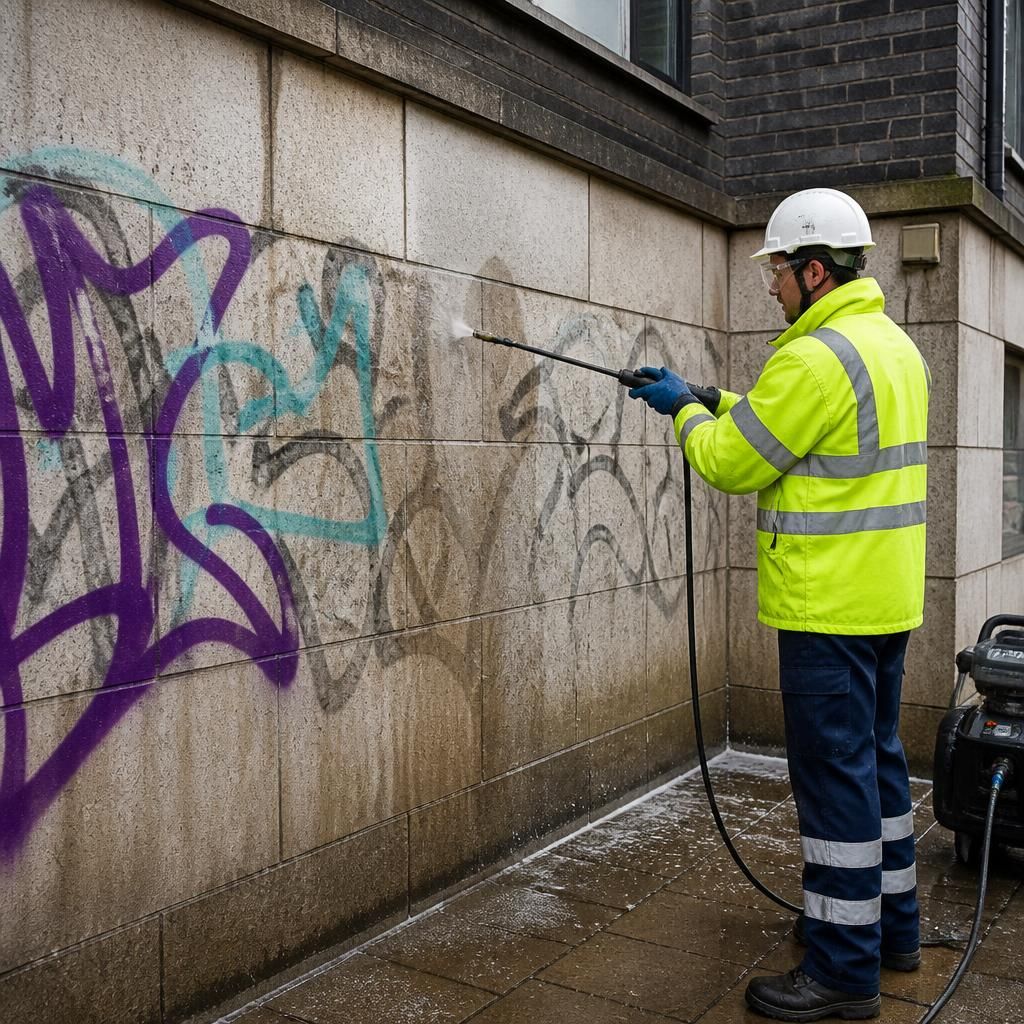
Graffiti and spray paint removers can be used on brick, concrete, stone, metal, cladding, glass, timber, paving and tarmac, but the product and application method must match the surface. Porous, painted, coated or weathered materials may react differently from clean, uncoated substrates.
A discreet test patch should be completed before full treatment. This checks whether the remover affects colour, gloss, sealants, pointing or protective coatings, while also showing how much pressure, dwell time and rinsing are required. The assessment should consider:
- the surface material and its porosity;
- existing paint, sealants, films or anti-graffiti coatings;
- visible deterioration, repairs or loose material; and
- the risk of staining, etching, coating loss or a remaining graffiti shadow.
This process helps establish whether the graffiti can be removed fully, reduced safely or followed by repainting, resealing or local repair.
Arrange a Graffiti Removal Surface Assessment
Arrange a graffiti removal surface assessment so we can identify the substrate, coatings and condition before selecting a suitable treatment. This helps confirm the safest approach and whether full removal, surface repair or follow-up protection is required.