
What factors determine the choice of graffiti removal method?
The choice of graffiti removal method is determined by the surface material, type and age of the paint, the graffiti’s location, the risk of damage, and requirements for safety and environmental protection. A suitable approach may involve pressure washing, steam cleaning, chemical treatment or a combination of methods, selected after assessing the surface and testing the proposed technique.
The right graffiti removal method is determined by the interaction between the graffiti, the surface beneath it and the conditions at the site. The main considerations are the surface material and condition, the type and age of the paint, the size and location of the marking, the risk of damaging coatings or finishes, and the safety and environmental controls required. A professional assessment should be completed before choosing between steam cleaning, pressure washing, chemical treatment, dry removal or a combination of techniques.
Surface type and condition
The substrate is usually the most important starting point. Brick, stone, concrete, render, painted walls, powder-coated cladding, glass, timber and plastic all respond differently to heat, water pressure and cleaning chemicals. A porous material such as unfinished brick or sandstone can absorb paint and cleaning products, while a smooth coated surface may be more vulnerable to scratching, gloss loss or coating failure.
The condition of the surface also affects the decision. Weathered masonry, cracked render, loose pointing, flaking paint and corroded metal may not withstand aggressive cleaning. Existing sealants, protective coatings, anti-graffiti treatments and historic finishes must be identified because the removal process may need to preserve them or remove and reinstate them in a controlled way.
Type, age and condition of the graffiti
Graffiti can consist of aerosol paint, marker ink, masonry paint, bitumen-based products, adhesive residue or several layers of different materials. These substances vary in how strongly they bond to a surface and how they react to solvents, detergents, steam and mechanical cleaning.
Fresh paint is often easier to remove before it has fully weathered and penetrated a porous substrate. Older graffiti may have hardened, faded or been overpainted, making staged treatment more appropriate. Multiple layers should not automatically be tackled with the strongest available chemical or highest pressure, as this can drive contamination further into the substrate or remove the original finish along with the graffiti.
Required level of mechanical action
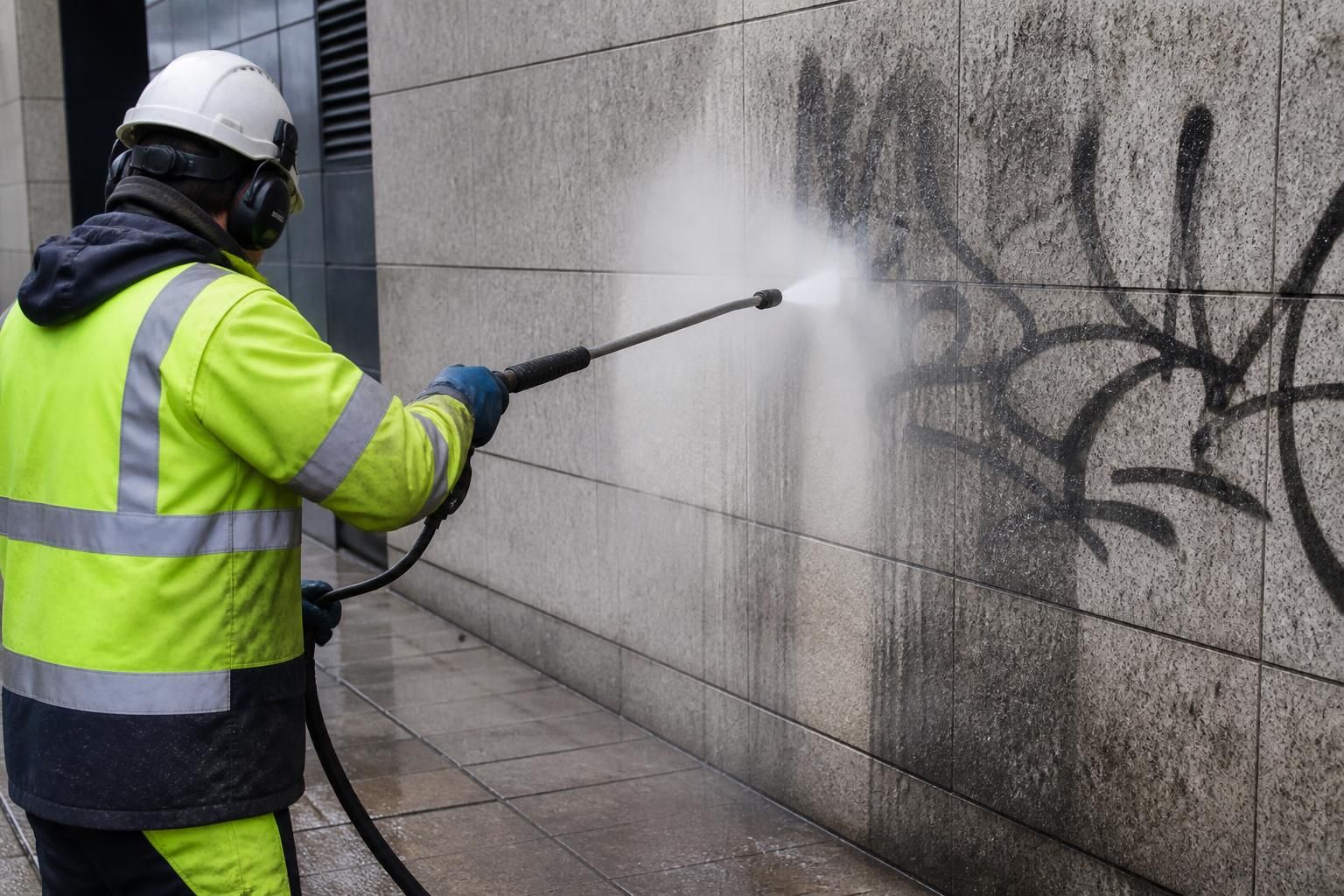
Pressure washing can be effective on robust, sound surfaces where controlled water pressure and the correct nozzle or cleaning attachment can remove the marking without scarring the substrate. Excessive pressure can open the surface of masonry, dislodge pointing, etch softer stone and force water into the building fabric.
Steam cleaning uses heat and relatively low water volume, which can be suitable where reducing chemical use or limiting run-off is important. It may work particularly well on certain painted surfaces, signage and hard, stable substrates, although the temperature must be controlled to avoid softening coatings or causing thermal damage.
Chemical graffiti removers are selected according to the paint and substrate. Some products soften or dissolve the marking, allowing it to be rinsed or wiped away, while others are designed for porous masonry or sensitive finished surfaces. Dwell time, dilution, agitation and rinsing all require control. A chemical that is effective on bare concrete may stain, soften or strip a coating on cladding.
On delicate or detailed surfaces, a low-impact method may be preferable. This can include careful hand application, soft agitation, absorbent materials or specialist dry cleaning techniques. Abrasive methods should be used only where the surface can tolerate them, because they may leave a visible change in texture or colour.
Location and access
The position of the graffiti influences both the technique and the equipment required. Cleaning at ground level beside a pedestrian route presents different risks from removing paint on a high façade, roofline, bridge, rail-side structure or enclosed car park. Access equipment, exclusion zones, traffic management and protection of nearby property may be necessary before work begins.
Restricted drainage, enclosed areas and proximity to doors, vents, electrical equipment or occupied premises can limit the use of water and chemicals. In these situations, a low-water method, controlled collection system or dry treatment may be more suitable. The location may also determine whether work can be completed during normal operating hours or needs to be planned around building use and public access.
Risk of damage and the required finish
The method must reflect the required outcome. Removing the visible paint may be sufficient on an already weathered utility wall, whereas a prominent commercial façade may require stain reduction, blending of the treated area and protection against repeat tagging. Some porous materials retain a shadow or halo after the upper paint layer has been removed, particularly where pigment has penetrated below the surface.
A small test area should be treated before full removal. The test checks whether the chosen process removes the graffiti, how much dwell time and agitation are needed, whether the surrounding finish changes and whether rinsing leaves staining or residue. For larger projects, testing different methods on separate areas can provide a practical comparison before the main work proceeds.
Health, safety and environmental requirements
Choice of method is also governed by exposure risks, run-off controls and the surroundings. Operators may need suitable personal protective equipment, ventilation, barriers and controlled access, particularly when solvents, aerosols, pressurised water or elevated work platforms are involved. Public areas require measures to prevent contact with wet surfaces, cleaning products, equipment and dislodged debris.
Water and chemical run-off must be managed so that contaminated liquid does not enter surface-water drains, soil, watercourses or neighbouring premises. Collection, filtration, containment and responsible disposal may be required, depending on the site and the substances removed. Where practical, steam cleaning or a low-chemical process may reduce the environmental burden, but the lowest-impact option is not automatically suitable if it cannot remove the graffiti safely or effectively.
Time, access and operational constraints
The method may need to be adapted around trading hours, deliveries, tenants, residents, school or public access, security arrangements and weather conditions. Wet cleaning is affected by drainage, freezing conditions and the ability to allow the area to dry. Chemical treatment may require a controlled dwell period and additional rinsing, while delicate work can take longer because it relies on gradual removal rather than force.
For recurring graffiti, the most appropriate approach may include removal followed by a compatible sacrificial or permanent anti-graffiti coating. The coating must match the surface and be applied only after the substrate is clean, dry and suitable. Future removal can then be carried out with less aggressive treatment, helping to preserve the underlying finish over repeated maintenance visits.
How the method is selected in practice
- Inspect the site: identify the substrate, surface condition, existing coatings, nearby materials, access limitations and drainage arrangements.
- Identify the contamination: assess the likely paint or ink type, number of layers, age, spread and degree of penetration.
- Set the protection requirements: determine pedestrian, traffic, building, environmental and waste-control measures.
- Test a discreet area: compare a suitable low-impact process with alternatives where necessary, checking both removal and surface appearance.
- Select and control the treatment: use the least aggressive method that achieves the required result, with controlled pressure, temperature, chemical strength, dwell time and agitation.
- Inspect and finish: rinse or recover residues appropriately, check for shadows or surface damage, and agree any sealing, coating or follow-up maintenance.
For commercial and industrial premises, the method should therefore be specified for the particular surface and site rather than chosen solely by the type of equipment available. A documented assessment and test patch provide the clearest basis for selecting a process that removes the graffiti while protecting the building, controlling risk and meeting the site’s environmental requirements.
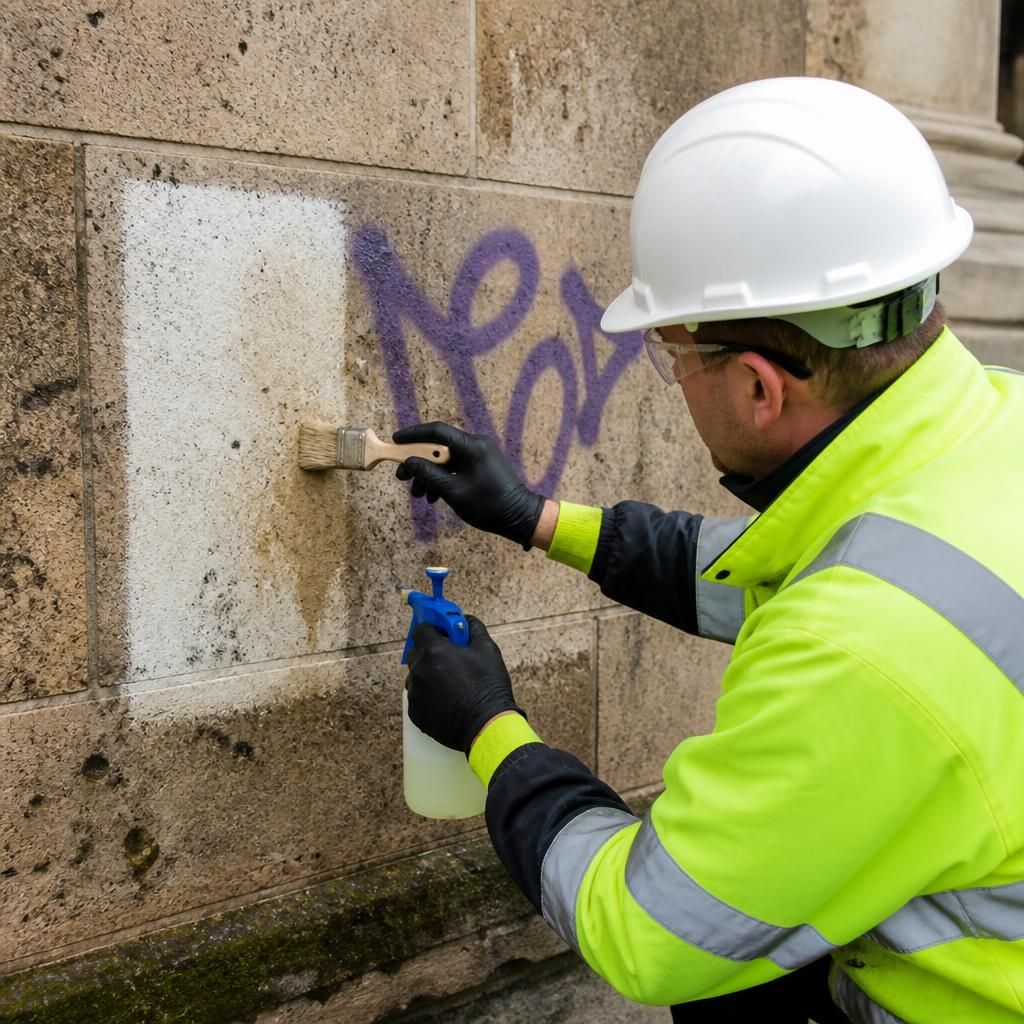
A test patch is the most reliable way to determine whether a graffiti removal method is suitable for a particular surface. A discreet area is treated using the proposed pressure, temperature, chemical strength and dwell time, then checked for paint removal, staining, residue, colour change or damage to the underlying finish.
This assessment is especially important on porous masonry, painted walls, coated cladding, stone and weathered surfaces, where an overly aggressive method can leave visible marks or remove more than the graffiti. If necessary, alternative techniques can be tested and compared before full treatment begins. The final method should be the least aggressive option that achieves the required finish while meeting the site’s safety, drainage and access requirements.
Arrange a Graffiti Removal Assessment
Arrange a graffiti removal assessment so we can inspect the surface, paint type, access conditions and drainage requirements before recommending a suitable treatment. We can also carry out a discreet test patch where needed to confirm the method will remove the marking without damaging the underlying finish.