
What are the most effective methods for removing graffiti without damaging underlying surfaces?
The most effective graffiti removal method is to assess the surface first, test a small inconspicuous area, and use the least aggressive technique that will remove the paint—typically controlled steam, a surface-appropriate remover, or low-pressure washing. Professional operators adjust pressure, temperature, dwell time and rinsing to protect brick, stone, metal, glass and painted finishes from etching, staining or discolouration.
The safest and most effective graffiti removal method is a controlled, surface-specific process: identify the substrate and paint, test a small inconspicuous area, then use the least aggressive technique that removes the graffiti. In practice, this may involve a specialist graffiti remover, low-pressure washing, controlled steam cleaning, or a carefully selected combination of methods. Pressure, temperature, chemical dwell time and rinsing must all be controlled to prevent etching, staining, paint loss or discolouration.
There is no single remover that is suitable for every surface. Graffiti can contain aerosol paint, marker ink, lacquer or other coatings, while the underlying material may be porous masonry, painted metal, glass, plastic, render or a delicate stone. The graffiti may also have penetrated the surface, particularly where it has remained in place for a long period. These factors determine both the treatment method and the risk of damage.
Assessment should come before cleaning
A competent operator first assesses the surface, the graffiti medium and the surrounding area. This includes checking whether the substrate is sealed, painted, weathered, cracked or already damaged. Previous cleaning attempts are also relevant, as aggressive pressure washing or unsuitable chemicals may have spread pigment, opened the surface pores or removed a protective coating.
A test patch should be carried out in a discreet location before the main treatment begins. The test should confirm whether the chosen method removes the graffiti without changing the colour, texture, gloss or protective finish of the substrate. It should also be checked after drying, because staining and shadowing may become more apparent once the surface is no longer wet.
Controlled steam cleaning
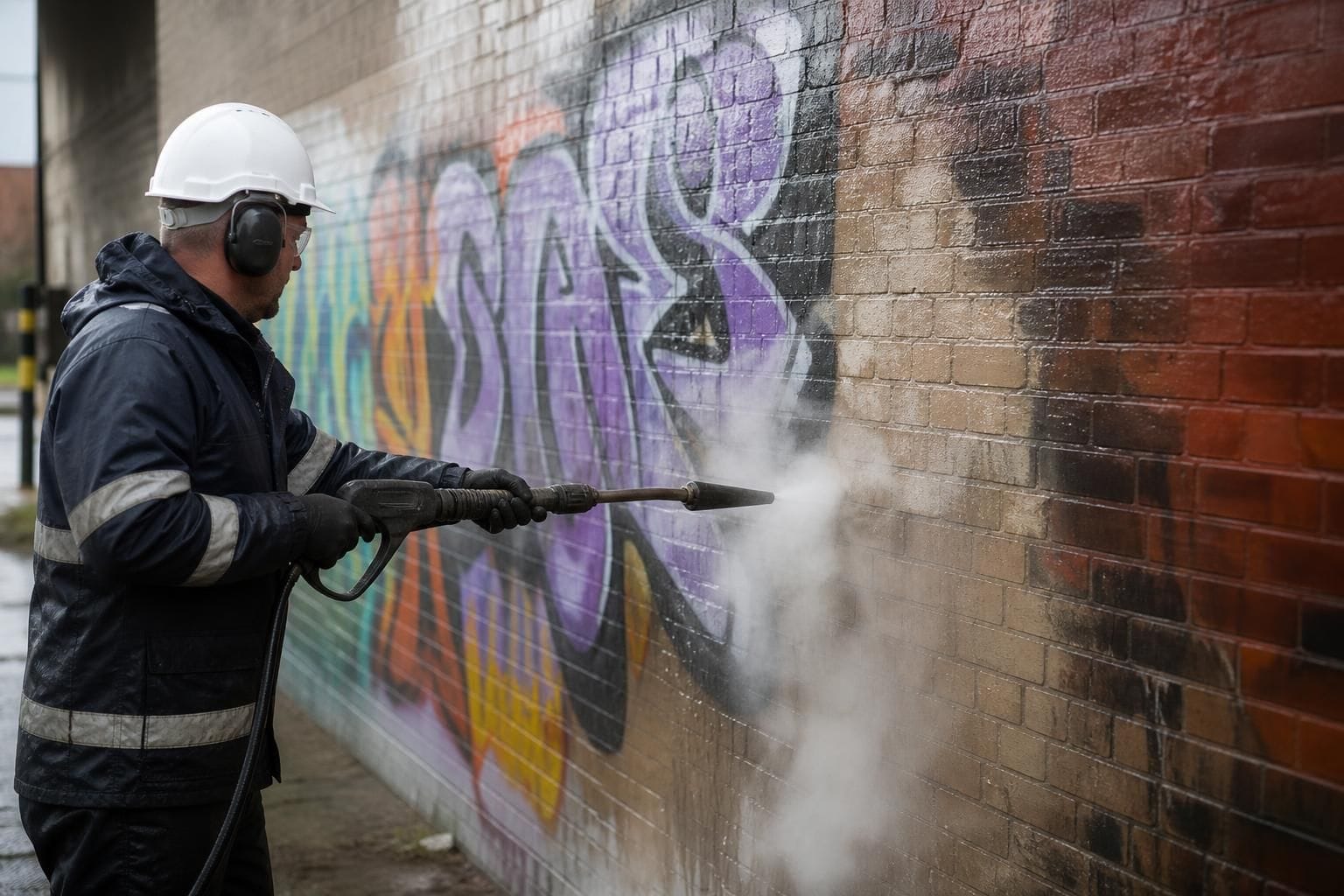
Steam cleaning uses heat and controlled moisture to soften paint and loosen its bond with the surface. It can be particularly useful on masonry, street furniture, signs and other areas where excessive water or high pressure would create a risk. Because the cleaning action is driven substantially by heat rather than force, steam can reduce the likelihood of damaging softer brick, aged stone or painted finishes.
Steam is not automatically safe for every substrate. Excessive heat may affect some plastics, sealants, laminates and coatings, and rapid temperature changes can be unsuitable for certain glass or brittle materials. The operator must therefore regulate the temperature, keep the nozzle moving and avoid concentrating heat on joints, edges or existing defects.
Surface-appropriate chemical removers
Specialist graffiti removers dissolve, soften or lift the paint so it can be removed with gentle agitation and controlled rinsing. Solvent-based products may be effective against some aerosol paints and permanent markers, while alkaline or water-based products may be more appropriate for other coatings. Product selection should be based on both the graffiti and the substrate, not simply on the apparent strength of the remover.
Chemicals should be applied for the recommended dwell time and prevented from drying on the surface. Leaving a product in place for too long can cause staining, bleaching, softening or deterioration of the underlying finish. Care is also needed around painted surfaces, sealants, vegetation, drainage channels and adjacent materials. Any residue must be removed thoroughly, with wastewater collected or managed in accordance with the site and environmental requirements.
Low-pressure washing and controlled rinsing
Low-pressure washing is often used to rinse away softened graffiti and cleaning product. It can also remove some fresh or lightly bonded marks when combined with an appropriate detergent. The objective is to use sufficient water flow to lift the residue without forcing water and pigment deeper into porous materials.
High pressure is not a universal solution. It can roughen brick faces, strip mortar, expose aggregate in concrete, drive paint into stone pores and damage pointing or render. It may also leave visible cleaning bands where the pressure or distance changes across the surface. Fan patterns, suitable nozzles, controlled working distances and gradual transitions help maintain an even appearance.
Mechanical and specialist techniques
Gentle brushing or non-abrasive agitation can help remove softened paint from textured surfaces, but hard wire brushes and aggressive scraping can leave scratches or remove the surface layer. Abrasive blasting, including fine media systems, may be considered for robust substrates where other methods are unsuitable. It should be treated as a specialist option because it can permanently alter the texture and appearance of masonry, stone, metal and coatings.
Dry ice or other specialist low-residue techniques may be appropriate in particular industrial or sensitive environments. Their suitability depends on the type of graffiti, the substrate, access conditions and how removed material will be contained. These methods should not be selected solely because they reduce water use; the cleaning action must still be compatible with the surface.
Recommended approaches for common surfaces
- Brick and masonry: begin with a test patch and consider a compatible remover, controlled steam or low-pressure rinsing. Porous brick can absorb pigment and chemicals, so repeated aggressive washing may worsen the appearance.
- Natural stone: identify whether the stone is soft, polished, honed, sealed or acid-sensitive. Neutral or stone-compatible products and gentle methods are generally preferable. Acidic products and abrasive techniques can etch or dull the stone.
- Concrete: assess whether the concrete is smooth, exposed aggregate, painted or sealed. A method that is suitable for unfinished concrete may remove a coating or change the texture of a finished surface.
- Painted walls and render: the safest option may be to remove only the graffiti and preserve the surrounding coating, but this is not always possible. If the graffiti has bonded to or chemically affected the paint, local repainting may be required to achieve an even finish.
- Metal: use a compatible remover and controlled agitation, taking account of powder coating, galvanising, anodising or painted finishes. Strong solvents or abrasive tools may expose the metal or create visible marks.
- Glass: use products and tools designed for glass, avoiding abrasive pads and blades that can scratch the surface. Window films, tints, sealants and printed finishes require additional care.
- Plastic and composite materials: test carefully, as some solvents can soften, craze or discolour plastics and composite panels. Heat and prolonged chemical contact should be closely controlled.
How professionals minimise surface damage
- Identify the substrate, coating and type of graffiti.
- Inspect for cracks, failed pointing, loose coatings and previous damage.
- Select the least aggressive suitable method and carry out a test patch.
- Adjust pressure, temperature, product concentration, dwell time and nozzle distance based on the test result.
- Work in controlled sections, protecting adjacent surfaces and keeping the cleaning pattern consistent.
- Rinse or remove residues thoroughly without spreading pigment into clean areas.
- Inspect the surface after drying and record any pre-existing marks or limitations.
Where a faint graffiti shadow remains in porous masonry, further treatment is not always the safest answer. Repeated chemical application or increasingly abrasive cleaning can cause more damage than the remaining discolouration. The practical decision is based on the condition of the substrate, the visibility of the residue and whether additional treatment would produce a better result without compromising the surface.
Protective coatings can make future graffiti easier to remove, but they must be compatible with the substrate and applied after the surface is clean, dry and stable. They are not a substitute for correct removal, and an unsuitable coating may alter breathability, colour or texture. For commercial premises, the cleaning plan should also consider pedestrian management, access equipment, nearby vehicles, drainage, chemical handling and the safe containment of removed paint and wastewater.
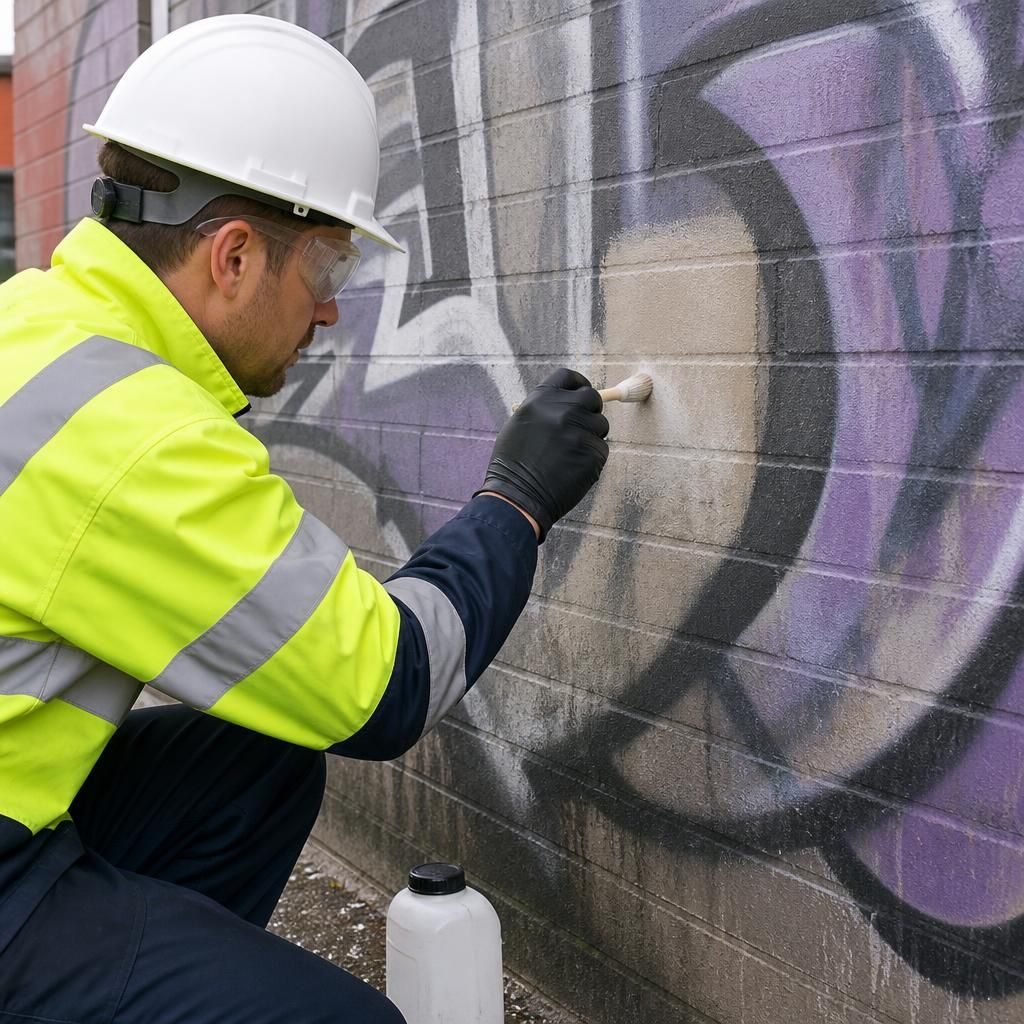
The safest graffiti removal process begins with a discreet test patch. This confirms whether a surface-appropriate remover, controlled steam or low-pressure rinsing will lift the paint without changing the substrate’s colour, texture, gloss or protective coating. The area should be inspected again after drying, as staining or graffiti shadowing may not be visible while the surface is wet. Operators can then adjust the pressure, temperature, chemical dwell time and rinsing method before treating the full area.