
What are the environmental considerations when removing graffiti and spray paint?
Environmental considerations when removing graffiti and spray paint include preventing contaminated runoff, choosing the least harmful effective cleaning method, controlling chemical use and containing paint residues. Wastewater and removed coatings should be collected, handled and disposed of responsibly in line with relevant environmental requirements, rather than allowed to enter drains, soil or watercourses.
Environmentally responsible graffiti and spray paint removal is based on preventing contamination, using the least harmful effective method and managing all residues correctly. The main risks are paint fragments and cleaning chemicals entering surface-water drains, soil or watercourses, together with unnecessary water, energy and chemical use. A suitable method should remove the graffiti while protecting the underlying surface and containing the resulting wastewater and debris.
Preventing contaminated runoff
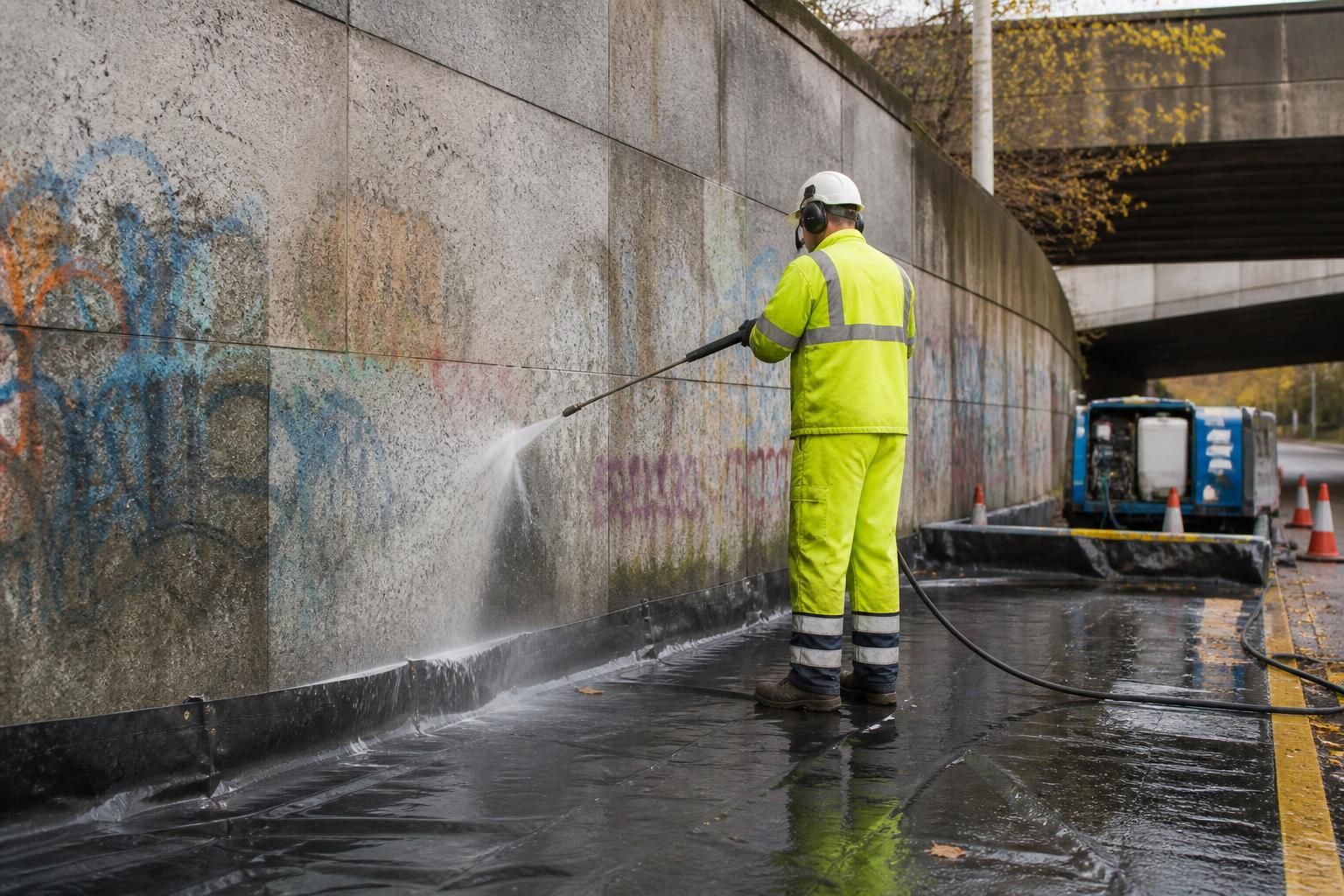
Runoff is often the most important environmental consideration, particularly on pavements, façades, car parks and other areas connected to surface-water drainage. Water used during cleaning can carry dissolved chemicals, paint particles, heavy metals and other contaminants. It should not be allowed to flow into gullies, open ground or nearby watercourses without appropriate controls.
- Identify drainage points and the direction of surface falls before work starts.
- Use drain covers, booms, bunding or temporary barriers to contain the work area where appropriate.
- Collect wastewater using wet vacuums or other recovery equipment rather than allowing it to spread.
- Prevent residues from being washed into planted areas, joints, soil or neighbouring properties.
- Arrange suitable treatment, discharge or disposal of recovered water in accordance with the site requirements and applicable environmental controls.
Surface-water drains commonly discharge with limited treatment, so they must not be treated as a convenient disposal route. Where discharge to a foul sewer is being considered, the relevant water and sewerage provider may require permission or trade effluent consent. The site owner, cleaning contractor and any drainage or environmental adviser should confirm the correct arrangements before work begins.
Selecting the least harmful effective method
The cleaning method should be selected after assessing the paint, substrate, location and extent of the damage. High-pressure water can create substantial runoff and may damage masonry joints, render, coatings or historic surfaces. Abrasive blasting can generate airborne dust and spent media, while strong chemical removers may create hazardous residues or affect adjacent finishes.
Lower-impact options may include controlled low-pressure washing, steam cleaning, poultices, gel-based removers or carefully selected water-based products. These methods are not automatically suitable for every surface, and an apparently mild product can still create environmental harm if it is over-applied or rinsed into drainage. A test patch helps establish the lowest pressure, temperature, dwell time and product concentration needed to achieve a clean result.
Where a chemical remover is necessary, the assessment should consider its biodegradability, pH, solvents, volatile components, toxicity, packaging and compatibility with the surface. Product instructions and safety data should be reviewed before use. Substitution with a less hazardous product is preferable where it provides an equivalent result, but environmental claims should be assessed against the complete process, including rinsing and waste disposal.
Controlling water, chemicals and energy
Good planning reduces the resources required for the work. Removing loose paint mechanically before washing can reduce water use and limit contaminated runoff. Accurate application of a gel or poultice can prevent excess product from spreading beyond the affected area. Reusable sheeting, targeted spray patterns and recovery equipment can also reduce waste.
Steam cleaning may reduce the need for aggressive chemicals on some substrates, although it still requires control of runoff and energy use. Pressure washing can be efficient when correctly specified, but using excessive pressure or repeated passes increases water consumption and the risk of surface damage. The most sustainable approach is not simply the method using the least water; it is the method that achieves the required result with the least overall chemical, water, energy and waste burden.
Managing removed paint and other waste
Scraped coatings, spent abrasive, contaminated absorbents, used sheeting and filter materials should be gathered rather than swept into drains or left on the ground. The waste should be kept contained, labelled where necessary and assessed according to its contents and contamination. The composition of older paint is not always known, so residues from some surfaces may require additional precautions and specialist disposal.
Wastewater should be kept separate from clean rainwater where practical. Depending on the materials involved and the disposal route, it may need settling, filtration or specialist treatment before discharge. Solid waste and liquid waste should be handled through an appropriate, authorised route, with transfer or disposal records retained when required. A responsible contractor should be able to explain how the waste will be contained and where it will go, rather than treating disposal as an afterthought.
Protecting surrounding areas and wildlife
Pre-work checks should identify nearby planting, watercourses, ponds, air-intake systems, food preparation areas and sensitive finishes. Wind can carry spray, dust and vapour beyond the work zone, so screens and controlled application may be needed. Cleaning should be paused when weather conditions would make containment unreliable.
Sites with nesting birds, bats or other protected wildlife may require additional checks, particularly where graffiti affects roofs, bridges, vegetation or older structures. The presence of a protected species or habitat can affect the timing and method of cleaning. The responsible approach is to identify these constraints during planning and obtain appropriate specialist advice where necessary.
Planning and documenting the work
An environmental method statement should set out the surface assessment, chosen technique, products, drainage controls, wastewater recovery arrangements, waste route and response procedure for spills or uncontrolled runoff. It should also identify who will inspect the controls during the work and what will happen if the method causes unexpected staining, surface damage or excessive runoff.
For commercial and industrial sites, records of products used, quantities, waste movements, discharge permissions and any incidents can support the site’s environmental management system and demonstrate responsible control. These records are particularly useful where graffiti removal forms part of a planned maintenance contract or takes place near sensitive drainage infrastructure.
Before removal starts, confirm the location of drains, the condition and type of substrate, the likely paint composition and the proposed disposal route. Once the work is complete, inspect the area for remaining residue, contaminated water, blocked controls and debris. This final check helps ensure that the environmental impact is controlled throughout the process, not just during the cleaning itself.
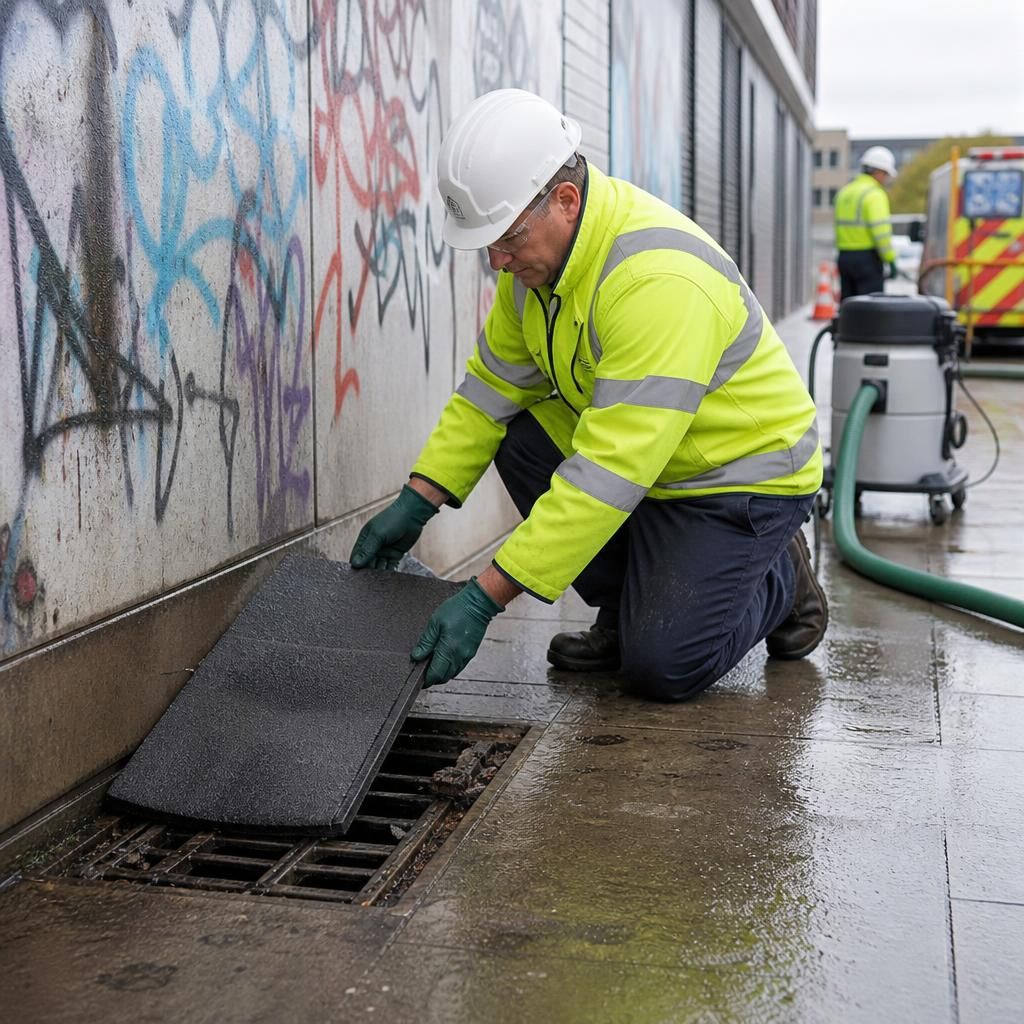
Controlling contaminated runoff is one of the most important environmental requirements when removing graffiti and spray paint. Water used during cleaning can carry paint particles, chemical residues and other contaminants into surface-water drains, soil or nearby watercourses.
Before work begins, identify drainage points and the direction of surface falls. Use drain covers, bunding, booms or temporary barriers to contain the cleaning area, and recover wastewater with suitable vacuum equipment where necessary. Removed paint, absorbent materials and spent cleaning products should also be collected rather than swept into a drain or left on the ground.
Recovered wastewater must be assessed and handled through an appropriate treatment, discharge or disposal route. Surface-water drains should never be used as a convenient disposal point, and permission may be needed before any discharge to a foul sewer. A responsible removal plan records these controls before cleaning starts and includes a final inspection for residue, debris and uncontrolled runoff.