
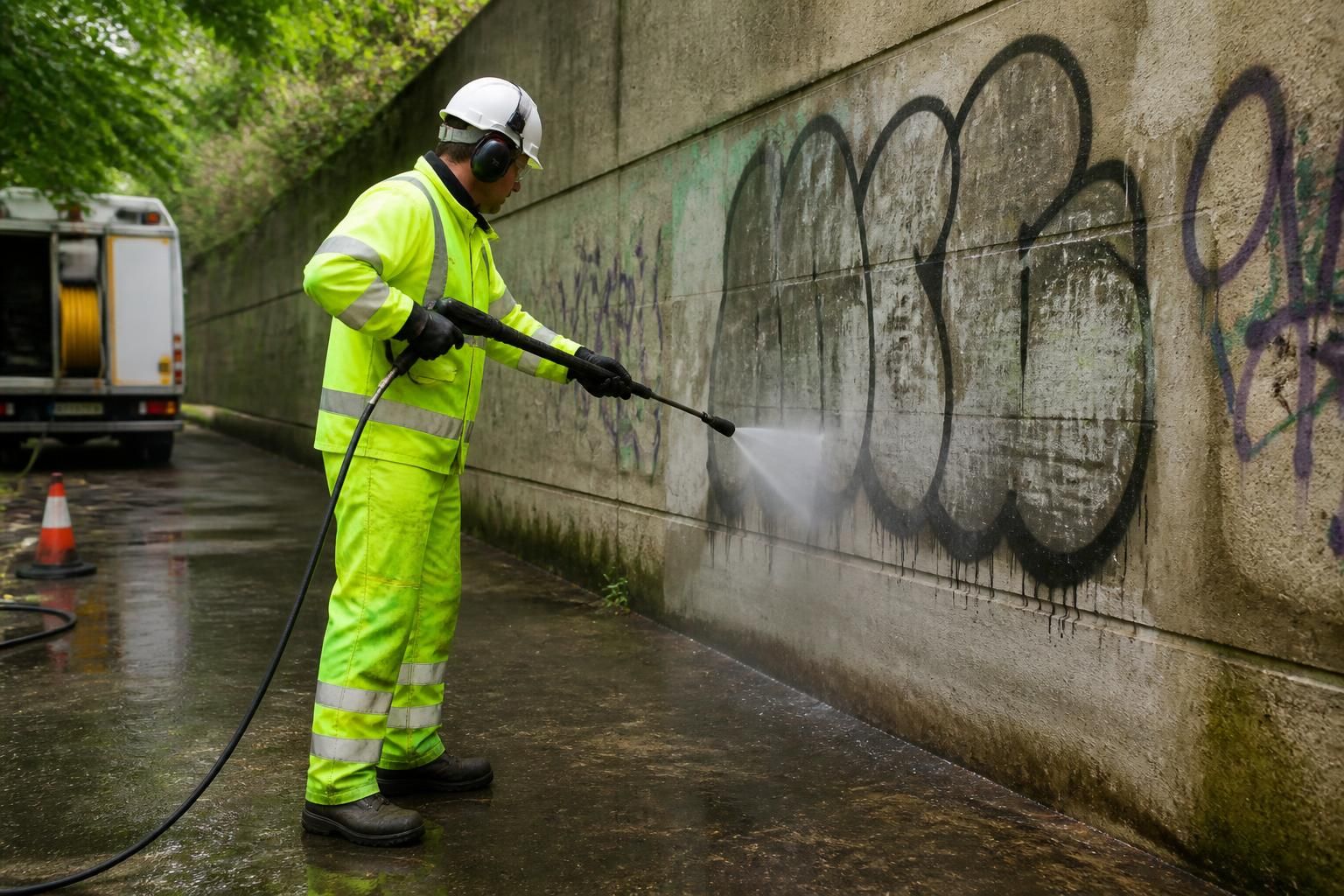
What are the environmental benefits of using eco-friendly graffiti removal methods?
Eco-friendly graffiti removal methods reduce pollution by using biodegradable or lower-toxicity products, limiting harmful runoff and reducing damage to the underlying surface. They can also use less water and energy than conventional methods, helping protect drainage systems, soil, surrounding vegetation and local waterways.
Eco-friendly graffiti removal reduces environmental impact by limiting hazardous chemicals, contaminated runoff, water consumption, energy use and damage to the treated surface. The most responsible approach combines a suitable low-toxicity or biodegradable cleaning product with controlled application, efficient equipment, runoff containment and compliant disposal.
Traditional graffiti removal can introduce solvent residues, paint particles and concentrated cleaning solutions into drainage systems, soil and nearby planting. A greener method is designed to remove the graffiti effectively while keeping these pollutants away from the wider environment. This is particularly important on commercial premises, where hard surfaces may drain towards public roads, watercourses or surface-water systems.
The main environmental benefits include:
- Reduced chemical pollution: Biodegradable or lower-toxicity graffiti removers are less persistent in the environment than some harsh solvent-based products. They can reduce the potential impact on soil, vegetation, drainage infrastructure and aquatic environments when used correctly.
- Less harmful runoff: Controlled application, low-pressure rinsing and suitable containment can minimise the spread of dissolved cleaning chemicals, loosened paint and suspended debris. Runoff should never be allowed to enter surface-water drains without appropriate controls.
- Lower water consumption: Some products and steam-based systems can soften or break down spray paint with less rinsing than conventional high-volume pressure washing. Using the minimum effective water volume reduces demand on mains supplies and produces less wastewater for collection or treatment.
- Lower energy use in suitable applications: Efficient equipment and targeted cleaning can reduce the time spent operating pumps, heaters and access equipment. The environmental outcome depends on the method, equipment and scale of the work, so this should be assessed rather than assumed.
- Protection of the underlying surface: A product and technique selected for the substrate can avoid unnecessary erosion, etching and coating failure. Preserving brickwork, masonry, render, cladding, street furniture and protective finishes reduces the need for replacement materials, repairs and repeated resource-intensive work.
- Reduced waste: Careful removal creates less damaged substrate, packaging waste and contaminated absorbent material. Where residues are collected, they can be handled and disposed of through the appropriate waste route instead of being dispersed across the site.
- Safer conditions for surrounding vegetation and wildlife: Preventing overspray and uncontrolled runoff reduces the risk of cleaning chemicals reaching planted areas, tree pits, soil and habitats near the work zone. Physical protection and precise application are as important as the product itself.
Eco-friendly does not mean that every product is harmless or that wastewater can be discharged without consideration. A product described as biodegradable may still affect aquatic life at high concentrations, and removed paint can contain substances that require controlled handling. The work should therefore be planned using the product safety data sheet, the condition of the surface, the location of drains and the likely route of any runoff.
A responsible graffiti removal process normally starts with identifying the substrate and the paint type, then testing the proposed treatment in an inconspicuous area. This helps establish the lowest effective concentration, contact time, pressure and temperature. It also prevents excessive cleaning that could strip existing coatings or create additional waste. For sensitive masonry, painted surfaces and historic materials, steam cleaning or a carefully selected specialist remover may be more appropriate than aggressive pressure washing or abrasive techniques.
Runoff management is essential on large commercial and industrial sites. Drain covers, booms, absorbent materials, wet vacuums or wastewater recovery systems may be used where there is a risk of discharge. Collected water and solid residues should be assessed and disposed of in accordance with site requirements and applicable waste regulations. Cleaning personnel should also use the required personal protective equipment and prevent mist, spray or vapour from affecting people in nearby areas.
There can also be an indirect environmental benefit when graffiti is removed promptly and the surface is maintained afterwards. Early removal may prevent repeated scrubbing, deeper penetration into porous materials and the need for stronger treatments. A suitable sacrificial or permanent anti-graffiti coating can make future marks easier to remove, although the coating itself should be selected for durability, repairability and environmental compatibility.
When comparing methods, consider more than the product label. Review the full process: the ingredients, dilution, application method, water and energy requirements, access equipment, runoff controls, waste arrangements and likely effect on the substrate. The greenest option is generally the one that achieves complete removal with the least overall resource use and the lowest risk of pollution, rather than simply the method using the product marketed as natural or biodegradable.
For commercial properties, the cleaning contractor should be able to explain the proposed method, provide relevant safety information and confirm how wastewater and removed material will be controlled. This allows environmental performance to be assessed alongside cleaning quality, surface protection, worker safety and compliance with the site’s environmental procedures.
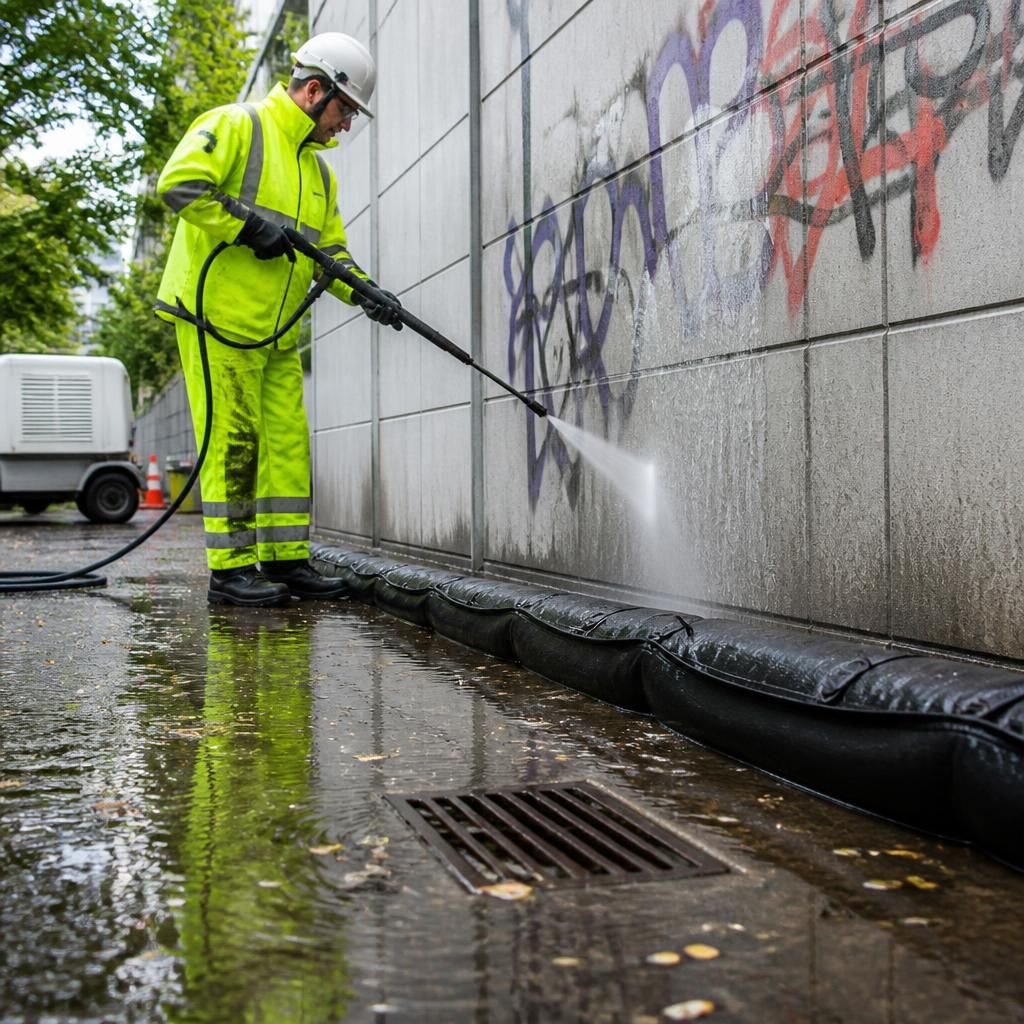
Eco-friendly graffiti removal methods reduce environmental harm by controlling contaminated runoff as well as by using lower-toxicity cleaning products. Loosened paint, dissolved residues and cleaning chemicals can otherwise enter surface-water drains, soil, planted areas or nearby watercourses.
On commercial and industrial sites, responsible contractors identify drainage routes before work begins and use suitable controls such as drain covers, absorbent barriers, low-pressure rinsing and wastewater recovery. Collected water and paint residues should be assessed and disposed of through the appropriate waste route. This protects surrounding vegetation and wildlife while reducing the risk of pollution beyond the treated surface.