
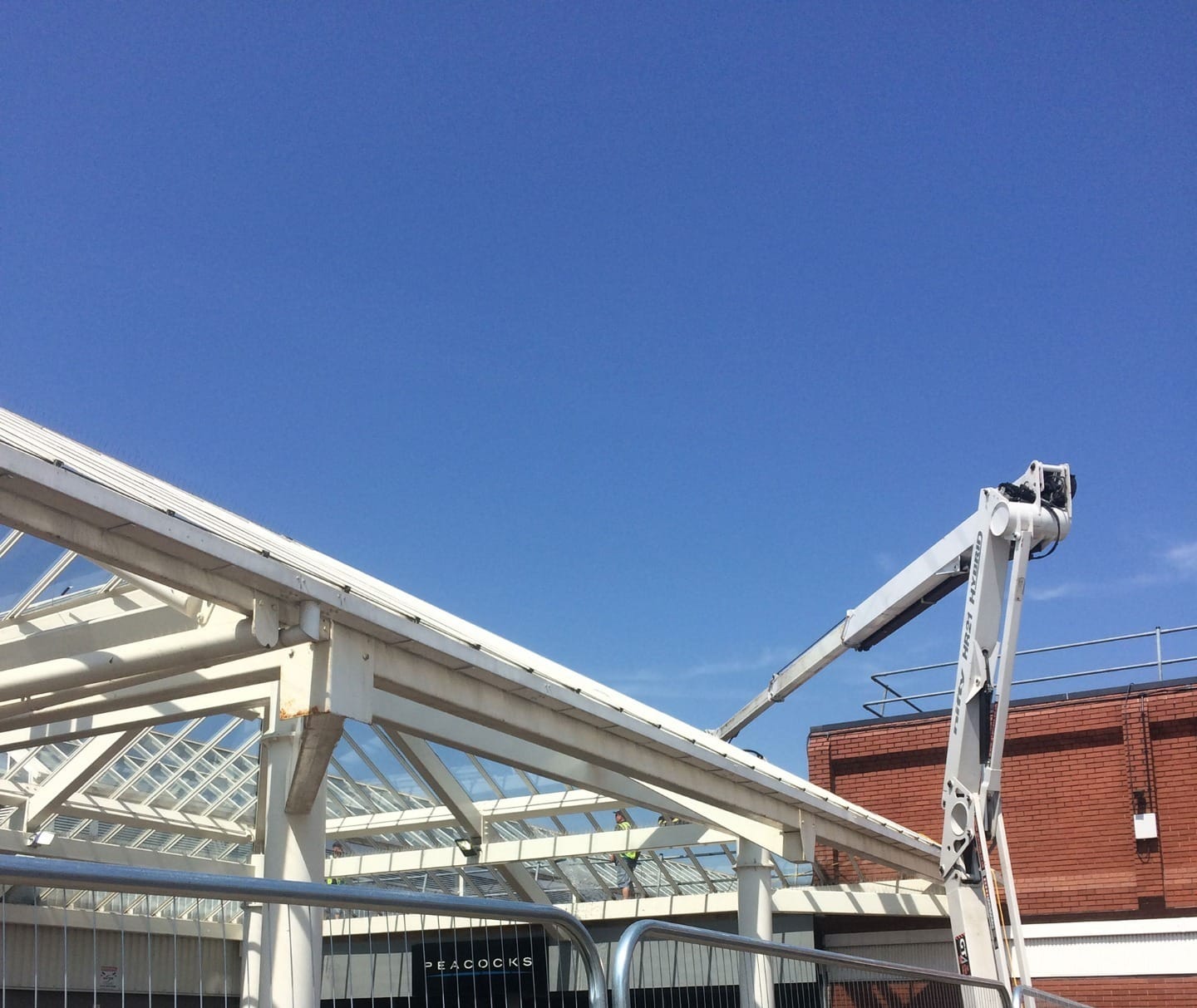
How do debris, drainage and weather affect glass canopy cleaning?
Leaves and windblown material collect at edges and outlets, sometimes restricting flow and contributing to ponding. Assessment therefore considers accessible drainage as well as glazing. Debris should be collected rather than pushed into downpipes where blockages become concealed.
Runoff and residues may affect entrances, surfaces or people below. Collection and disposal need site-specific arrangements. Existing drainage problems should be recorded because cleaning accessible channels does not establish the condition of concealed pipes. Persistent overflow may need separate investigation.
Weather affects safety and quality. Wind can influence equipment and spray control, while frost, heavy rain or storms can make work unsuitable. Hot glass can cause products to dry too rapidly. Agree a programme that can respond to conditions rather than relying on fixed completion. Supply maintenance history and drainage concerns when enquiring. More forceful washing is not the solution to every blocked or defective canopy drainage system.
Discuss Your Site
For advice specific to your premises in Birmingham and the West Midlands, share the surface details, condition and access requirements with Encanto.
Ask Encanto About Your Cleaning Requirements
Tell Encanto about your premises, the surfaces involved and any access restrictions for a site-specific quote.
Get a quote