
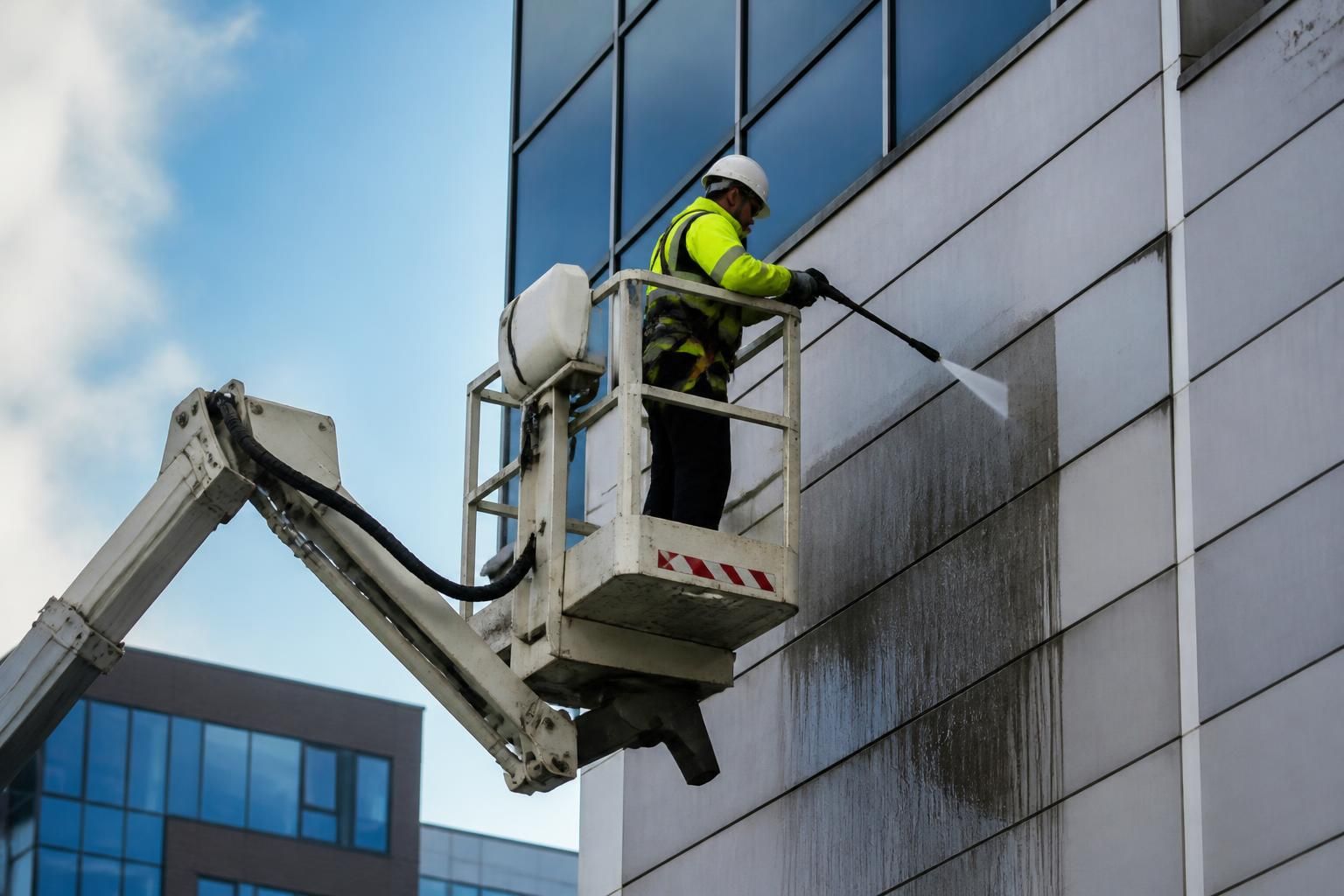
What specialised cleaning techniques are most effective for different facade and cladding materials?
The most effective technique depends on the material’s porosity, coating, age and condition: low-pressure washing and steam cleaning suit many masonry surfaces, soft washing helps remove biological growth, and controlled abrasive or chemical treatments may be appropriate for specific deposits. Glass, metal cladding, render, brick and stone each require a tested combination of pressure, temperature, cleaning solution and access equipment to remove contamination without damaging the surface or its protective finish.
The most effective cleaning technique is determined by the facade or cladding material, its surface finish, the type of contamination and its current condition. Low-pressure washing, steam cleaning and soft washing are generally suitable starting points, while controlled chemical, abrasive or specialist treatments may be required for stubborn deposits. Every method should be selected and tested to remove contamination without opening pores, stripping coatings, forcing water behind panels or damaging joints and seals.
Brick and exterior brickwork
Brickwork is usually cleaned with low-pressure water washing, steam cleaning or a carefully selected masonry detergent. These methods can remove traffic film, general dirt, algae and light atmospheric staining while reducing the risk of surface damage. Steam cleaning is particularly useful where heat can soften oily deposits or biological growth, and where a lower water volume is preferred.
Older, handmade or weathered bricks need a more conservative approach. Excessive pressure can erode the brick face, expose the softer inner material and damage mortar joints. Aggressive rotary blasting may leave a rough surface that attracts dirt more readily. Where cement residue, paint or heavy carbon deposits are present, a specialist chemical or controlled abrasive treatment may be considered, but only after a test area has confirmed that the brick and mortar can tolerate it.
Cleaning should normally proceed from the top down, with suitable control of run-off. Mortar joints, pointing repairs and areas around windows require particular care because water can enter through defects that are not visible from ground level.
Natural stone
Stone cleaning depends on whether the material is limestone, sandstone, granite, slate or another stone, as hardness, porosity and chemical sensitivity vary considerably. Low-pressure steam cleaning is often effective for surface dirt and biological staining, while nebulous or low-pressure water systems can be appropriate for delicate stonework where prolonged, gentle treatment is safer than force.
Limestone and other calcareous stones can be damaged by acidic products, including some products intended to remove cement or rust. Sandstone may be highly porous and can suffer from saturation, salt movement or surface loss if cleaned too aggressively. Granite is harder but may still have a polished, honed or sealed finish that must be preserved. A specialist assessment should therefore identify the stone type, previous repairs, coatings and areas of weakness before a method is chosen.
Where sulphate crusts, paint, rust or historic soiling cannot be removed with water or steam alone, a compatible chemical poultice or other controlled treatment may be used. The product must be neutralised or rinsed as required, and cleaning should not remove the natural patina or the surface detail that contributes to the building’s character.
Render and stucco
Render is often more vulnerable than the masonry beneath it because it can be thin, porous, cracked or coated with paint. Soft washing with a suitable biocidal or detergent solution is commonly effective for algae, moss, lichen and other biological growth. The solution is applied at low pressure, allowed appropriate dwell time and then rinsed gently. This reduces the need for high-pressure impact on the render surface.
Low-pressure washing or steam cleaning may be suitable for general dirt when the render is sound and well bonded. However, pressure can drive water into cracks, lift loose areas or remove the surface texture. Painted, textured and polymer-modified renders may respond differently to the same treatment, so a discreet test patch is essential. Any loose render, failed sealant, open crack or defective flashing should be recorded before cleaning rather than concealed by the work.
Biological growth may return if the underlying moisture problem is not addressed. Gutters, downpipes, copings, leaking joints and shaded areas should be checked as part of the maintenance assessment. Cleaning is not a substitute for repairing defective drainage or weatherproofing.
Metal cladding
Metal cladding is commonly cleaned using low-pressure water, a mild compatible detergent and soft-bristled agitation where necessary. The correct approach depends on whether the panels are aluminium, coated steel, zinc, copper or another alloy, and whether they have a factory-applied paint, powder coating, anodised finish or protective film.
High pressure can damage coatings, force water behind laps and flashings, and mark softer metals. Strong alkaline or acidic products may dull, discolour or corrode the finish. Chloride-containing products can be particularly unsuitable for some metals and should not be used without confirming compatibility. Abrasive pads and aggressive brushing can create visible scratches or uneven gloss.
Cleaning should include attention to panel joints, fixings, vents and drainage paths. Rinsing must remove detergent residue, while run-off should be controlled to prevent staining of lower surfaces. If white corrosion, rust staining, coating failure or galvanic corrosion is present, the issue may require remedial metalwork or coating advice rather than routine cleaning alone.
Glass and glazed facade systems
Glass is generally cleaned with purified water-fed equipment, a suitable glass-cleaning solution or controlled low-pressure washing, depending on access and the nature of the deposits. Mineral spotting, bird fouling, construction residue and silicone contamination may require different treatments. Abrasive scraping should only be undertaken with tools and techniques suitable for the glass type, as scratches can be permanent.
Care is also needed around gaskets, sealants, vents, opening lights and curtain-wall joints. Water should not be directed into drainage channels or behind glazing seals at excessive pressure. Coated, tinted, laminated or solar-control glass may have a surface treatment that restricts the products and tools that can safely be used. The frame material must be considered alongside the glass, particularly where aluminium coatings or painted surrounds are present.
Composite panels, high-pressure laminate and plastics
Composite panels, uPVC, polycarbonate and high-pressure laminate cladding usually respond to low-pressure washing with a neutral or manufacturer-compatible detergent. Soft brushes or non-abrasive pads can help lift ingrained dirt, but excessive scrubbing may create a patchy sheen or remove a surface coating.
Solvents, strong oxidising agents and abrasive media can discolour plastic-based materials or attack resin and paint systems. Heat must also be controlled because some panels can distort or become more vulnerable when warmed. Any exposed core, damaged edge or failed joint should be noted before washing, as water entry can worsen an existing defect.
Coated, painted and powder-coated surfaces
Coatings should be treated as part of the facade rather than as an indestructible barrier. A mild detergent, soft agitation and low-pressure rinse are normally safer than aggressive cleaning. The cleaning team should establish whether the coating is chalking, flaking, blistering or poorly bonded. If it is already failing, pressure washing can accelerate loss and leave visible differences between cleaned and uncleaned areas.
Different panels may have faded at different rates, so cleaning can reveal colour variation that was previously masked by dirt. A test area helps establish the likely visual result and confirms whether the coating can withstand the proposed solution, dwell time, temperature and rinsing process.
Removing specific types of contamination
- Algae, moss and lichen: a compatible biocidal or soft-washing treatment is usually preferable to high pressure. Residual growth may need gentle rinsing after the solution has worked, and heavily colonised surfaces may require follow-up treatment.
- Oil and grease: a suitable degreaser, steam cleaning or hot-water pressure washing can be effective, subject to surface compatibility and run-off controls. Detergent residue must be removed thoroughly.
- Rust and metallic staining: the source of the stain should be identified first. A compatible rust-removal treatment may be suitable, but acidic products can damage stone, mortar, render and some metal finishes.
- Paint, sealant and adhesive: removal may require a controlled chemical gel, steam, gentle scraping or specialist abrasive work. The underlying material and coating must be protected from etching and abrasion.
- Cement, mortar and construction residue: mechanical removal, steam or a carefully selected residue remover may be used. Acid-based products should never be applied indiscriminately, particularly to limestone, polished stone, glazed surfaces or metal cladding.
- Atmospheric and traffic film: low-pressure detergent washing, steam or purified-water cleaning will often provide the most controlled result, depending on the material and access arrangements.
Why testing and preparation matter
A professional method statement should record the substrate, finish, contamination, access requirements, water management arrangements and any known defects. Before full-scale cleaning, a representative test area should be assessed for colour change, surface loss, coating response, water penetration, streaking and the effectiveness of the treatment. The test should include adjoining materials where run-off could affect them.
Preparation may include protecting windows, vents, doors, lighting, electrical equipment, landscaping and pedestrian routes. Drainage points should be checked, and contaminated water should be collected or managed in line with site and environmental requirements. Access equipment must be selected so that operators can work at the correct distance and angle rather than compensating for poor positioning with excessive pressure.
Choosing the least aggressive effective method
The safest principle is to begin with the least aggressive technique likely to achieve the required result, then increase intensity only when testing shows that it is necessary. In practical terms, this may mean purified water or a mild detergent before steam, soft washing before pressure washing, and controlled chemical treatment before abrasive removal. Pressure, temperature, chemical strength, contact time and nozzle selection should be controlled independently; increasing all of them at once makes damage more difficult to prevent and diagnose.
After cleaning, the facade should be inspected for missed deposits, exposed defects, damaged sealants and areas requiring repair. A suitable protective treatment may be considered for some porous masonry, but it should be breathable, compatible with the substrate and specified for the exposure conditions. Protection is not appropriate for every material, and sealing a damp or defective wall can trap moisture.
For commercial and industrial properties, the final technique should balance appearance, substrate preservation, safe access, disruption, water use and long-term maintenance. Recording the material type, tested products, equipment settings and observed results creates a useful cleaning history and helps future maintenance teams avoid repeating unsuitable treatments.
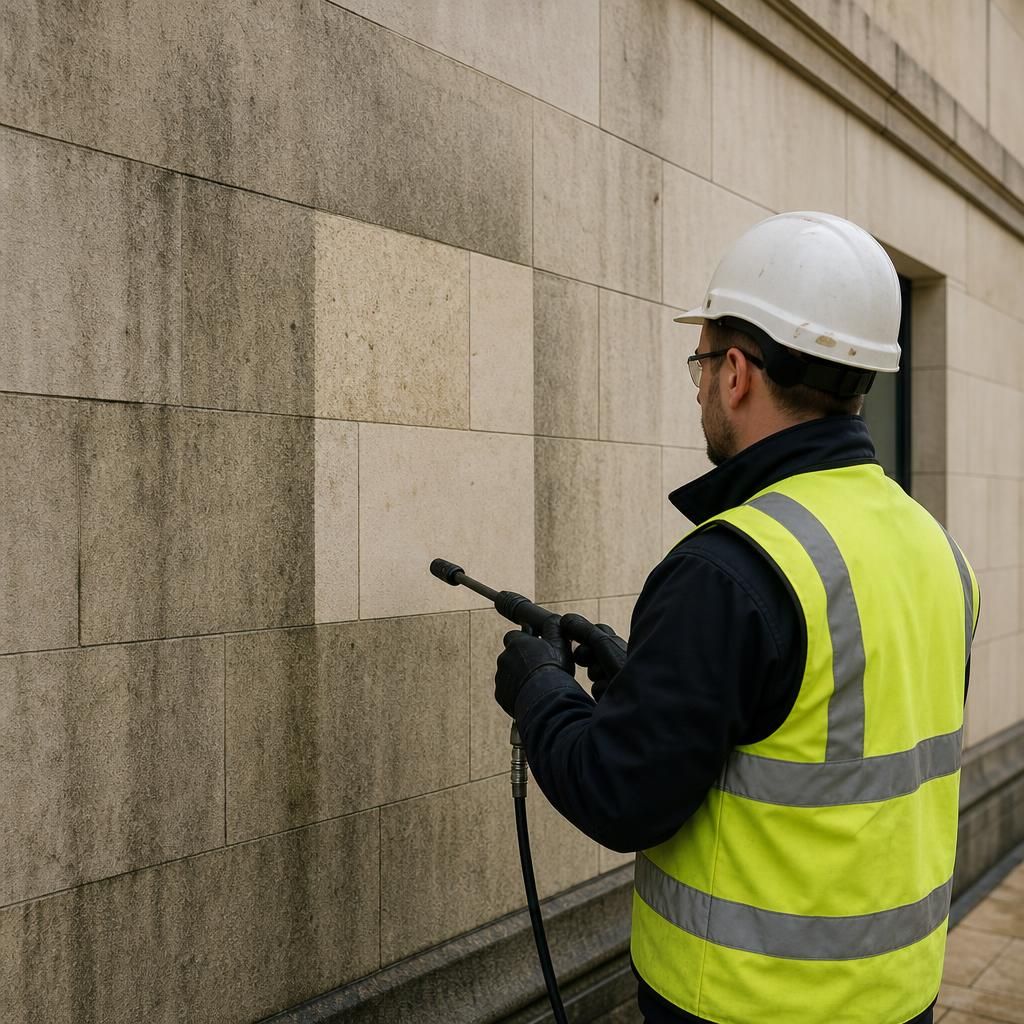
A representative test area is essential before cleaning a facade or cladding system because the same treatment can produce different results on different materials, coatings and deposits. It allows the cleaning team to confirm that the selected pressure, temperature, detergent and dwell time remove the contamination without etching the surface, lifting a coating, damaging joints or causing colour variation.
The test should include adjoining materials and vulnerable details such as sealants, window frames and panel joints. Once the area has dried, it can be checked for surface loss, streaking, water penetration and coating changes before the method is used across the building.
Discuss the right cleaning technique for your facade or cladding
Discuss the right cleaning technique for your facade or cladding with our team, including the material, surface condition, contamination and access requirements. We can help identify a suitable method and arrange a representative test area before full cleaning begins.