
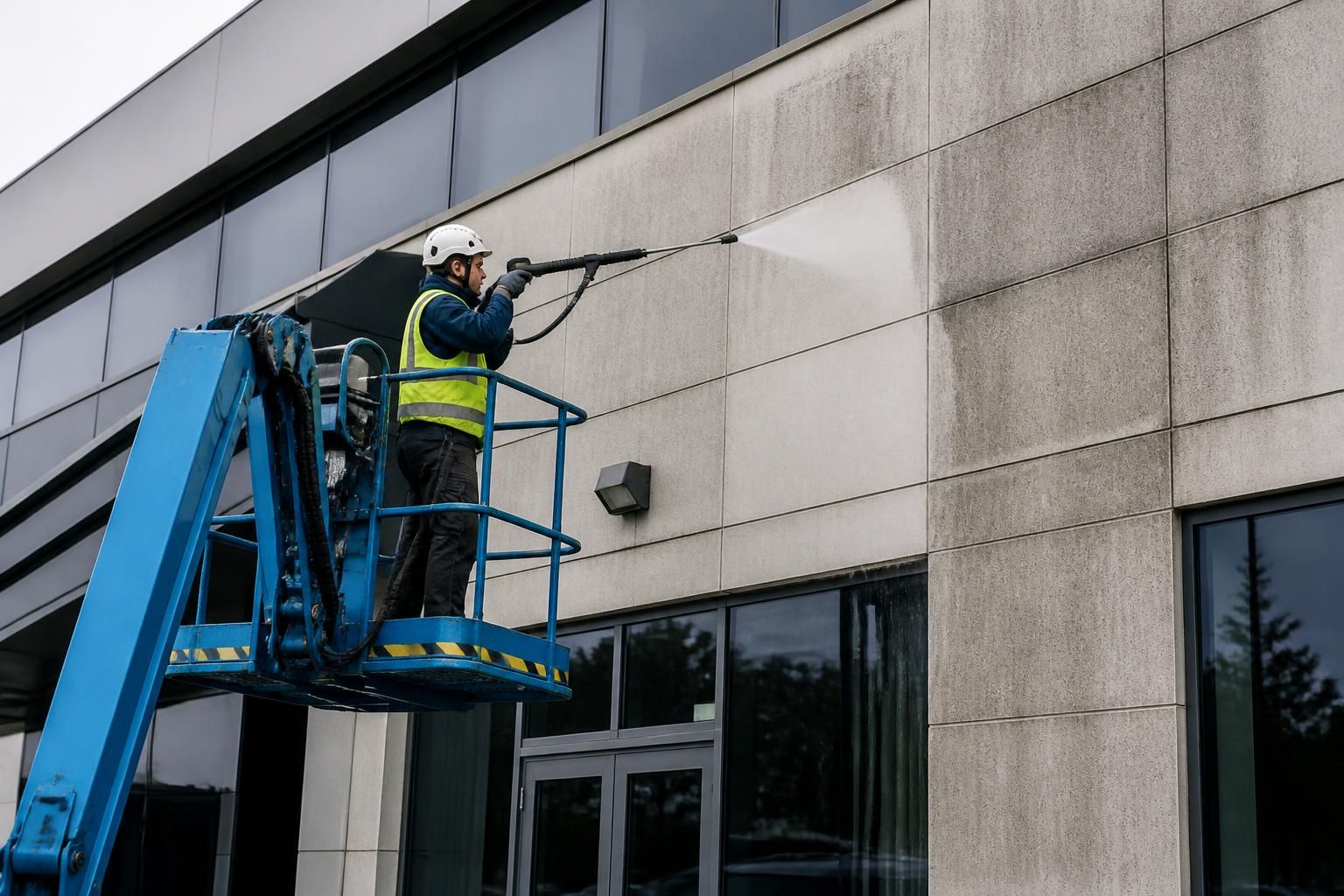
What materials are suitable for facade, cladding, and render cleaning, and how do they influence the cleaning methods used?
Suitable materials include brick, natural and engineered stone, concrete, render, stucco, metal cladding, glass and coated panels, but each responds differently to pressure, heat, moisture and cleaning chemicals. Facade, cladding and render cleaning methods must therefore be selected according to the material’s porosity, coating, condition and sensitivity, using controlled pressure washing, steam cleaning, soft washing or specialist treatments where appropriate.
The suitable materials for facade, cladding and render cleaning include brick, natural and engineered stone, concrete, render, stucco, metal cladding, glass and coated panels. Each material reacts differently to water pressure, heat, moisture and cleaning chemicals, so the method must be selected according to its porosity, surface finish, coating, age and condition. A technique that is safe for robust, sound brickwork may damage delicate render, strip a coating from metal cladding or force water behind a panel system.
Before cleaning begins, the surface should be identified and assessed rather than treated as a uniform facade. This includes checking for cracks, open joints, failed sealant, loose coatings, corrosion, previous repairs, staining and areas where the substrate may already be weakened. A small, inconspicuous test area is normally used to confirm the lowest effective pressure, temperature, dwell time and cleaning solution. The test should assess both immediate results and any risk of colour change, surface marking, residue or coating failure.
Brick and exterior brickwork
Sound, well-fired brick can usually tolerate controlled pressure washing, low-pressure rinsing or steam cleaning, depending on the brick type and the condition of the mortar joints. Water pressure must be kept under control because soft, porous or weathered bricks can suffer surface erosion, while excessive pressure may remove the weathered face of the brick or widen defective joints. Older handmade bricks and historic brickwork generally require a gentler approach than dense modern engineering bricks.
Mortar is often more vulnerable than the brick itself. Strong jets directed at joints can cause loss of mortar, water penetration and further frost-related deterioration. Where staining is biological, a suitable biocidal treatment may be more appropriate than aggressive pressure. Carbon deposits, traffic film, paint, efflorescence and cement residues require different treatments, and abrasive methods should not be selected without establishing that the brick and jointing can withstand them.
Natural and engineered stone
Natural stone varies considerably. Granite and some dense limestones may withstand carefully controlled pressure, whereas sandstone, soft limestone and weathered stone can be highly absorbent and vulnerable to abrasion, rapid wetting, thermal shock or chemical attack. The stone’s mineral composition, finish and previous repairs all influence the cleaning specification. Polished, honed, bush-hammered and textured finishes may respond differently to the same treatment.
Steam cleaning or low-pressure washing is often considered for sensitive stone because it can reduce the need for mechanical force. Chemical treatments must be compatible with the particular stone; acidic products, for example, can etch or dissolve calcium-based materials such as limestone and some marbles. Poultice cleaning may be considered for deeply absorbed staining where surface washing would not remove the contaminant safely. Joints, pointing and metal fixings should also be checked, as cleaning can expose defects that need separate repair.
Concrete and precast concrete
Sound concrete and precast concrete are generally suitable for pressure washing, steam cleaning and selected chemical treatments. However, exposed aggregate, textured finishes, painted concrete and surfaces with laitance or a weak outer layer need more careful control. Excessive pressure can reveal aggregate unevenly, mark the surface or remove a protective finish.
Cracks, spalling, exposed reinforcement and failed repairs should be recorded before cleaning. Water or chemicals entering defects can worsen an existing problem, while cleaning alone will not resolve structural deterioration. Where concrete has been painted, sealed or coated, the method must be chosen to remove soiling without lifting the finish. Any required repairs or recoating should be planned after the substrate has been cleaned and allowed to dry appropriately.
Render and stucco
Render and stucco can be made from cement, lime, polymer-modified mixes or other systems, and their tolerance varies considerably. Sound modern render may accept a low-pressure wash or soft-washing treatment, but aged, friable, cracked or hollow render can be damaged by high pressure. Water forced behind the finish may lead to prolonged dampness, staining, blistering or detachment.
Soft washing can be useful for algae, moss and other biological growth because it relies on a compatible treatment and controlled rinsing rather than force alone. The solution must be selected carefully to avoid bleaching, streaking or damage to coloured render, nearby planting, glazing, seals and metalwork. Pressure should be directed evenly and kept away from cracks, edges, vents and defective joints. Loose render should be repaired before cleaning, not held in place by the cleaning process.
Metal cladding
Metal cladding may consist of aluminium, steel, zinc or composite systems with painted, powder-coated, anodised or plastisol-type finishes. The metal itself may be durable, but its coating can be sensitive to strong chemicals, abrasion, heat and concentrated pressure. Cleaning should therefore focus on preserving the finish and preventing water from entering laps, fixings, joints and ventilation details.
A mild detergent and low-pressure rinse may be suitable for general dirt, while steam cleaning can help with some oil-based or ingrained deposits when temperature and distance are controlled. Abrasive pads, harsh solvents and untested acidic or alkaline products can dull, discolour or remove the coating. Areas showing chalking, peeling, blistering or corrosion need assessment before cleaning, as washing may reveal the extent of coating failure without correcting it.
Composite panels require particular care because their outer coating can be thin and the panel edges, joints and seals may be vulnerable to water ingress. The cleaning method should follow the panel manufacturer’s available guidance where possible, with special attention to compatibility between the detergent and the finish.
Glass and glazed facade elements
Glass is generally suitable for controlled washing with a compatible detergent and clean-water rinse, but its surrounding components require equal consideration. Pressure directed at seals, gaskets, frame joints or drainage channels can cause leakage or dislodge debris into the system. Coated, tinted, laminated or solar-control glass may also be damaged by abrasive tools or unsuitable chemicals.
Staining from hard-water deposits, mortar, paint or construction residue should not automatically be treated with a scraper or aggressive chemical. The glass type and coating need to be established first. Adjacent stone, metal, render and sealants must be protected from runoff, particularly where a treatment suitable for glass could harm another material.
Coated panels, painted surfaces and specialist finishes
Painted facades, powder-coated panels and other factory-applied finishes should be cleaned with the least aggressive method that removes the contamination. In many cases, low-pressure washing with a mild, compatible detergent is preferable to high pressure or abrasive cleaning. Heat may soften some coatings, while solvents can cause swelling, colour loss or gloss changes.
Existing coating failure must be distinguished from dirt. Cleaning cannot restore a finish that is already degraded, and aggressive treatment may make the defect more visible. If the facade is to be repainted or recoated, the cleaning specification should support the preparation system rather than simply maximise the amount of material removed.
How material properties determine the method
- Porosity: Absorbent brick, stone and render can retain water and cleaning chemicals, so controlled application, suitable rinsing and adequate drying are important.
- Surface hardness: Dense concrete or engineering brick may tolerate more mechanical action than soft sandstone, lime render or weathered brick.
- Coatings and finishes: Painted, anodised, powder-coated and sealed surfaces require non-abrasive, chemically compatible cleaning.
- Condition: Cracks, hollow areas, open joints, corrosion and failed sealant reduce the safe pressure and may require repair before cleaning.
- Contamination: Algae, moss, carbon, oil, paint, efflorescence and cement staining do not respond to the same treatment. Removing the contaminant’s cause and selecting a compatible product are as important as the washing method.
- Water sensitivity: Panel joints, insulation systems, vents and facade cavities may require low-pressure application and careful rinsing to limit water ingress.
- Location and access: Work at height, enclosed courtyards, occupied premises and areas near electrical equipment or drainage require additional controls over spray, runoff and equipment selection.
Pressure washing is most appropriate where the substrate and its condition can withstand controlled water impact. Steam cleaning uses heat and lower mechanical force, making it useful for some delicate masonry, greasy deposits and areas where reducing chemical use is desirable. Soft washing uses a low-pressure application of a suitable treatment and is often effective for biological growth on render, masonry and cladding. Specialist chemical or poultice treatments may be required for absorbed staining, but they should always be tested and neutralised or rinsed as the material demands.
Mixed-material facades need a coordinated specification rather than one setting across the whole elevation. For example, a building may combine brick, aluminium panels, glazing, sealants and rendered details. The method may need to change at each junction, with separate controls for pressure, chemical strength, temperature, rinsing and protection. Runoff should be managed so that dissolved dirt or cleaning solution does not stain lower surfaces, enter drainage systems without suitable control or affect landscaping.
Historic, listed or architecturally significant facades require particular restraint. Original masonry, lime mortar, decorative render and aged finishes can be permanently damaged by abrasive cleaning, strong chemicals or excessive pressure. In these cases, the cleaning plan should be based on the substrate and conservation requirements, with representative testing and appropriate approval before full-scale work.
The correct approach is therefore not simply to choose pressure washing, steam cleaning or soft washing in isolation. It is to identify the material and finish, understand the contamination, inspect defects, test a controlled method and then clean at the lowest effective intensity. This protects the facade while achieving a consistent result and also identifies maintenance issues—such as failed pointing, damaged coatings or defective seals—that may otherwise remain hidden beneath surface dirt.

Facade, cladding and render materials require different cleaning methods because their porosity, hardness, surface finish and condition determine how they respond to pressure, heat, water and cleaning chemicals. Sound brick may tolerate controlled pressure washing, while weathered stone, delicate render or coated cladding usually requires a gentler approach.
Before cleaning, the substrate and finish should be inspected and a small test area assessed. This confirms the lowest effective pressure, temperature and detergent strength, while identifying risks such as colour change, coating failure, water ingress or mortar damage. On mixed-material elevations, settings may need to change between brickwork, render, glazing, metal panels and sealants rather than applying one method across the entire facade.
Arrange a Facade, Cladding & Render Cleaning Assessment
Arrange a facade, cladding and render cleaning assessment with Encanto Exterior Cleaning to identify the materials, surface condition and most suitable cleaning method for your building. We will recommend a controlled approach that protects coatings, joints and surrounding areas while addressing the specific contamination.