
What factors influence the choice of cleaning technique for different surfaces in facade, cladding, and render cleaning?
The choice of cleaning technique depends on the surface material, its condition, the type and severity of soiling, and the risk of damaging coatings, joints or underlying substrates. Access requirements, surrounding features, environmental controls and the required finish also influence whether pressure washing, steam cleaning, soft washing, chemical treatment or a gentler manual method is most appropriate.
The cleaning technique is selected by assessing the surface material, its condition, the type of soiling and the risk of affecting coatings, joints or the substrate beneath. Access, surrounding features, drainage, environmental controls and the required finish also influence the method. A suitable approach may involve pressure washing, steam cleaning, soft washing, chemical treatment, manual cleaning or a controlled combination of techniques, rather than one method being applied across the whole building.
Surface material and construction
Different façade, cladding and render materials have different levels of porosity, strength and water resistance. Brick and many types of masonry can often tolerate carefully controlled water cleaning, but open joints, damaged faces and older or softer bricks require reduced pressure and closer control. Natural stone must be assessed individually because limestone, sandstone, granite and other stones vary considerably in hardness, porosity and sensitivity to chemicals.
Render and stucco are particularly dependent on their composition and condition. Cementitious, polymer-modified, acrylic and textured finishes can respond differently to water pressure, heat and detergents. A high-pressure system may erode a weak surface, expose aggregate, loosen a texture or force water behind cracks. Softer washing, low-pressure application and appropriate detergents are generally considered where the render is sound but vulnerable.
Metal cladding, coated panels and composite systems can be affected by abrasive action, aggressive chemicals and excessive heat. The cleaning plan must account for the coating type, sealants, fixings, joints and any areas where the panel finish has already deteriorated. Glass, glazed sections, vents, signage and other adjoining materials may need separate treatment to prevent scratching, staining or chemical damage.
Condition of the surface
A sound, well-maintained surface gives the contractor more cleaning options than one with cracks, failed sealant, loose pointing, blistered coatings or water ingress. Before work starts, the surface should be inspected for defects and areas where cleaning could worsen an existing problem. Cleaning does not repair structural movement, failed render or defective joints, so these issues may need to be recorded and addressed separately.
Previous coatings and repairs are also important. Paint, protective treatments, waterproofing products and patch repairs may have different reactions to water, heat and chemicals. A technique that is suitable for the original substrate may strip a coating or leave an uneven appearance. Where the building has heritage value or delicate finishes, a conservation-led approach with minimal intervention is more appropriate.
Type and severity of soiling
The deposit determines whether the main requirement is to dissolve, soften, lift or rinse away the contamination. Common examples include:
- Loose dust and surface dirt: may be removed with gentle rinsing, soft brushing or low-pressure washing.
- Traffic film and oily deposits: often require a suitable detergent or degreasing treatment, followed by controlled rinsing.
- Algae, moss, lichen and biological growth: may need a biocidal or soft-wash treatment, with care taken around drainage, planting and adjacent surfaces.
- Efflorescence and mineral staining: require identification of the deposit and careful selection of a compatible treatment; simply increasing pressure may not remove it and can damage the surface.
- Paint, adhesive and chewing gum: may require localised chemical treatment, steam, controlled abrasion or manual removal rather than broad-area washing.
- Graffiti: is assessed according to the paint or marker, the substrate and any existing anti-graffiti coating. Removal must avoid spreading the pigment or creating a visible cleaned patch.
Heavy or layered soiling may require staged cleaning. For example, a detergent can loosen a deposit before a low-pressure rinse, while localised steam or manual work may deal with residues that remain. Using the most aggressive method immediately is not necessarily the most effective option because it can cause avoidable surface loss and uneven results.
Pressure, heat and chemical sensitivity
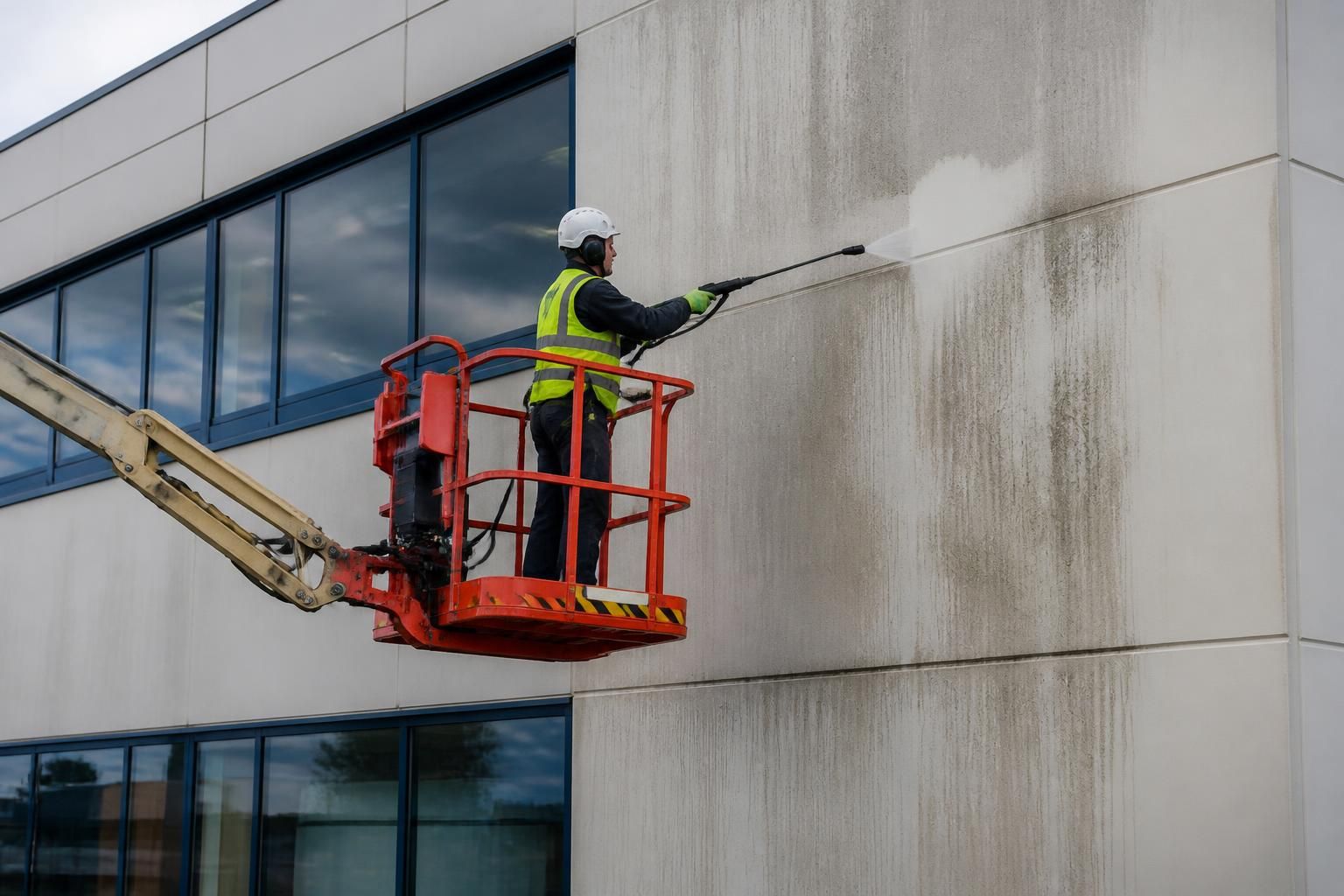
Pressure washing is useful for robust substrates and accessible areas where water can be controlled safely. The pressure, flow, spray pattern, distance from the surface and operator technique all affect the result. Excessive pressure can remove pointing, damage render, drive water into joints or mark coated cladding, so the equipment should be adjusted to the material rather than used at a standard setting.
Steam cleaning uses heat and controlled moisture to soften certain deposits and can be useful where a low-chemical approach is preferred. Heat must still be managed carefully around coatings, sealants, glazing and temperature-sensitive materials. Soft washing relies on lower mechanical force and a suitable cleaning solution, making it useful for delicate finishes and biological soiling when runoff and dwell time are properly controlled.
Chemical cleaning can be effective against deposits that water alone will not dissolve, but the product must be compatible with the substrate, coatings, joints and nearby materials. Application time, dilution, neutralisation and rinsing are important. Chemicals should not be selected solely because they remove a stain quickly; the potential for discolouration, corrosion, vegetation damage and contaminated runoff must also be considered.
Access and building design
The height and layout of the building influence both the available technique and the way it can be controlled. Access may involve mobile elevating work platforms, scaffold, rope access, water-fed systems or long-reach equipment, depending on the façade, ground conditions and risk assessment. Restricted areas, canopies, recessed panels and internal courtyards can affect spray angles, ventilation and the collection of wastewater.
Access equipment must provide a stable working position without placing excessive force against the façade or exposing operatives to uncontrolled overspray. Where high-level areas are difficult to reach, a lower-impact method may be preferable to forcing a powerful spray from a distance. The cleaning plan should also protect entrances, air-conditioning intakes, electrical equipment, vehicles, pedestrians and neighbouring properties.
Environmental and drainage controls
Local conditions can change the practical choice of method. Wind increases the risk of overspray and may make chemical application or high-level rinsing unsuitable. Cold weather can affect drying and the behaviour of cleaning products, while direct sunlight may cause a solution to dry too quickly and leave residues. Rain can dilute products and carry contamination into drains or surrounding ground.
Runoff must be managed according to the type of deposit and product used. Drain protection, collection, containment and appropriate disposal may be required, particularly where cleaning removes oil, heavy staining, paint or chemical residues. Planting, watercourses, public areas and sensitive neighbouring materials should be considered before work begins. These controls can determine whether water-based cleaning, steam, manual removal or a localised treatment is the most responsible option.
Required appearance and uniformity
The intended finish also affects the method. A façade requiring general soil removal may be cleaned differently from one needing stain reduction, coating preparation or preparation for repainting. Cleaning a small test area helps establish how the surface responds and whether the proposed technique produces an even appearance. It can also reveal colour variation, repairs or areas that have been previously cleaned.
On façades with weathered or uneven materials, removing every visible mark may not be appropriate if doing so would damage the substrate. The objective should be agreed in advance: this may be safe removal of harmful biological growth, reduction of staining, preparation for maintenance or a consistent presentable finish. Some marks are embedded within the material or linked to defects and cannot be removed safely without restoration work.
How the method is normally selected
- Inspect the façade, cladding or render, including joints, edges, coatings, repairs and areas of visible damage.
- Identify the substrate and any surface treatment, using building information or specialist advice where the material is uncertain.
- Classify the soiling and consider whether it is loose, biological, oily, mineral, painted or linked to corrosion or water movement.
- Review access, weather, drainage, nearby features and the controls needed for water, chemicals and wastewater.
- Carry out a discreet test area using the least aggressive practical method.
- Compare the result, surface response and drying behaviour before confirming the wider cleaning specification.
This assessment is why the same building may require different techniques on different elevations or materials. Encanto Exterior Cleaning can use the survey and test-cleaning stage to establish a controlled specification for the façade, cladding or render, including suitable access, protection, treatment, rinsing and post-cleaning checks.
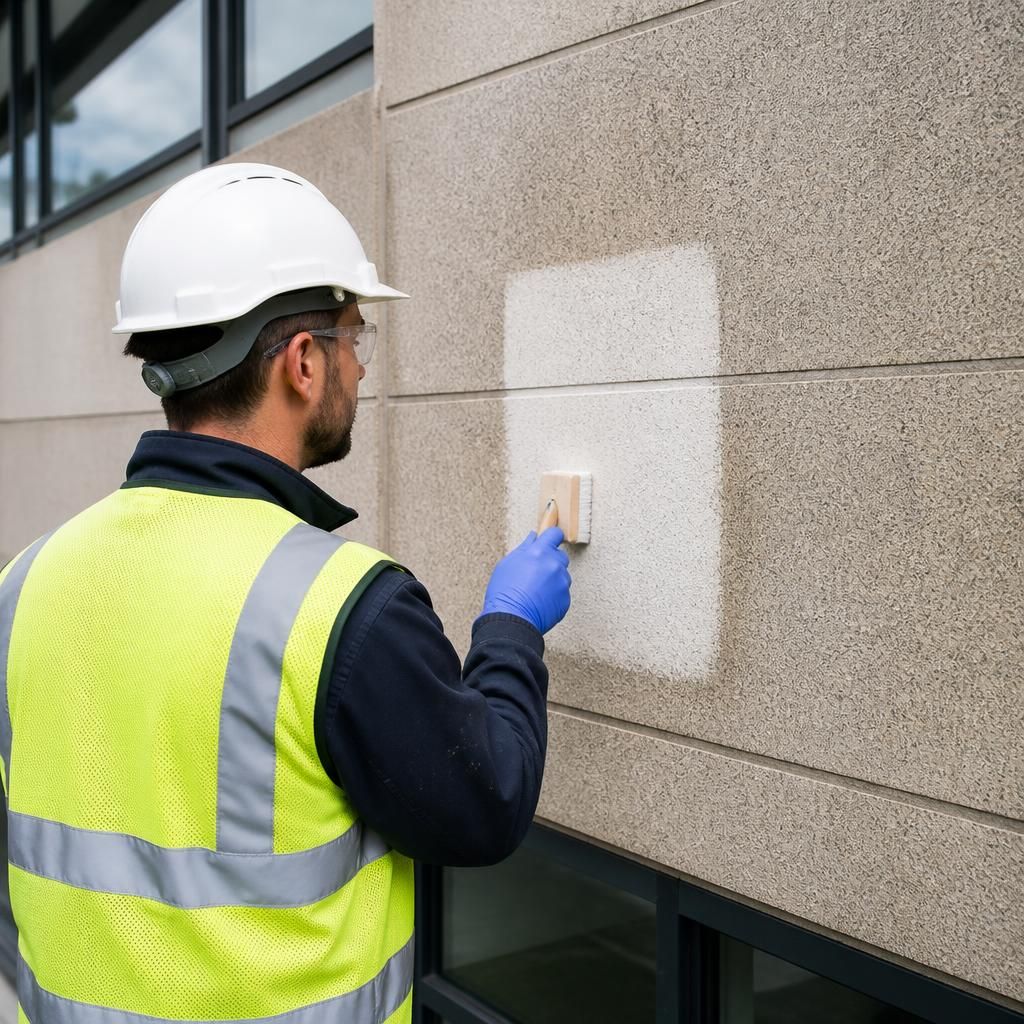
The safest cleaning technique is established through a surface inspection and a discreet test area, not by applying the same pressure or chemical treatment across the whole building. Testing shows how the façade, cladding or render responds and helps identify risks such as colour change, coating failure, surface erosion or water penetration.
A suitable assessment compares the least aggressive practical method first, such as soft brushing, low-pressure rinsing, steam or a compatible detergent. The result, drying behaviour and effect on surrounding materials are then reviewed before the wider specification is agreed. This is particularly important where surfaces have previous repairs, protective coatings, weathering or mixed materials, as different elevations may require different cleaning techniques.
Arrange a professional facade, cladding or render cleaning assessment
Arrange a professional facade, cladding or render cleaning assessment with Encanto Exterior Cleaning to identify the safest and most effective technique for your building’s surfaces. We will review the condition, soiling, access and environmental controls before recommending a suitable cleaning specification.