
What are the primary methods used in facade, cladding, and render cleaning?
The primary methods for facade, cladding and render cleaning are pressure washing, steam cleaning, soft washing and carefully controlled chemical treatment. The suitable method depends on the surface material, condition, soiling and surrounding environment, with pressure and temperature adjusted to remove contamination without damaging the substrate or finish.
The primary methods used for façade, cladding and render cleaning are pressure washing, steam cleaning, soft washing and controlled chemical treatment. The correct approach depends on the substrate, surface finish, type of soiling, condition of the building and the risk of water or chemical ingress. In practice, professional cleaning often combines methods rather than relying on one technique for the entire building.
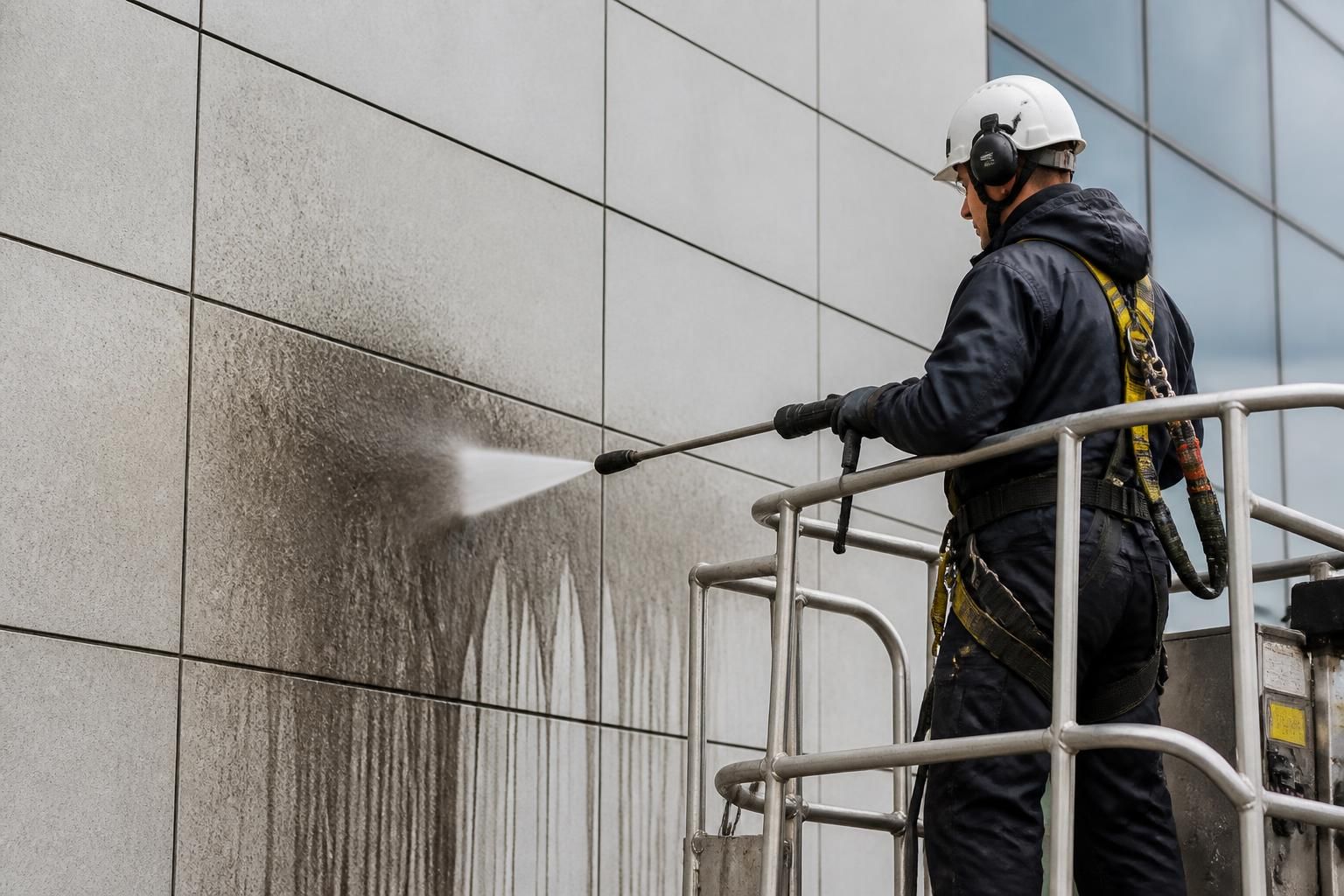
Pressure washing uses water delivered at controlled pressure to remove loose dirt, dust, algae, moss, traffic film and some biological growth. It is effective on robust, well-bonded surfaces such as suitable brickwork, concrete, some stone and durable cladding. Pressure, water volume, nozzle selection and working distance must be adjusted carefully. Excessive pressure can strip coatings, open joints, drive water behind panels, damage sealants or erode softer masonry and render.
Pressure washing is therefore not simply a matter of using the highest available setting. The operator should inspect the surface first, identify weak areas and carry out a discreet test clean. Water should be directed in a controlled manner, with particular care around windows, vents, joints, electrical fittings, façade penetrations and deteriorated render. Where possible, the cleaning process should work from the cleaner areas towards the more heavily soiled areas to reduce the spread of contamination.
Steam cleaning uses heated water, generally at lower pressure than conventional power washing, to soften and lift dirt, grease, algae, carbon deposits and some atmospheric staining. It can be suitable for sensitive façades, painted or coated surfaces and areas where minimising mechanical impact is important. Heat can also help loosen organic growth and reduce the amount of chemical product required.
Steam cleaning still requires careful control. Heat may affect certain paints, plastics, sealants, membranes and synthetic render finishes, particularly where the surface is already degraded. The operator must also manage condensation and runoff, protect adjacent materials and avoid concentrating heat in one area. A test patch helps establish whether the finish can tolerate the selected temperature and application technique.
Soft washing combines low-pressure water with a suitable cleaning solution to remove biological contamination such as algae, moss, lichen and mildew. It is commonly considered for render, painted façades, coated cladding and other finishes that could be damaged by aggressive pressure. The solution is applied to the surface, allowed sufficient contact time to work, and then rinsed using controlled pressure.
Soft washing is dependent on correct chemical selection and application. The product must be compatible with the substrate and surrounding materials, diluted according to its intended use and prevented from drying on the surface unless the treatment specifically requires it. Plants, soil, drainage systems, vehicles, pedestrians and neighbouring surfaces should be protected. Any residue and contaminated runoff should be managed in accordance with the site requirements and applicable environmental controls.
Controlled chemical cleaning is used where water alone cannot remove the contamination. Different formulations may be selected for organic growth, oils, atmospheric staining, oxidation, efflorescence, carbon deposits or other specific marks. Chemical cleaning can be particularly useful on façades and cladding with textured finishes, where dirt becomes embedded and cannot be removed effectively by rinsing alone.
Chemical treatment should never be selected solely because it is more aggressive. The cleaning product must be assessed for compatibility with the surface, coatings, joints, fixings and nearby materials. A controlled test area is essential, followed by thorough rinsing or neutralisation where required. Incorrect chemical use can cause colour change, chalking, staining, corrosion or deterioration of the underlying finish.
Manual and low-impact cleaning is often used for detailed areas, delicate finishes and localised staining. Soft brushes, non-abrasive pads, scrapers and measured quantities of water or cleaning solution can provide greater control around architectural details, signage, joints and vulnerable edges. Manual work may also be used after washing to remove residual deposits that have been loosened but not fully released.
Abrasive or specialist surface cleaning has a more limited role. Carefully selected abrasive media or other specialist techniques may be considered for hard, heavily marked surfaces where conventional washing is unsuitable. These methods can remove coatings and alter the texture of masonry, render or cladding, so they require detailed assessment and experienced operation. They are generally inappropriate for fragile render, decorative finishes, weathered coatings and surfaces where preserving the original profile is important.
Before choosing a method, the cleaning team should assess:
- the material, coating and finish, including whether the surface is porous, painted, sealed or textured;
- the type and severity of soiling, such as dust, traffic film, algae, moss, graffiti, rust or efflorescence;
- existing defects, including cracks, failed joints, loose render, corrosion, damaged panels and open penetrations;
- the building’s exposure to wind, rain, pollution, salt and biological growth;
- nearby windows, landscaping, entrances, vehicles, public areas and sensitive equipment;
- access requirements, water availability, drainage, runoff controls and safe working arrangements; and
- the intended finish, including whether the work is routine maintenance, preparation for redecoration or part of a wider refurbishment.
A typical cleaning process begins with a site survey and identification of the substrate and contamination. The surface is then inspected for defects, vulnerable areas are protected and a small test patch is completed. The results are reviewed for cleaning effectiveness, colour change, surface damage, moisture impact and runoff. The chosen method can then be adjusted before work proceeds across the wider façade, cladding or rendered elevation.
For many commercial buildings, the best result comes from a combination of techniques. For example, low-pressure chemical treatment may be used to deal with biological growth on render, steam may be selected for ingrained marks on a sensitive façade, and controlled pressure washing may be appropriate for robust lower-level masonry or hardstanding. This selective approach helps achieve a consistent finish while limiting unnecessary impact on the building fabric.
After cleaning, the surface should be checked for remaining staining, newly exposed defects and areas requiring repair rather than further washing. Cleaning does not correct failed sealants, cracked render, damaged coatings or defective drainage. Recording the method used and any defects identified also supports future façade maintenance and helps establish a safer, more consistent approach for subsequent cleaning visits.
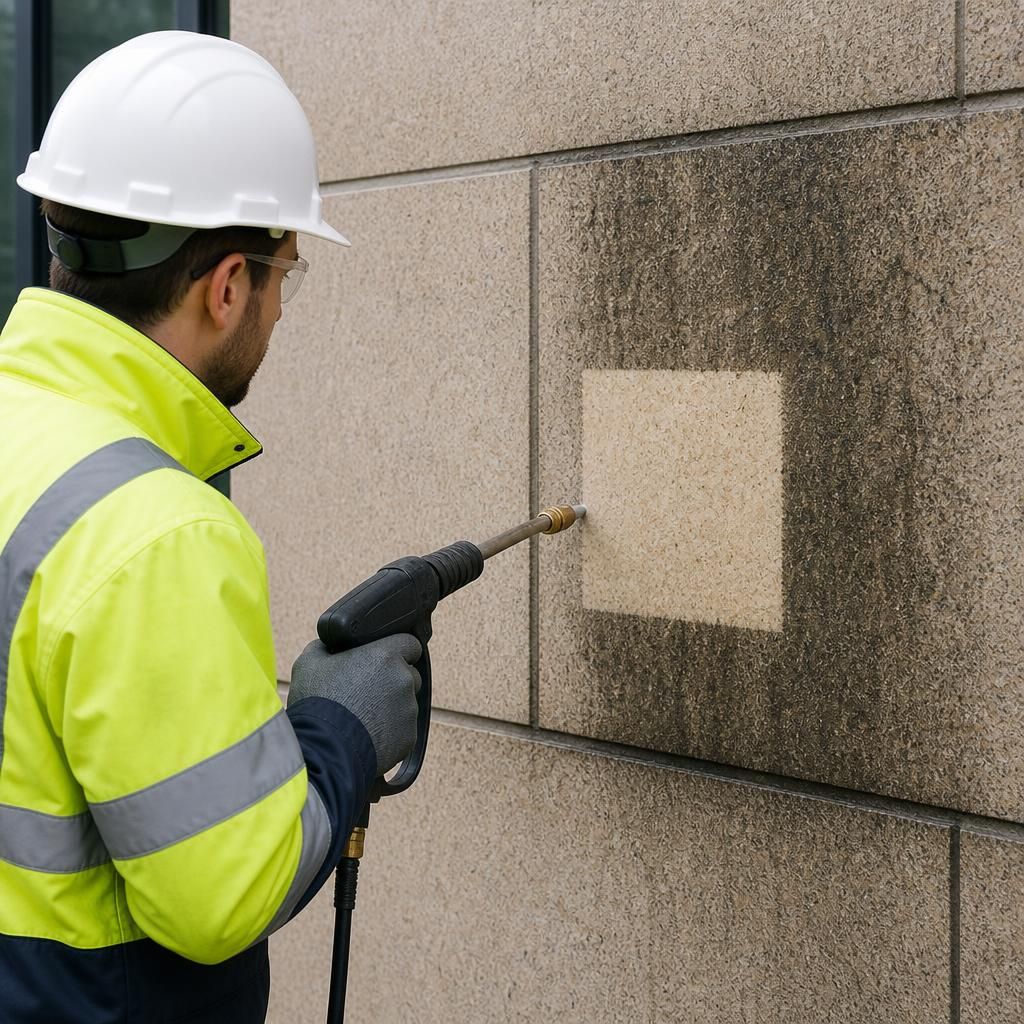
The most important step in façade, cladding and render cleaning is selecting and testing the method before treating the full elevation. A small test patch shows whether the surface can tolerate the proposed pressure, temperature, chemical solution and rinsing process without colour change, coating loss or substrate damage.
The result should be assessed for cleaning effectiveness, surface condition, moisture impact and runoff. For example, robust masonry may accept controlled pressure washing, while painted cladding or render may require soft washing, steam cleaning or careful manual work. The chosen method can then be adjusted to suit different materials and areas of the building, helping achieve a consistent finish without applying unnecessary force or chemicals.