
What are the key considerations when selecting a facade, cladding, and render cleaning service provider?
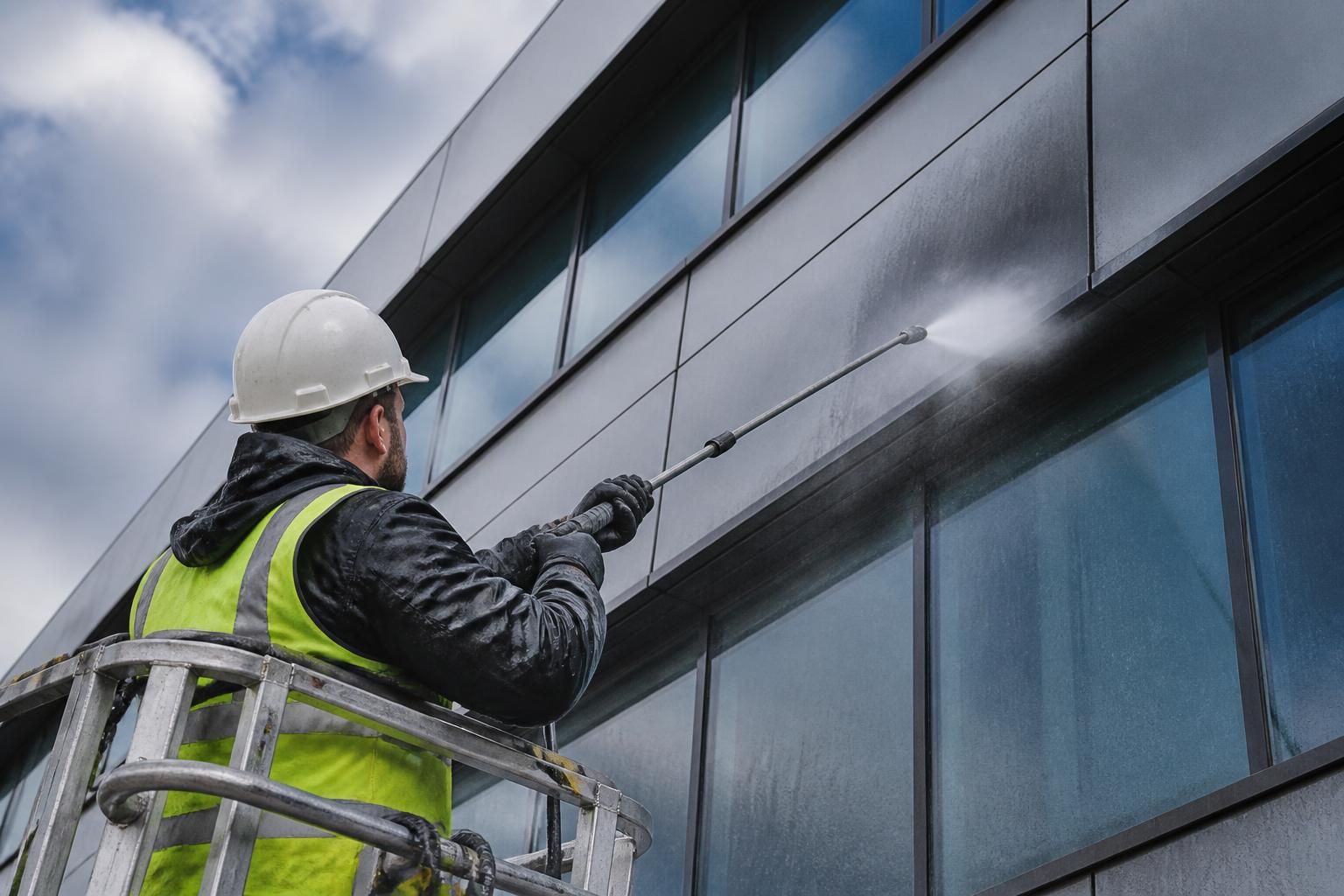
Select a facade, cladding and render cleaning provider based on relevant experience with your building materials, a suitable low-risk cleaning method, robust health and safety procedures, appropriate access equipment, and clear evidence of commercial insurance and competent operatives. They should inspect the surfaces before quoting, explain how they will manage chemical use, water runoff and potential damage, and provide a detailed scope of work with realistic timescales.
Select a facade, cladding and render cleaning provider by assessing their experience with the specific materials, proposed cleaning methods, health and safety controls, access arrangements, environmental procedures and ability to deliver commercial work. A suitable contractor should inspect the building before quoting, identify risks and sensitive areas, explain the proposed process clearly, and provide evidence of competent operatives, appropriate insurance and effective site management.
Relevant experience with the building and materials
Facade systems can include brick, stone, concrete, glass, aluminium, coated metal, composite panels, render, stucco and specialist finishes. These materials do not respond identically to pressure, heat, detergents or agitation. A provider should be able to explain how the selected method will deal with soiling without removing coatings, opening joints, marking the surface or forcing water behind panels and render.
Ask whether the contractor has completed comparable commercial or industrial projects and whether the proposed team understands the construction of your building. Experience should cover not only the visible surface but also details such as sealants, window surrounds, vents, signage, expansion joints, drainage outlets and areas where different materials meet. These interfaces often require a more controlled approach than the main facade.
A proper site survey before the quotation
A reliable quotation should follow a site inspection rather than being based solely on photographs or a brief description. During the survey, the contractor should assess the type and condition of each surface, the extent of staining, previous coatings or treatments, fragile areas, access requirements and any restrictions around the building.
The inspection should also consider whether the soiling is caused by general atmospheric deposits, algae, moss, traffic film, bird fouling, oxidation, efflorescence, paint or graffiti. Some staining may indicate a defect such as failed sealant, defective guttering, leaking services or persistent damp. Cleaning can improve the appearance, but it will not resolve the underlying cause. A competent provider should identify when repairs or building maintenance may be needed before or after cleaning.
A cleaning method matched to the surface
The proposed process should be based on the material and its condition, not on a standard pressure-washing routine. Possible methods include controlled pressure washing, soft washing, steam cleaning, detergent application, low-pressure rinsing, abrasive-free stain removal or a combination of techniques. The contractor should explain why the method is appropriate and what limitations apply.
Pressure should be controllable and suitable for the surface. Excessive pressure can damage mortar joints, dislodge render, strip protective coatings, roughen stone or drive water into the building envelope. Steam cleaning can be useful for certain deposits and sensitive surfaces, but temperature, dwell time and runoff still need to be controlled. Chemical treatments should be selected for the substrate, applied in accordance with the manufacturer’s instructions and thoroughly rinsed or neutralised where required.
Ask whether a discreet test area will be completed before full-scale cleaning. Testing helps confirm the cleaning effect, identify colour or coating changes and establish safe settings for pressure, temperature, chemical concentration and dwell time. On a large facade, the test area should be representative of the most sensitive or heavily soiled sections rather than selected only because it is easy to reach.
Health and safety arrangements
Facade cleaning can involve work at height, powered equipment, wet surfaces, chemicals, traffic, members of the public and interaction with other contractors. The provider should supply suitable risk assessments and method statements and explain how the work will be controlled on your site.
Check that the arrangements cover:
- safe systems for work at height and the inspection of access equipment;
- exclusion zones, barriers, warning signs and protection for pedestrians and vehicles;
- the control of water, hoses, electrical equipment and slip hazards;
- chemical storage, handling, personal protective equipment and emergency procedures;
- protection of windows, doors, vents, electrical fittings, landscaping and nearby property;
- weather conditions, wind exposure and the circumstances in which work will be paused;
- emergency arrangements, first aid and communication with the person responsible for the site.
Operatives should be trained and competent for the equipment and techniques being used. Where specialist access systems are required, the contractor should be able to demonstrate that the relevant equipment is suitable, maintained and operated by appropriately trained personnel.
Access equipment and site logistics
The correct access solution depends on building height, roof and ground conditions, obstructions, public access and the reach required. Options may include mobile elevated work platforms, towers, cradles, abseiling systems or other specialist equipment. The provider should explain the advantages and restrictions of the proposed arrangement rather than selecting access equipment solely for convenience.
Consider whether the contractor has accounted for delivery, set-up, ground loading, overhead hazards, parking restrictions, emergency routes and disruption to occupants. For occupied premises, the programme should identify noisy activities, areas that need temporary closure and how entrances, walkways and loading areas will remain safe.
Insurance, competence and documentation
Request evidence of appropriate public liability and employers’ liability insurance, along with any other cover relevant to the project. Insurance does not by itself prove technical competence, but a professional provider should be willing to provide current documentation and clarify the limits of the cover.
Useful supporting information may include training records, equipment inspection records, risk assessments, method statements, chemical safety data and examples of relevant completed work. For larger or higher-risk projects, you may also need information for your own contractor approval, procurement or site compliance process. The provider should understand these requirements and supply documents in time for review.
Environmental controls and water management
Facade cleaning creates wastewater that may contain detergents, dirt, paint residues, biological growth or other contaminants. The contractor should explain how runoff will be contained, collected, filtered or directed to an approved drainage route. Wastewater must not be allowed to enter surface-water systems or neighbouring property where it could cause pollution.
Ask how the provider will minimise water and chemical use, protect planting and soil, and manage removed debris or contaminated materials. The answer should reflect the site conditions and the type of cleaning rather than rely on a general environmental statement. Where detergents or biocidal products are proposed, the contractor should explain their purpose, handling requirements and any precautions for occupants, wildlife and surrounding surfaces.
A clear, itemised quotation
The quotation should define the areas and surfaces included, the cleaning method, access equipment, preparation and protection, testing, treatment of difficult stains, rinsing, waste and wastewater management, and final inspection. It should also state what is excluded, such as repairs, paint removal beyond the agreed scope, sealant replacement or remedial work to defective surfaces.
Clarify whether the price is fixed or subject to a further inspection, what circumstances could affect the cost, and whether work will be charged by area, time or a defined project scope. A low initial price may not represent good value if it excludes access, protection, difficult sections or compliant wastewater disposal. The most useful comparison is between quotations that describe equivalent work and controls.
Realistic results and limitations
A reputable provider should describe the expected outcome without promising that every mark will disappear. Weathering, oxidisation, aged coatings, deep biological staining and permanent discolouration may not be fully removable without risking damage to the substrate. Render can also vary in colour and texture, making isolated cleaning patches visible if the work is not planned carefully.
Ask how the contractor will handle areas where cleaning could expose existing defects or create an uneven appearance. The agreement should record any known limitations and explain whether a broader elevation, panel or section should be treated to achieve a consistent finish.
Inspection, handover and ongoing maintenance
Before completion, the provider should carry out a final inspection with the site representative, remove protection and equipment, and leave access routes safe and free of cleaning residue. Agree how defects, missed areas or damage will be reported and reviewed. Photographic records can be useful for documenting the pre-cleaning condition and confirming the completed work.
For buildings exposed to traffic pollution, coastal air, industrial emissions, shade, moisture or persistent bird fouling, a one-off clean may not provide lasting protection. A suitable provider can help establish an inspection and maintenance schedule based on the building’s materials, exposure and use. Regular, appropriately controlled cleaning can reduce the need for more aggressive restoration work while allowing emerging defects to be identified earlier.
In practice, the strongest choice is the provider that combines material-specific technical knowledge with sound site controls and transparent communication. Compare the survey findings, method statement, access plan, environmental arrangements, insurance and full scope of work—not just the headline price.
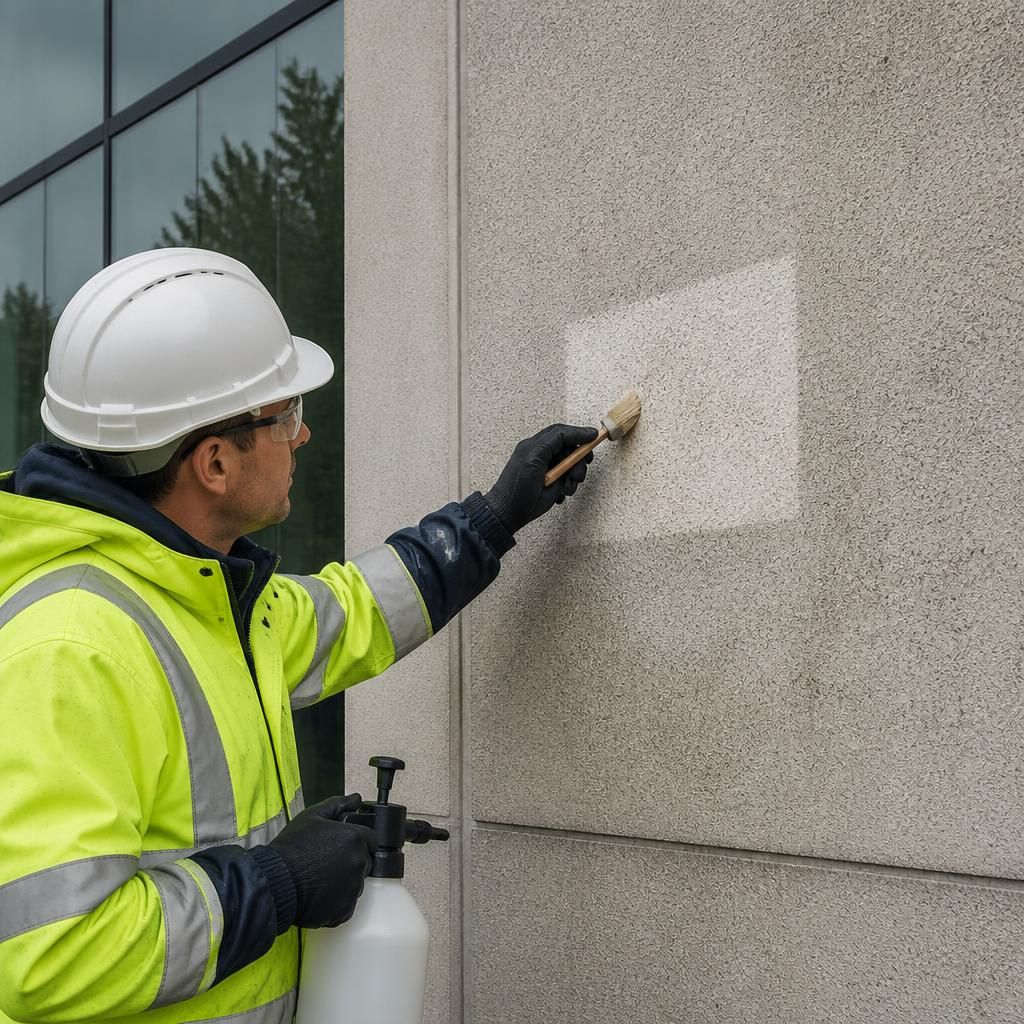
A discreet test area should be completed before full facade, cladding or render cleaning begins. Testing confirms that the proposed pressure, temperature, detergent concentration and dwell time remove the soiling without damaging the substrate, coating, joints or surrounding finishes.
The test should be carried out on a representative, sensitive or heavily soiled section rather than an easily cleaned area. The agreed result can then guide the full method and highlight limitations such as permanent staining, colour variation or underlying defects before the main work starts.
Arrange Your Facade, Cladding & Render Cleaning Assessment
Arrange a facade, cladding and render cleaning assessment with Encanto Exterior Cleaning to review your surfaces, access requirements, cleaning method and site controls before work begins. We can provide a clear, itemised scope based on the building’s condition and your maintenance requirements.