
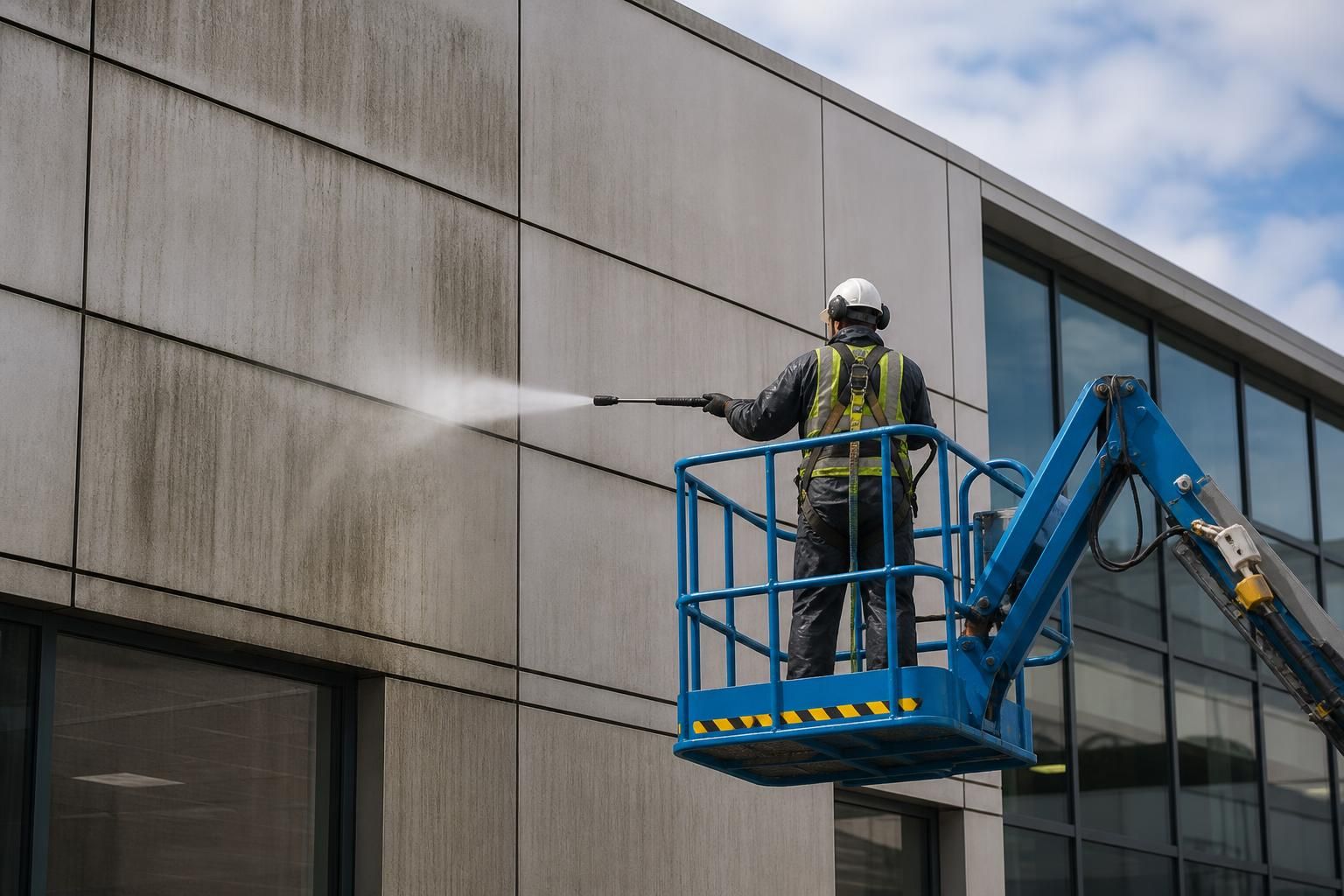
What are the environmental and structural benefits of regular facade, cladding, and render maintenance?
Regular facade, cladding and render maintenance removes dirt, pollutants, biological growth and moisture-retaining deposits before they cause staining, corrosion, cracking or material deterioration. It therefore helps extend service life, reduce unnecessary replacement and repainting, protect the building fabric, and maintain a cleaner external environment with less waste.
Regular facade, cladding and render maintenance protects the building envelope by removing pollutants, organic growth, moisture-retaining deposits and surface contamination before they contribute to material deterioration. It provides both environmental benefits, such as reduced waste and lower demand for replacement materials, and structural benefits, such as preserving protective finishes, limiting corrosion and allowing defects to be identified at an earlier stage.
Environmental benefits
External surfaces collect airborne pollution, traffic film, dust, salts, bird fouling, algae, moss and other biological growth. If these deposits remain in place, they can retain moisture against the surface and may increase the risk of staining, biological spread and localised deterioration. Controlled cleaning removes the contamination without unnecessarily replacing sound materials.
- Less construction waste: maintaining serviceable facades, cladding panels and rendered finishes can delay strip-out, extensive refurbishment and premature replacement. This reduces the volume of old render, coatings, panels and associated materials sent for disposal.
- Lower demand for raw materials: extending the useful life of existing surfaces reduces the need for new cladding, masonry products, render systems, sealants, coatings and fixings.
- Reduced use of remedial products: early cleaning and minor maintenance may prevent more extensive treatments, such as widespread repainting, heavy restoration or replacement of corroded components.
- Better control of wash water and contaminants: professional cleaning can be planned around the surface, the type of soiling and the drainage arrangements. Suitable collection, filtration or disposal measures help prevent pollutants and cleaning residues entering surface-water systems.
- Reduced biological spread: removing algae, moss, lichen and other growth from suitable surfaces helps prevent contamination spreading across elevations, roof edges, paving and adjoining areas.
- Improved building performance where surfaces are part of the envelope: clean, intact coatings and cladding systems are better able to perform their intended weathering role. Cleaning does not replace insulation or repair defective construction, but it supports the condition of the external envelope.
The environmental benefit depends on how the work is carried out. Excessive pressure, unsuitable chemicals or uncontrolled discharge can damage surfaces and create avoidable environmental impact. The cleaning method should therefore be selected according to the substrate, coating, type of contamination and surrounding drainage. Low-pressure washing, steam cleaning, soft washing or carefully controlled chemical treatments may be appropriate in different circumstances. Water use, dwell times and rinsing should be kept proportionate to the work required.
Structural and material benefits
Maintenance helps preserve the components that protect a building from weather and contamination. It is not a substitute for a structural survey, but it is an important part of identifying and managing defects before they become more disruptive or costly.
- Protection from moisture retention: moss, algae, dirt and other deposits can hold moisture against render, joints, coatings and metalwork. Removing them allows surfaces to dry more effectively and makes moisture-related defects easier to assess.
- Reduced risk of corrosion: pollutants, salts and persistent dampness can accelerate corrosion on metal cladding, fixings, flashings, rails and exposed support components. Cleaning, followed by inspection and appropriate protective treatment, helps manage this risk.
- Preservation of coatings and finishes: dirt and biological growth can degrade or obscure paints, powder coatings, protective films and render finishes. Appropriate cleaning removes harmful deposits without unnecessarily stripping sound coatings.
- Lower likelihood of cracking and spalling being overlooked: a clean facade makes hairline cracks, failed sealant, open joints, impact damage, loose render and damaged panels easier to identify. Prompt reporting allows the appropriate repair to be arranged.
- Protection of joints and interfaces: movement joints, panel connections, window surrounds and penetrations are vulnerable points in the building envelope. Removing deposits around these areas supports closer inspection of seals and junctions.
- Longer service life: preventing the build-up of contamination and addressing minor defects helps surfaces remain functional for longer, reducing the likelihood of premature refurbishment or replacement.
- Better protection of masonry and render: controlled cleaning can remove salts and organic deposits that contribute to staining and surface breakdown. The pressure and treatment must be suitable, as aggressive cleaning can erode mortar, expose aggregate or damage a render finish.
Maintenance also improves the accuracy of condition assessments. Heavy staining can conceal open joints, failed coatings, fractured render, corrosion staining and water tracking. Once the surface has been cleaned safely, a follow-up inspection can distinguish superficial soiling from defects that require repair. Cleaning should not be used to disguise deterioration or to remove evidence before an investigation; photographs, surveys and repair planning may need to take place before work begins.
How regular maintenance prevents deterioration
A practical maintenance programme normally combines visual inspections, planned cleaning and targeted remedial work. The process should begin with an assessment of the facade or cladding system, including its material, finish, age, exposure, previous treatments and known defects. Areas affected by traffic pollution, coastal salts, industrial emissions, shade, persistent dampness or heavy vegetation may need more frequent attention than sheltered elevations.
- Inspect the elevation and record staining, biological growth, cracks, failed sealant, corrosion, loose components and damaged coatings.
- Identify the substrate and test the proposed cleaning method on an inconspicuous area where appropriate.
- Select a technique that removes the contamination while protecting the surface, joints, coatings, glazing, landscaping and nearby equipment.
- Control water, run-off and access arrangements before cleaning begins.
- Clean methodically, avoiding unnecessary pressure, abrasion or chemical exposure.
- Inspect the cleaned surface and report defects that require repair, sealing, coating or further investigation.
- Keep records of the work and use them to plan future inspections and maintenance.
Regular cleaning is most effective when it is linked to the wider maintenance strategy rather than treated as an isolated cosmetic service. For example, cleaning may be scheduled before a coating inspection, after building works that have created dust or residue, or alongside planned repairs to joints and render. This approach reduces duplicated access arrangements and helps ensure that defects are addressed while they are still manageable.
Limits and important precautions
Cleaning alone cannot resolve structural movement, defective detailing, penetrating damp, failed waterproofing, unstable cladding, damaged fixings or widespread render failure. These conditions require assessment by a suitably competent professional. Loose materials must be made safe before cleaning, and any suspected structural defect should be reported rather than concealed by surface treatment.
The wrong method can cause more damage than the original contamination. High pressure may drive water behind panels or through defective joints, erode mortar and render, remove protective coatings or mark softer materials. Strong chemicals may bleach finishes, attack metals, damage vegetation or leave residues. A responsible maintenance specification therefore considers access equipment, exclusion zones, weather conditions, water management, chemical handling, personal protective equipment and the protection of occupants and the public.
For commercial and industrial premises, the most useful outcome is a documented maintenance cycle that combines appropriate cleaning with inspection and timely repair. This keeps facades, cladding and render cleaner and more serviceable, reduces avoidable material consumption, supports responsible water and waste management, and helps protect the building envelope over its working life.
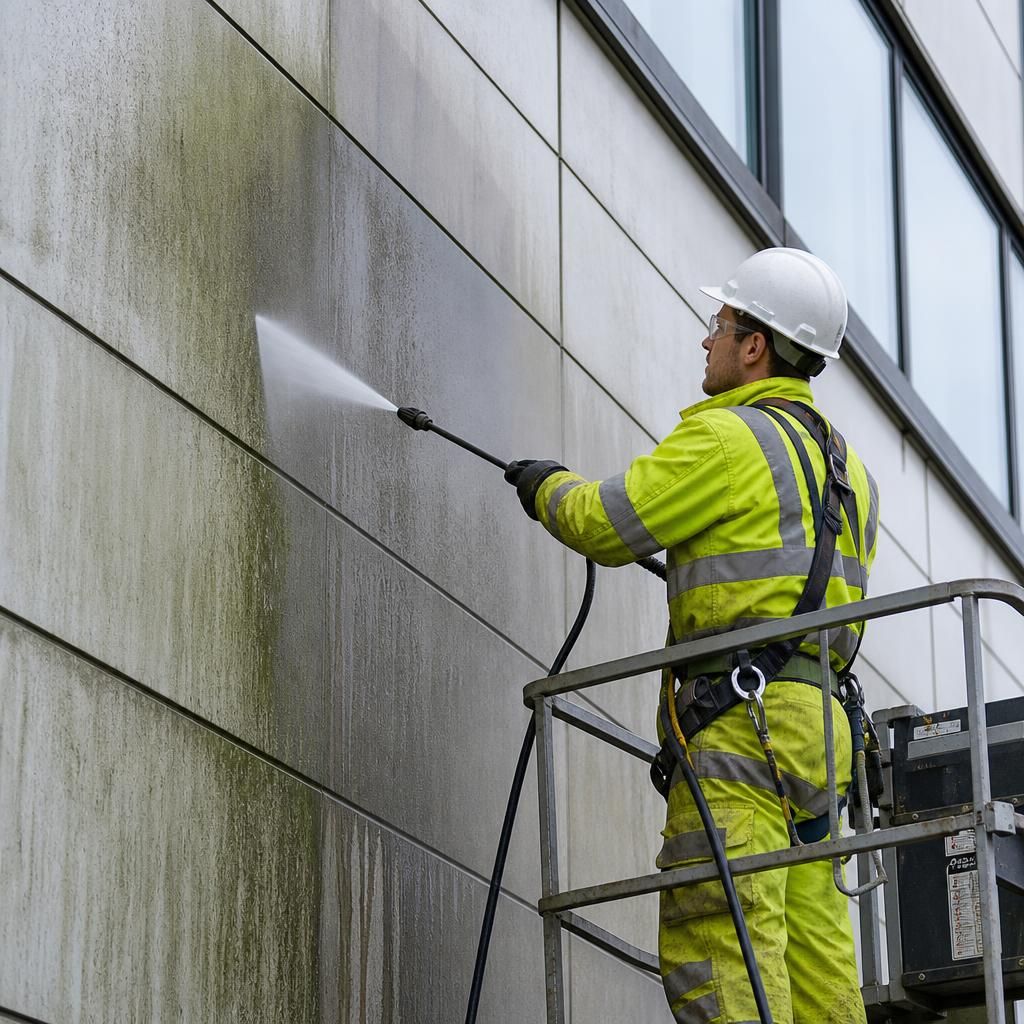
Regular facade, cladding and render maintenance helps protect the building envelope by removing deposits that retain moisture and conceal defects. A clean surface is easier to inspect, allowing staining, cracked render, failed sealant, open joints, corrosion and damaged coatings to be identified before they lead to more extensive deterioration.
Cleaning must be matched to the substrate and its condition. Controlled low-pressure washing, steam cleaning or other suitable methods can remove algae, moss, traffic film, salts and industrial pollution without unnecessarily eroding render, mortar or protective finishes. Once the surface is clean, defects can be recorded and referred for appropriate repair, sealing or further investigation. This supports longer service life and can delay avoidable replacement of sound materials, provided cleaning is treated as part of a planned inspection and maintenance programme rather than as a substitute for structural repairs.
Discuss your facade, cladding and render maintenance needs
Discuss your facade, cladding and render maintenance needs with Encanto Exterior Cleaning to plan suitable cleaning, inspection and access arrangements for your property. We can help identify the appropriate method for the surface condition, contamination and surrounding environment.