
What methods are used to clean stucco without causing damage?
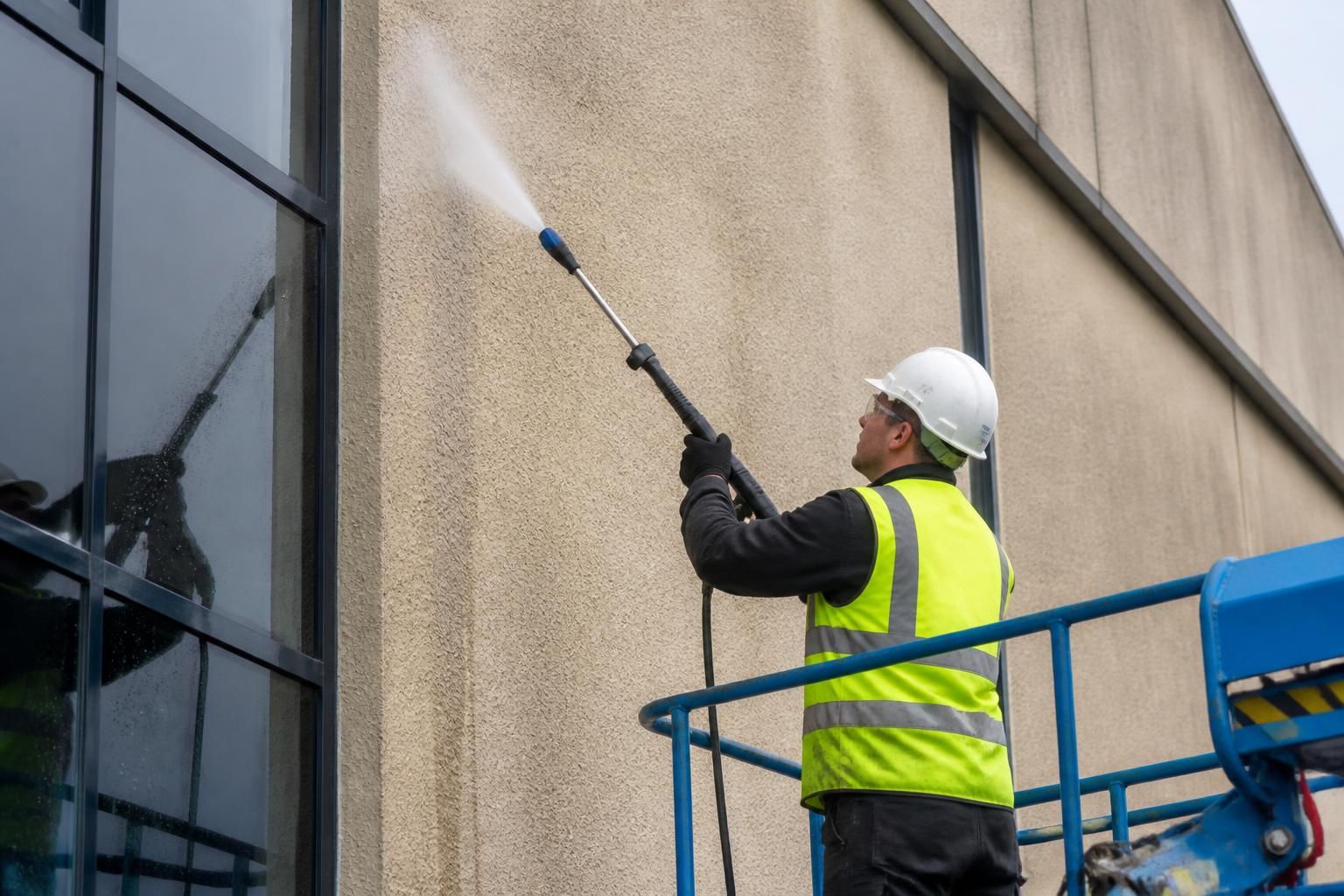
Stucco is cleaned safely using low-pressure soft washing, controlled steam cleaning and a suitable biocidal treatment, rather than aggressive pressure washing. The method should be selected after assessing the stucco’s condition, then tested on a small area to remove dirt, algae and staining without eroding the finish or forcing water behind it.
Stucco is cleaned safely by using the least aggressive method that will remove the contamination: usually a low-pressure soft wash with a suitable biocidal treatment, supplemented by gentle brushing or controlled steam cleaning where necessary. The surface should be inspected and tested before work begins, because excessive pressure, unsuitable chemicals and uncontrolled water can erode the finish, dislodge loose material or force moisture behind the stucco.
Low-pressure soft washing is often the most appropriate method for exterior stucco. A cleaning solution is applied at controlled pressure to loosen organic growth, atmospheric dirt and surface staining. The surface is then rinsed carefully, using enough water to remove the residue without driving water into cracks, joints or damaged areas. Unlike aggressive pressure washing, soft washing relies more on dwell time and the cleaning solution than on impact from the water.
A suitable biocidal treatment can be used where algae, moss, lichen or other biological growth is present. This helps break down the growth and reduce the likelihood of rapid regrowth. The treatment must be compatible with the stucco, any paint or coating, nearby materials and the surrounding environment. It should never be allowed to dry on the surface unless the product instructions specifically require this.
Controlled steam cleaning may be suitable for localised staining or areas where a low-water method is preferred. Steam can soften ingrained dirt and biological deposits without the same mechanical force associated with high-pressure cleaning. It still requires careful control, however. Excessive heat or prolonged application can affect paint films, sealants and vulnerable repairs, so the operator should adjust the equipment to the condition and finish of the surface.
Gentle manual cleaning is useful for delicate or isolated areas. Soft brushes, non-abrasive pads and an appropriate mild cleaning solution can remove residue around details, edges and textured sections that might be damaged by concentrated water pressure. Hard wire brushes, abrasive pads and scraping tools should generally be avoided because they can scratch the finish or expose the underlying substrate.
A careful cleaning process normally includes:
- Inspecting the stucco: identifying cracks, hollow or loose sections, failed sealant, open joints, previous repairs, flaking paint and signs of water ingress.
- Identifying the contamination: distinguishing biological growth from rust, carbon deposits, efflorescence, paint, mortar staining and general atmospheric soiling.
- Protecting adjacent areas: covering or wetting sensitive surfaces and controlling run-off around windows, doors, vents, landscaping and drainage points.
- Testing a discreet area: checking the cleaning solution, pressure, temperature, dwell time and rinsing technique before treating the full elevation.
- Cleaning from a suitable position: working evenly across the surface rather than concentrating pressure on one patch, which can create visible differences in texture or colour.
- Rinsing and inspecting: removing loosened residue thoroughly while avoiding unnecessary saturation, then checking whether further treatment is needed.
Water pressure should be kept low enough to protect the stucco profile and prevent water being forced beneath the finish. The correct setting depends on the substrate, age, texture, coating and condition of the building; a pressure washer should not be used at its highest setting simply because the surface is masonry. Narrow spray patterns, rotary attachments and close-range cleaning can be particularly damaging to softer or already weakened areas.
Cleaning chemicals also need careful selection. Strong acids may affect cement-based finishes, metal components and surrounding masonry, while highly alkaline products can damage some coatings, sealants and adjacent materials. A professional cleaner should follow the product data, control run-off and rinse the surface appropriately. Mixing chemicals is unsafe and can produce harmful reactions.
Stucco that is cracked, hollow, friable or allowing water behind the finish should be repaired before general cleaning. Cleaning cannot correct failed render, defective flashing, leaking gutters or open penetrations. In these circumstances, washing may reveal the extent of the defect but could worsen it if water is applied before the underlying problem is addressed.
Weather conditions also affect the result. Extreme heat, strong wind, frost and heavy rain can interfere with chemical dwell time, drying and run-off control. Cleaning should be planned when the solution can be managed safely and the stucco will not be subjected to sudden temperature changes or freezing conditions while wet.
The safest approach is therefore a condition-led combination of soft washing, controlled steam and gentle manual work, supported by testing and close inspection. This removes staining while preserving the texture, coatings and soundness of the stucco, rather than relying on high pressure to produce a quick visual result.
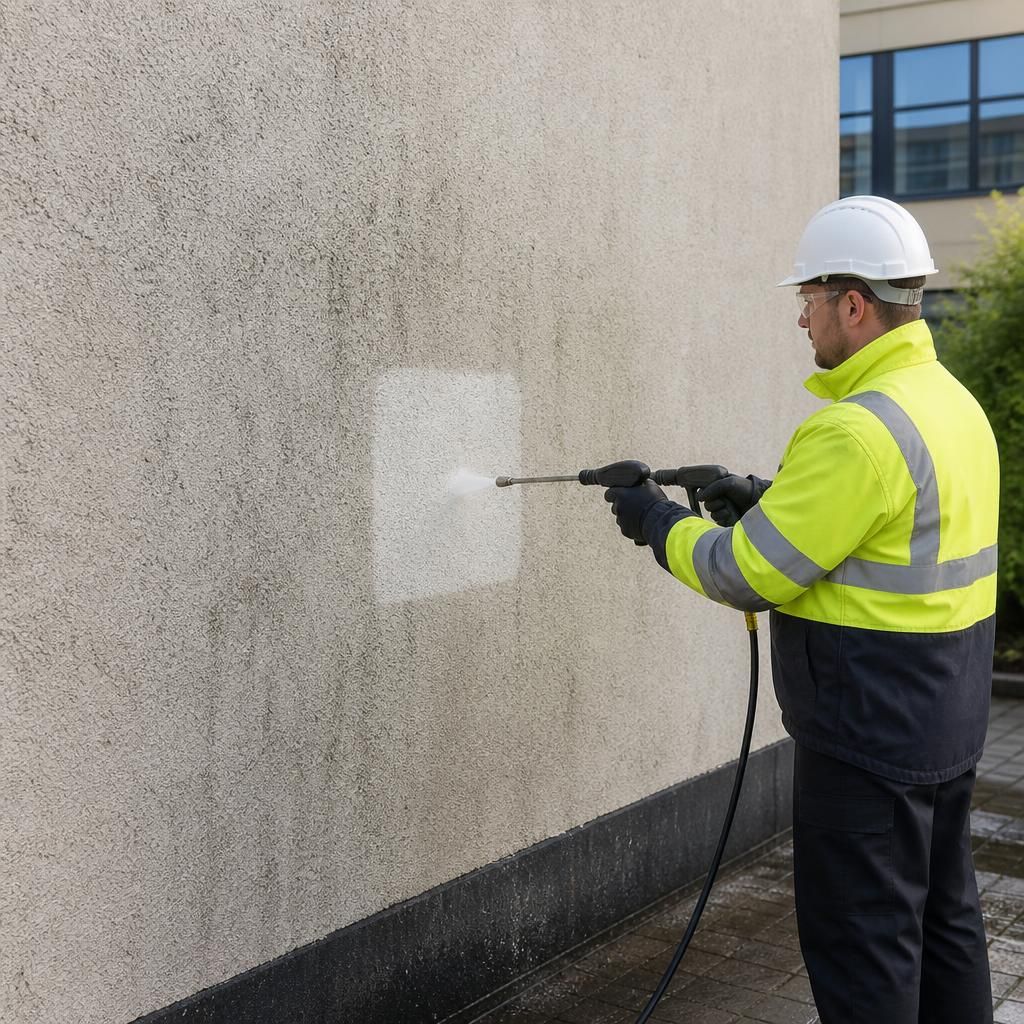
Testing a small, discreet area is one of the most important safeguards when cleaning stucco. It confirms that the chosen solution, pressure, temperature and dwell time will remove the contamination without changing the surface texture, colour or coating.
The test area should represent the wider elevation and be inspected after cleaning and drying. If the stucco becomes chalky, rough, discoloured or excessively saturated, the method must be adjusted before work continues. This controlled approach is particularly important where the finish is aged, painted, previously repaired or already showing cracks and loose sections.
Arrange a Safe Stucco Cleaning Assessment
Arrange a safe stucco cleaning assessment with Encanto Exterior Cleaning so we can inspect the surface, identify any risks and recommend the most suitable cleaning method. Contact our team to discuss your requirements across Birmingham, the West Midlands or the wider UK.