
What is the best method for cleaning and maintaining exterior rendered walls and stucco surfaces?
The best method for cleaning exterior rendered walls and stucco is a controlled soft-wash process using a suitable detergent or fungicidal treatment, followed by a low-pressure rinse rather than aggressive pressure washing. The surface should first be assessed for cracks, loose areas and coating condition, then cleaned gently and maintained with prompt repairs and regular removal of organic growth and atmospheric soiling.
The best method for cleaning and maintaining exterior rendered walls and stucco is a controlled soft-wash process using a compatible detergent or fungicidal treatment, followed by a low-pressure rinse. This approach removes atmospheric dirt, algae, moss, lichen and staining without subjecting the render to the force that can cause surface erosion, cracking, water penetration or loss of decorative texture.
Render and stucco are not simply masonry surfaces. Their texture, porosity, coating system and condition can vary considerably, so the cleaning method must be selected after inspecting the building. A sound, well-coated surface may tolerate a different process from aged, porous or previously repaired render. The objective is to remove contamination while leaving the render intact and avoiding unnecessary saturation of the wall.
A suitable cleaning process normally includes the following stages:
- Inspection and preparation: The surface should be checked for cracks, hollow or loose areas, failed sealants, open joints, damaged coatings and vulnerable details around windows, doors, vents and rooflines. Gutters, downpipes, electrical fittings and nearby landscaping should also be considered before work begins.
- Identification of the contamination: Organic growth such as algae, moss and lichen requires a different treatment from soot, traffic film, rust, paint, cement residue or general atmospheric soiling. Identifying the pollutant helps determine whether a detergent, fungicidal treatment, steam cleaning or another controlled method is appropriate.
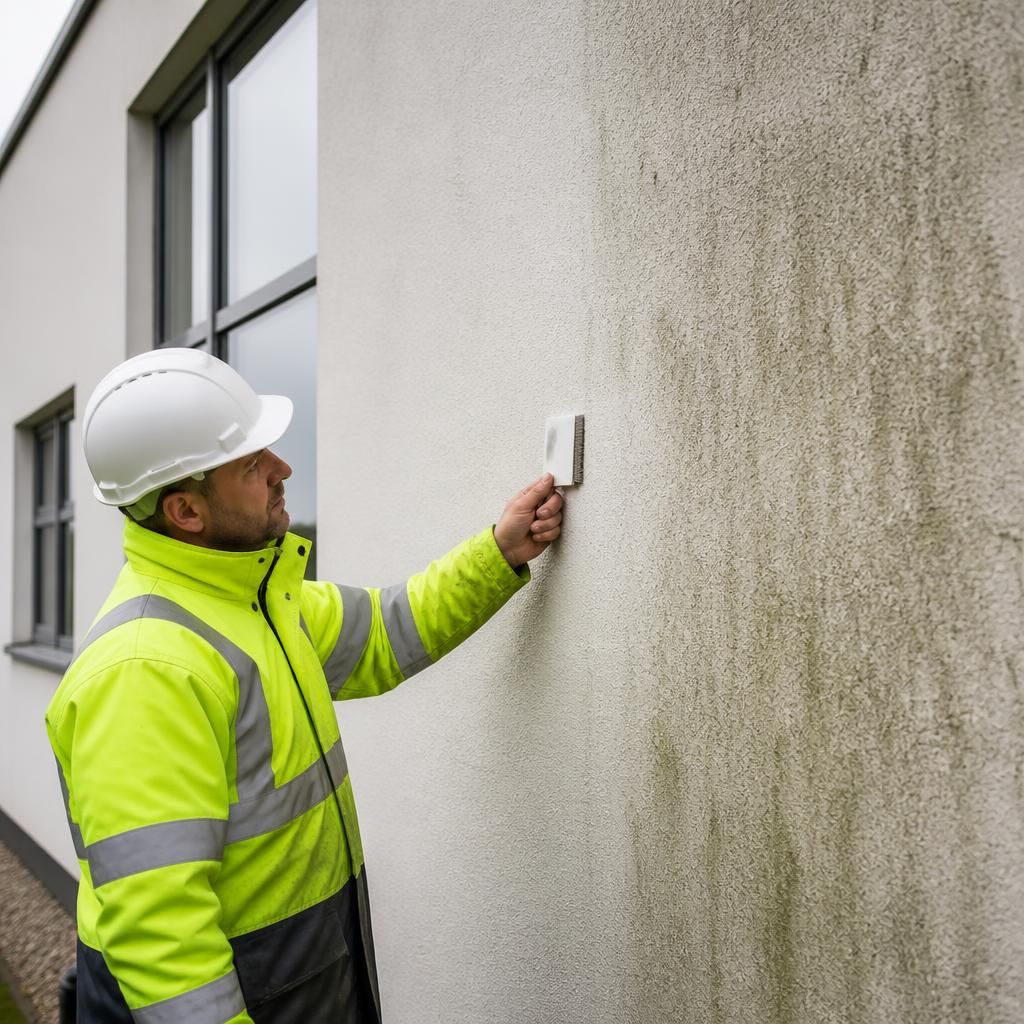
- Small-area testing: A discreet test area should be cleaned first. This confirms that the chosen solution is compatible with the render, paint or protective coating and allows the operator to assess the required dwell time and rinsing pressure.
- Application of the cleaning solution: A suitable detergent or biocidal treatment is applied evenly, normally from the lower part of the wall upwards where appropriate to reduce streaking. The product must be used in accordance with its instructions and should not be allowed to dry on the surface.
- Controlled agitation or dwell time: The treatment is given enough time to break down organic matter and loosen embedded soiling. Heavily affected areas may need careful brushing with soft equipment, but aggressive scrubbing should be avoided because it can wear the surface or expose aggregate.
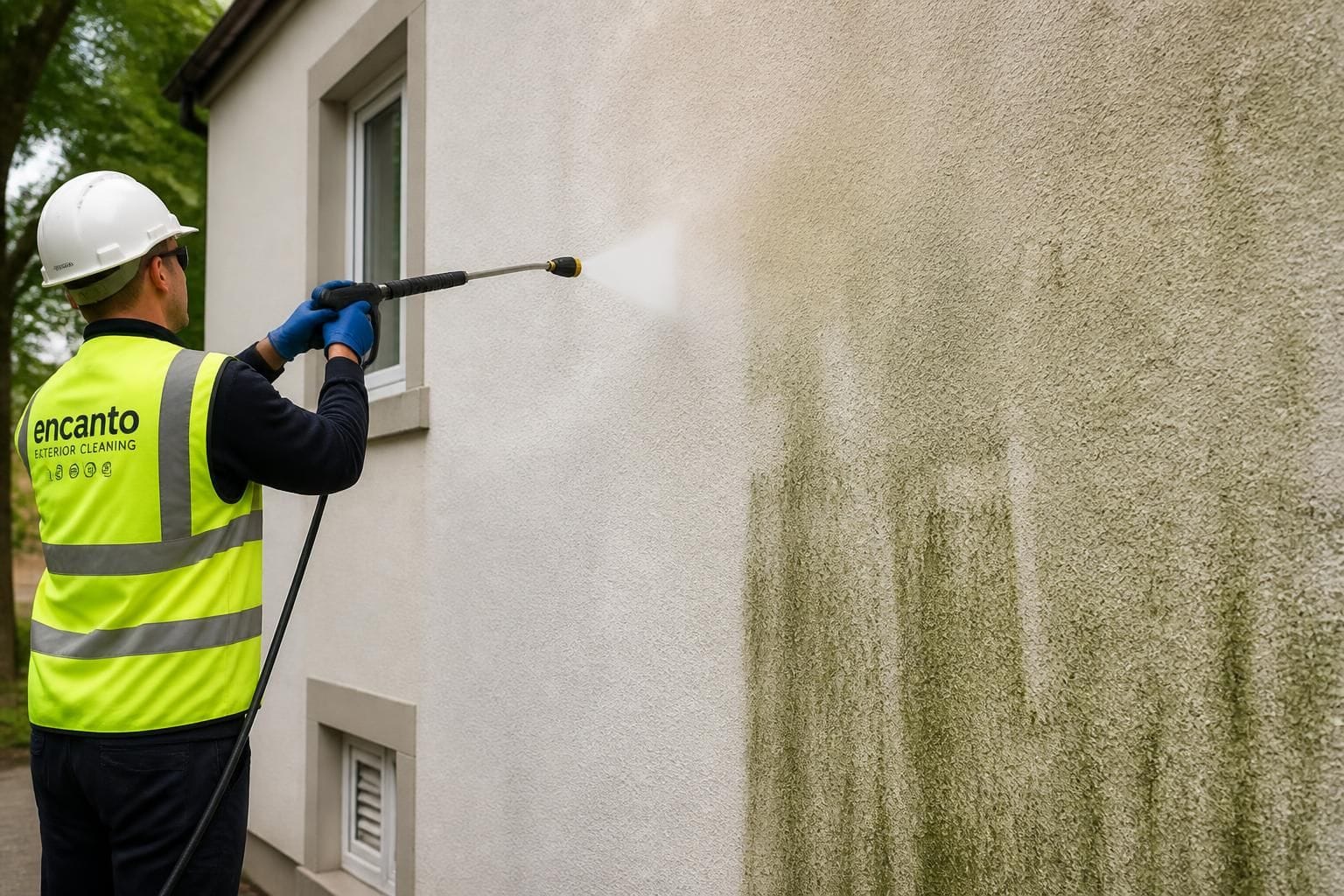
- Low-pressure rinsing: Loosened contamination and cleaning residues are rinsed away using controlled pressure and a suitable spray pattern. The operator should work methodically, keeping the nozzle at a safe distance and avoiding direct force into cracks, joints, vents or damaged render.
- Final inspection and remedial advice: Remaining marks, failed areas and defects should be reviewed after cleaning. Some staining may require a separate treatment or repair rather than repeated pressure. Any necessary rendering, sealing, repainting or waterproofing work should be completed only after the wall is suitably dry and stable.
Why aggressive pressure washing is usually unsuitable
High-pressure washing can remove more than the dirt from rendered walls. It may strip paint, dislodge decorative finishes, enlarge existing cracks and drive water behind the render system. On softer or weathered surfaces, the pressure can also create pitting and uneven patches that remain visible after the wall dries. Repeated pressure washing may gradually weaken the finish, particularly where the render has already been affected by frost, movement or prolonged damp.
Pressure is not the only factor that determines cleaning effectiveness. Chemical selection, application, dwell time, temperature, water volume, nozzle type and operator control all affect the result. A lower-pressure method with the correct treatment is often more effective and safer than trying to remove staining by force.
When other methods may be appropriate
Soft washing is generally the preferred starting point for algae, moss, lichen and general organic soiling. Steam cleaning may be considered for certain localised stains or delicate areas because it uses heat and controlled water flow rather than abrasive force. It still requires care: excessive heat or prolonged application can affect coatings, soften some materials or drive moisture into defects.
More concentrated cleaning products may be needed for specific contamination such as oil, rust or cement deposits, but these should not be applied indiscriminately. Acidic or strongly alkaline products can damage render, discolour coatings, affect adjoining materials and create hazardous runoff. Graffiti, bitumen and paint should be assessed separately, as attempting to remove them with excessive pressure can enlarge the affected area or damage the underlying finish.
Maintenance after cleaning
Cleaning should form part of an ongoing maintenance plan rather than being treated as a one-off cure. The wall should be inspected periodically for new organic growth, blocked or overflowing gutters, defective downpipes, failed seals and areas that remain persistently damp. These moisture sources often cause staining to return and can contribute to longer-term deterioration.
- Keep gutters, outlets and downpipes clear so rainwater is discharged away from the render.
- Repair cracks, open joints and damaged areas promptly, using materials compatible with the existing render system.
- Trim vegetation that remains close to the wall and restricts airflow or holds moisture against the surface.
- Remove new biological growth before it becomes established and more difficult to treat.
- Do not paint or seal a wall until it has dried properly and the substrate has been checked for trapped moisture.
- Use compatible coatings and follow the manufacturer’s preparation requirements when redecorating.
Cleaning is best carried out in suitable weather, with no risk of frost, heavy rain or rapid drying from strong sun and wind. Weather affects product dwell time, rinsing, drying and runoff control. On commercial or multi-occupancy premises, the work plan should also account for pedestrian routes, entrances, parked vehicles, sensitive landscaping and the safe management of access equipment.
A professional assessment is particularly important where the render is old, painted, textured, insulated, cracked, patch-repaired or showing signs of damp. It is also advisable where staining has penetrated the coating, where previous cleaning has left marks, or where the building has a complex façade with multiple materials. The correct method should preserve the render rather than simply produce a short-term visual improvement.
In practice, the most reliable specification is a test-led soft wash, targeted treatment of organic or specialist staining, controlled low-pressure rinsing and prompt attention to defects that allow moisture or contamination to return. Regular inspections and proportionate maintenance then help retain a clean, consistent finish and reduce the need for more disruptive restoration.
The safest general method for cleaning exterior rendered walls and stucco is a test-led soft wash followed by a controlled, low-pressure rinse. A compatible detergent or fungicidal treatment loosens algae, moss, lichen and atmospheric dirt without relying on force that could erode the surface, strip coatings or drive water into cracks.
Before cleaning, the render should be checked for loose areas, damaged coatings, open joints and failed seals around windows, doors, gutters and downpipes. A discreet test patch confirms that the treatment is suitable and shows how much dwell time and rinsing are required. This is particularly important for aged, painted, textured or previously repaired render, where excessive pressure or unsuitable chemicals can leave permanent marks.
Arrange a Professional Render and Stucco Cleaning Assessment
Arrange a professional assessment of your rendered walls or stucco surfaces so the cleaning method can be matched to the material, condition and type of contamination. Contact Encanto Exterior Cleaning to discuss a suitable cleaning and maintenance plan.