
What are the best practices for post-cleaning render and stucco maintenance?
Best practice after cleaning render and stucco is to allow the surface to dry fully, inspect it for cracking or failed areas, and address repairs before applying any approved protective or fungicidal treatment. Ongoing care should include gentle rinsing where appropriate, prompt removal of new organic growth and staining, clear drainage routes, and scheduled inspections to prevent minor defects becoming costly damage.
Post-cleaning render and stucco maintenance means allowing the surface to dry properly, checking for defects revealed by cleaning, completing compatible repairs and treatments, and then monitoring the façade to prevent new staining or water penetration. Cleaning removes dirt, algae, moss, traffic film and other deposits, but it does not correct cracked render, failed sealant, defective coping or blocked drainage. These issues should be addressed before they cause further deterioration.
Allow the surface to dry and settle. Render and stucco should be given sufficient time to dry naturally after cleaning. The drying period depends on the substrate, coating, exposure, temperature, humidity, wind and the amount of water used during the work. Avoid applying paint, sealers or other treatments to a damp surface unless the product manufacturer specifically permits it. Trapped moisture can lead to poor adhesion, patchy appearance, blistering, efflorescence or further staining.
Do not judge the final appearance while the surface is still wet. Damp areas can look darker than surrounding sections, and some deposits may become more visible as the façade dries. A final inspection should take place once the surface has dried evenly and any temporary changes in colour or shading can be assessed accurately.
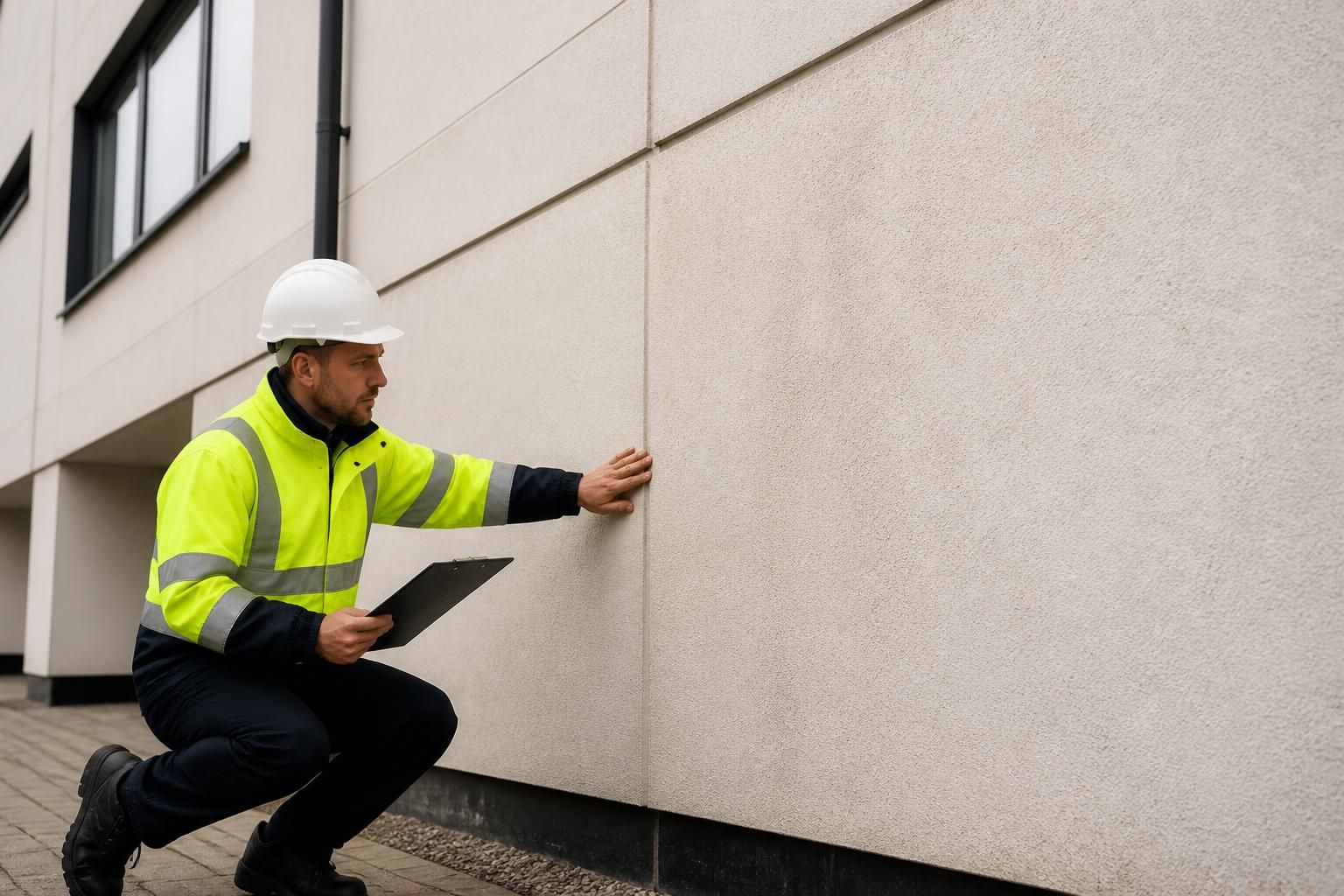
Inspect for defects exposed by cleaning. Cleaning can make hairline cracks, hollow areas, failed repairs and localised water damage easier to identify. Check the rendered or stucco finish for:
- Cracks, open joints and areas where the finish has separated from the background
- Hollow, friable or powdery sections that may not provide a sound base for repair
- Blown, flaking or poorly bonded paint and textured coatings
- Efflorescence, which may indicate moisture movement through the substrate
- Rust staining around fixings, brackets, pipes or embedded metalwork
- Damaged beads, corners, reveals, sealant joints, flashings and movement joints
- Persistent damp patches or staining below roofs, sills, outlets and parapets
Minor surface marks are not necessarily evidence of structural failure, but recurring cracks, expanding defects or damp-related staining should be assessed by a suitably qualified building professional. Repairs should use materials compatible with the existing render or stucco in terms of composition, texture, movement and moisture behaviour. Hard, impermeable repairs can trap moisture or create visible edges where the surrounding finish moves differently.
Complete repairs before applying protective treatments. Fill suitable cracks, renew failed sealant and repair damaged render before applying any water-repellent, protective or decorative coating. The substrate should be sound, clean and dry, and repairs should be allowed to cure in accordance with the product instructions. Treating over unstable material may conceal the defect temporarily while allowing deterioration to continue underneath.
Any coating or sealer should be selected for the specific render or stucco system. Consider whether the finish is cementitious, polymer-modified, lime-based, painted, insulated or previously coated. The product should not prevent the façade from managing moisture in the way it was designed to do. Compatibility testing on an inconspicuous area is advisable, particularly where the existing finish is aged, colour-sensitive or of unknown composition.
Use fungicidal treatment where organic growth is present. Algae, moss, lichen and fungal staining can return if the underlying spores are left on the surface or if the façade remains persistently damp. Where appropriate, an approved fungicidal treatment can help reduce regrowth after cleaning. It must be applied at the correct dilution and dwell time, with suitable protection for nearby glazing, plants, drainage systems and surrounding surfaces. Fungicidal treatment is not a substitute for repairing leaks, improving drainage or reducing persistent shade and moisture.
Follow-up treatment should only be applied when weather and surface conditions are suitable. Rain shortly after application can dilute or remove the product, while strong sun or high temperatures may cause it to dry too quickly. Product instructions and the requirements of the particular render system should take priority over a standard timetable.
Keep water away from vulnerable areas. Good drainage is one of the most important parts of render and stucco maintenance. Keep gutters, downpipes, hopper heads, gullies and outlets clear, and check that discharge is not running down the face of the building. Inspect roof edges, copings, parapets, window sills and flashings for defects that could direct water behind the finish.
Pay particular attention to the base of the wall. Splashback from paving, standing water, leaking taps and poorly directed downpipes can keep the lower render damp and encourage staining, salt deposits and frost-related damage. Vegetation should not be allowed to grow against the façade, as roots and retained moisture can open defects and obstruct inspection.
Adopt a gentle cleaning routine. Between planned professional cleans, remove isolated marks using the least aggressive method suitable for the surface. Avoid abrasive pads, aggressive brushing, untested chemicals and concentrated pressure washing, as these can erode the texture, expose aggregate, damage paint or force water into cracks and joints. Do not use household cleaning products without checking their suitability; some contain solvents, acids or bleaching agents that can discolour or weaken the finish.
Where light rinsing is appropriate, use controlled low-pressure water and avoid directing it into cracks, vents, joints, window seals or damaged areas. Test any cleaning method in a small, discreet location first and compare the result after the area has dried. Larger areas, persistent organic growth and staining caused by pollutants should be dealt with through a planned professional cleaning process rather than repeated spot treatment.
Inspect the façade on a planned basis. A visual inspection should cover elevations, corners, recessed areas, parapets, entrances and locations beneath trees or near roads. Look for changes in colour, renewed biological growth, cracking, flaking, damp marks, blocked outlets and damage caused by impact or nearby works. Inspections are particularly useful after prolonged wet weather, storms, building alterations or maintenance to roofs and drainage.
Keep a simple maintenance record showing the date of cleaning, areas treated, defects found, repairs completed, products used and any areas requiring observation. Photographs taken from consistent viewpoints can help identify gradual changes that may not be obvious during a routine visit. This record also helps contractors select compatible methods during future cleaning and prevents unnecessary use of increasingly strong treatments.
Deal with new staining promptly. Small areas of algae, bird fouling, graffiti, oil transfer or construction residue are generally easier to remove before they spread or become established. Prompt attention also helps distinguish a new surface mark from a recurring defect caused by water ingress. Graffiti and chemically aggressive deposits should be assessed carefully because unsuitable removal methods can cause more damage than the original stain.
Where a façade is part of a managed commercial or industrial property, post-cleaning checks should be incorporated into the building’s planned maintenance schedule. Coordinate façade inspections with roof, gutter, window, paving and external mechanical service checks, as defects in these adjacent elements often affect render and stucco. Arrange specialist advice when staining repeatedly returns in the same location, cracks widen, render becomes detached or damp persists after drainage issues have been addressed.
The most effective maintenance approach is therefore preventative: let the cleaned finish dry, inspect it properly, repair defects with compatible materials, use protective or fungicidal treatments only where appropriate, maintain drainage and remove new contamination with gentle methods. This preserves the appearance of the render or stucco while reducing the risk that minor surface problems develop into extensive repair work.
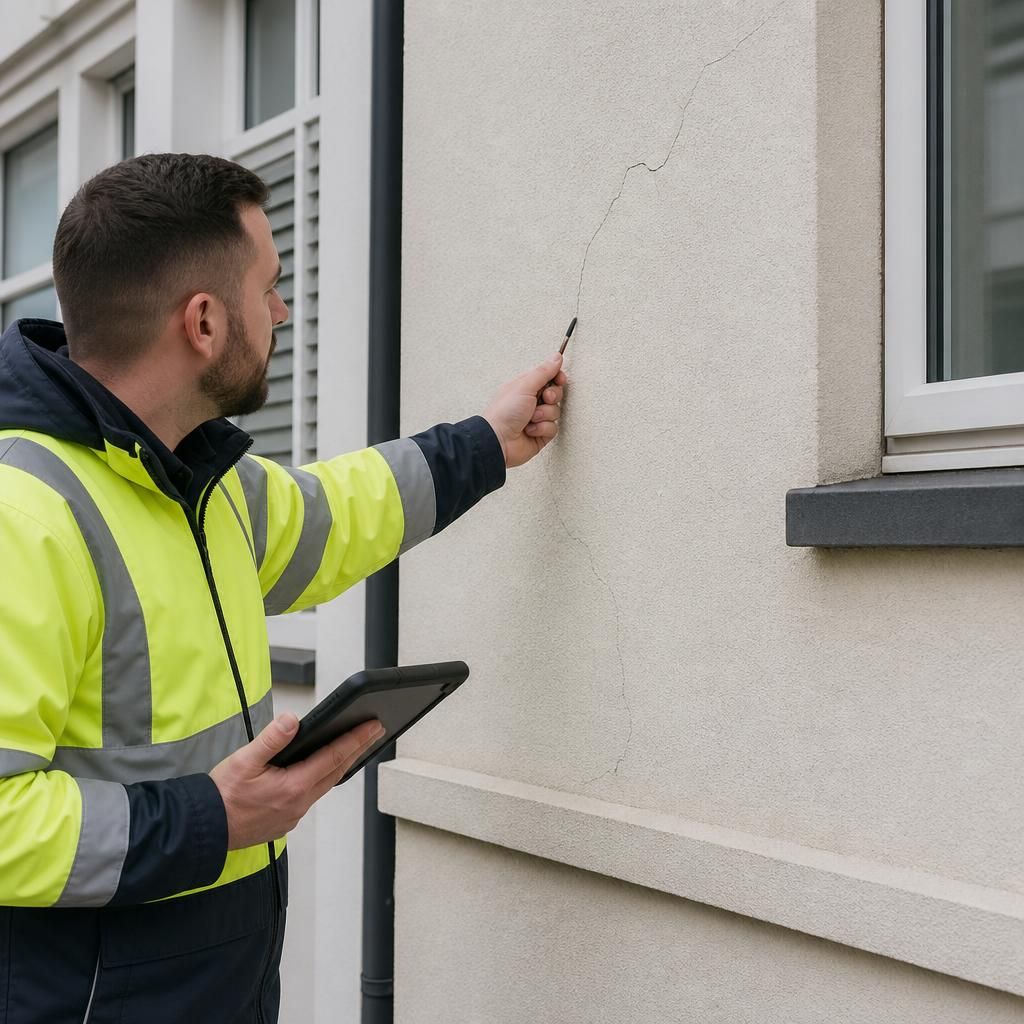
Post-cleaning render and stucco maintenance should prioritise thorough drying, compatible repairs and control of water sources. Once the finish has dried, inspect for cracks, failed sealant, damaged render and staining around sills, copings, gutters and downpipes. Address these defects before applying any protective or fungicidal treatment.
Keep drainage routes clear and remove new organic growth or staining using the gentlest suitable method. Avoid abrasive tools, harsh chemicals and concentrated pressure, which can erode textured finishes or force water into defects. Record inspections and photographs so recurring damp patches, cracking or regrowth can be identified and investigated promptly.
Arrange Professional Render and Stucco Maintenance
Arrange professional render and stucco maintenance to inspect defects, manage recurring staining and select compatible cleaning or protective treatments. Contact Encanto Exterior Cleaning to plan ongoing façade care for your commercial or industrial property.